
You’ve done it. After weeks of research, writing, and design, your agency’s masterpiece is complete: a comprehensive whitepaper on the future of AI in marketing. You build a sleek landing page, lock the PDF behind a form, and launch your lead generation campaign. The leads start trickling in from paid ads and email blasts.
But when you search for „future of AI in marketing,“ your landing page is nowhere to be found. Crickets.
This is a common publishing problem. The landing page is public, but the useful detail sits behind a form. Search engines can evaluate only the public page and the other crawlable signals around it. If the public page does not answer the query, it has little reason to rank for that query.
How do you capture high-quality leads without sacrificing your organic visibility? The good news is you don’t have to choose. You just need a smarter playbook.
The Gated Content Dilemma: Leads vs. Traffic
Gated content can collect contact details when the asset has a clear practical value, such as a template, calculator input sheet, original data set or implementation checklist. A form is not evidence of value. The decision to gate should depend on the asset, the reader’s stage and the follow-up process.
But here’s the trade-off: what you gain in lead capture, you lose in organic reach.
Google’s primary job is to crawl, index, and rank publicly accessible information to answer a searcher’s query. When your most valuable insights are hidden behind a form, search engine crawlers hit a wall. Unable to access the content, they can’t understand its value or rank it accordingly.
This creates a roadblock when a reader must submit data before seeing enough substance to judge the asset. Publish the answer, method and limitations openly. Gate only the reusable working material that helps the reader apply the method.
You’re essentially forcing potential customers to pay (with their data) before you’ve even had a chance to demonstrate your expertise.
The „Pillar and Gate“ Strategy: Getting the Best of Both Worlds
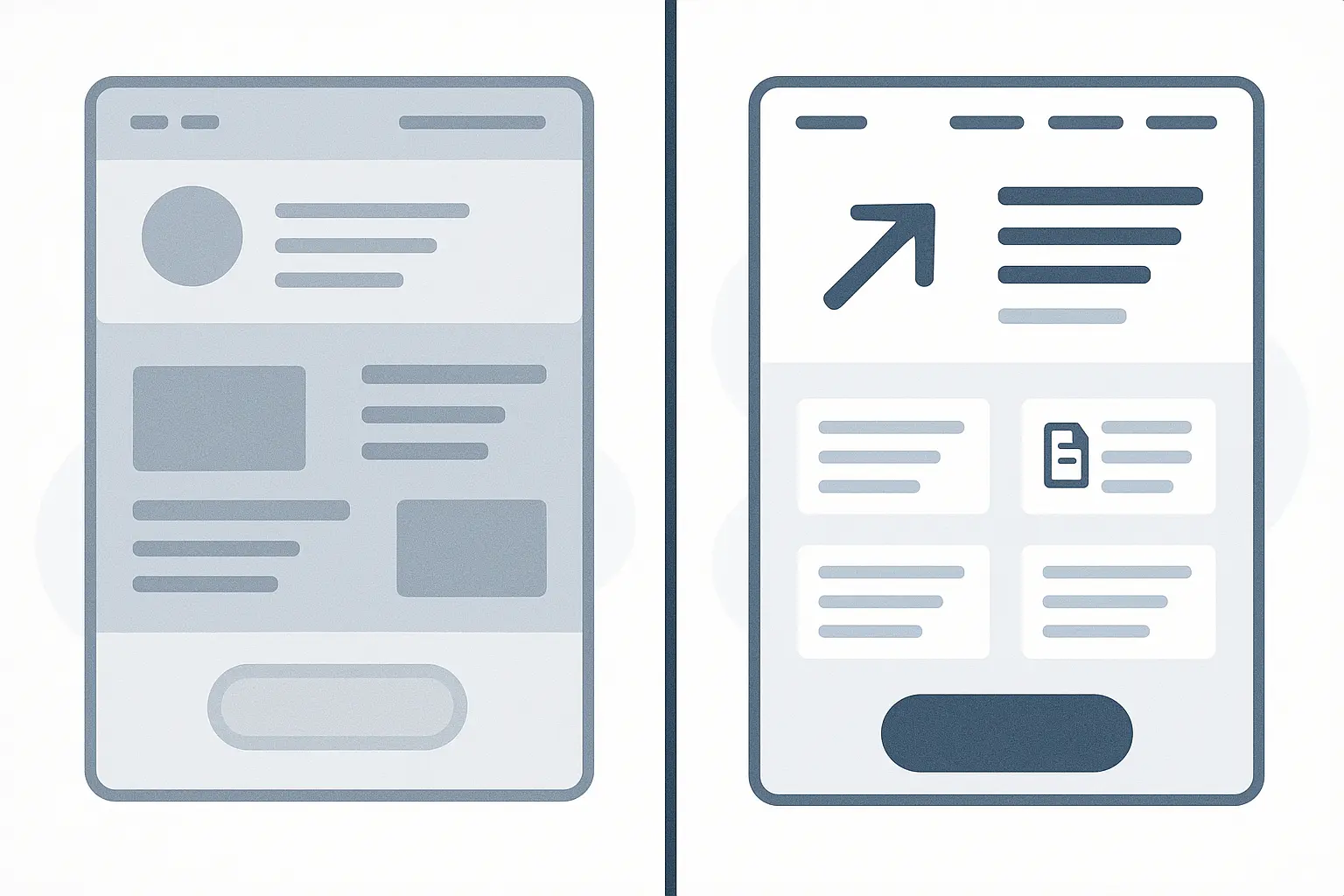
Instead of approaching this as an „either/or“ problem, the solution lies in a hybrid model: the „Pillar and Gate“ strategy. This approach involves creating two related assets:
-
The Pillar: A comprehensive, ungated blog post or guide that is optimized for search engines and provides significant value to the reader.
-
The Gate: Your high-value, downloadable asset (whitepaper, ebook, template) that sits behind a lead capture form.
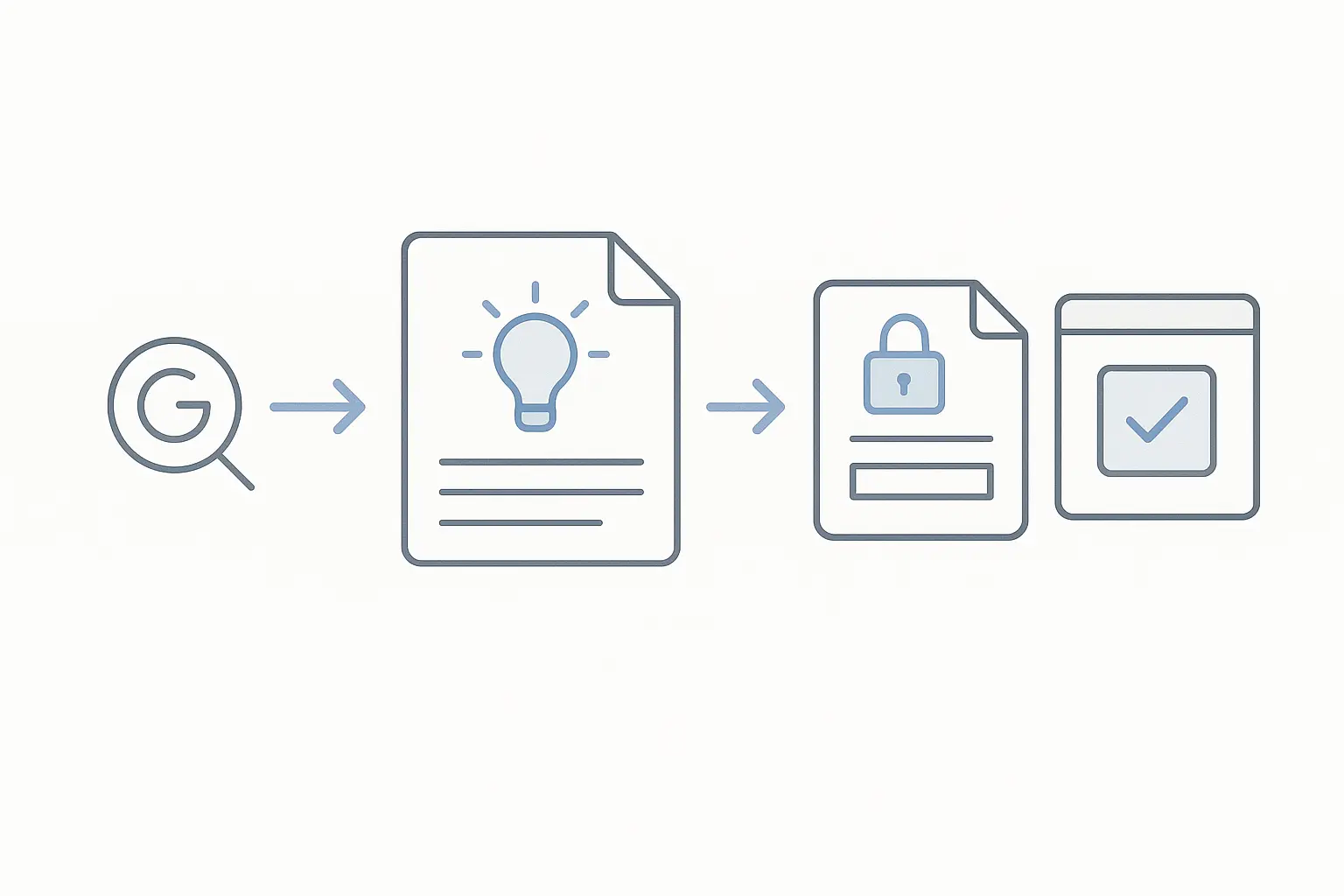
The pillar page acts as the publicly accessible „front door“ for organic search, while the gated asset is the „exclusive room“ for your most engaged prospects. Here’s how to build it.
Step 1: Create an Ungated, SEO-Friendly Pillar Page
Think of this pillar page as an in-depth summary or an extended preview of your gated asset. It shouldn’t be a short, fluffy teaser. It needs to be a valuable resource in its own right—something that fully answers a user’s search query while enticing them to learn more.
Your Pillar Page Should:
- Be complete: Use as many words as the search task requires. Cover the decision, method, evidence and limitations without padding the page to a fixed length.
- Target a Broad Keyword: Optimize the page for a high-intent, top-of-funnel keyword (e.g., „b2b content marketing strategy“).
- Provide Real Value: Answer the „what“ and the „why.“ Explain the core concepts and give the reader actionable insights they can use immediately.
- Feature a Clear Call-to-Action (CTA): Throughout the pillar page, strategically place CTAs that invite readers to download the full, more detailed resource. Frame it as the next logical step in their learning journey.
This gives search engines a complete public resource to evaluate. Measure the path with page impressions, qualified visits, clicks to the asset, completed forms and accepted leads. Compare those steps over the same period instead of relying on generic conversion benchmarks.
Step 2: Optimize Your Gated Landing Page
Just because the main content is hidden doesn’t mean the landing page itself should be an SEO ghost town. You can still optimize the public-facing elements to give it a fighting chance to rank for branded or long-tail terms.
Optimizing the Landing Page:
-
Compelling URL, Title Tag, and Meta Description: Write these as if you were trying to rank. Clearly state what the resource is and the value it provides. For example, a title like: „Download The Ultimate Guide to AI in Marketing [Ebook].“
-
Include „Teaser“ Content: Add 200-300 words of public-facing copy on the landing page. This could be the executive summary, a compelling introduction, or a bulleted list of what the reader will learn. This gives search engines a bit of text to index.
-
Use accurate structured data: Mark up only the content and entity that are actually visible on the page. Structured data can clarify page meaning, but it does not make hidden content crawlable.
This way, even if someone searches for your company and the name of your whitepaper, they can find the correct landing page directly. This is a key part of an effective omnichannel SEO strategy, where every asset is discoverable across multiple touchpoints.
Step 3: Connect the Pillar and the Gate
The final step is to create a strategic link between your pillar page and your gated landing page.
-
From Pillar to Gate: Your pillar page should have multiple, contextually relevant links and CTAs that point to the gated landing page. This creates a clear user journey from learning to converting.
-
From Gate to Pillar (Optional but Recommended): On the „Thank You“ page after a user fills out the form, link back to the original pillar page. You can frame it as, „While you wait for your download, check out our foundational guide…“ This keeps users engaged on your site and reinforces the connection between the two assets in the eyes of search engines.
This interconnected structure signals to Google that the two pages are related, passing some authority from your high-traffic pillar page to your conversion-focused landing page. For agencies managing dozens of client campaigns, using AI-powered SEO automation can help track the performance of these content funnels and identify opportunities for optimization at scale.
Frequently Asked Questions (FAQ)
Should I ever gate blog posts?
Generally, no. The primary purpose of a blog is to attract a wide audience through organic search and build trust. Gating standard blog posts defeats this purpose. Reserve gating for high-value, consolidated resources like ebooks, whitepapers, original research reports, templates, or webinars.
How much content from my gated asset should I put on the pillar page?
Do not use a fixed percentage. The public page should answer the search question completely. The gated asset should add a different form of utility, such as a worksheet, editable template, source data or implementation pack, rather than withholding the answer.
What if my gated content is already published? Can I apply this strategy retroactively?
Absolutely. Identify your highest-performing gated assets (in terms of leads generated). Then, create a new pillar page for each one based on its content. Publish the pillar page and update your promotional efforts to drive organic traffic there first. It’s a great way to breathe new life into existing content.
How do I measure the success of this strategy?
You need to track two sets of metrics. For the pillar page, monitor organic traffic, keyword rankings, time on page, and click-through rate to your gated landing page. For the landing page, track conversion rate (form fills) and lead quality. Effective SEO reporting will combine these metrics to show the full picture of how your content is driving both brand awareness and business growth.
From Invisible Asset to Traffic Magnet
You no longer have to sacrifice organic traffic for lead generation. By adopting the Pillar and Gate strategy, you create a content ecosystem that serves users at every stage of their journey.
You attract casual browsers with valuable, accessible pillar content, establishing your brand as a trusted authority. Then, you convert your most engaged readers into qualified leads with a high-value gated asset.
It’s a strategic approach that turns a simple lead magnet into a powerful, sustainable engine for both traffic and growth. For agencies looking to deliver these kinds of sophisticated strategies for their clients, leveraging white-label SEO services can provide the necessary expertise and execution power without the overhead of building an in-house team.