

Imagine a potential client, referred by a colleague, is ready to call your law firm. They have a complex personal injury case and need the best representation. But first, they do what over 90% of consumers do: they Google your firm’s name.
What they find isn’t your string of successful verdicts or the five-star service you’re known for. Instead, they see a 3.2-star rating, a handful of lukewarm reviews from years ago, and one particularly negative comment from a disgruntled party that was never addressed. The client hesitates. The call is never made.
In the legal field, where trust is everything, your online reputation isn’t just part of your brand; it is your brand. If you’re not actively managing it, you’re letting random chance dictate your firm’s first impression.
This guide lays out a turnkey, white-label Standard Operating Procedure (SOP) that agencies can adapt for their law firm clients. It’s a proactive system for ethically generating, managing, and leveraging client reviews to build trust and drive growth.
Why Online Reviews Are Non-Negotiable for Today’s Law Firms
For a law firm, a review is more than just feedback. Research shows that online reviews influence the decisions of 93% of consumers—a factor that becomes even more potent when someone is choosing legal counsel. Positive reviews act as digital word-of-mouth, and 72% of consumers say positive reviews make them trust a local business more.
The challenge is that the legal profession operates under a strict set of ethical guidelines from bodies like the American Bar Association regarding client testimonials and advertising. This creates a landscape where many firms are either too hesitant to ask for reviews or unsure how to handle the feedback they receive.
As a result, a firm’s review profile often fails to reflect the quality of its work. This SOP is designed to change that.
A Proactive Review Management System: Your 3-Part SOP
A reactive approach—dealing with reviews only when a problem arises—is a recipe for a weak online reputation. A proactive system, by contrast, turns reputation management into a predictable, growth-oriented business process.
Part 1: The Ethical Ask – A System for Generating Authentic Reviews
The best time to ask for a review is when the value you’ve provided is top of mind—for law firms, that’s typically at the conclusion of a successful matter. The key is to make the process simple, respectful, and ethically compliant.
The Process:
-
Identify the Right Moment: The ideal time is shortly after a case has been favorably resolved or a significant, positive milestone has been reached, when the client’s positive feelings are at their peak.
-
Use a Simple Email Template: Don’t overcomplicate the request. Send a personalized email thanking the client for their trust and explaining that sharing their experience could help others in a similar situation. Never offer incentives, as this violates ethical guidelines.
-
Make It Easy: Provide direct links to your most important review profiles, such as your Google Business Profile, Avvo, or Lawyers.com. The fewer clicks required, the higher the completion rate.
Here’s an example of an effective and professional email template:
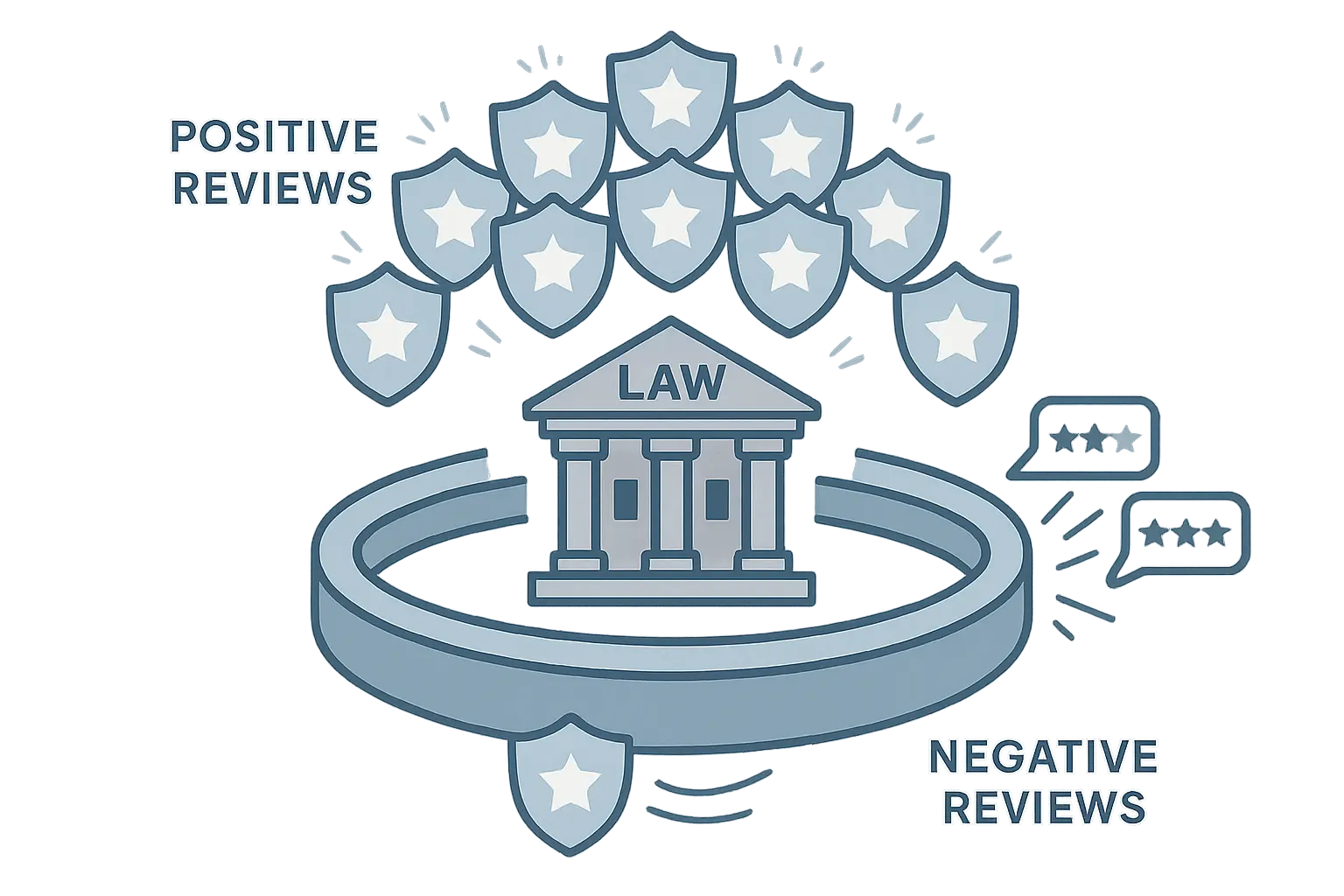
Part 2: The Proactive Defense – Responding to Negative Reviews with Integrity
A negative review is not a catastrophe; it’s an opportunity. It’s a chance to demonstrate professionalism, show you listen to feedback, and control the public narrative. Yet it’s a massive unforced error. The Clio Legal Trends Report reveals that only 36% of law firms respond to negative online reviews.
Ignoring a negative review allows a one-sided story to stand as fact. Responding improperly—by being defensive or violating client confidentiality—can create an even bigger ethical and reputational problem.
The Bar-Compliant Response Process:
-
Acknowledge and Empathize (Publicly): Post a brief, professional reply that thanks the reviewer for their feedback and acknowledges their frustration—without admitting fault or discussing specifics.
-
Take It Offline (Immediately): Your public response should always aim to move the conversation to a private channel. Provide a direct contact person, email, or phone number for them to discuss the matter further. This shows you take their concerns seriously.
-
Never, Ever Violate Confidentiality: Do not discuss any details of a client’s case, or even confirm that the person was a client. This is a critical ethical line that must never be crossed.
Sample Non-Confidential Response:
“Thank you for sharing your feedback. We take all client experiences very seriously. Our goal is to provide the highest level of service, and we regret that your experience did not meet expectations. We would appreciate the opportunity to discuss this with you directly. Please contact our office manager, [Name], at [Phone Number or Email].”
This response is professional, non-combative, and ethically sound. It shows prospective clients that you handle criticism with grace and integrity.
Part 3: The Strategic Showcase – Turning Positive Reviews into Your Best Marketing Asset
Getting a five-star review is only half the battle. The real power comes from leveraging that social proof across your digital assets to build authority and drive conversions.
Your website’s practice area pages are the perfect place to feature them. A potential client reading about your “Family Law” services will be far more compelled by a testimonial from a former family law client than by a generic statement.
This creates a powerful growth loop: positive reviews on third-party sites boost your visibility in local SEO, while embedding those same reviews on your website increases conversion rates from the traffic you attract.
Integrating reviews directly onto your pages provides context-specific social proof. It answers the visitor’s unspoken question: “Has this firm successfully helped someone like me with a problem like mine?”
The visual and psychological impact is significant. A page with authentic client testimonials feels more trustworthy and authoritative.
Integrating This SOP into a Broader Growth Strategy
A robust review management system is a cornerstone of a modern marketing strategy, but it works best when integrated into a holistic plan. For agencies, this SOP can be a key deliverable within a larger package of white-label SEO for agencies.
Starting with a comprehensive SEO audit can help you identify how a firm’s reputation, technical SEO, and content strategy intersect. This approach allows you to build a cohesive plan where great reviews amplify strong technical foundations and drive measurable growth for your legal clients.
Frequently Asked Questions (FAQ) about Legal Review Management
Can I offer a gift card or discount for a review?
Absolutely not. This is a direct violation of FTC guidelines and most state bar association rules on advertising. Reviews must be given freely, without coercion or compensation.
What if a review contains false information?
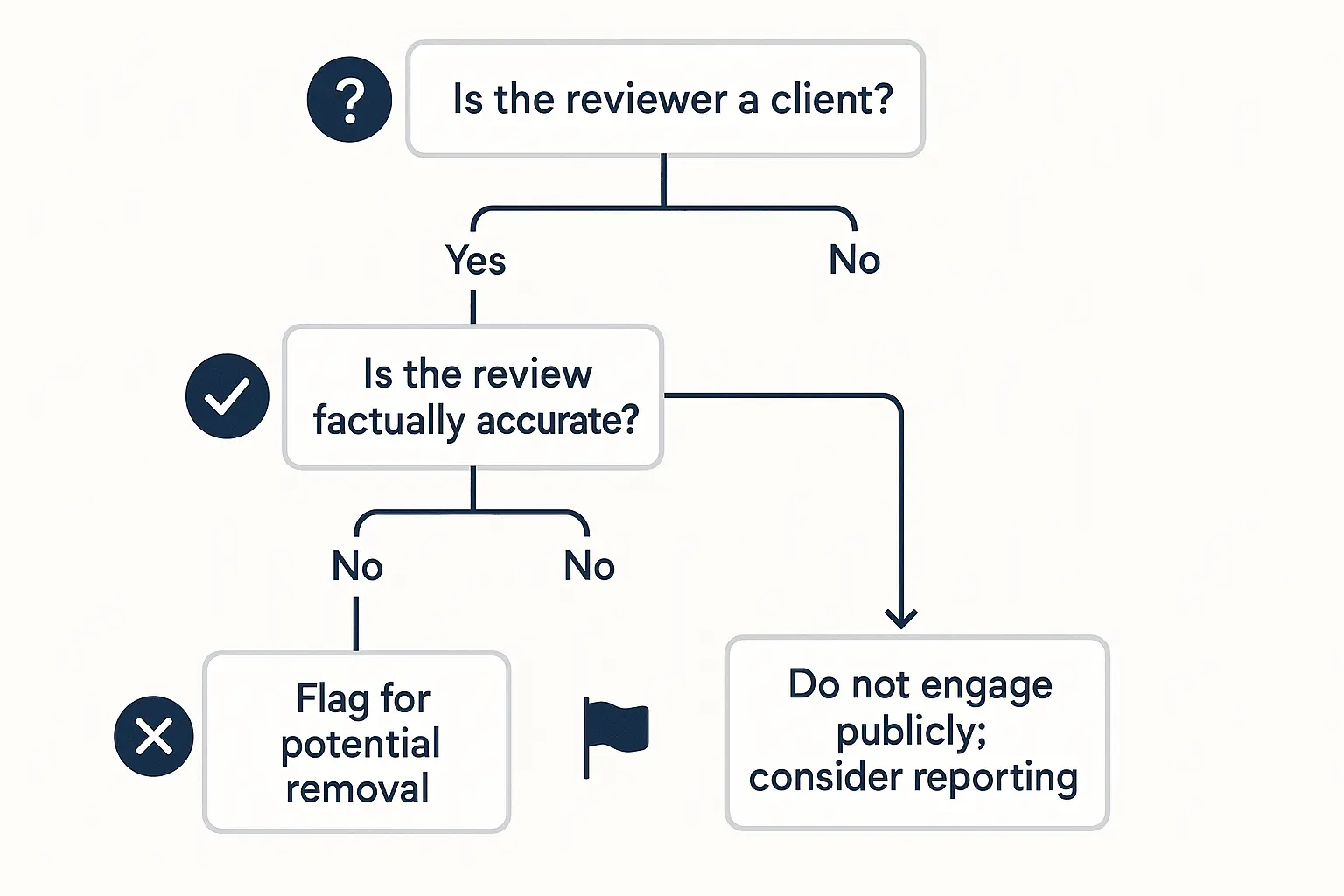
If a review is factually incorrect or libelous, you can flag it for removal on the platform (e.g., Google), though removal is not guaranteed. Your best defense is a calm, professional response and a steady stream of new, positive reviews to push the negative one down.
Which review platform is most important for lawyers?
While industry-specific sites like Avvo are valuable, your Google Business Profile is arguably the most critical. It heavily influences local search rankings and is often the first thing a potential client sees when searching for your firm.
What if a negative review is from someone who was never a client?
You can state this professionally in your response. For example: “Thank you for your feedback. Our records do not show you as a client of our firm. If you believe this is an error, please contact our office directly so we can address your concerns.”
From Reactive to Proactive: Taking Control of Your Firm’s Narrative
Your law firm’s online reputation is being built every day, with or without your input. By implementing a proactive system for review generation, management, and promotion, you can shift from a defensive posture to an offensive one.
You stop letting outdated or outlier reviews define your digital presence. Instead, you build a powerful, authentic, and ethically sound library of social proof that reflects the true quality of your work, turning casual browsers into confident clients.