

The calendar notification pops up: ‘Client SEO Review – 30 Mins.’ A PDF from your white-label partner, packed with charts and keyword lists, sits open on your desktop. If that gives you a knot in your stomach, you’re not alone.
You’re the face of the account, the trusted advisor. But how can you confidently explain performance data you didn’t personally compile?
This is a critical moment for any agency. With a staggering 53.3% of all website traffic coming from organic search, clients are understandably invested in their SEO performance. The pressure is on you to not just read the numbers but to tell the story behind them—a story of progress, strategy, and business growth.
The good news? You don’t need to be a technical SEO guru to be a strategic expert. This guide provides a framework for transforming those partner reports into your own powerful narrative, turning client meetings from stressful Q&As into confident, value-driven conversations.
The Challenge: Translating SEO Data into a Business Story
An SEO report is a collection of facts. It shows keyword movements, backlink acquisitions, and organic traffic trends. But clients don’t buy facts; they invest in outcomes. As you present, they’re asking silent questions:
‘So what? What does a #5 ranking mean for my sales?’
‘Are we actually getting a return on this investment?’
‘What are you doing to get us ahead of our competitors?’
The common trap is becoming a ‘data-reader,’ simply listing metrics from the page. This opens the door to tricky technical questions and can make you feel like a messenger, not a strategist. The stakes are high: improving SEO is a top priority for 61% of marketers, and they are looking to you for leadership.
The solution is a mindset shift. Your job isn’t to explain how the engine was built, but to show the client where the car is going and why it’s the best route.
From Data-Reader to Strategic Advisor: The Mindset Shift
As an agency, your unique value lies in your deep understanding of the client’s business, while your white-label SEO partner brings expertise in search engine algorithms. The magic happens when you bridge the two.
Your role is to be the translator—the one who connects a ‘decrease in bounce rate on key service pages’ to ‘a more engaged audience that’s closer to converting.’
That’s where the right kind of SEO outsourcing for agencies proves its worth. It’s not about offloading tasks; it’s about gaining a powerful execution engine that frees you to focus on strategy and client relationships. You maintain control and own the narrative, delivering the strategic insights that make you indispensable.
The Secret Weapon: Your Pre-Briefing with Your SEO Partner
Confidence doesn’t come from memorizing definitions; it comes from preparation. The single most important step in owning your SEO narrative is the internal pre-briefing with your partner before you ever speak to the client.
This isn’t just a handover. It’s a strategy huddle. It’s your chance to ask the ‘dumb’ questions, pressure-test the data, and align on the story you’re going to tell. A true partner won’t just expect this meeting—they will value it, because your success is their success.
The 4-P Framework for a Bulletproof Pre-Briefing
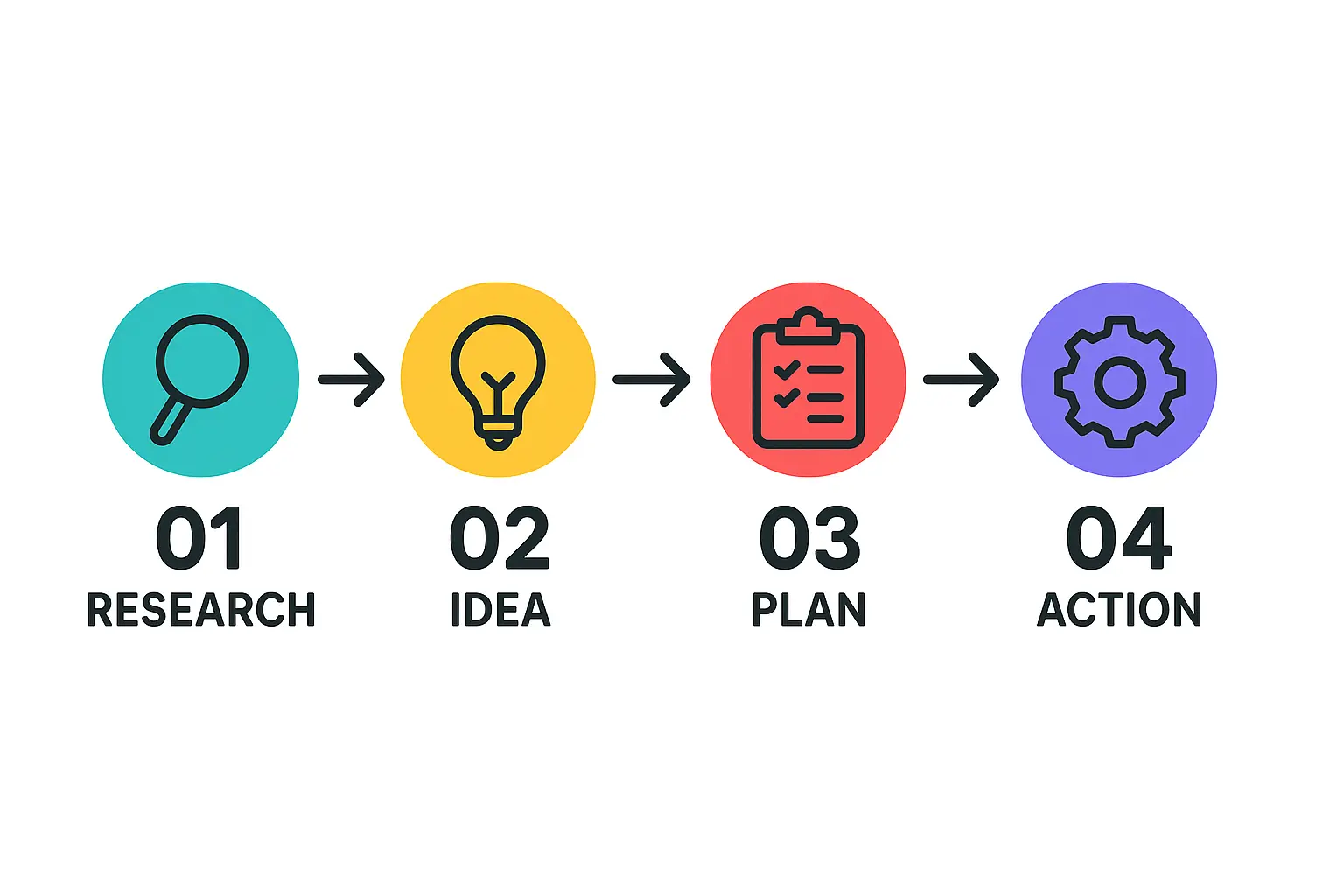
To make these huddles efficient and effective, use this simple framework. Ask your partner to walk you through these four areas:
-
Progress: What are the wins, big and small? Where did we see positive momentum?
Example Questions: ‘Which keywords saw the biggest positive jump?’ ‘Did our technical fixes improve site speed?’ ‘Show me the blog post that brought in the most traffic.’ -
Problems: What were the challenges or setbacks? What didn’t go as planned?
Example Questions: ‘Why did we see a dip in traffic from this channel?’ ‘A competitor outranked us for our target term. What’s their strategy?’ ‘Was there a Google algorithm update that impacted us?’ -
Plans: What is the strategic focus for the next 30-60 days?
Example Questions: ‘What are the top three priorities for next month?’ ‘Which new content pieces are in the pipeline?’ ‘What’s our plan to address the ‘Problems’ we just discussed?’ -
Performance (KPIs): How does this activity connect to the client’s business goals?
Example Questions: ‘How many goal completions (e.g., form fills, downloads) can we attribute to organic search?’ ‘How is this work contributing to lead generation?’ ‘What is the overall ROI looking like?’
That last point is your cornerstone. Your job is to prove the value of the investment, armed with their data and industry-wide proof points, like the finding that 49% of marketers report organic search has the best ROI of any channel.
Structuring Your Client Presentation for Maximum Impact
Armed with insights from your 4-P pre-briefing, you can now structure a presentation that tells a clear and compelling story.
- Start with the ‘So What?’
Don’t open with a keyword ranking chart. Open with the business outcome.
Instead of: ‘Our ranking for ‘blue widgets’ went from 12 to 7.’
Try: ‘This month, we captured more of the market for ‘blue widgets,’ putting your brand in front of hundreds of new potential customers. Let me show you how our content strategy made that happen.’
- Use the 4-Ps as Your Story Arc
Structure your presentation around the framework. It’s a natural narrative that clients can easily follow.
Progress: Share the wins and celebrate the team’s collective effort.
Problems: Address any dips transparently. This builds immense trust. Explaining a drop due to industry-wide algorithm volatility shows you’re on top of the trends, not making excuses.
Plans: Proactively share what’s next. It shows you’re always thinking ahead and keeps the client excited about the future.
Performance: End by tying everything back to the KPIs that matter—leads, sales, and revenue growth. For B2B clients, noting that 61% of their peers generate more leads from SEO than any other initiative powerfully frames the value.
- Anticipate the Tough Questions
Your pre-briefing is your chance to get answers in advance. Here are a few common ones:
‘Why aren’t we #1 yet?’ Explain that SEO is a long-term strategy and that being on the first page is a massive win, as 75% of users never scroll past the first page. Focus on the trend of improvement and the business value being generated right now.
‘Why did our traffic dip last week?’ Your partner should have identified this in the pre-briefing. It could be seasonality, a competitor’s campaign, or a technical glitch. Having the answer ready transforms a moment of panic into a moment of authority.
‘What is ‘keyword cannibalization’?’ Ask your partner to give you a simple, jargon-free definition for any technical term in the report (e.g., ‘It’s when two of our own pages are accidentally competing for the same search term, and we have a plan to fix it.’).

Beyond the Report: Becoming an Indispensable Partner
When you confidently present SEO reports, you do more than just retain a client. You elevate your agency’s role from a service provider to a strategic growth partner, proving you can drive real business results.
This approach allows your agency to scale SEO without hiring a full-time, in-house specialist, yet still deliver the high-level strategic counsel clients crave. A partnership built on clear communication and a shared goal of client success lets you offer powerful, AI-driven SEO insights under your own brand.
Mastering the narrative of an SEO report is a skill. It takes practice, but it starts with a simple framework and a commitment to preparation. In doing so, you turn data into dialogue, reports into roadmaps, and a partnership into a powerful engine for growth.
Frequently Asked Questions (FAQ)
What if a client asks a technical question I can’t answer on the spot?
It’s perfectly fine to say, ‘That’s an excellent, specific question. Let me consult with my technical team to get you a detailed answer, and I’ll include it in our follow-up email.’ It shows you’re thorough and doesn’t compromise your authority.
How often should I present SEO reports?
Monthly is standard for most clients. This frequency is regular enough to show progress and make strategic adjustments without overwhelming them with data.
What’s the most important metric to focus on for a client who is new to SEO?
Start with organic traffic growth and keyword rankings for their top 5-10 ‘money’ terms. As the campaign matures, shift the focus toward conversion-oriented metrics like leads, goal completions, and organic-driven revenue.
How do I handle a report that shows a dip in performance?
Address it head-on at the beginning of the meeting. Use the ‘Problems’ part of the 4-P framework. Explain what happened, what you believe caused it (e.g., algorithm update, competitor action), and your plan to address it. Transparency builds trust far more than hiding bad news.
Can I really offer SEO without an in-house team?
Absolutely. That’s what modern white-label SEO services make possible. A true partner acts as an invisible extension of your team, providing the execution and technical depth while you focus on the client relationship and big-picture strategy.