
The Productivity Tax: Is Manual Research Costing Your Sales Team Its Quota?
Your top sales rep, Sarah, just had another “busy” week. Her calendar was full and her keyboard was clicking—she was neck-deep in work. But when you check the CRM, her call volume is down and her pipeline looks thin. What’s going on?
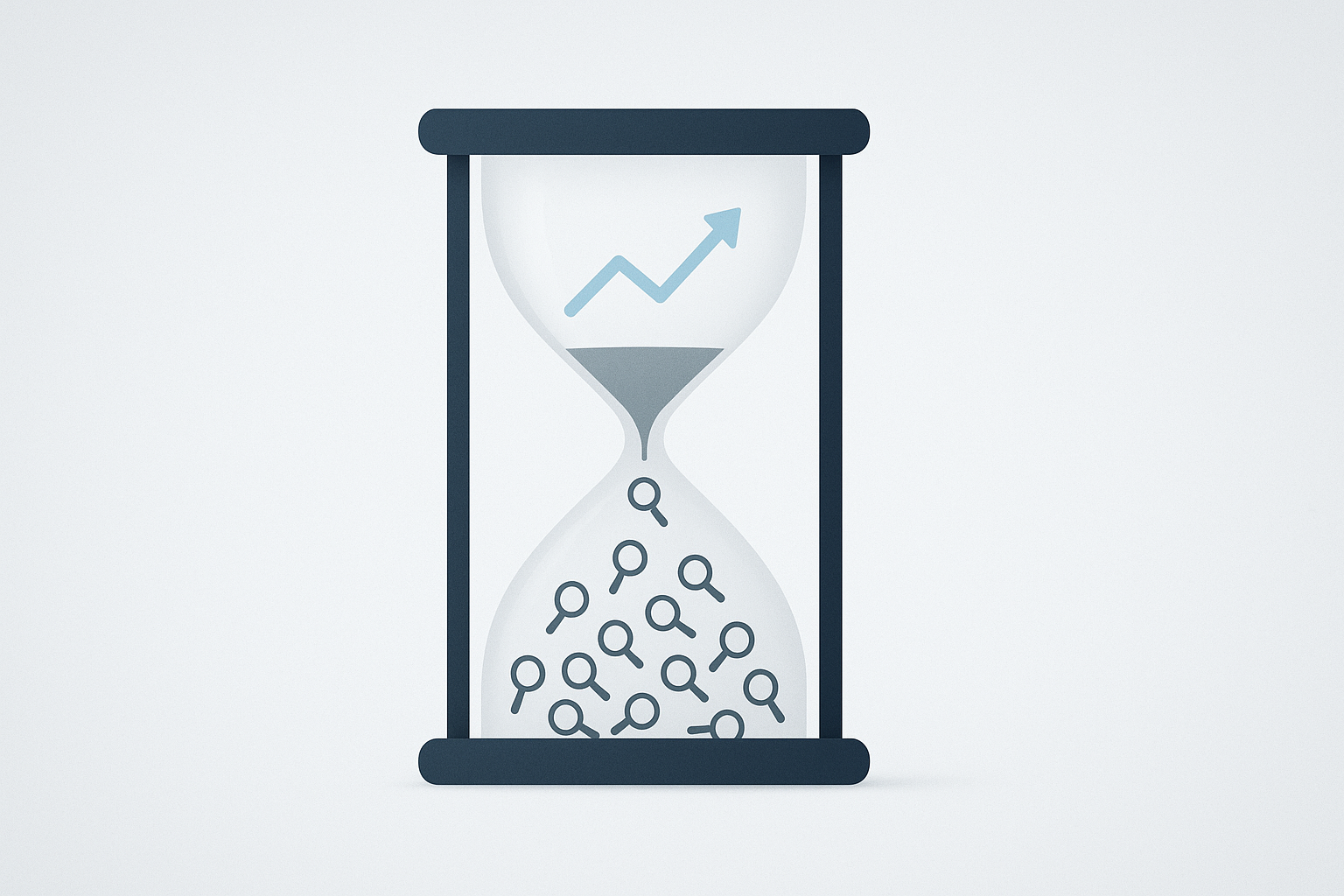
She’s not being lazy. She’s paying the Productivity Tax.
It’s the invisible cost of time-consuming manual tasks that chip away at a salesperson’s most valuable asset: time for selling. And the single biggest offender is manual lead research.
According to Gartner, sales reps spend a staggering 15% of their time just researching prospects. Considering they spend only 28% of their week actually selling, the imbalance is clear. That’s a massive portion of your payroll spent on prep work, not performance.
This isn’t a minor inefficiency; it’s a direct threat to quota attainment. Let’s break down the real cost.
What is the Sales Productivity Tax?
Think of the Productivity Tax as every non-selling activity a rep has to do just to get to the starting line of a conversation. It’s the time spent toggling between browser tabs, digging through LinkedIn profiles, deciphering old CRM notes, and searching for a relevant hook for an email.
A stunning 54% of sales reps say they spend too much time on these research activities. They feel the drain, even if it isn’t explicitly tracked on a timesheet.
This tax has several costs:
- Time Cost: The most obvious cost. An average of 6 hours per week per rep is lost to research.
- Opportunity Cost: Every hour spent researching is an hour not spent prospecting, nurturing relationships, or closing deals.
- Cognitive Cost: Switching between a dozen tabs, a CRM, and sales enablement tools creates mental friction. 3 out of 4 reps report their sales tech stack is overwhelming, leading to burnout and decreased focus.
The Hidden P&L Impact of “Doing Your Homework”
Let’s translate this into dollars and cents.
Imagine a sales rep with a $120,000 On-Target Earnings (OTE), which works out to roughly $60 per hour. If they spend the average of six hours a week on manual research, you’re paying them:
$360 per week, per rep, just to find information.
For a team of 10 reps, that’s $3,600 a week. Over a year, you’re looking at more than $187,000 in salary spent on an activity that produces zero revenue. It’s a foundational task, but when done manually, it becomes a financial black hole.
The Direct Line Between Wasted Time and Missed Quotas
Here’s the paradox: research is undeniably crucial for success. Top-performing reps—those who consistently exceed their quota—are 2.7 times more likely to always research prospects before outreach. Personalization, which is impossible without research, is proven to improve click-through rates by 14%.
So, research is good, right?
Yes, but it’s the method that creates the problem. The value of research follows a law of diminishing returns: the first 15 minutes might uncover critical insights, while the next 45 often yield only trivial details at a massive opportunity cost.
When manual research consumes too much time, it creates a domino effect that puts quotas at risk:
- Less Selling Time: More time spent on research directly translates to less time for calls, demos, and follow-ups.
- Lower Activity Volume: It takes an average of 8 cold call attempts to even reach a prospect. If research is eating into call blocks, reps can’t hit the volume needed to build a healthy pipeline.
- Stagnant Pipeline: Fewer conversations mean fewer opportunities created, resulting in a thinner, less predictable pipeline.
- Missed Quotas: The final, inevitable result. The team is busy, but not productive, and the numbers show it.
The goal isn’t to eliminate research—it’s to eliminate the inefficiency by transforming how your team accesses and uses information.
How to Reclaim Selling Time Without Sacrificing Quality
Beating the Productivity Tax doesn’t mean cutting corners; it means working smarter. Forward-thinking companies are already moving away from manual brute force and toward intelligent, automated systems.
Here are a few principles you can apply today:
- Define a “Minimum Viable Insight” Profile: Work with your team to identify the five to seven key data points they absolutely need for personalized outreach. This prevents them from boiling the ocean and could include recent company news, a key technology they use, a recent job change, or a shared connection. Standardize this profile so everyone knows when “good enough” is reached.
- Focus on Signals, Not Just Data: Teach your team to hunt for buying signals, not just biographical facts. A company hiring for a specific role is a signal. A funding announcement is a signal. A VP complaining about a problem on LinkedIn is a huge signal. This shifts the goal from data collection to opportunity identification.
- Build a Centralized Intelligence System: Research is time-consuming because information is scattered. A robust AI Visibility strategy isn’t just for your customers; it’s for your internal teams, too. By structuring your own data and leveraging tools that consolidate external data, you can create a single source of truth that drastically reduces manual searching.
The future of high-performance sales lies in equipping reps with the right insights at the right time, without the manual tax.
Frequently Asked Questions (FAQ)
Q1: Isn’t research a necessary part of a quality sales process?
Absolutely. The issue isn’t the act of research, but the inefficient manual process. The goal is to evolve from time-consuming data gathering to near-instant insight delivery. Effective reps use surgically precise information; ineffective reps get lost in a sea of data.
Q2: My reps already use tools like LinkedIn Sales Navigator. Isn’t that enough?
LinkedIn is a powerful tool, and data shows top sellers spend around 6 hours a week on the platform. However, it’s just one piece of the puzzle. Relying on it alone requires significant manual effort to cross-reference with your CRM, company news, and other sources. It’s an important ingredient, but not a complete solution.
Q3: Can’t we just solve this with more sales tech?
Not necessarily. With 3 out of 4 reps already feeling overwhelmed by their tech stacks, adding another point solution can often make the problem worse. The key isn’t more tools, but better, more integrated systems that automate the flow of information. Many companies are now exploring how to add AI search visibility as a new service or internal function to streamline how reps find and use intelligence across the organization.
Q4: How much research is too much?
There isn’t a universal number, but the data provides a clear warning sign. When research consistently consumes more than 15% of a rep’s time and their active selling time dips below 30%, you have a costly imbalance that almost certainly impacts their ability to hit quota.
From Awareness to Action
The Productivity Tax is silently draining your sales team’s potential, one browser tab at a time. It turns your highly paid closers into low-value data miners, directly causing inconsistent quota attainment.
By recognizing these hidden costs and shifting your team’s focus from manual data collection to efficient insight generation, you can reclaim those lost hours. The future of sales isn’t about working harder; it’s about empowering your team with smarter systems that deliver the intelligence they need to win.