
Is your company’s success on LinkedIn resting on the shoulders of one or two top performers? For many businesses, it is. These sales heroes seem to have a magic touch, turning connections into conversations and conversations into revenue. But their success is often intuitive, unrepeatable, and fragile. If they have a bad month—or worse, if they leave—the pipeline dries up.
This highlights a fundamental challenge for any enterprise revenue team: individual heroics don’t scale. Relying on scattered tactics and inconsistent messaging without a shared process is like trying to build a skyscraper without a blueprint. You might get a few floors up, but the structure is unstable.
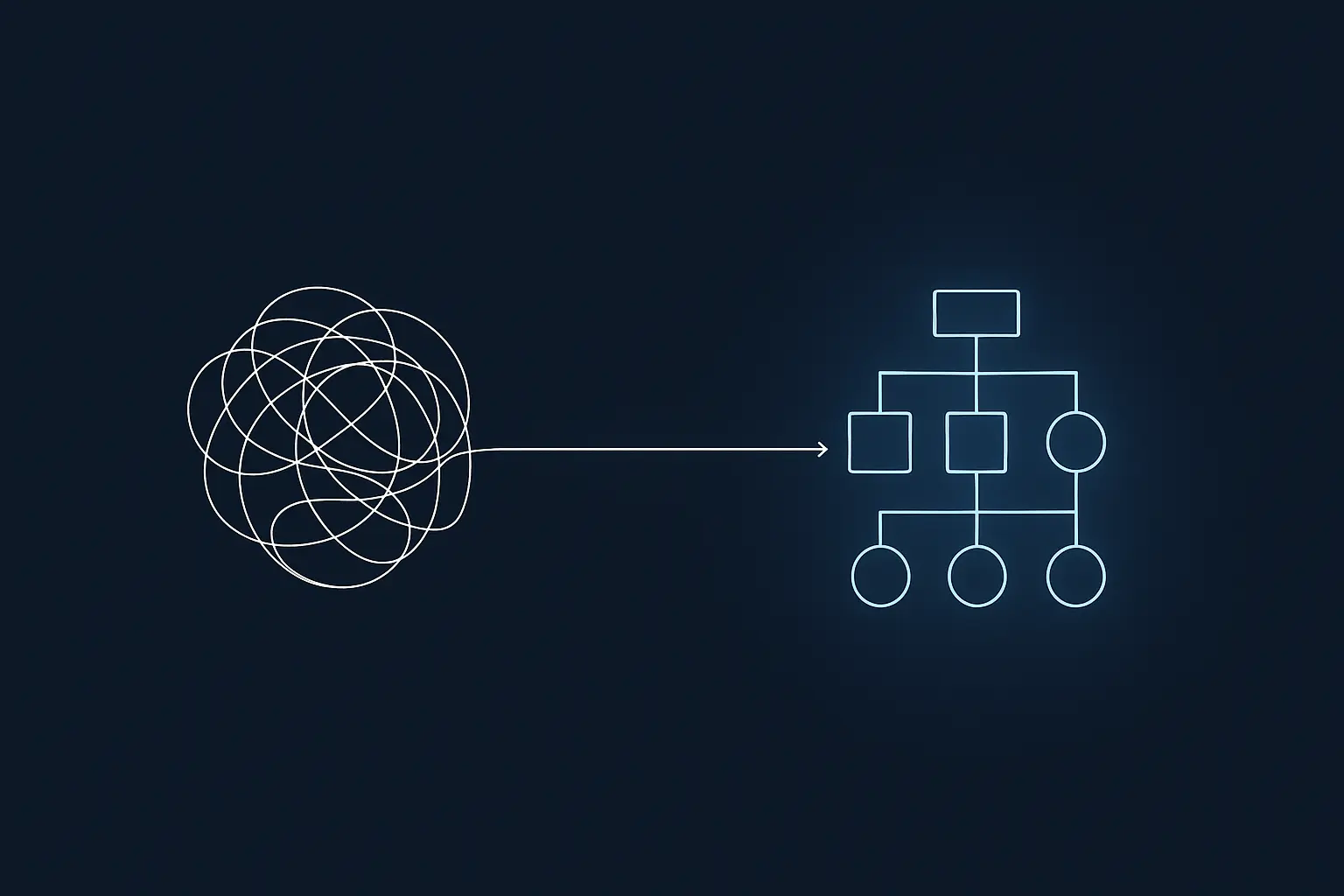
The solution isn’t more scripts or another growth hack. It’s transforming LinkedIn from a collection of individual profiles into a cohesive, predictable, and measurable revenue engine. You need an Operating System.
From Random Acts of Sales to a Predictable Revenue Channel
The data is clear: LinkedIn is the undisputed champion of B2B engagement, driving over 80% of all B2B leads from social media. Salespeople who use social selling effectively are also 51% more likely to exceed their quota. The opportunity is massive.
Yet, most sales leaders approach LinkedIn with the tactical mindset promoted by countless blog posts, focusing on scripts, templates, and profile tweaks. While these are useful components, they are ultimately disconnected parts of a much larger machine. This approach leaves a critical gap that competitors also fail to address: the operational how of scaling success across an entire enterprise.
An Operating System moves beyond tactics. It’s a strategic framework that establishes governance, workflows, and clear roles to ensure every action on the platform contributes to a single, measurable goal: predictable revenue growth.
The 5 Core Components of a LinkedIn Operating System
A robust LinkedIn Operating System (OS) is built on five interconnected pillars. Each works in concert to eliminate guesswork, drive consistency, and create a scalable foundation for your entire revenue team. It transforms your team’s LinkedIn presence from a liability into a managed, high-performance asset.
-
Governance: The foundational rules of engagement that protect your brand and ensure compliance.
-
Workflows: Standardized, repeatable processes that turn prospecting and outreach into a science.
-
Role-Based Execution: A clear definition of who does what, eliminating overlap and ensuring accountability.
-
Technology & Automation: The tech stack that powers the system, saving time and providing critical data.
-
Measurement & Optimization: The KPIs and reporting that prove ROI and drive continuous improvement.
Here’s a closer look at each pillar.
Pillar 1: Governance — The Rules of the Road
Without governance, your team’s activity on LinkedIn is a brand risk. Inconsistent profiles, off-message comments, and non-compliant outreach can do more harm than good. Governance establishes the guardrails that allow your team to operate with speed and confidence.
Key Actions:
-
Define Profile Standards: Create a template for headlines, summary sections, and experience descriptions that aligns with company messaging.
-
Establish a Brand Voice Guide: Document the tone, language, and style reps should use when posting, commenting, and messaging prospects.
-
Set Rules of Engagement: Clearly outline what is and isn’t acceptable, including guidelines on connection request notes, follow-up cadence, and handling negative interactions.
-
Ensure Compliance: For regulated industries, codify legal and compliance requirements for all platform communication.
Pillar 2: Workflows — Standardizing Excellence
Your top performers succeed because they follow a process, whether they realize it or not. Workflows document, refine, and distribute that process so everyone on the team can execute at a high level.
Key Actions:
-
Map the Prospecting Journey: Define the step-by-step process from identifying an ideal customer in Sales Navigator to scheduling the first conversation.
-
Standardize Messaging Sequences: Develop a library of approved, multi-touch messaging templates for different personas and scenarios. This isn’t about robotic copy-pasting; it’s about providing a proven starting point for personalization.
-
Create Handoff Protocols: Design a seamless process for passing qualified leads from an SDR to an Account Executive, ensuring no context is lost and the prospect has a flawless experience.
Pillar 3: Role-Based Execution — Defining Who Does What
In a scalable system, every player knows their position. A LinkedIn OS fails when SDRs and AEs are tripping over each other, or when sales managers aren’t equipped to coach effectively.
Key Responsibilities:
-
Sales Development Reps (SDRs): Focus on top-of-funnel activities. Their primary role is identifying and engaging new prospects, building initial rapport, and booking qualified meetings.
-
Account Executives (AEs): Concentrate on mid-to-bottom-funnel engagement. They use LinkedIn to nurture relationships within active opportunities, connect with decision-making committees, and share relevant insights to build trust.
-
Sales Managers: Their role shifts from individual seller to system operator. They are responsible for coaching reps on the workflows, monitoring performance dashboards, and identifying opportunities for process optimization.
Pillar 4: Technology & Automation — The System’s Backbone
Technology is the force multiplier for your Operating System. The right tools automate low-value tasks, provide critical intelligence, and ensure your workflows are executed consistently.
The Essential Stack:
-
LinkedIn Sales Navigator: Non-negotiable for identifying prospects, saving accounts, and understanding organizational structures.
-
CRM Integration: Your single source of truth. All LinkedIn activity must be logged in your CRM for complete visibility and accurate reporting.
-
Engagement & Automation Tools: Platforms that help manage messaging sequences and data enrichment. When used wisely, these tools can leverage AI-enhanced personalization to achieve reply rates over 10.3%—more than double the typical average.
To ensure your technology supports your strategy—not the other way around—explore your complete guide to building a social selling tech stack.
Pillar 5: Measurement & Optimization — If You Can’t Measure It, You Can’t Scale It
An effective LinkedIn OS moves beyond vanity metrics like profile views and connection numbers to focus on what truly matters: business outcomes.
Key Performance Indicators (KPIs):
-
Activity Metrics (Leading Indicators): New relevant connections per week, personalized messages sent, conversations initiated.
-
Pipeline Metrics (Business Impact): Number of qualified meetings booked, pipeline from LinkedIn-sourced opportunities, deal velocity.
-
Conversion Rates: The percentage of conversations that become meetings, and the percentage of meetings that become qualified pipeline.
By tracking these KPIs, you can diagnose bottlenecks, identify coaching opportunities, and make data-driven decisions to refine your system. Understanding this data is the first step in how to measure the true ROI of your social selling program.
Implementing Your LinkedIn Operating System: A 4-Step Rollout
Deploying a system like this doesn’t have to be a monumental task. A phased approach ensures buy-in and minimizes disruption.
-
Audit & Document: Interview your top performers. What are they doing that works? Document their existing processes to create your Version 1.0 workflows.
-
Design & Build: Formalize the five pillars. Create the governance documents, workflow maps, and KPI dashboards. Configure your tech stack to support the system.
-
Train & Launch: Conduct a formal training session with the entire team. Explain the why behind the OS, not just the what. Role-play the workflows and ensure everyone is comfortable with the technology.
-
Measure & Iterate: Launch the system and begin tracking performance. Hold weekly or bi-weekly meetings to review data, celebrate wins, and identify areas for improvement. The OS is a living system that should evolve.
Frequently Asked Questions (FAQ)
This seems too complex. Where do we even start?
Start with your biggest pain point. Is it inconsistent branding? Begin with Governance. Is your lead follow-up chaotic? Start by mapping a single Workflow. The key is to start small, prove value with one part of the system, and then expand.
Won’t a system like this stifle our reps’ creativity and personalization?
On the contrary. A well-designed Operating System enhances it by automating repetitive, low-value tasks like basic prospecting and follow-up reminders. This frees up your reps’ time and mental energy to focus on high-value activities: deeply personalizing messages, researching a prospect’s business challenges, and having strategic conversations. The framework provides the baseline for excellence, not the ceiling.
How is this different from just buying a list of scripts?
Scripts are tactics; an Operating System is a strategy. A script tells a rep what to say in a single message. An OS provides the entire strategic context: who to contact (Role-Based Execution), when to reach out (Workflows), what brand voice to use (Governance), how to track success (Measurement), and which tools to leverage (Technology). It’s the difference between giving someone a fish and teaching them how to build a commercial fishing operation.
Build Your Revenue Engine, Not Just Your Contact List
Transforming your LinkedIn strategy from a series of individual efforts into a cohesive Operating System is the single most impactful step you can take to create a predictable, scalable revenue channel. It’s the move from hoping for success to engineering it.
By establishing a clear framework of governance, workflows, and measurement, you de-risk your pipeline, empower your entire team to perform like A-players, and build a competitive advantage that can’t be replicated with a simple list of templates.
Ready to move beyond individual heroics and build a true revenue engine? Let’s talk about designing the right LinkedIn Operating System for your team.