
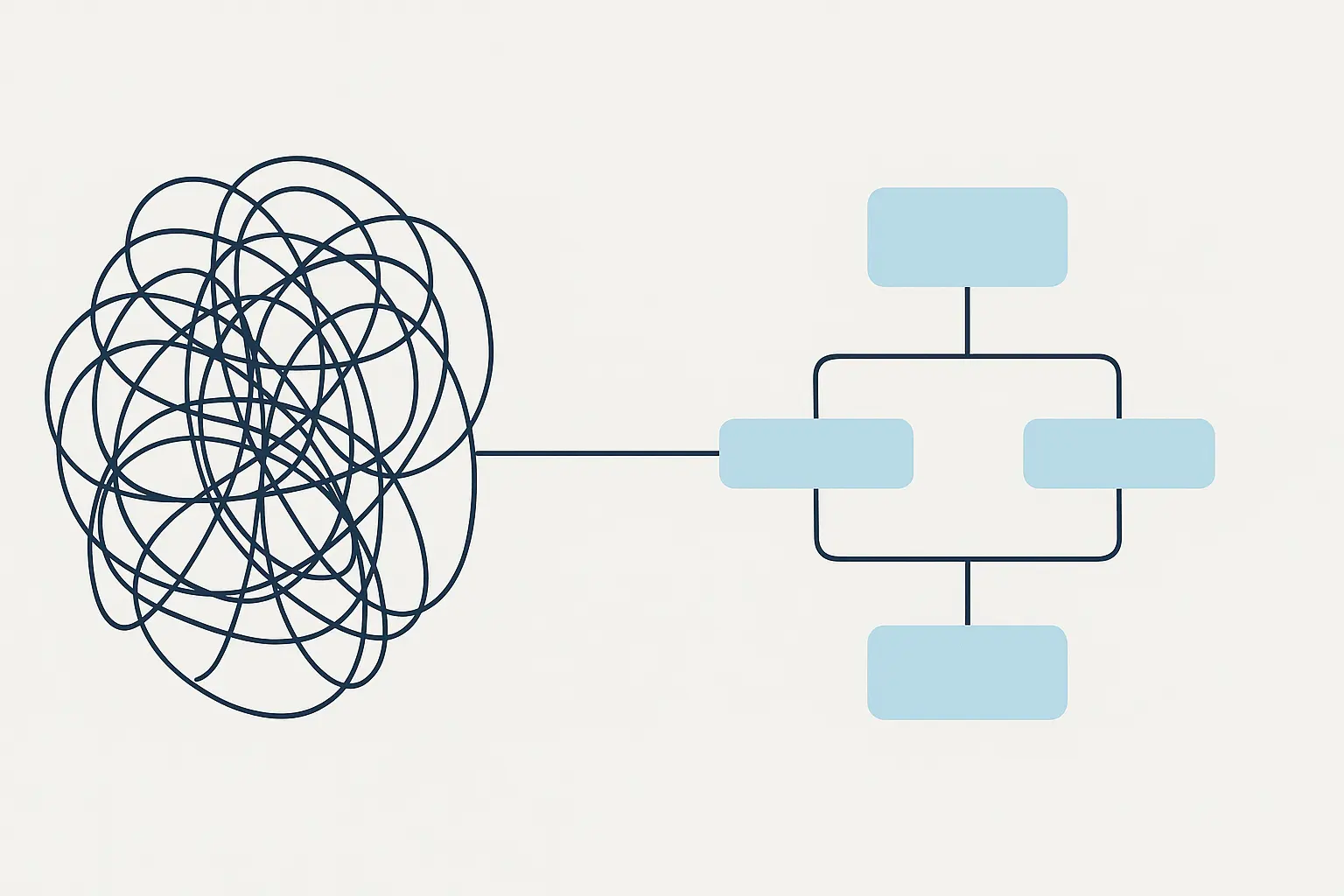
It’s 8 PM on a Friday. Your biggest client just called in a panic—their website is down, showing a 503 error. Your in-house team is offline for the weekend. Your white-label SEO partner… who do you even contact? Do you send an email to your day-to-day contact and hope for the best?
If this scenario makes your stomach clench, you’re not alone. In the fast-paced world of agency life, ambiguity is the enemy. But partnerships rarely break down over a single catastrophic event. It’s more often a series of small miscommunications that erode trust and efficiency—a problem so common that the Project Management Institute (PMI) found poor communication contributes to a staggering 56% of failed projects.
For agencies relying on white-label partners, a clear communication plan isn’t just a nice-to-have; it’s the bedrock of a scalable, profitable relationship. Without one, you’re left scrambling.
The Chaos of Ad-Hoc Communication
When there’s no defined process for handling issues, communication becomes a frantic scramble. Urgent requests get lost in a sea of routine emails, and minor questions get escalated to senior strategists, wasting everyone’s time.
This unstructured approach is the exact opposite of what clients expect. Research from Zendesk shows that 90% of customers rate an ‘immediate’ response as important or very important when they have a question. Forrester backs this up, noting that 77% of consumers say valuing their time is the most important thing a company can do for them.
When your white-label partner is an extension of your team, that expectation of speed and clarity extends to them—and a chaotic system simply can’t deliver.
The solution isn’t just naming a single point of contact. It’s building a smart, tiered system that matches the urgency of an issue with the right person and the right channel. It’s creating an escalation matrix.
What is an Escalation Matrix?
Think of an escalation matrix as a clear roadmap for resolving problems. It’s a simple framework that defines who to contact, for what type of issue, through which channel, and the expected response time.
It transforms panicked guesswork into a calm, repeatable process. Instead of asking, ‘Who do I talk to about this?!’ your team can simply consult the matrix and know the exact next step. This simple document is one of the most powerful tools in your partnership toolkit, ensuring there’s always a clear path forward, from a simple reporting question to a site-down emergency.
For agencies, this isn’t just about internal efficiency; it’s about protecting your client relationships. When you can resolve issues quickly and confidently, you reinforce your value. That’s why, according to HubSpot, 93% of customers are likely to make repeat purchases with companies offering excellent service.
A 3-Tier Framework for Your Escalation Matrix
A robust escalation matrix doesn’t need to be complicated. A simple three-tier structure covers the vast majority of scenarios you’ll encounter with your SEO partner.
Tier 1: Routine & Non-Urgent Inquiries
These are the day-to-day communications that keep the wheels turning. They’re important but don’t require an immediate, all-hands-on-deck response.
- Examples: Clarification on a monthly report, questions about a content brief, scheduling a strategy call, updates on keyword rankings.
- Who to Contact: Your dedicated Account Manager or primary point of contact.
- Communication Channel: Email or a shared project management tool (like Asana, Monday, or Basecamp).
- Expected Response Time: Within one business day (e.g., 24 hours).
Tier 2: Urgent but Not Critical Issues
These issues have a direct impact on campaign performance or client satisfaction and require a faster response than routine queries. They aren’t emergencies, but they can’t wait until tomorrow.
- Examples: A sudden, significant drop in rankings for key terms, an alert from Google Search Console, a client request for a strategy pivot with a tight deadline, or KPI tracking issues.
- Who to Contact: A Senior SEO Strategist or the designated Team Lead.
- Communication Channel: A priority channel like a dedicated Slack channel or an email marked ‘URGENT.’
- Expected Response Time: Within a few business hours (e.g., 4-6 hours).
Tier 3: Critical Incidents & Emergencies
This is the red-alert level. These are issues that pose an immediate threat to your client’s business, your agency’s reputation, or the integrity of the website.
- Examples: Website is down or inaccessible, suspected security breach or hacking, a manual action penalty from Google, a suspected negative SEO attack.
- Who to Contact: The partner’s Head of Operations or a pre-defined emergency contact.
- Communication Channel: A direct phone call to a dedicated emergency line.
- Expected Response Time: Immediate acknowledgment within the hour (e.g., 30-60 minutes), with a plan of action to follow shortly after.
Beyond the Matrix: Setting the Foundation for Success
An escalation matrix works best when it’s part of a broader communication strategy. And while technology is changing the game—Gartner predicts that chatbots will become a primary service channel for 25% of organizations by 2027—critical incidents still demand clear, human-led protocols.
When onboarding a new partner, establish these protocols from day one. Discuss and document the following:
- Defining ‘Urgency’: What one person considers an emergency, another might see as merely urgent. Agree on clear definitions for each tier.
- After-Hours & Weekend Support: What does the emergency protocol look like outside of standard business hours?
- Tool Alignment: Agree on which project management tools, chat platforms, and reporting dashboards you’ll use to centralize information.
The process of creating this matrix is itself a powerful litmus test. A partner who readily engages in this conversation demonstrates operational maturity, while one who can’t provide clear answers may not have the processes in place to support your agency as it scales.
This level of foresight is a key differentiator when choosing the right white-label SEO partner. You aren’t just buying a service; you’re investing in a system that needs to be resilient under pressure.
Frequently Asked Questions (FAQ)
What if my partner doesn’t have a formal escalation matrix?
This is a red flag, but it can also be an opportunity. Propose creating one together using the three-tier framework. Their willingness to collaborate and formalize a process will tell you a lot about them as a partner. If they resist, it may signal a lack of structure that could cause problems later.
How often should we review the escalation plan?
Review it quarterly or whenever there are personnel changes on either your team or your partner’s. The goal is to ensure the contact information is always current and the process remains relevant.
Who is responsible for creating the matrix?
It should be a collaborative effort, but a mature white-label partner should come to the table with a template or standard operating procedure already in place. Your role as the agency is to review it, ask questions, and ensure it aligns with your client service standards.
Isn’t having a single point of contact simpler?
It seems simpler, but it creates a single point of failure. If that person is sick, on vacation, or simply overwhelmed, communication breaks down. A matrix ensures there is always a clear path to resolution, providing the redundancy and reliability that protect your business.
From Planning for Problems to Building for Success
An escalation matrix isn’t about expecting things to go wrong. It’s about building a partnership so strong, transparent, and resilient that you can handle any challenge that comes your way. It replaces anxiety with assurance and chaos with clarity.
By establishing this framework upfront, you’re not just planning for problems—you’re building the operational backbone for a successful, long-term collaboration that allows your agency to scale with confidence.