

You just signed a new client. The contract is inked, the kickoff call is done, and a wave of excitement—and pressure—washes over your team.
You have 30 days to prove you were the right choice. Thirty days to turn promises into a plan.
For many agencies, this is where the frantic scramble begins: a marathon of keyword research, endless spreadsheets, and the painstaking process of manually grouping terms into some semblance of a strategy. It’s a race against the clock.
But what if you could change the dynamic? What if, instead of delivering a long list of keywords, you could present a comprehensive, 12-month content roadmap in that first month? A visual blueprint that makes your client say, “Wow, they really get it.”
According to a HubSpot Agency Report, agencies that present a comprehensive strategy upfront see a 30% higher client retention rate. The first impression isn’t just important; it’s profitable. Automated topical map generation transforms your onboarding from a stressful scramble into a strategic masterpiece.
The Old Way: Drowning in a Sea of Keywords
Let’s be honest: traditional content strategy planning is a bottleneck. It often looks something like this:
-
Brainstorming: You talk to the client and come up with a list of “seed” keywords.
-
Massive Export: You plug those seeds into an SEO tool and export thousands of keyword variations.
-
The Spreadsheet Maze: You and your team spend hours, sometimes weeks, manually sifting through this data, trying to group related terms and identify content ideas.
An Ahrefs study found that SEO professionals spend nearly 40% of their time on manual tasks like this. It’s not just inefficient; it’s a recipe for burnout and missed opportunities.
This process often results in a strategy that feels more like a loose collection of ideas than a cohesive plan. That makes it incredibly difficult to demonstrate long-term value to a new client.
A Better Way: Thinking in Maps, Not Lists
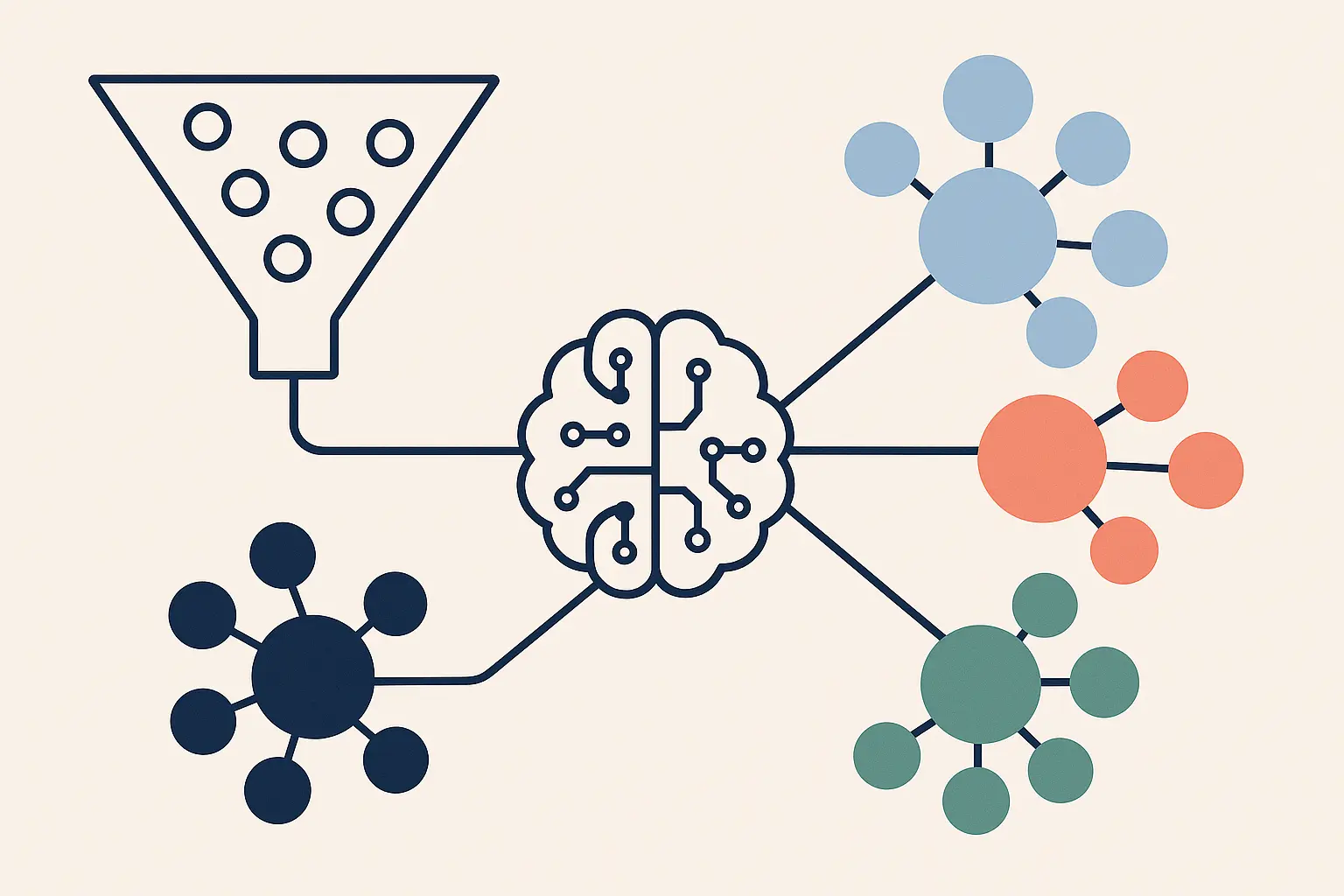
The goal of modern SEO isn’t just to rank for individual keywords. It’s to establish topical authority—to become the go-to resource for an entire subject area in Google’s eyes. A topical map is the blueprint for achieving this.
Think of it like building a city. You don’t just randomly place buildings (your articles). You plan districts (pillar pages), neighborhoods (cluster content), and the roads that connect them all (internal links).
A topical map organizes your content strategy into:
-
Pillars: Broad, foundational topics that cover a core aspect of your client’s business (e.g., “Digital Marketing for Small Business”).
-
Clusters: Deeper-dive articles that answer specific questions related to a pillar (e.g., “How to Set a Digital Marketing Budget,” “Local SEO Tips for Cafes”).
-
Connecting Links: A deliberate internal linking structure that guides users and search engines through your expertise, showing how all the pieces fit together.
Why does this matter so much? A study by Authority Hacker revealed that websites with high topical authority can rank for competitive terms with 45% fewer backlinks. You’re building authority from the inside out, creating a content ecosystem that Google trusts.
The Automation Advantage: A 12-Month Roadmap in Days, Not Weeks
Building a topical map manually is a monumental task. That’s where automation, powered by AI, changes the game. It’s no longer a niche tactic; research from Salesforce shows that 77% of high-performing marketing teams now use AI for tasks like content personalization and journey mapping.
Automating topical map creation condenses weeks of work into a few days, letting you present a full-funnel, long-term content strategy right within that critical 30-day onboarding window.
A Scalable Workflow for Automated Topical Map Generation
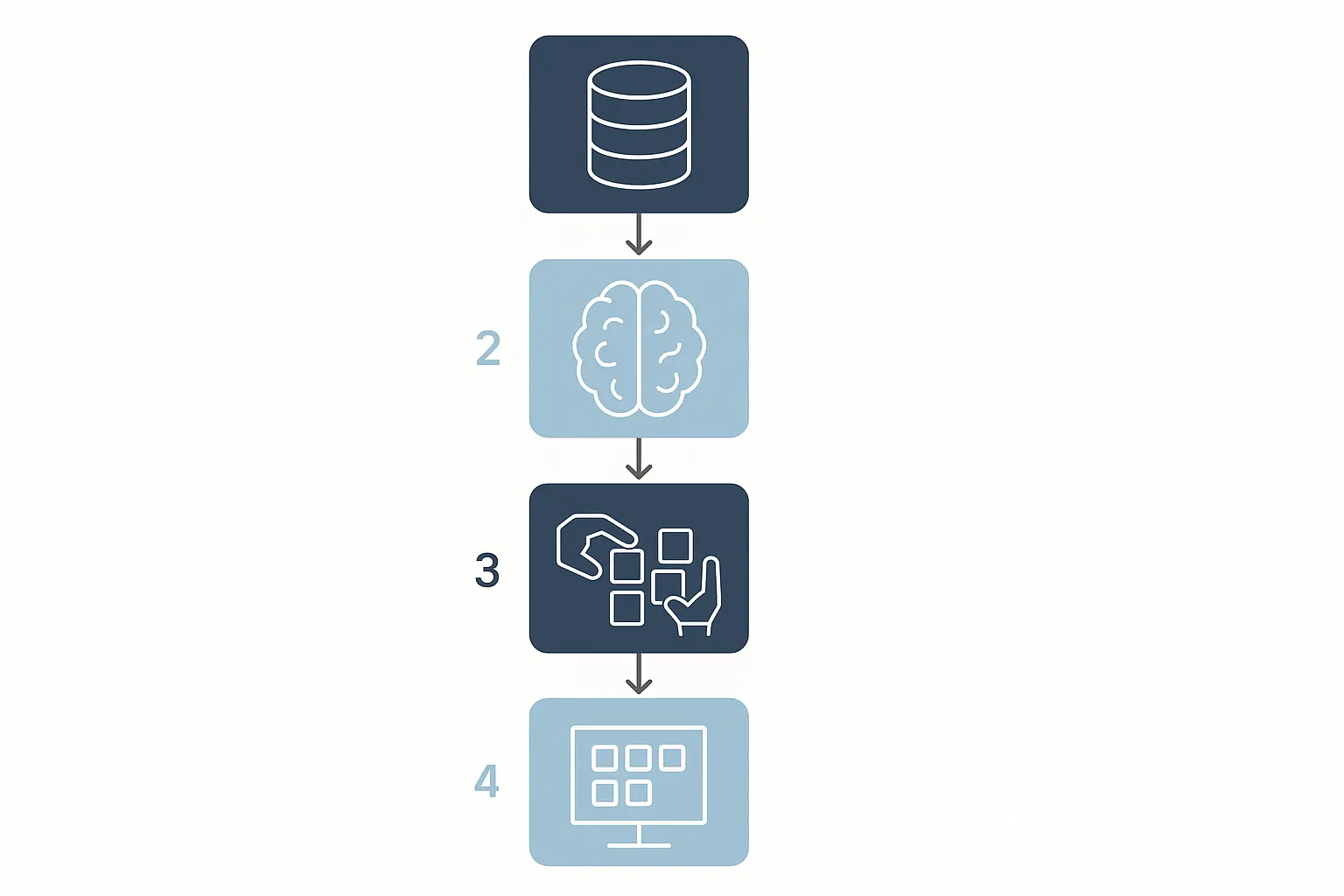
Here’s what this modern, scalable workflow looks like in practice:
Step 1: Start with Seed Keywords (The Foundation)
You still begin with client discovery to identify the core topics and “money” keywords central to their business. But instead of thousands, you only need a handful of strong seed terms.
Step 2: AI-Powered Expansion & Clustering
AI tools take your seed keywords and explore the entire topic universe around them, finding hundreds of related questions and long-tail keywords. Crucially, the AI then automatically groups these terms into logical clusters based on search intent.
Step 3: Semantic Structuring (Pillars & Clusters)
The AI doesn’t just group keywords; it organizes them into a strategic hierarchy. It identifies the broad pillar topics and arranges the relevant clusters underneath them, creating the foundational structure of your map.
Step 4: Visualize and Validate (The Roadmap)
The final output isn’t a spreadsheet; it’s a clean, visual roadmap of your client’s future content. Now, your human expertise comes in: you review the map, align it with business goals, and prioritize the content calendar for the next 6-12 months.
The Impact on Your Agency and Your Clients
Adopting this workflow does more than just save time. It fundamentally improves your service delivery and client relationships.
For Your Agency: Predictable, Scalable, and Profitable
-
Efficiency: Your senior strategists are freed from tedious manual work, allowing them to focus on high-value client communication and overarching strategy.
-
Scalability: You can confidently onboard multiple new clients at once without overwhelming your team. This standardized process lets you scale your agency’s SEO delivery.
-
Profitability: By delivering immense strategic value in the first 30 days, you solidify your role as an indispensable partner, making retainer justification and future upsells far easier.
For Your Client: Clarity, Confidence, and a “Wow” Moment
-
Clarity: The client sees the plan. The visual map demystifies SEO, transforming it from a “black box” into a clear business strategy. According to Wyng, 63% of customers say the onboarding experience sets the tone for the entire relationship.
-
Confidence: Presenting a 12-month plan upfront shows you’ve done your homework and are committed to their long-term success. It builds immediate trust and gets buy-in from key stakeholders.
-
The “Wow” Moment: This is the deliverable that gets shared in the client’s internal Slack channels. It’s the proof that they made the right choice in hiring your agency.
Frequently Asked Questions (FAQ)
Is a topical map the same as a keyword list?
Not at all. A keyword list is a flat collection of terms. A topical map is a strategic framework that shows the relationships between those terms, organized by user intent to establish authority.
Does this AI-driven process replace human strategists?
No, it empowers them. AI handles the heavy lifting of data processing and clustering. The human strategist is the pilot who reviews the map, infuses it with business context, and presents it to the client.
How long does this automated process really take?
While it depends on the complexity of the industry, generating the core topical map can often be done in a matter of hours or a couple of days, compared to the weeks it would take manually.
Can this be used for existing clients, not just new ones?
Absolutely. An automated topical map analysis is a fantastic way to perform a strategic refresh for an existing client, identify crucial content gaps, and build a business case for an expanded scope of work.
From Onboarding to Omnichannel Growth
The first 30 days of a client relationship are your single greatest opportunity to build a foundation of trust and demonstrate undeniable value.
By shifting from chaotic keyword lists to automated topical maps, you transform your onboarding process from a liability into your most powerful sales tool. A clear, authoritative content foundation is the bedrock of any successful SEO campaign—the starting point for growth strategies that tie search visibility directly to business results.
Ready to see how this workflow can supercharge your agency? Explore how a dedicated white-label SEO partner can help you implement these scalable systems without the in-house overhead, or start with an AI-powered SEO audit to uncover your first opportunities.