

You just got the first draft back. You spent hours crafting what you thought was a rock-solid content brief: target keyword, secondary keywords, word count, even a few competitor links for inspiration. You handed it to your writer—or, more likely, plugged it into your favorite AI content generator—and waited for magic.
Instead, you got… that.
A piece of content that’s technically correct but completely soulless. It hits the keywords but misses the point. The facts are fuzzy, the narrative is generic, and it reads like a summary of a summary. Now you’re stuck in a cycle of revisions, trying to edit expertise and nuance into a piece that was hollow from the start.
If this sounds familiar, it’s because the game has changed, but the rulebook for content briefing hasn’t. In the age of AI, a keyword list isn’t a brief; it’s a suggestion. To create content that ranks and resonates, you need to start briefing for meaning, not just words.
Why Your ‘Detailed’ Content Briefs Are Failing in the Age of AI
For years, the standard content brief was a simple recipe: combine keywords, a target word count, and a few H2s, and hope for a decent article. This worked when the primary challenge was simply producing content at scale.
But today, with over 73% of content marketers using AI for content creation, ‘scale’ is no longer the bottleneck. The new challenge is quality and trustworthiness. Generative AI is an incredible tool for execution, but it’s not a strategist. It’s an ‘excellent parrot’ that can assemble information based on patterns, but it lacks true understanding, experience, or critical judgment.
This leads to the bland, undifferentiated content flooding the internet—a problem consumers are noticing. Recent studies show that over 60% of consumers find AI-generated content to be less trustworthy than human-written content.
The root of the problem isn’t the AI; it’s the instructions we give it. A vague brief inevitably leads to vague content. Your old briefing model falls short because it lacks three components critical to the modern web: entities, semantic relationships, and verifiable facts.
Moving Beyond Keywords: Briefing for Meaning, Not Just Words
To guide AI (and human writers) toward creating expert-level content, we need to speak the language that search engines like Google use to understand the world. This language is built on concepts, not just keywords.
Meet Your New Best Friends: Entities and Semantic Triples
Think of it this way: a keyword is a word or phrase someone types into a search bar, like ‘Apple financial results’. An entity, however, is the actual thing in the real world—the person, place, organization, or concept. In this case, the entity is Apple Inc., the multinational technology company.
Google’s entire Knowledge Graph, which powers its understanding of search queries, is built on over 500 billion facts about 5 billion entities. When you brief with entities, you’re moving from ambiguous text strings to precise, machine-readable concepts.
But just listing entities isn’t enough. You need to define their relationships. This is where semantic triples (or semantic assertions) come in, using a simple but powerful structure:
Entity 1: Subject → Relationship: Predicate → Entity 2: Object
For example:
Steve Jobs → co-founded → Apple Inc.
Tim Cook → is the CEO of → Apple Inc.
iPhone → is a product of → Apple Inc.
These assertions create a web of meaning that provides structure and context. For an AI, this transforms a vague instruction like ‘write about Apple’ into a specific command: ‘Write an article explaining how the entity ‘Steve Jobs’ is connected to the entity ‘Apple Inc.’ through the act of ‘co-founding,’ and how that relationship extends to its flagship product, the ‘iPhone’.’
This is how you guide AI toward creating content with genuine depth and accuracy.
The Missing Ingredient: Mandated Fact-Sourcing
The biggest risk with generative AI is its tendency to ‘hallucinate’—to state incorrect information with absolute confidence. This is poison for Google’s E-E-A-T (Experience, Expertise, Authoritativeness, and Trustworthiness) guidelines.
A traditional brief might say, ‘Include some statistics about market share.’ An AI-first brief says, ‘Cite the Q4 2023 market share statistic for smartphones from the linked IDC report and attribute it.’
By making specific sources and data points a mandatory part of the brief, you:
- Eliminate Hallucinations: You provide the ‘ground truth,’ preventing the AI from inventing facts.
- Build Authority: You ensure the content is built on a foundation of credible, verifiable information.
- Streamline Editing: The fact-checking process becomes a simple verification step, not a research project.
Introducing the AI-First Content Brief Template
To bridge this gap, we’ve developed a new kind of template—one designed specifically for the challenges and opportunities of AI-assisted content creation. It’s built for agencies and ready to be white-labeled for your clients.
This template goes beyond keywords to provide the structural, semantic, and factual guardrails needed to produce high-quality content consistently.
Here’s what it includes:
- Core Target & Intent: Who is this for and what problem does it solve?
- Primary & Secondary Keywords: The foundational SEO elements are still crucial.
- Required Entities: The key people, products, and concepts that must be included.
- Semantic Assertions: The core relationships and facts the article needs to establish.
- Mandatory Sources & Data: Links to specific reports, studies, or quotes that must be cited.
- Brand Voice & Exclusions: Guidelines on tone and terms to avoid.
This structured approach is a core part of building a scalable white-label SEO program for your clients. It turns content creation from a creative gamble into a repeatable, high-quality process.
How to Use the Template: A 3-Step Guide for Agencies
Integrating this into your workflow is more straightforward than it sounds. It’s about shifting your strategic work to the beginning of the process.
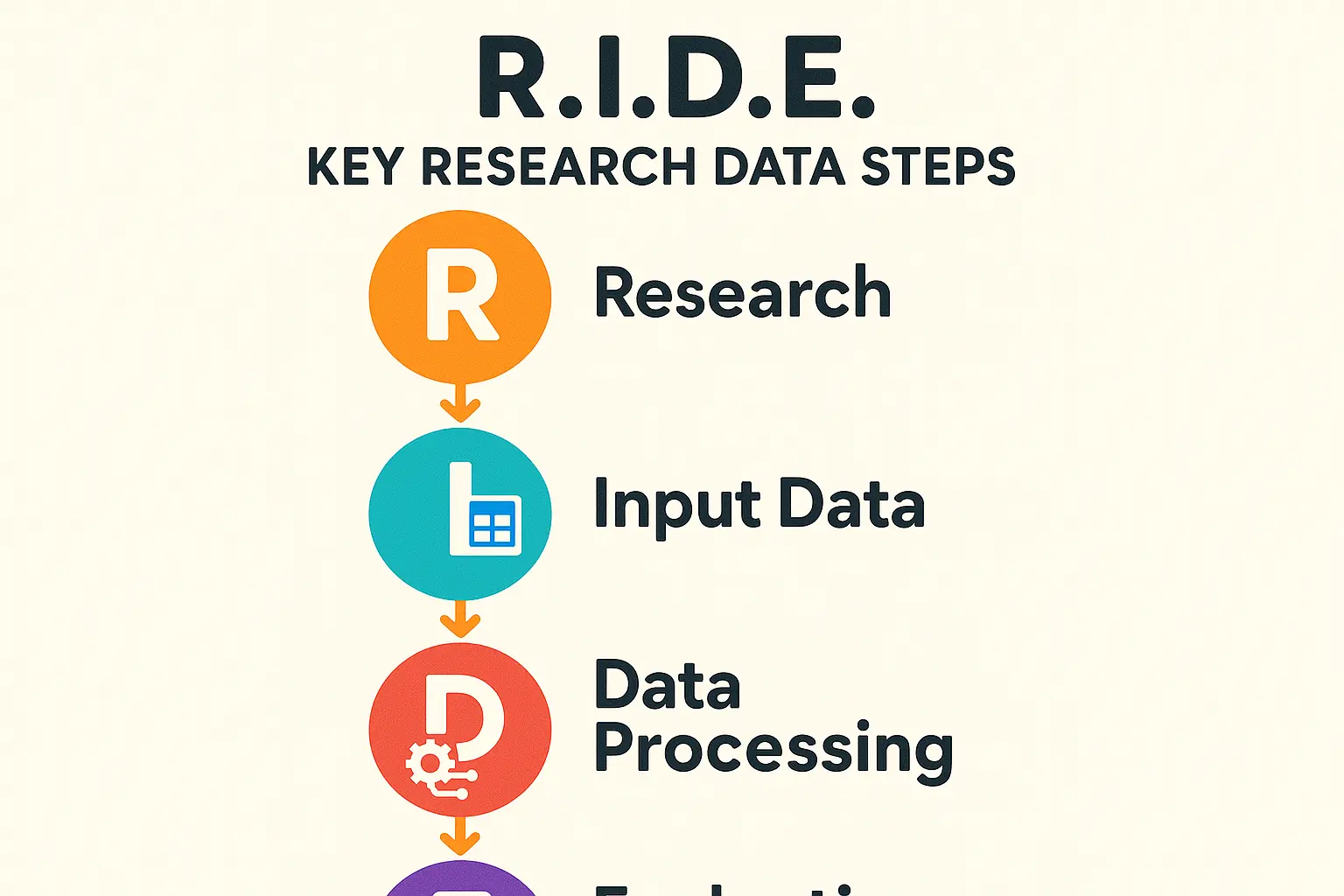
Step 1: Identify Your Core Entities.
Before you even think about keywords, ask: what are the fundamental concepts this piece needs to cover? Use tools like Google’s NLP demo, Wikipedia, and competitor analysis to map out the key entities in your topic.
Step 2: Formulate Key Semantic Assertions.
What are the 3-5 undeniable truths or core messages your article must convey? Write them out in the Subject-Predicate-Object format. This will become the logical backbone of your content.
Step 3: Curate Your ‘Ground Truth’ Sources.
Find the most authoritative sources for your topic. Is there a recent industry study? A government data source? An interview with a renowned expert? Link to them directly in the brief.
Mastering this process is key to delivering modern, omnichannel SEO that connects search visibility with real business results for your clients.
Frequently Asked Questions (FAQ)
Isn’t this overcomplicating things?
It might seem like more work upfront, but it saves countless hours in revisions, editing, and fact-checking. By front-loading the strategic thinking, you make the execution phase faster, cheaper, and far more effective.
Can I use this for human writers too?
Absolutely. This template is arguably even more powerful for human writers. It provides them with unparalleled clarity, freeing them from guessing games and allowing them to focus their creative energy on storytelling and engagement, confident that the strategic foundation is solid.
Where do I find entities and semantic triples?
Start with your topic’s Wikipedia page—it’s essentially a massive, human-curated database of entities and relationships. You can also analyze top-ranking competitor content to see which core concepts they consistently cover. For more advanced analysis, tools that use Natural Language Processing (NLP) can automatically extract entities from text.
How does this relate to E-E-A-T?
This methodology is E-E-A-T in action.
- Expertise & Authoritativeness: You build these by grounding your content in specific, verifiable facts from credible sources.
- Trustworthiness: You establish this by demonstrating a clear, logical understanding of a topic’s core concepts and their relationships, not just by stuffing keywords.
Your Next Step: From Better Briefs to Scalable Content
To get better, more reliable output from your content process—whether it’s powered by AI, human writers, or a hybrid—you need to provide better, more precise input. That journey begins with rethinking the content brief.
Stop briefing for words. Start briefing for meaning.
Download our free, white-label AI-First Content Brief Template today and give your agency the framework it needs to create content that performs in the new era of search.
Once you’ve streamlined your briefing process, the next challenge is scaling execution across all your clients. Learn more about how AI-powered SEO automation can help your agency deliver superior results without increasing headcount.