
The One-Size-Fits-All SEO Report is Dead: How to Customize for E-commerce, Lead Gen & SaaS Clients
It’s a familiar story. You send your client a meticulously crafted SEO report packed with impressive ranking improvements, an upward-trending traffic graph, and a list of backlinks you worked hard to secure. You wait for the praise, but the reply is… lukewarm.
“This is great,” they write, “but did we sell more widgets?”
Or, “Thanks. How many of these visitors actually booked a demo?”
That single question can feel deflating, but it reveals a fundamental truth about client communication: if your report doesn’t speak their language, the data doesn’t matter. You’re talking about SEO tactics; they’re thinking about business results.
This disconnect is surprisingly common. Research from Digital.com found that only 29% of small businesses use website analytics, with a staggering 17% not tracking anything at all. As an agency, you have a massive opportunity to bridge this gap, but it requires moving beyond a generic report template.
Why Generic SEO Reports Fall Short
A generic report is like a map with no destination. It shows movement, but it doesn’t tell the client if they’re getting closer to where they want to go. Every business defines success differently, and your reporting must reflect that reality.
The core challenge isn’t just pulling data; it’s telling a story that connects your SEO efforts directly to a client’s bottom line. It’s no wonder a study by Econsultancy revealed that 52% of marketers cite ‘attribution and measuring ROI’ as their top challenge. When you send a one-size-fits-all report, you’re asking the client to connect the dots themselves.
Great reporting does that work for them. It translates SEO metrics into business KPIs, turning a data dump into a compelling narrative of growth. The secret is to stop reporting on everything and start reporting on what matters most to each client’s business model.
The Art of Translation: Matching Metrics to Business Models
Think of yourself as a financial advisor. You wouldn’t give the same advice to a 25-year-old starting a career as you would to a 65-year-old nearing retirement. Their goals are completely different, and the same principle applies to your clients.
Customizing your reports for different business types isn’t just a nice-to-have; it’s a strategic imperative. In fact, Campaign Monitor found that leveraging segmented data can lead to a 760% increase in revenue. While that study focused on email, the principle is universal: personalization gets results. Tailoring your reporting demonstrates a deeper understanding of your client’s world.
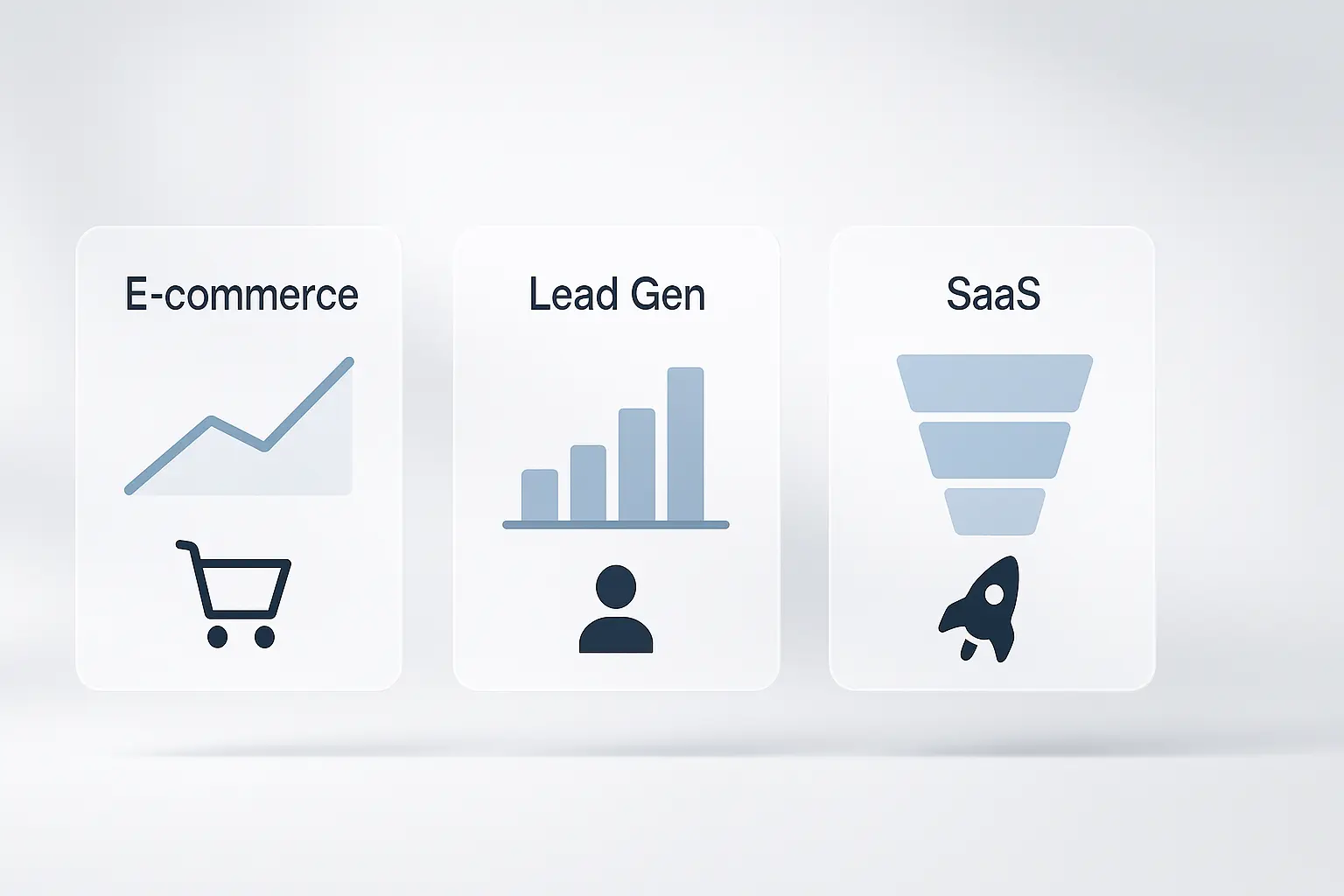
Let’s break down the three most common business models and the key performance indicators (KPIs) that truly matter to each.
For Your E-commerce Client: It’s All About the Sale
For an e-commerce business, traffic is only valuable if it leads to paying customers. Their world revolves around products, carts, and transactions.
Primary KPIs to Report On:
-
Revenue from Organic Traffic: This is the ultimate metric. Use Google Analytics to isolate how much revenue your SEO efforts are actually generating.
-
Organic Conversion Rate: What percentage of visitors from search engines are making a purchase? An increase here shows you’re driving not just more traffic, but better traffic.
-
Average Order Value (AOV): Are organic visitors spending more per transaction than those from other channels? This can indicate high purchase intent.
-
Product & Category Page Rankings: Instead of just tracking the homepage, focus on the money-making pages. Ranking number one for a high-volume product keyword is a direct line to revenue.
-
Shopping Cart Abandonment Rate (from Organic): A high abandonment rate can signal issues with pricing, shipping, or user experience that your technical SEO insights can help solve.

For Your Lead Gen Client: The Journey to a Handshake
A lead generation client—like a B2B service provider, a law firm, or a contractor—isn’t selling a product online. They’re selling a conversation. Their goal is to fill the sales pipeline with qualified opportunities.
Primary KPIs to Report On:
-
Marketing Qualified Leads (MQLs): This is the North Star. How many high-quality leads did organic search generate this month? This metric requires clear definitions and proper goal tracking.
-
Cost Per Lead (CPL) from Organic: While organic traffic is ‘free,’ your services aren’t. Showcasing a low CPL from SEO compared to paid channels is a powerful way to demonstrate ROI.
-
Form Submissions & Phone Calls: Track the specific actions that count as a lead. Use call tracking and dedicated landing pages to attribute these conversions accurately.
-
Landing Page Conversion Rates: Are the pages you’re driving traffic to effective at turning visitors into leads? This connects your on-page SEO work to tangible outcomes.
-
‘Money’ Keyword Rankings: Focus on keywords that show clear commercial intent, like ’emergency plumber near me’ or ‘B2B marketing agency.’

For Your SaaS Client: From Trial to Evangelist
Software-as-a-Service (SaaS) businesses run on a subscription model, where success depends on acquiring new users and retaining them over the long term. Their SEO needs are often content-heavy, focused on educating users at every stage of the funnel.
A documented content strategy is vital here, yet the Content Marketing Institute notes that only 45% of B2B marketers have one—making this another area where your agency can provide immense value.
Primary KPIs to Report On:
-
Free Trial Sign-ups / Demo Requests: For most SaaS companies, these are the primary top-of-funnel conversions. Show a clear line from organic traffic to these critical actions.
-
Marketing Qualified Leads (MQLs): Similar to lead gen, but often defined by actions like a high-value content download (e.g., a guide for using their software).
-
Rankings for ‘Problem-Aware’ Keywords: SaaS customers often search for their problem, not the solution. Tracking rankings for terms like ‘how to automate invoicing’ is just as important as ranking for the brand name.
-
Content Performance: Report on which blog posts or guides drive the most sign-ups. This informs future content strategy and proves the value of content marketing. As HubSpot found, personalized calls-to-action on these posts can make a huge difference, converting 202% better than default CTAs.
-
Customer Acquisition Cost (CAC) from Organic: Show how SEO contributes to a lower, more efficient CAC compared to other channels.

From Data Points to a Story: Connecting SEO to the Bottom Line
The goal of a great report is to build a bridge from your daily SEO tasks to the client’s biggest business goals. It’s not enough to show what happened; you have to explain why it matters.
Instead of saying, ‘We increased organic traffic by 20%,’ tell a story: ‘Our targeted content strategy boosted organic traffic by 20%, which led to a 15% lift in demo requests. This shows our focus on attracting problem-aware users is successfully filling the top of your sales funnel.’
This narrative approach transforms your report from a simple update into a strategic document that reinforces your value. A great agency partner provides the tools and frameworks to make this kind of storytelling scalable across your entire client portfolio.
Frequently Asked Questions (FAQ)
What’s the difference between a vanity metric and a KPI?
A vanity metric, like impressions or overall traffic, looks good on paper but doesn’t directly correlate to business success. A Key Performance Indicator (KPI), like revenue from organic search or MQLs, is tied directly to a business objective. Your reports should focus on KPIs.
How do I explain a drop in rankings to a client?
Be proactive and transparent. Explain potential causes like algorithm updates, new competitor activity, or seasonal trends. Most importantly, pivot the conversation back to the KPIs that matter. A slight dip in one keyword ranking is less concerning if overall leads or sales remain strong.
How often should I send reports?
Monthly is the standard for comprehensive reports, as it provides enough data to identify meaningful trends. You might supplement this with a weekly dashboard of key metrics or automated alerts for major changes. The key is consistency.
Can’t I just use one template and swap out the metrics?
While you can have a base template for efficiency, the focus and narrative of the report should be fundamentally different for each client type. An e-commerce report should lead with revenue, while a lead-gen report should lead with MQLs. The structure itself should reflect the client’s priorities.
Your Next Step: Build Reports That Build Relationships
Customizing your SEO reports isn’t just about better data; it’s about building stronger, more trusting client relationships. When you speak your client’s language, you move from being a vendor they hired to a strategic partner they can’t live without.
This level of detailed, value-driven reporting is a hallmark of high-quality white-label SEO services. For agencies looking to deliver this impact at scale without overwhelming their teams, SEO outsourcing provides the expertise and automation to get it right every time.
Stop delivering data. Start delivering insights. Your clients—and your bottom line—will thank you for it.