

You’ve done everything by the book. You delivered a report to your B2B tech client showing a 30% jump in organic traffic. High-fives all around, right? But a month later, the client calls. “The traffic is great,” they say, “but our sales team says the leads are all wrong. They’re students, researchers, and hobbyists. Where are the senior engineers and CTOs?”
If this sounds familiar, you’ve hit the B2B tech marketing wall. It’s a frustrating reality: the keyword strategies that work for consumer brands often fall flat in highly technical industries.
Why? Because your most valuable prospects—the ones with budget authority and deep technical knowledge—don’t search like everyone else. They use hyper-specific, problem-oriented language that most SEO tools completely miss.
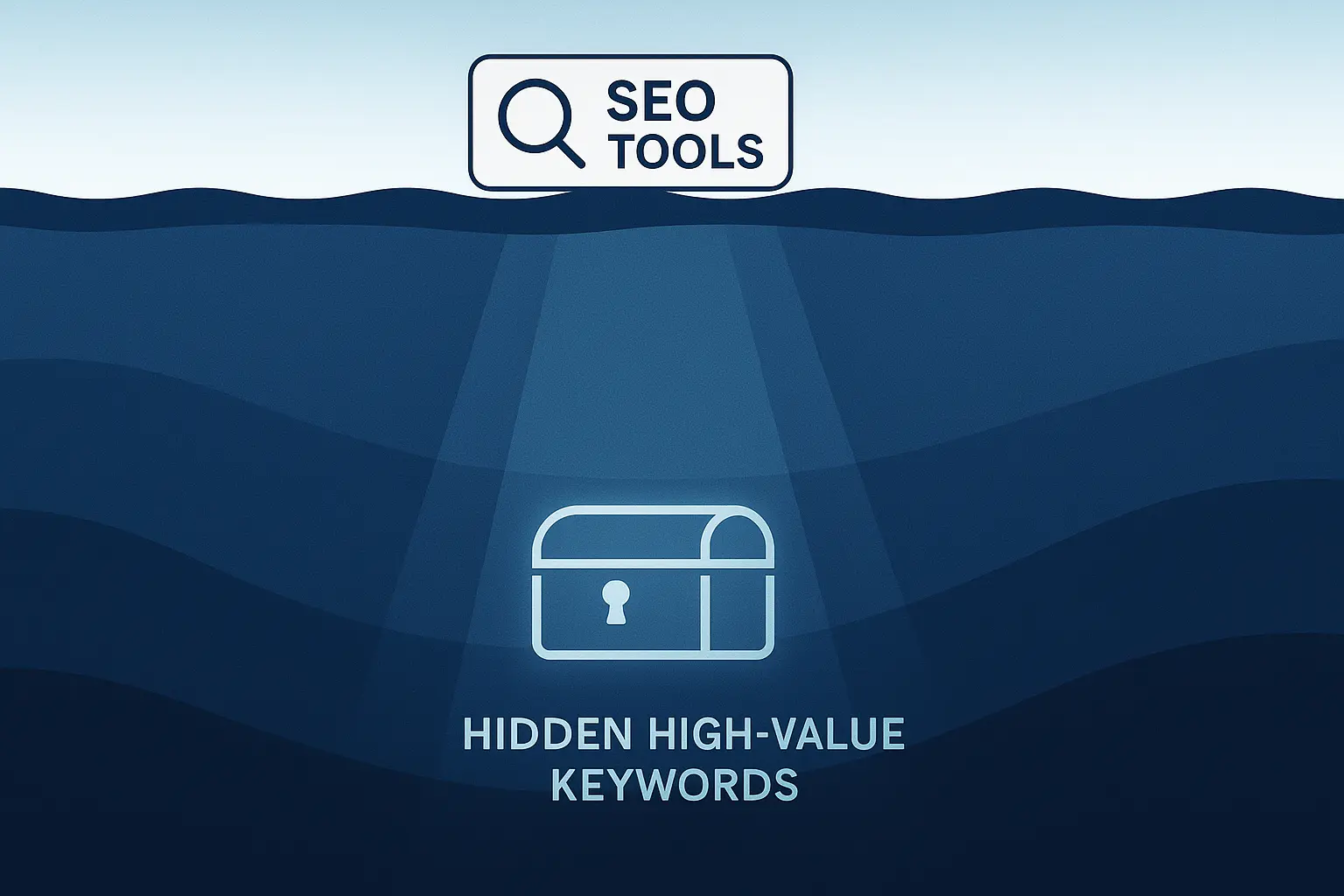
Welcome to the world of “zero-search-volume” keywords, where your most valuable leads are hiding in plain sight.
The Problem with Traditional Keyword Research
Traditional SEO prioritizes volume. We’re taught to find keywords with hundreds or thousands of monthly searches, battle for the top spot, and watch the traffic roll in. This works when you’re selling sneakers or software to the masses.
But in B2B tech, it’s a trap. An Ahrefs study revealed that a staggering 90.63% of content gets zero traffic from Google. Countless businesses are fighting over the same handful of high-volume keywords, creating a “red ocean” of competition while ignoring the real queries their buyers are using.
Your ideal customer, a solutions architect at a Fortune 500 company, isn’t Googling “cloud data platform.” They’re Googling “migrate multi-petabyte on-prem Hadoop to Snowflake performance comparison.”
An SEO tool will report that keyword has a search volume of “0,” and for most marketers, that’s where the analysis stops. But the handful of people who do search that term are exactly who your client wants to talk to.
Think of it this way: high-volume keywords attract browsers. Zero-volume keywords attract buyers.
What Are ‘Zero-Search-Volume’ Keywords?
Let’s clear up a misconception. “Zero-search-volume” doesn’t mean no one is searching for these terms. It simply means the monthly volume is too low for tools like SEMrush or Ahrefs to register it reliably.
These are the ultra-specific, long-tail queries that signal deep expertise and high intent. They are often:
- Problem-Specific: Focusing on a distinct technical challenge.
- Comparative: Pitting one technology or methodology against another.
- Integrative: Asking how different systems can work together.
- Error-Based: Including specific error codes or troubleshooting language.
Research shows that B2B buyers conduct an average of 12 searches before engaging with a specific brand’s site. These aren’t 12 simple searches; they’re a journey of discovery, comparison, and validation using increasingly specific language. Creating content that answers these niche queries means you meet them at their moment of greatest need.
How to Find Your Hidden-Gem Keywords
If the tools can’t find them, where do you look? You go to the source: your client’s customers and internal experts. This process requires a shift from data mining to human intelligence.
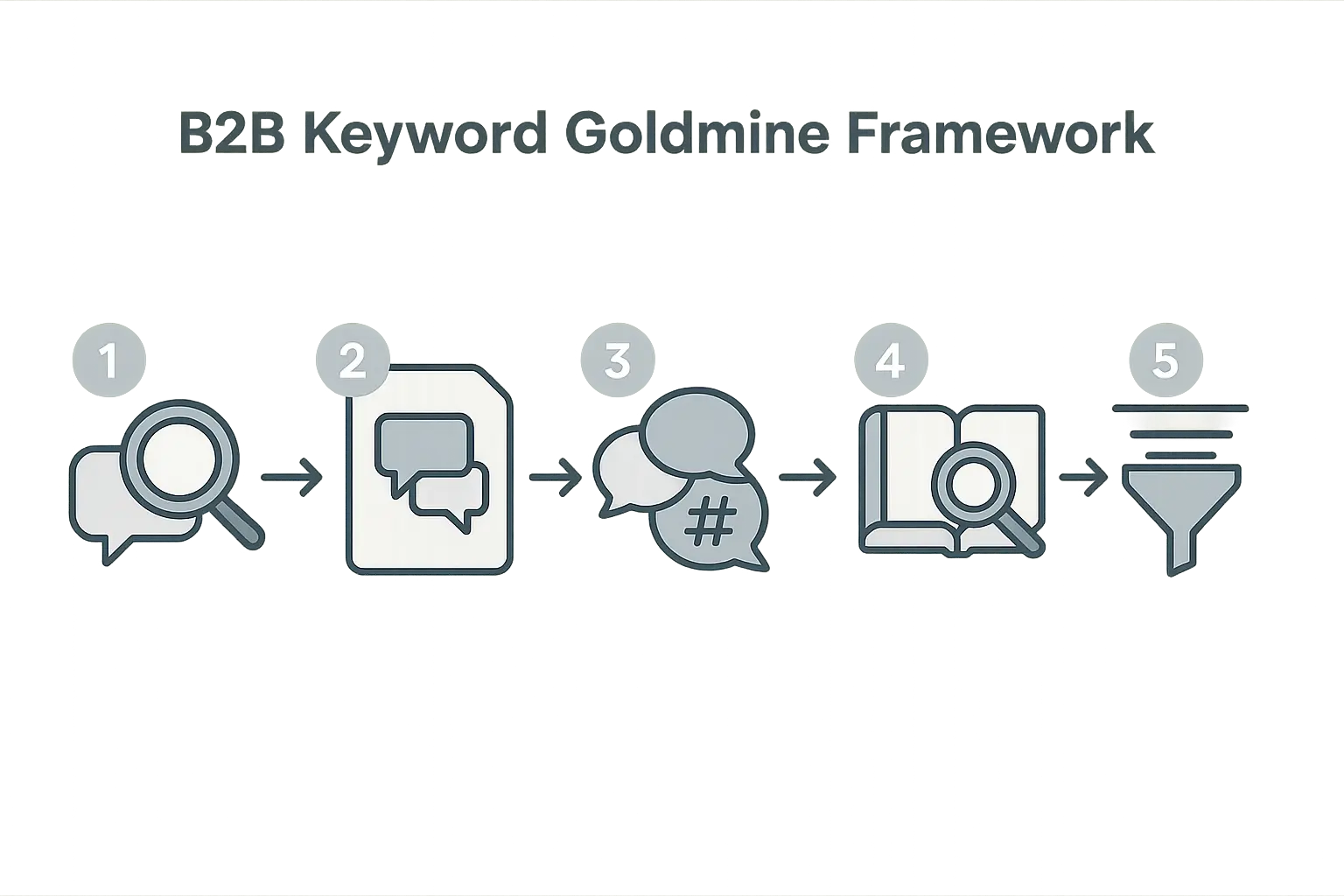
1. Talk to the Sales and Customer Support Teams
Your client’s front-line teams are a goldmine. They hear the exact language customers use every single day. Ask them:
- What are the most common technical questions you get on sales calls?
- What specific integration challenges do prospects bring up?
- Are there certain competitor features they always ask about?
- What phrasing do customers use in support tickets when something breaks?
These conversations will give you a list of the highly specific, problem-oriented queries you need to build content around.
2. Dive into Online Communities
Your target audience doesn’t just hang out on Google. They solve problems in niche communities. Explore:
- Reddit: Subreddits like r/sysadmin, r/devops, or industry-specific forums.
- Stack Overflow & GitHub: Look for common questions and recurring issues related to your client’s technology.
- Industry Forums: Every niche has its own watering holes. Find them.
- Quora: Search for your client’s product category and see what questions people are asking.
The language used in these communities is unfiltered and authentic—it’s the voice of your ideal customer.
3. Analyze Competitor ‘Praise and Grumbles’
Read the reviews for your client’s competitors on sites like G2 and Capterra. Ignore the star ratings and focus on the text.
- Praise: What specific features or use cases do customers love? This tells you what to highlight.
- Grumble: What are their biggest complaints or frustrations? These are problems your client can solve. A review that says, “It was a nightmare getting it to work with our legacy Oracle database,” gives you the keyword “integrate [competitor product] with legacy oracle database.”
Creating Content That Converts High-Intent Traffic
Once you have your list of zero-volume keywords, you can’t just plug them into a generic blog post. The content needs to be as specific and valuable as the query itself. After all, answering a hyper-specific query is the ultimate form of personalization—and data shows that personalized content drives 202% better results.
Content Formats That Win
- Detailed Troubleshooting Guides: Walk users step-by-step through solving a specific error.
- In-Depth Comparison Pages: Create an unbiased, technically deep comparison between two or more products or methodologies.
- Implementation Walkthroughs: Show exactly how to execute a complex task using your client’s product.
- Use-Case Deep Dives: Tell the story of how a specific problem was solved for a specific industry.
The goal isn’t just to rank; it’s to become the definitive resource for that specific problem. Because these users are often technically savvy and skeptical, an educational, non-salesy tone is critical. This is where an omnichannel approach to SEO becomes so powerful, leveraging insights from across the entire customer journey.
Redefining Success: Measuring What Matters
You can’t measure the success of a zero-volume keyword strategy with traditional metrics like “organic traffic.” By that standard, it will look like a failure.
Instead, you need to track business outcomes.
Metrics to Focus On:
- Lead Quality: Are the people filling out forms the right job titles from the right companies?
- Demo/Trial Sign-ups: How many leads from these pages request a demo or start a trial?
- Sales Pipeline Influence: Ask the sales team, “Did this content piece help you close a deal?”
- Conversion Rate: While traffic may be low, long-tail keywords have been shown to have a 3-5% higher click-through rate and often a much higher conversion rate on-page.
For agencies already stretched thin, scaling this kind of strategic work presents a challenge. A dedicated white-label SEO partner can provide the specialized execution needed for advanced strategies like this without overloading your in-house team. You can also leverage AI-powered SEO automation to analyze customer data and community conversations at scale, uncovering these hidden opportunities more efficiently.

Frequently Asked Questions (FAQ)
Q: Is a ‘zero-search-volume’ keyword strategy scalable?
A: While it isn’t scalable in the traditional sense of targeting thousands of keywords, it is highly scalable in its impact. A handful of well-crafted pages targeting high-intent queries can generate more revenue than hundreds of pages targeting broad terms. Focus on scaling business results, not traffic volume.
Q: How do I convince my client to invest in a strategy with no guaranteed traffic?
A: Frame it as a lead quality initiative, not a traffic play. Use the data and logic presented here. Show them examples of the specific, high-value queries you plan to target and ask, “If we could get in front of the handful of people searching for this every month, would that be valuable to you?” The answer is almost always yes.
Q: What’s the biggest mistake to avoid with this strategy?
A: The biggest mistake is creating thin or generic content. Someone searching for a hyper-specific technical problem expects a hyper-specific technical answer. Your content must be authoritative, detailed, and genuinely helpful. If it’s not, you’ll lose their trust instantly.
Q: How long does it take to see results?
A: Because there’s often little to no competition for these terms, pages can rank surprisingly quickly—sometimes within weeks. However, the business impact (qualified leads and sales) will depend on your client’s sales cycle. It’s a long-term play that builds a moat of valuable, evergreen content around their business.
The Future is Niche
In the crowded B2B tech landscape, the goal is no longer to be the loudest voice in the room. It’s to be the most helpful voice in the right room. When you shift your focus from high-volume, low-intent keywords to the zero-volume queries your ideal customers are actually using, you stop chasing vanity metrics and start driving real business growth.
It’s time to stop ignoring the invisible 90% and start mining for gold.