

You spent the weekend filming a stunning walkthrough of your new listing. The lighting was perfect, the drone shots were breathtaking, and you edited it all into a polished, professional video tour. You upload it to YouTube, share it on social media, and wait for the calls to roll in.
A week later: 17 views. And one of them was your mom.
What went wrong? The problem isn’t your video; it’s your strategy. In a world where 86% of homebuyers use video to research properties, simply creating a tour isn’t enough. You have to make it discoverable.
The secret isn’t getting more views on YouTube; it’s getting your video to show up on Google the moment a motivated buyer searches for a home just like yours. This is where video SEO comes in. It’s the art and science of optimizing your virtual tours to rank on both YouTube and Google, turning passive viewers into scheduled viewings.
Why Your Property Tours Belong on Google, Not Just YouTube
Think about the last time you searched for something. You probably went to Google. Your potential buyers are no different.
While YouTube is the leading platform for real estate video research, the journey often starts with a Google search like “4 bedroom home virtual tour in Miami” or “downtown Chicago condo tour.”
Because Google owns YouTube, it loves to feature relevant videos directly on its search results page. This creates a massive opportunity: a well-optimized video can land you a front-page spot, grabbing a buyer’s attention before they even click on a traditional listing site.
This isn’t just a nice bonus; it’s a strategic advantage. Property listings with video receive 403% more inquiries than those without. By treating your video as a primary search asset, you capture buyers at the peak of their interest.
The Anatomy of a High-Ranking Real Estate Video
A successful video SEO strategy happens in two phases: before you film and after you upload. Getting both right is key to connecting with your audience.
Before You Hit ‘Upload’: Filming for Engagement
Search engines pay close attention to how people interact with your video. A tour that viewers watch all the way through sends a powerful signal of quality.
Keep It Concise: While you want to be thorough, data from Wistia shows that videos under two minutes get the most engagement. Showcase the “wow” factors—the kitchen, master suite, and outdoor space—early on to hook viewers.
Optimize for Silent Viewing: Did you know 85% of videos on some platforms are watched without sound? Use clear text overlays to highlight key features (e.g., “Newly Renovated Kitchen with Quartz Countertops”). This ensures your message lands, even if the viewer is scrolling in a quiet office.
Film a Clear Call-to-Action (CTA): End your video by telling the viewer exactly what to do next. A simple verbal and text CTA like, “For full property details and to schedule a viewing, click the link in the description below,” can dramatically increase click-throughs.

The YouTube Optimization Playbook
Once your video is ready, you need to give search engines the right signals so they understand what it’s about and who to show it to. That’s where the technical optimization begins.
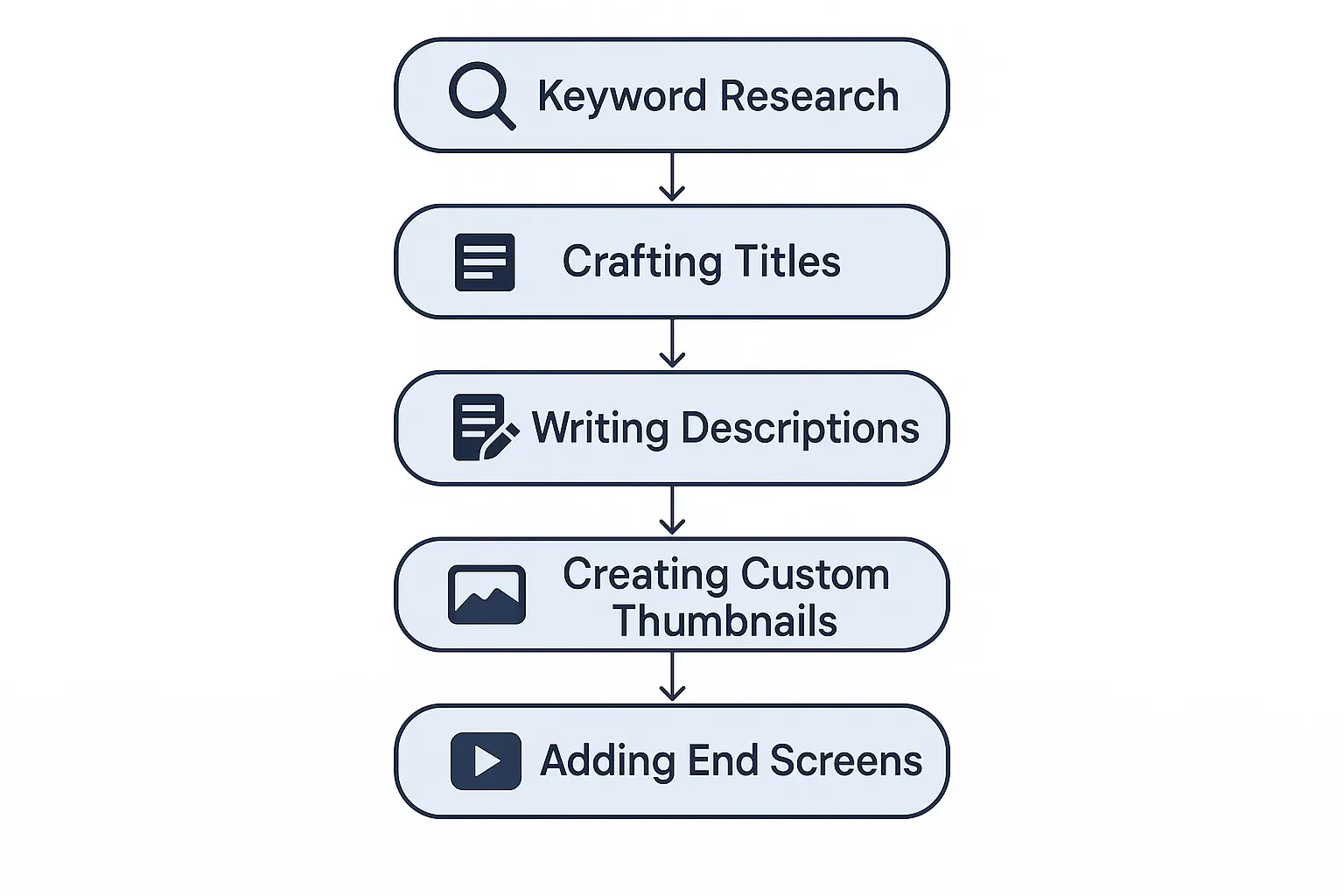
- Video Title: Your title is the single most important ranking factor. It needs to be descriptive, keyword-rich, and enticing.
Bad Title: 123 Maple St
Good Title: Virtual Tour: Stunning 4-Bed Brick Colonial for Sale | Arlington, VA | 123 Maple St
Pro Tip: Include the property type, key features, city/neighborhood, and full address.
- Video Description: This is your chance to provide rich context. Don’t just write one sentence. Treat it like a mini-listing description.
Start with the most important thing: the link to the property listing page on your website.
Write a detailed, 200+ word paragraph describing the property, using the same keywords from your title.
Include property specs (beds, baths, sq. ft.), contact information, and your real estate license number.
- Tags: Tags help YouTube’s algorithm categorize your video. Use a mix of broad, specific, and location-based tags.
Broad: real estate, house tour
Specific: 4 bedroom colonial arlington, 123 maple street virtual tour
Location: arlington virginia real estate, northern virginia homes for sale
-
Custom Thumbnail: Your thumbnail is the billboard for your video. An auto-generated, blurry shot of a hallway won’t cut it. Create a bright, high-quality custom thumbnail that showcases the property’s best feature, like the front exterior or the kitchen.
-
Subtitles/Closed Captions (SRT File): Uploading a transcript of your video as an SRT file is a powerful, often-overlooked tactic. Google and YouTube can read this text, giving them even more keyword-rich data to understand your video’s content.
Connecting Views to Viewings: Building the Bridge from YouTube to Your Website
Getting a thousand views is a vanity metric. Getting five qualified leads is a business result. The ultimate goal is to move a potential buyer from a passive platform (YouTube) to a conversion-focused environment like your website.
This seamless user journey—from a search engine to a video platform and back to your website—is a core principle of effective omnichannel SEO. It ensures every piece of content works together to guide a potential client toward a goal.
The entire process should look like a simple, logical funnel:
-
Discover: A buyer searches on Google and finds your video.
-
Engage: They watch the tour on YouTube and get interested.
-
Click: They click the prominent link in your description.
-
Convert: They land on your property listing page, get more details, and fill out a form to schedule a viewing.
To make this work, your website’s property page must be ready. Embed the same YouTube video on the listing page. This not only provides a consistent experience but also increases the time visitors spend on your site—a positive signal to Google that boosts the page’s own SEO authority.
Scaling Your Video SEO Strategy
Applying this level of detail to every single property listing can seem daunting, especially for busy agencies. Manually implementing this for every client is often unsustainable. This is where dedicated white-label SEO services provide the means to execute at scale, ensuring every video becomes an optimized asset.
Tracking the performance of hundreds of video keywords and their impact on website traffic requires powerful tools. Modern AI-powered SEO automation can monitor rankings and report on performance, freeing up your team to focus on client strategy and closing deals. By creating templates for your descriptions and a repeatable optimization checklist, you can turn this powerful strategy into a streamlined, efficient part of your marketing workflow.
Frequently Asked Questions (FAQ)
How long should a virtual property tour be?
Aim for under two minutes to maximize viewer engagement. Focus on the most impactful rooms and features. You can always provide more details on the property listing page.
Do I need expensive camera equipment?
Not at all. Modern smartphones shoot in high-quality 4K. The most important factors are good lighting (film during the day with windows open) and stability (use a simple tripod or gimbal).
Should I use music in my videos?
Yes, soft, royalty-free background music can make a tour more engaging. However, always design for silent viewing by using text overlays for key information, as many people will watch without sound.
What’s more important: YouTube views or website clicks?
Website clicks. While views indicate reach, a click to your website signifies a much higher level of interest and intent. The goal of the video is to generate qualified leads, and that happens on your turf—your website.
A great virtual tour doesn’t just show a property; it finds a buyer. By shifting your mindset from “making videos” to “creating searchable assets,” you transform your YouTube channel from a simple portfolio into a powerful, automated lead generation machine. You’ll stop chasing views and start scheduling viewings.