

Your client just landed a feature in a major industry publication. The team is celebrating—it’s a huge win for brand visibility. You read the article, and it’s perfect… except for one small, glaring omission: they mentioned your client’s brand name but didn’t link to their website.
That feeling, a mix of excitement and frustration, is familiar to every agency. It’s the classic “so close, yet so far” moment in SEO. But what if that missing link isn’t a lost opportunity? What if it’s a warm lead for one of the most valuable assets in the SEO world?
Welcome to unlinked mention reclamation. This isn’t about cold outreach or complex link-building schemes; it’s about finding where people are already talking about your clients and simply asking them to add a link. This is one of the most efficient and powerful ways to build authority—a service you can scale and white-label for your clients starting today.
What Are Unlinked Mentions (and Why Are They an SEO Goldmine)?
An unlinked brand mention is exactly what it sounds like: any online reference to a brand, product, or key person that doesn’t include a hyperlink back to the brand’s website. You’ll find them in news articles, blog posts, reviews, and resource lists.
For an agency, these mentions are pure gold, primarily because:
-
The Hard Part Is Already Done: The author already knows the brand and found it credible enough to include. You don’t need to convince them of the brand’s value—you just need to make a small, reasonable request.
-
They Are a Massive Untapped Resource: According to research from Brandwatch, a staggering 90% of online brand conversations are unstructured, meaning they happen without a direct link or tag. Your clients are likely sitting on a mountain of these untapped opportunities.
-
They Directly Impact Rankings: High-authority backlinks remain one of the most critical search ranking factors. Analysis from Ahrefs consistently places backlinks among the top three drivers of organic performance. Each reclaimed mention becomes a powerful signal to Google, boosting your client’s domain authority and search visibility.
Think of it this way: research from Backlinko found that only 9.4% of all online content ever gets a single backlink from another website. Earning links is incredibly difficult. But with mention reclamation, you aren’t starting from zero. You’re stepping into a conversation that’s already happening.
The Four-Step Mention Reclamation Workflow You Can White-Label Today
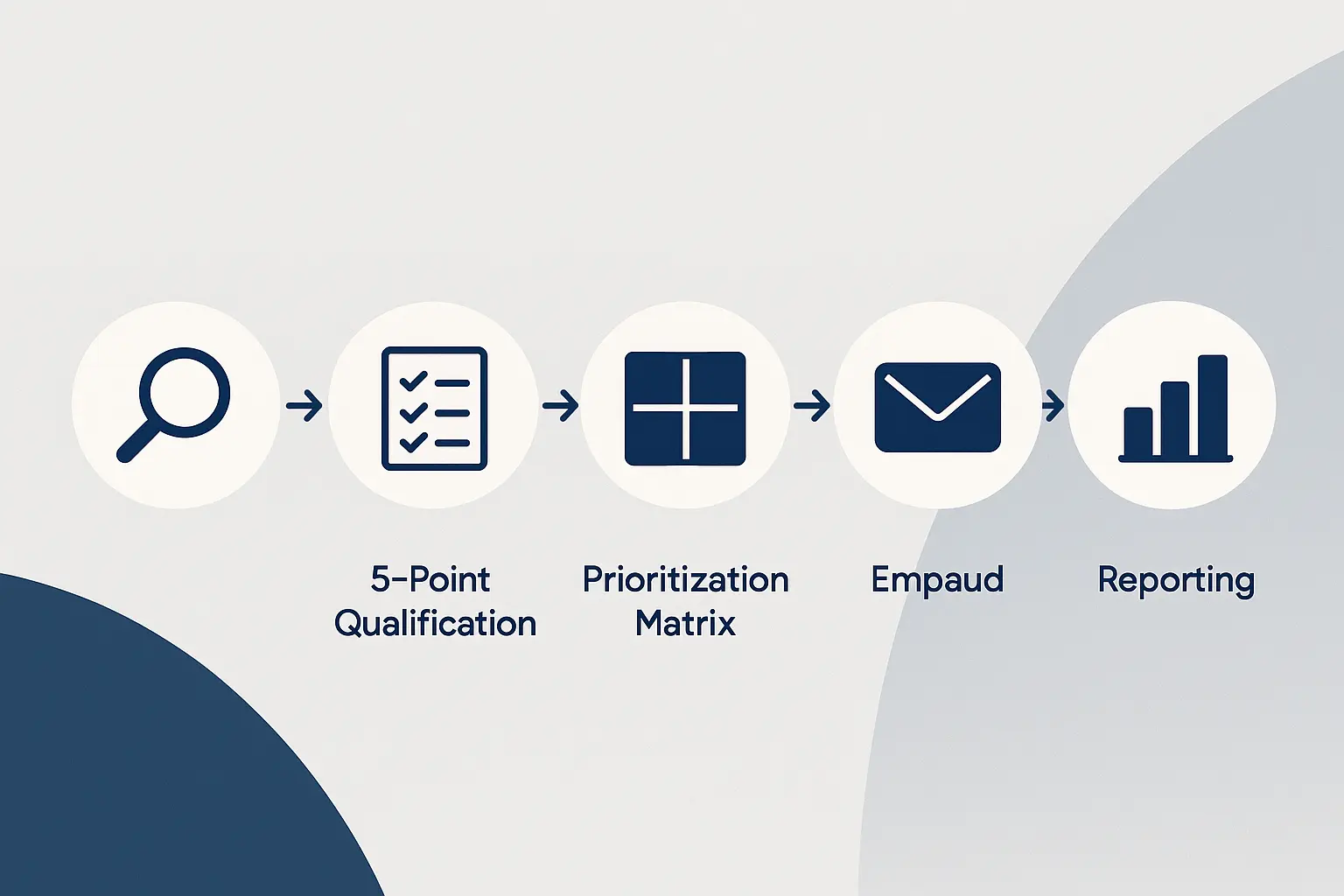
To turn this opportunity into a repeatable service, you need a process. This four-step workflow is designed for agencies to manage the work efficiently, report on it transparently, and scale it across multiple clients.
Step 1: Discover Your Client’s Digital Footprint
First, you need to find where your clients are being mentioned. While manual searching works, it doesn’t scale. The key is to set up automated monitoring using a mix of tools:
-
Google Alerts (Free): A simple, no-cost starting point. Set up alerts for your client’s brand name, product names, and the names of key executives.
-
SEO Platforms (Paid): Tools like Ahrefs, Semrush, or Moz have powerful brand monitoring features. You can use Ahrefs’ Content Explorer with a search query like “Client Brand Name” -site:clientbrand.com to find mentions across the web while excluding their own site.
-
Media Monitoring Tools: For clients with a larger footprint, dedicated tools like Brandwatch or Mention can provide more comprehensive results, including on social media.
Your goal is to build a master list of all online mentions. Don’t worry about qualifying them yet—just focus on discovery.
Step 2: Qualify Your Opportunities
Not every mention is worth pursuing. A link from a low-quality, irrelevant site can do more harm than good. Create a simple checklist to qualify each opportunity before you even think about outreach.
-
Site Authority: Is the website credible? Use a metric like Ahrefs’ Domain Rating (DR) or Moz’s Domain Authority (DA) as a quick filter. Focus your initial efforts on sites with a DR of 40 or higher.
-
Relevance: Is the website’s topic relevant to your client’s industry? A link from a niche blog in their field is far more valuable than one from an unrelated directory.
-
Context: Is the mention positive or neutral? Only pursue links from content that portrays your client in a good light.
-
Likelihood of Linking: Does the article already contain external links? If the author is already linking out to other resources, they are far more likely to grant your request. A forum comment, for instance, is less likely to be updated than a well-researched blog post.
This qualification step saves you from wasting time on outreach that will never convert and ensures the links you do get are the ones that actually move the needle.
Step 3: Craft Your Personalized Outreach
This is where most people fail. They send a generic, self-serving template that gets ignored or instantly deleted. Your agency can stand out by being human, helpful, and personal.
Remember, research by Backlinko shows that personalized outreach emails have a 33% higher response rate than generic ones. That’s a massive difference. Instead of a template, use a simple, repeatable framework:
-
Find the Right Person: Look for the article’s author or a site editor. Avoid generic info@ addresses whenever possible.
-
Lead with a Genuine Compliment: Start by saying what you liked about their article. Be specific. “I really enjoyed your article on digital marketing trends” is generic. “Your point about AI’s role in content personalization was fascinating” is personal.
-
Make the Connection: Briefly and politely point out that you saw they mentioned your client.
-
The Gentle Ask: Frame your request as a benefit to their readers. Instead of “Give us a link,” try something like: “I was wondering if you might consider adding a link to the brand name? It could be helpful for your readers who want to learn more about [the company/product].” Provide the exact URL you want them to use.
Step 4: Track, Report, and Scale
For agencies, process is profit. You need a centralized place to track every opportunity, from discovery to acquisition. A simple Google Sheet or your project management tool can work perfectly.
Your tracker should include:
- Mention URL
- Website Domain Rating (DR)
- Contact Person & Email
- Outreach Date
- Follow-Up Date
- Status (e.g., Found, Contacted, Replied, Link Acquired, Rejected)
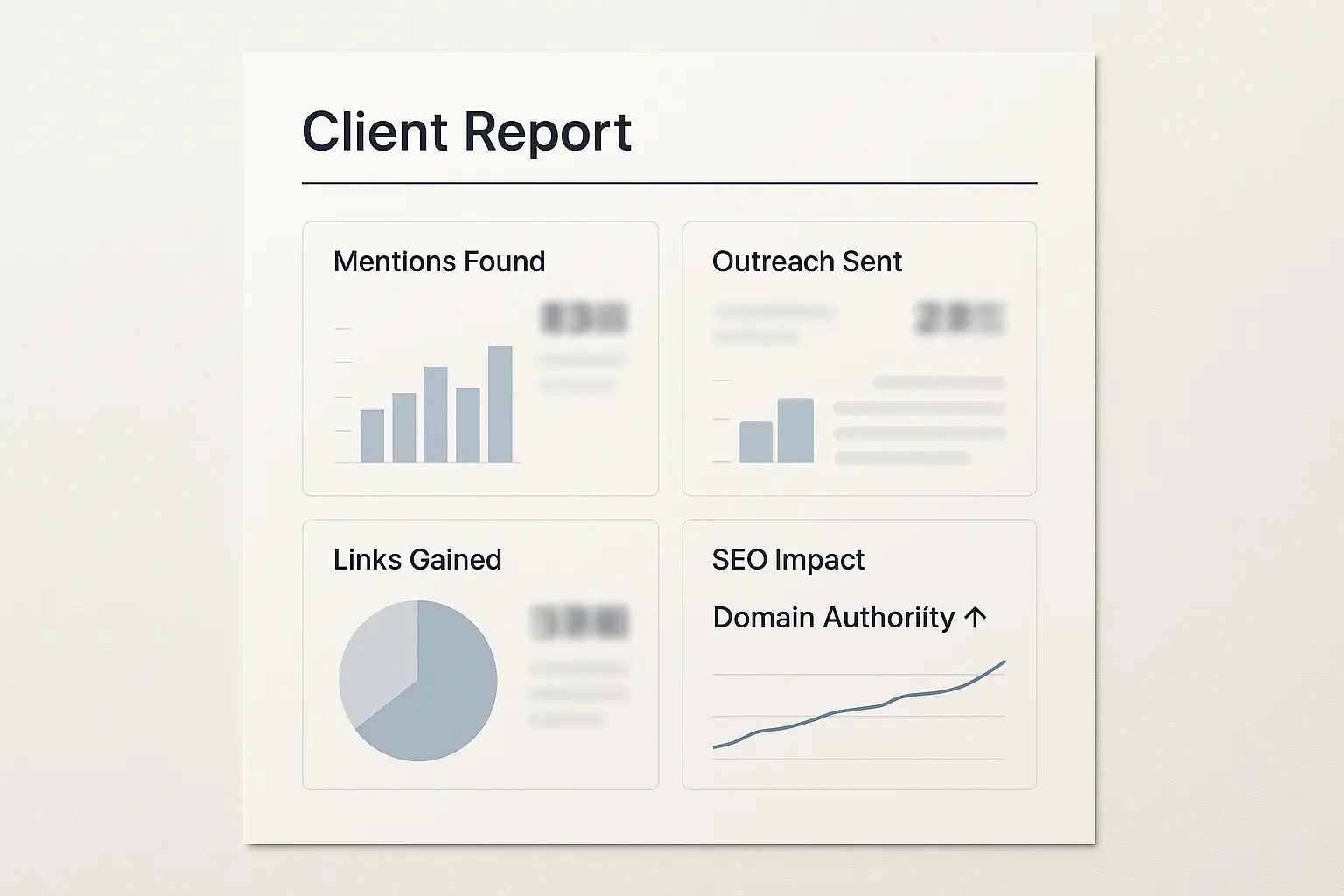
This isn’t just for internal organization; this tracker becomes the basis for your client reports, clearly demonstrating the value and ROI of your work. It’s a core component of professional white-label SEO services, showing clients the tangible results you’re driving on their behalf.
Beyond Manual Workflows: The Role of Automation
Executing this workflow for one client is straightforward. Executing it for ten clients requires efficiency. As your agency grows, manual discovery and tracking quickly become bottlenecks.
This is where leading agencies gain an edge. By leveraging AI-powered SEO automation, you can streamline the most time-consuming parts of this process. Automated tools can handle discovery, initial filtering, and even contact discovery, freeing your team to focus on the high-value work of crafting personalized outreach.
This automated approach fits perfectly within a larger omnichannel SEO strategy. By monitoring brand signals across all channels—from PR hits to social media chatter—you can create a holistic system that turns every bit of brand awareness into measurable SEO value.
Frequently Asked Questions (FAQ)
What tools are best for finding unlinked mentions?
For agencies starting out, a combination of Google Alerts (free) and the brand monitoring features within an SEO suite like Ahrefs or Semrush is the most effective and cost-efficient stack.
What kind of success rate can I expect?
This varies widely based on the quality of the site and the personalization of your outreach. With a highly personalized and helpful approach, success rates of 10–20% are achievable. Without personalization, expect that number to be much closer to 1–2%.
What if the editor asks for money to add the link?
Politely decline. If an editor asks for payment, it’s no longer an earned editorial link—it’s a sponsored one. This violates Google’s webmaster guidelines and is not a sustainable or ethical link-building practice. Focus on building genuine relationships.
How often should I follow up?
One gentle follow-up email 5–7 days after your initial outreach is appropriate. If you don’t hear back after that, it’s best to move on to the next opportunity.
Turning Mentions into Momentum
Unlinked brand mentions aren’t a problem to be fixed. They are a clear sign that a client’s branding and PR efforts are working. Your job as their agency partner is to connect that brand momentum to SEO performance.
By building a simple, scalable reclamation workflow, you can provide immense value, secure high-authority backlinks that are otherwise incredibly difficult to earn, and create a powerful new revenue stream for your agency. Start with one client, build your process, and turn their existing brand buzz into a lasting competitive advantage.