

Everyone talks about “integrated marketing,” but for agency leaders, the term often feels like a buzzword without a blueprint. You’re told to be everywhere, maintain brand consistency, and prove ROI across channels, yet you’re rarely given a practical system for making it happen—especially at scale, for multiple clients.
The ad-hoc approach of running disconnected campaigns doesn’t work anymore. It burns out your team, creates inconsistent messaging, and leaves value on the table.
The data confirms the high stakes: companies with strong omnichannel strategies retain an average of 33% of their customers, compared to just 12.9% for those with weaker approaches. More importantly, effective omnichannel engagement boosts annual revenue by an average of 9.5%.
The challenge for most agencies isn’t understanding the why—it’s building the how. You don’t need another high-level guide. You need an operational framework: a Unified Content Engine that offers a systematic approach to creating and distributing content, powering every channel from a single, strategic core.
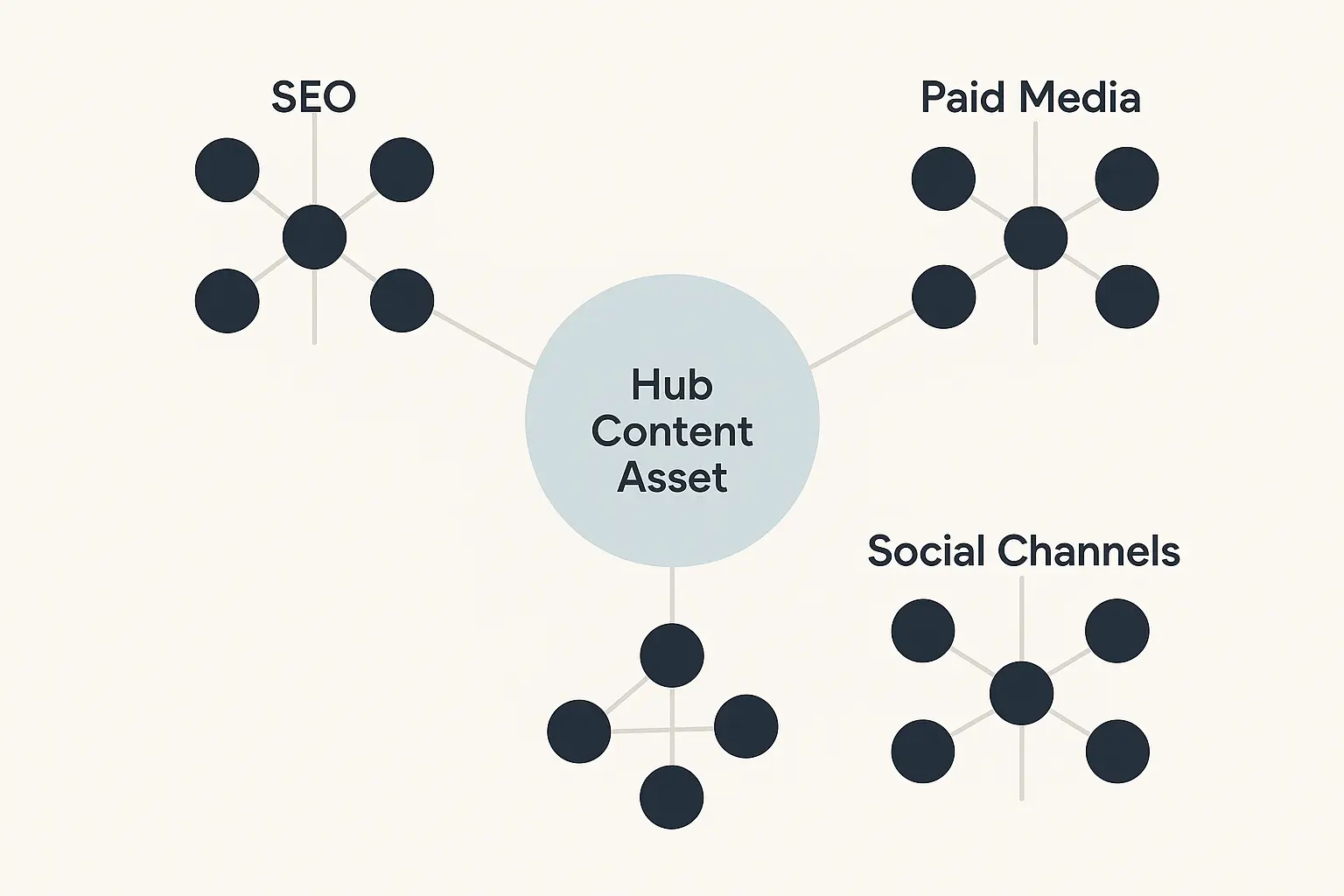
The Unified Content Engine: A Framework for Scalable Agency Growth
A Unified Content Engine shifts your agency’s mindset from creating disposable, campaign-specific assets to building a central library of interconnected content. The goal is simple: to maximize the lifetime value of every major content investment.
Instead of your SEO, paid media, and social teams operating in silos, they draw from a single, powerful source. This approach ensures message consistency and creates a feedback loop where insights from one channel inform the strategy for others. The result is a more efficient, scalable, and impactful content operation for every client you serve.
This model is built on four operational pillars that will transform your agency from a campaign-based service provider to the architect of a client’s long-term growth.
Pillar 1: The Core Asset — Creating Content with Maximum Lifetime Value
The engine starts with one substantial piece of content—the Core Asset. This isn’t just another blog post; it’s a foundational piece of intellectual property designed from day one to be repurposed.
Think of a comprehensive research report, an in-depth webinar, a proprietary data study, or a definitive “how-to” guide. The key is to choose a format with enough depth to be broken down into dozens of smaller pieces. Before production begins, you must plan the Core Asset with its future “atomized” formats in mind. This ensures every section can stand alone or be recontextualized for different channels.
Pillar 2: Content Atomization in Action
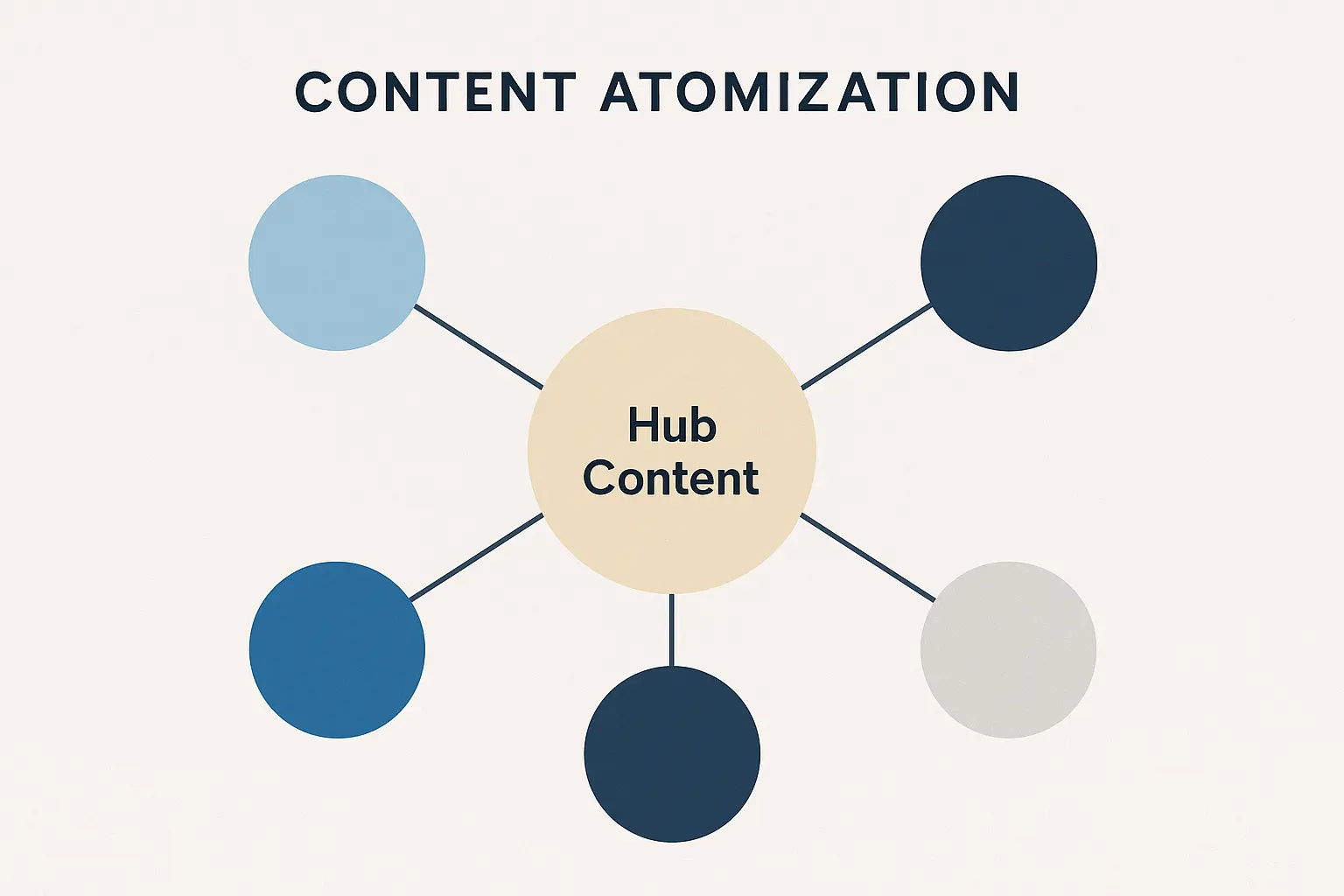
Content atomization is the process of breaking down your Core Asset into smaller, channel-specific pieces. This is where your agency’s efficiency skyrockets. By starting with one approved, high-value source, you eliminate redundant research, writing, and design cycles.
A single Core Asset, like a “2025 State of B2B Marketing” report, can fuel an entire quarter’s worth of content:
For SEO: Four long-form blog posts, each expanding on a key chapter of the report and targeting specific long-tail keywords.
For Social Media: Ten LinkedIn posts with key statistics, twenty tweets with pull quotes, and three short-form video scripts for Instagram Reels or TikTok.
For Paid Media: Five distinct ad copy variations highlighting different pain points solved in the report, paired with compelling statistical graphics for display ads.
For Email Marketing: A three-part newsletter series that teases findings from the report to drive downloads and nurture leads.
This isn’t just repurposing; it’s a strategic redistribution of a core message, tailored to the unique language of each platform.
Pillar 3: The Cross-Channel Promotion Calendar
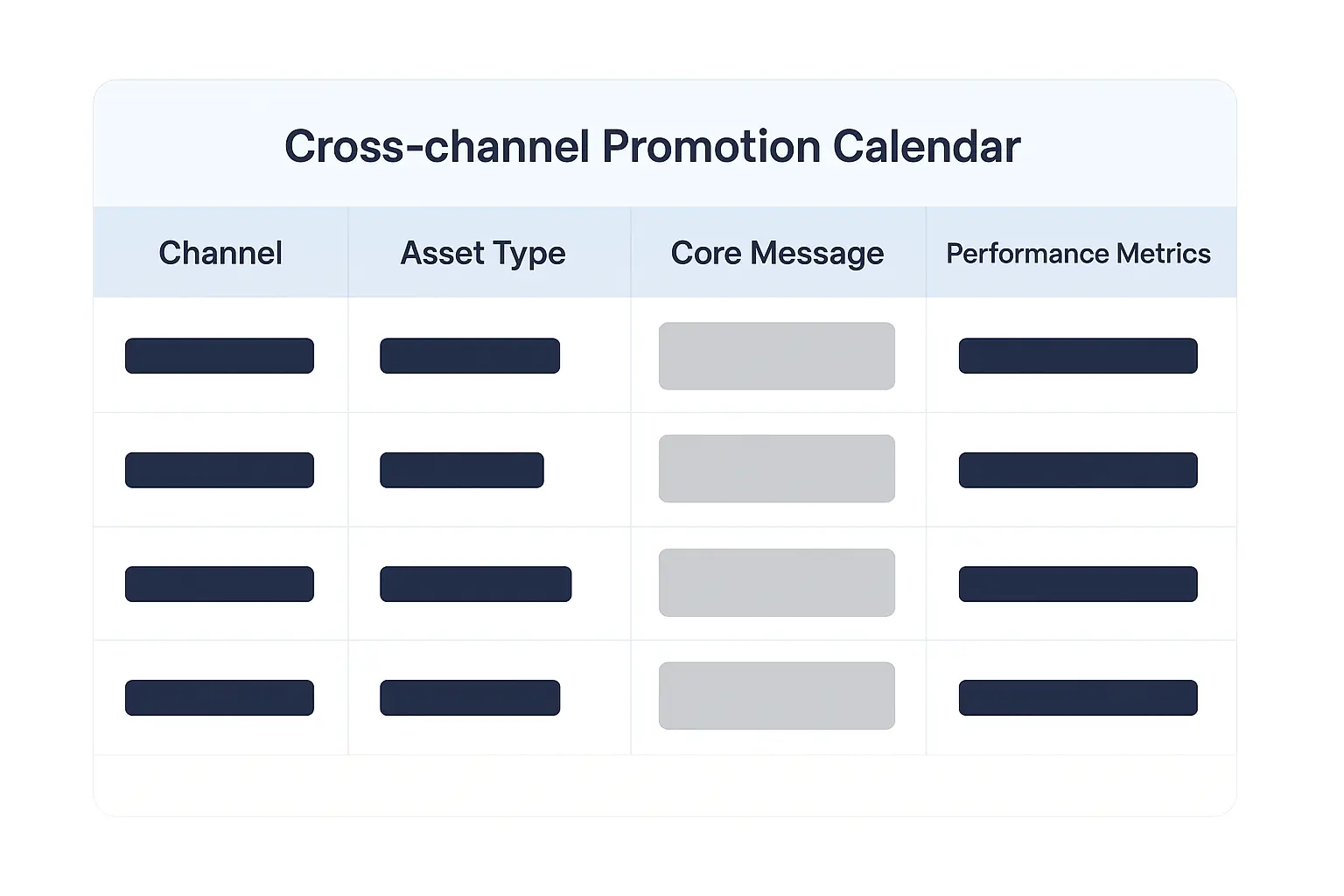
Once you’ve created your assets, deploying them requires just as much strategy. A cross-channel promotion calendar is your operational command center, orchestrating the rollout to create a surround-sound effect for your client’s audience.
This calendar moves beyond a simple social media schedule. It aligns every asset—from blog post publication dates to email drops and ad flight schedules—around a single, unified theme. This ensures a prospect encounters a consistent, reinforcing message at multiple touchpoints. And the approach is proven: integrated campaigns using three or more channels see a 28.7% higher purchase rate than single-channel efforts.
A robust calendar should track:
- Channel: Where the asset will be published.
- Asset Format: Blog post, video, ad creative, etc.
- Core Message Alignment: Which key talking point from the Core Asset it supports.
- Timeline: Publication and promotion dates.
- Key Performance Metric: What defines success for this specific asset (e.g., organic traffic, ad CTR, social engagement).
Pillar 4: Topic Clusters for a Two-Front War
The final pillar aligns your content architecture with your commercial goals. The Unified Content Engine drives both long-term organic growth and short-term paid acquisition simultaneously.
Here’s how it works:
- The SEO Front: Your Core Asset acts as the “pillar page” for a broad, high-value topic. The atomized blog posts serve as the “cluster content,” targeting more specific, long-tail keywords that link back to the pillar. This structure signals topical authority to search engines, building sustainable organic visibility over time.
- The Paid Media Front: The same atomized assets—short-form videos, infographics, and targeted ad copy—can be used in paid campaigns to attract high-intent leads. You can target audiences with laser precision based on the specific sub-topic each asset addresses.
This dual-purpose approach means your content budget works twice as hard. The assets you create for your long-term SEO strategy are the same ones fueling your immediate lead generation efforts, maximizing the ROI of your entire content investment.
Putting It All Together: A White-Label Engine for Your Agency
Designing and operating a Unified Content Engine is a powerful differentiator for any agency. It demonstrates a sophisticated strategy and delivers superior, integrated results for clients.
However, the operational reality can be daunting. It requires a dedicated team with expertise in SEO, content strategy, writing, design, and analytics—all working in perfect sync. Building that capacity in-house is costly, time-consuming, and difficult to scale as your agency grows.
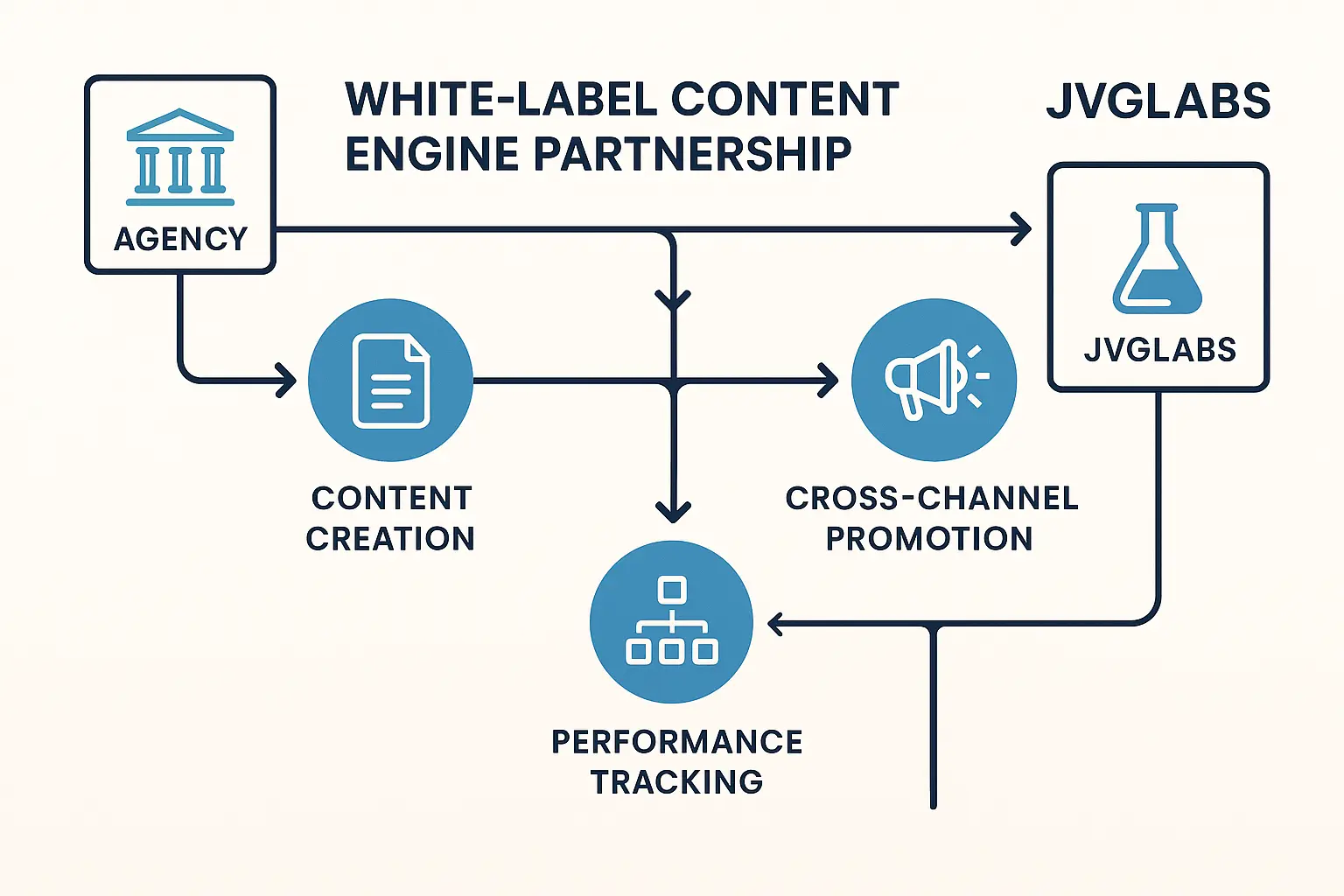
This is where a dedicated execution partner becomes a strategic advantage. Instead of shouldering the entire production burden, you can focus on client strategy and relationships. A specialized team can build and run the content engine for you, working invisibly in the background. With a white-label SEO partner, all reports, assets, and results are delivered under your brand, reinforcing your agency’s value.
JVGLABS specializes in this exact model. We are the SEO and content execution team behind some of the fastest-growing agencies, combining expert strategy with AI-powered SEO automation to handle up to 90% of traditional SEO and content tasks. We build the engine, you drive the growth.
Frequently Asked Questions
Is this framework too complex for my smaller clients?
Not at all. The Unified Content Engine is a scalable model. For a smaller client, the “Core Asset” might be a single, in-depth guide rather than a massive research report. The principle remains the same: create one strong piece and atomize it to maximize its reach and value. The goal is efficiency, which benefits clients of all sizes.
Will I lose strategic control by outsourcing execution?
No. With a true white-label partner like JVGLABS, your agency always owns the client relationship and sets the overarching strategy. We operate as your execution arm, taking direction from you and handling the tactical implementation in the background. You remain the single point of contact and the strategic lead for your client.
How does this model improve agency profitability?
This model boosts profitability in two key ways. First, it eliminates the fixed overhead of hiring, training, and managing a large in-house content and SEO team. You access top-tier talent on a flexible, scalable basis. Second, the engine model is inherently more efficient, reducing the time and resources needed to deliver high-quality, multi-channel content and improving your margins on every client retainer.
How quickly can a content engine be implemented?
Our specialization in this model makes onboarding fast and seamless. We can typically begin building the strategic foundation for a new client’s content engine within weeks. Our focus is on agility—delivering results without disrupting your existing client relationships or workflows.
Stop Campaigning, Start Building
The most successful agencies are no longer just running campaigns; they are building sustainable growth engines for their clients. The Unified Content Engine provides the framework to make that shift, turning content from a recurring expense into a compounding asset.
By adopting this model, you can deliver more consistent, impactful results, operate with greater efficiency, and scale your agency’s capacity without scaling your headcount.
Ready to build a white-label content engine for your agency? Learn how JVGLABS can become your invisible execution partner and help you scale profitably.