

Are you tired of the endless SEO hamster wheel? Chasing keywords, building links, and reporting on incremental gains, only to see a competitor with a stronger brand presence effortlessly outrank you.
You know there’s a better way—a strategy that builds a defensible asset for your clients, not just a temporary spot on page one.
The truth is, traditional SEO is hitting a wall. Link quotas and technical fixes are now table stakes. The real, sustainable advantage lies in building brand authority. The problem? “Building a brand” often feels vague and hard to measure, leaving agencies struggling to package it as a concrete, high-value service.
That’s where the SEO Flywheel Effect comes in. It’s a strategic framework that turns brand-building activities into a self-sustaining engine for compounding SEO results. It’s how you stop chasing algorithms and start building an undeniable brand moat.
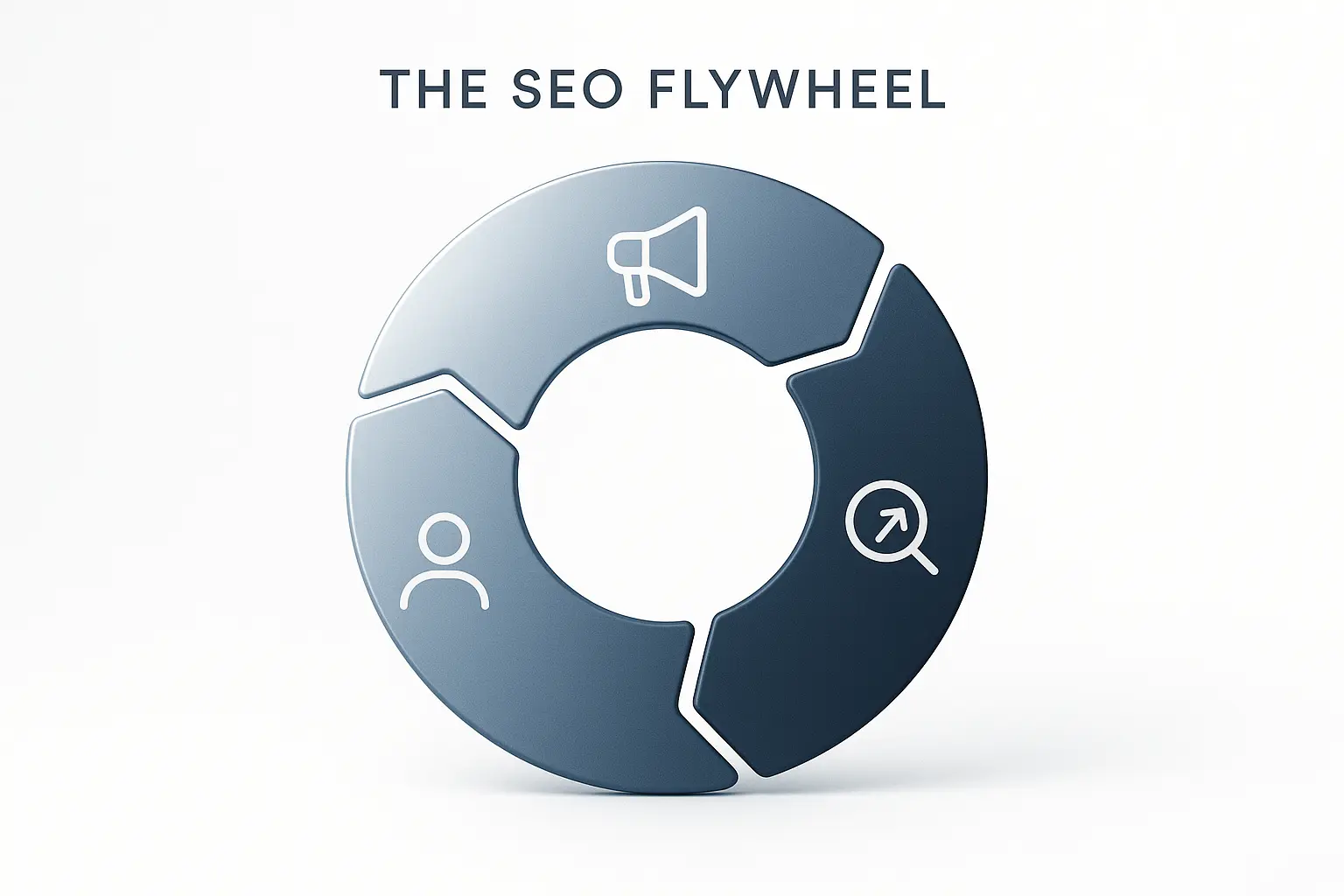
The Physics of the Flywheel: How Brand Authority Creates Unstoppable SEO Momentum
Think of a heavy flywheel. It takes significant effort to get it moving, but once it’s spinning, it stores energy and rotates with minimal effort, creating powerful, consistent output.
The SEO Flywheel operates on the same principle. It transforms one-off marketing pushes into a continuous cycle where each component feeds the next:
- Fuel (Data-Driven Thought Leadership): You create a core piece of expert content—original research, a unique industry report, or a strong point of view—that serves as the flywheel’s fuel.
- Push (High-Impact Digital PR): You amplify this content through strategic outreach, earning high-authority media placements, expert mentions, and powerful backlinks. This is the initial push that gets the flywheel spinning.
- Return (Branded Search Growth): This amplification drives brand awareness and credibility. As more people hear about your client, their branded search volume increases—a powerful signal of authority to Google.
- Momentum (Increased Authority): Google rewards this authority with better rankings for your target commercial keywords. This increased visibility makes it easier for your next piece of thought leadership to gain traction, requiring less effort for an even greater impact.
This isn’t just theory. It’s how Google’s E-E-A-T (Experience, Expertise, Authoritativeness, Trustworthiness) guidelines work in practice. The flywheel systematically builds all four pillars, creating a compounding advantage that competitors can’t replicate with technical SEO alone.
Component 1: The Fuel – Data-Driven Thought Leadership
The flywheel can’t spin without fuel. This fuel isn’t just another blog post; it’s a high-value content asset designed to be a “citation magnet.” This is the kind of content that journalists, bloggers, and industry leaders want to reference because it makes them look smarter.
Your role as an agency is to help clients create this fuel by:
- Conducting original research: Survey their customer base to uncover a unique statistic.
- Analyzing proprietary data: Turn their internal business data into a compelling industry trend report.
- Developing a strong, contrarian opinion: Create a well-researched argument that challenges conventional industry wisdom.
This foundational asset is the centerpiece of your strategy. It’s what gives your outreach campaigns a legitimate, newsworthy angle, moving the conversation from “please link to us” to “here’s some valuable data for your audience.”
Component 2: The Push – High-Impact Digital PR Campaigns
With your fuel in hand, the next step is the “push”—a strategic digital PR campaign designed for maximum impact. This is where you move far beyond transactional link-building to focus on earning placements that build true brand equity.
The goal isn’t just a link; it’s a mention in a top-tier publication that your client’s customers actually read and trust. While research shows that the top-ranking page on Google has, on average, 3.8 times more backlinks than pages in positions 2-10, quality is what truly separates the winners. A single link from a respected industry journal is worth more than a hundred low-quality directory links because it sends a much stronger authority signal.
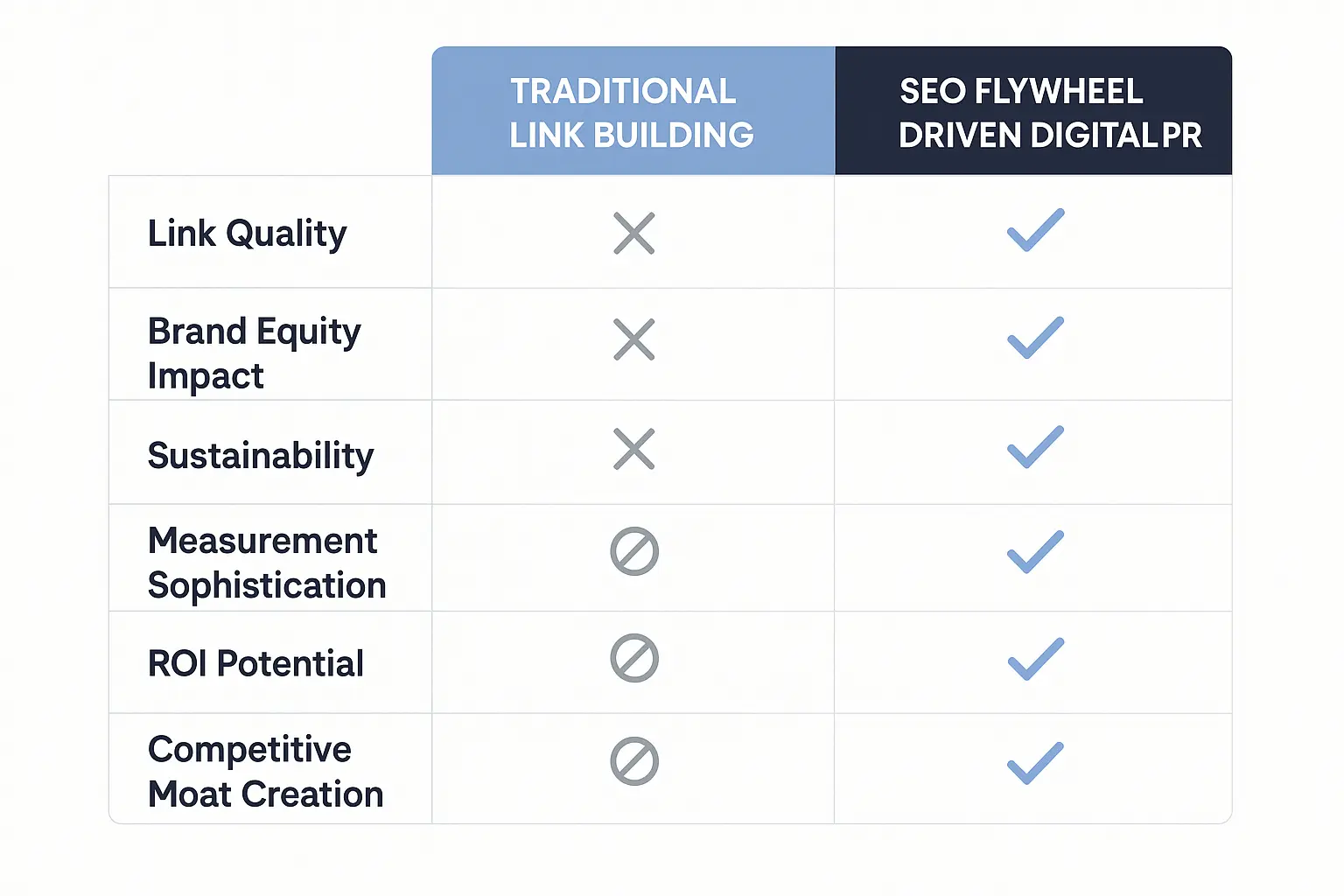
This highlights the core difference between the flywheel approach and outdated tactics. As you start thinking about how to scale SEO delivery (https://www.jvglabs.com/services/white-label-seo), focusing on quality outreach becomes the most efficient path to long-term results.
Component 3: The Compounding Return – Measuring Branded Search Growth
Here’s the part most SEO strategies miss. The ultimate proof that your flywheel is working isn’t the link count or even organic traffic—it’s the growth of branded search volume.
When people start searching for your client’s brand name directly (“Nike running shoes” instead of “running shoes”), it sends the strongest possible authority signal to Google. It says, “This brand is a recognized entity in this space.” Google then rewards that authority by giving the brand more visibility for its non-branded, commercial keywords.
Studies show that brands can see a 6-12% average increase in branded search volume after significant media coverage. This is your key performance indicator for the brand moat. Tracking this metric lets you directly connect your PR and content efforts to a powerful SEO signal that has a lasting impact on the entire domain.
The Flywheel’s Dashboard: Advanced ROI Models Your Competitors Aren’t Using
To sell a premium strategy, you have to demonstrate its premium value. The market is already shifting; 64% of brands now actively measure the SEO impact of their PR campaigns. Your agency can lead this charge by moving beyond vanity metrics and building a dashboard that tells the full ROI story.
This means connecting the dots that others miss:
- Multi-Touch Attribution: Show how an article in a major publication (first touch) led to a direct visit weeks later (last touch), contributing to a final conversion.
- SERP Correlation Analysis: Overlay the dates of major media placements with your client’s keyword ranking reports. You’ll quickly see a pattern of ranking improvements following significant PR wins.
- Branded vs. Non-Branded Growth: Report on the growth of non-branded organic traffic as a direct result of the lift in brand authority, which is powered by your flywheel efforts.
A dashboard like this lets you clearly demonstrate the compounding value of your work, justifying higher retainers and cementing your agency as a strategic partner, not just a vendor. Sophisticated reporting is a core component of any omnichannel growth SEO (https://www.jvglabs.com/services/omnichannel-seo) strategy.

Packaging the Flywheel: How to Sell Brand-Driven SEO as a Premium Service
How do you turn this powerful framework into a service your clients will eagerly invest in? You package it as a complete, end-to-end brand authority program.
Instead of selling “10 links per month,” you sell a system for building a defensible market position. Here’s a simple way to structure the offering:
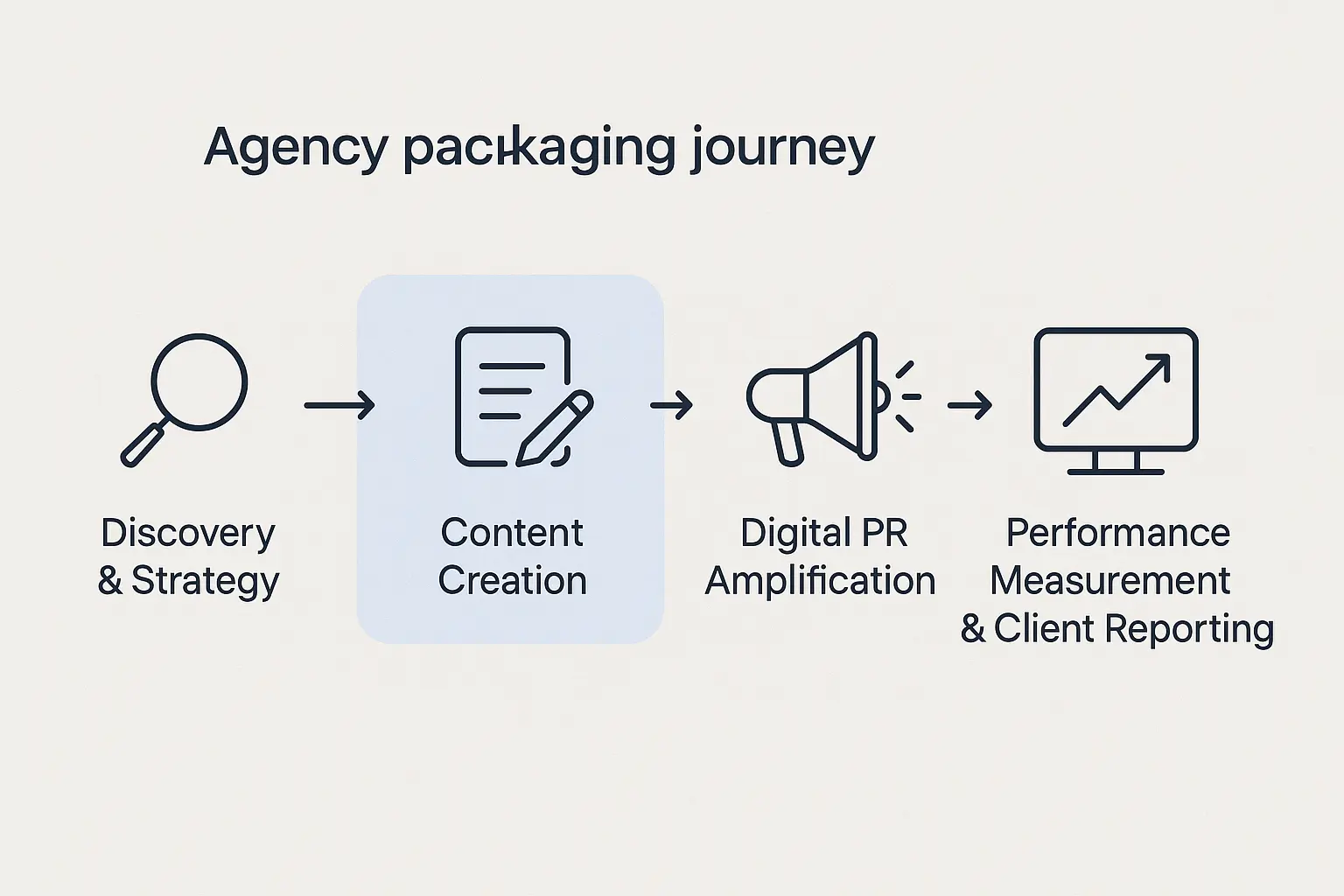
- Phase 1: Brand Authority Audit & Strategy: Analyze the client’s current brand perception, competitor brand strength, and identify content gaps to fuel the flywheel.
- Phase 2: Core Asset Development: Produce the foundational thought leadership piece—the original research, the industry report, the data study.
- Phase 3: Strategic Amplification & Outreach: Execute the high-impact digital PR campaign to earn placements in top-tier media outlets.
- Phase 4: Performance Measurement & Momentum Reporting: Deliver monthly reports using your advanced ROI dashboard, showcasing branded search growth, SERP correlations, and the overall momentum of the flywheel.
By framing the service this way, you elevate the conversation from costs to investment. You’re not just building links; you’re building their brand’s long-term value. This is how you escape the commoditization trap and become an indispensable partner.
Frequently Asked Questions
How do you justify the higher cost of a flywheel strategy to clients?
Focus on the shift from a recurring expense to a long-term asset. Traditional link building is like renting a billboard—the value stops when you stop paying. The SEO Flywheel builds brand equity, an asset that continues to deliver value and compounds over time. You’re building a moat, not just renting traffic.
What kind of results can we expect, and on what timeline?
The initial “push” can deliver immediate brand visibility and referral traffic within the first three to six months. The compounding SEO benefits, like improved organic rankings for commercial terms, typically follow in months six to twelve as the brand’s authority builds. One study found that digital PR can increase organic traffic by an average of 124% over two years in competitive niches. It’s a long-term play with transformative results.
Does the SEO Flywheel work for B2B and niche industries?
Absolutely. In many ways, it’s even more effective. B2B and niche industries are often won on expertise and trust. A data-driven thought leadership piece, amplified to respected industry journals, is the most direct way to establish a client as the definitive expert in their field, attracting high-value leads and customers.
How is this different from standard content marketing?
Standard content marketing often focuses on producing a steady volume of blog posts targeting various keywords. The SEO Flywheel concentrates resources on creating one exceptional, data-backed “hero” asset specifically designed for PR amplification. It prioritizes authority and credibility over content volume.
Build Your Brand Moat in the Age of AI
As AI continues to reshape search, one factor will become more important than ever: brand authority. Search engines will increasingly rely on brand signals to differentiate legitimate experts from content farms. A strong brand is the ultimate defense against algorithmic volatility.
By adopting the SEO Flywheel model, you’re not just offering a more effective SEO service—you’re future-proofing your clients’ businesses. You’re giving them a sustainable, compounding advantage that builds real, measurable brand equity. It’s time to step off the hamster wheel and start building something that lasts.