

It’s February, and your landscaping client’s phone is silent. It’s April, and your HVAC client who specializes in heating is wondering where the leads went. For agencies managing SEO for seasonal home services, this is the dreaded “off-season.” The temptation is to pull back on the budget and wait for the seasonal rush to kick in again.
But what if those quiet months were your greatest strategic advantage?
Consider this: 74% of homeowners do their research online before hiring a home service professional. That research doesn’t just happen the day their AC unit breaks. It happens on cold winter nights when they’re dreaming of a summer patio, or on cool spring mornings when they’re wondering if their aging furnace can survive another year.
By treating SEO as a seasonal sprint, agencies leave a massive opportunity on the table. The clients who win aren’t the ones who shout the loudest during peak season; they’re the ones who have been quietly building trust and authority all year. This approach transforms their SEO from a reactive, feast-or-famine cycle into a proactive, year-round growth engine.
The Seasonal SEO Rollercoaster: Feast or Famine
For businesses like HVAC, landscaping, roofing, and pool services, search demand follows a pattern of dramatic peaks and valleys. When it’s 95 degrees in July, “AC repair” searches skyrocket. When the first polar vortex hits, “furnace repair” is all anyone can type into Google.
This volatility leads many to adopt a “peak season” approach to SEO, pouring all their resources into ranking for high-intent keywords for just a few months. The problem? You’re entering a crowded, expensive race at the finish line, having done none of the training.
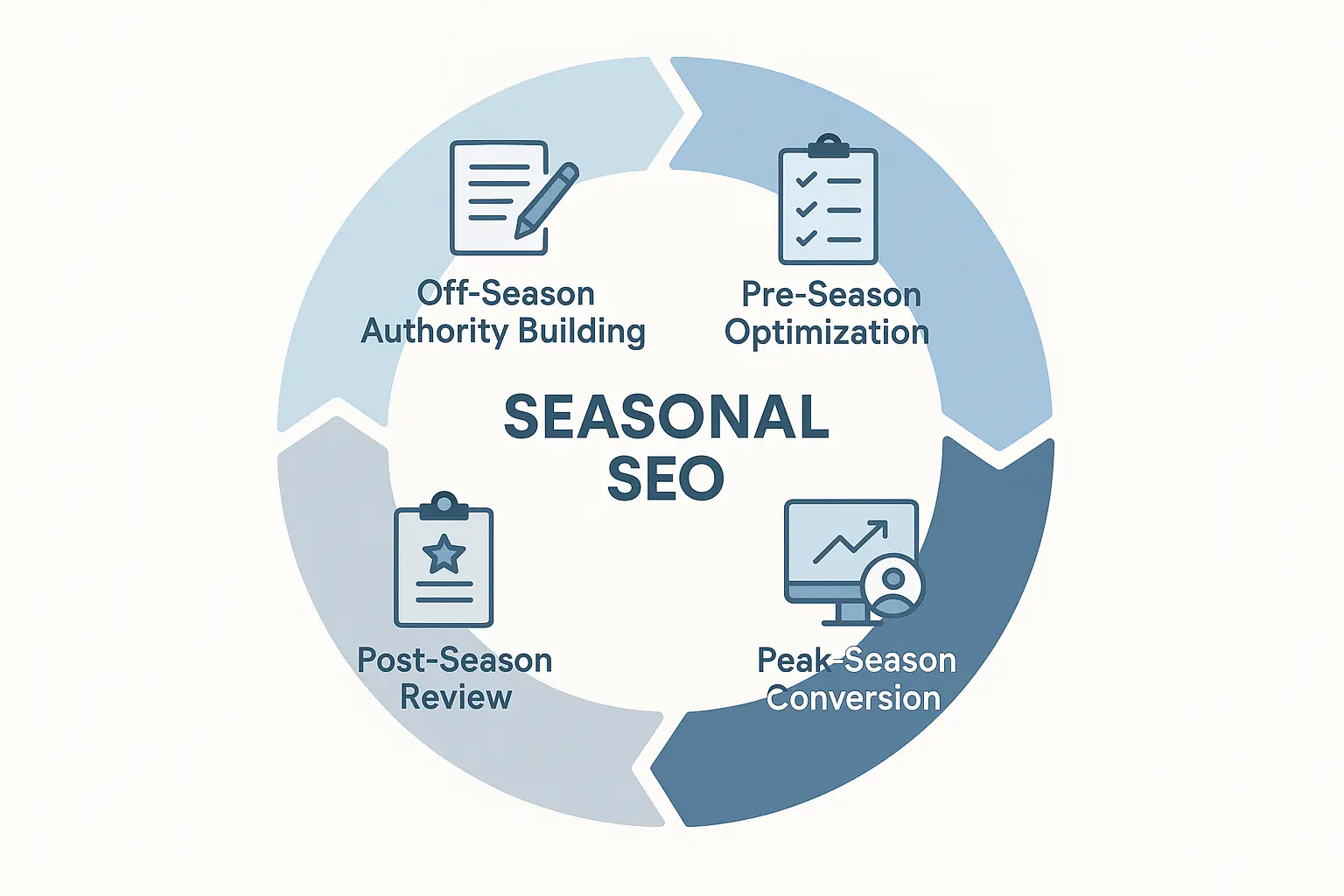
This reactive strategy creates several problems:
-
You’re always playing catch-up: It takes time for Google to recognize and reward your content. If you only start creating content in May for the summer rush, you’re already behind competitors who have been building authority since January.
-
You miss the “research phase” buyer: You’re ignoring the 74% of homeowners who plan ahead. They’re searching for “landscaping ideas for spring” in the dead of winter. If you’re not there with answers, another company will be.
-
Authority crumbles in the off-season: Consistent, high-quality content signals to Google that you are a reliable expert. When your content goes dormant for six months, you lose that momentum.
Shifting from Seasonal Tactics to a Year-Round Strategy
The solution is to reframe the off-season. It’s not a time to pause; it’s a time to build the foundation for peak-season success. An “always-on” content strategy focuses on capturing different types of customer intent throughout the year, ensuring your client is the trusted name people think of when they’re finally ready to buy.
The goal is simple: be the answer to their questions before they have an emergency. This approach turns a cold search for an “emergency plumber” into a warm call to the company that already taught them how to fix a leaky faucet with a helpful blog post three months earlier.
Building the 12-Month Content Calendar: A Blueprint for Success
An effective year-round strategy aligns content with the customer’s mindset through every season. Instead of thinking only about “buy now” keywords, you create a content ecosystem that serves customers at every stage of their journey.
Let’s use a landscaping company as an example.
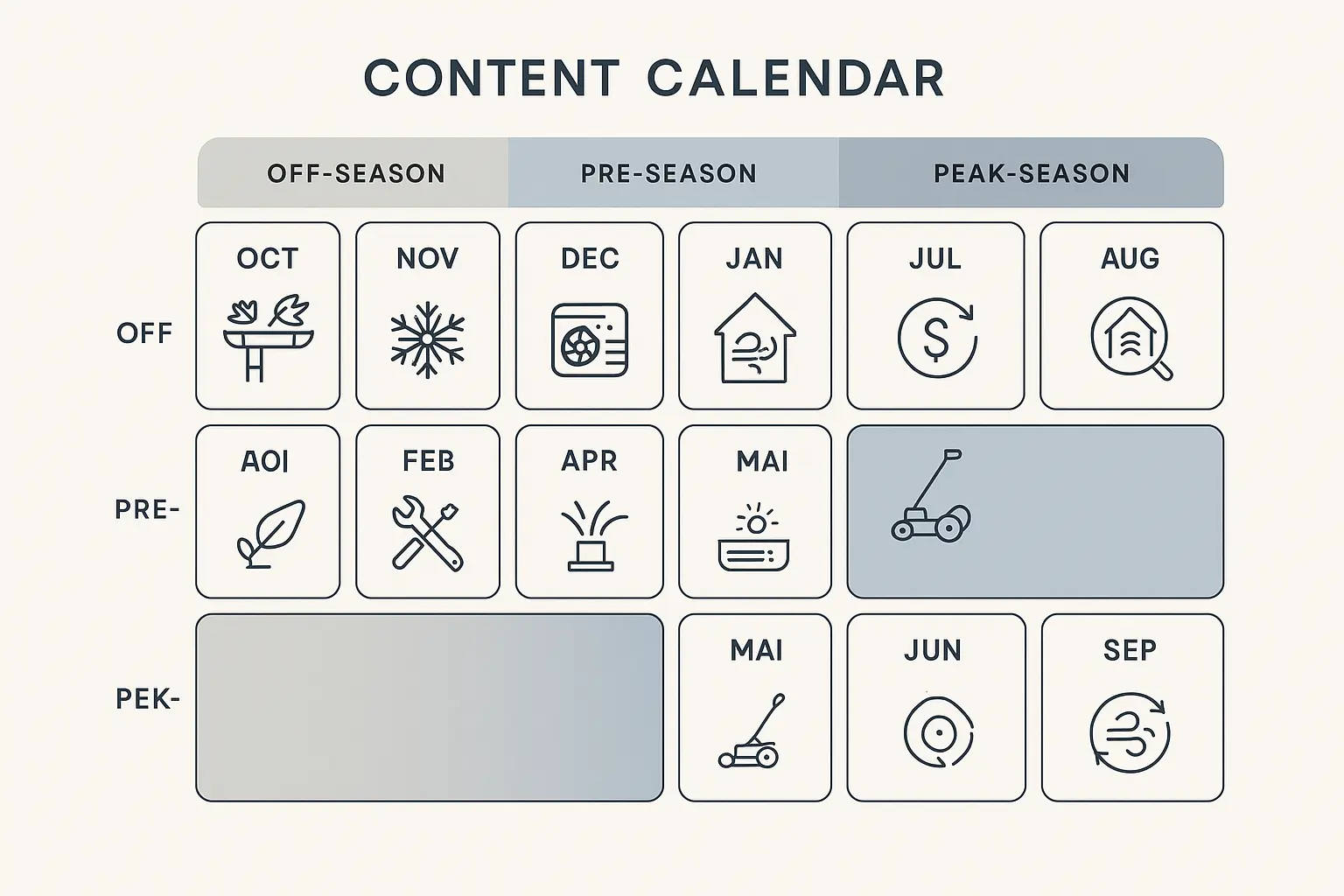
Off-Season (Winter): The Foundation & Dream Phase
This is when homeowners are inside, planning and dreaming. Your content should inspire and educate them.
-
Topics: “Backyard Design Ideas for 2024,” “How to Plan Your Spring Garden,” “Cost of a New Patio vs. a Deck.”
-
Keywords: Focus on informational, top-of-funnel keywords. Think “ideas,” “how to,” “planning,” and “costs.”
-
Why it works: You’re capturing early interest and building brand awareness. Searches for “landscaping ideas for spring” peak in late winter. By providing value now, you become the default choice later.
Shoulder Season (Spring & Fall): The Prep & Wind-Down Phase
As the weather changes, homeowners shift from dreaming to doing. Their searches become more specific and action-oriented.
-
Topics: “How to Prepare Your Lawn for Winter,” “Spring Cleanup Checklist for Your Yard,” “When Is the Best Time to Prune Trees in [State]?”
-
Keywords: Use a mix of informational and navigational keywords. They’re looking for guides, checklists, and seasonal tips.
-
Why it works: This content establishes your client as a local expert. It’s also the perfect time to promote seasonal services like “spring cleanup” or “fall aeration,” guiding the reader from a how-to article to a service page.
Peak Season (Summer): The Action & Emergency Phase
This is when intent is highest and customers need immediate solutions. Your content must be direct, local, and conversion-focused.
-
Topics: “Emergency Sprinkler Repair [City],” “Best Drought-Resistant Plants for a [City] Summer,” “Get a Free Estimate for a New Retaining Wall.”
-
Keywords: Target commercial, bottom-of-funnel keywords. These include “repair,” “install,” “near me,” and “quote.”
-
Why it works: All the authority you built during the off-season now helps you rank for these highly competitive, high-value keywords. And with 46% of all Google searches seeking local information, optimizing for “near me” is non-negotiable.
Beyond Blog Posts: Optimizing the Entire Customer Journey
A year-round strategy isn’t just about blog content. It’s about creating a comprehensive digital presence that builds trust at every touchpoint.
-
Google Business Profile (GBP): Keep it active all year. Post seasonal offers, answer questions, and, most importantly, continuously gather reviews. With 88% of consumers trusting online reviews as much as personal recommendations, a well-managed GBP is a 24/7 sales tool.
-
Service Pages: Don’t just have one “HVAC Services” page. Build out dedicated pages for “Ductless Mini-Split Installation,” “Furnace Maintenance,” and “Smart Thermostat Integration.” An experienced [Link 3: agency SEO partner] can help identify these long-tail keyword opportunities that attract highly qualified buyers.
-
Video & Visual Content: According to recent data, 62% of millennials prefer “how-to” articles and DIY guides when researching home services. Create short videos showing how to change a filter or a simple landscaping tip. Visuals build trust and are highly shareable.
The Payoff: Why an “Always-On” Approach Wins
Shifting your clients to a year-round SEO strategy requires a change in mindset, but the benefits are transformative. Instead of a frantic, seasonal scramble, you create a stable, predictable engine for growth.
Agencies that master this approach demonstrate a deep understanding of their client’s business, providing immense value. Executing this level of strategy across multiple clients can be complex, which is why many agencies rely on scalable [Link 1: white-label SEO services] to handle tactical implementation while they focus on client strategy and growth.
FAQ: Your Questions About Seasonal SEO, Answered
How long does it take to see results from off-season content?
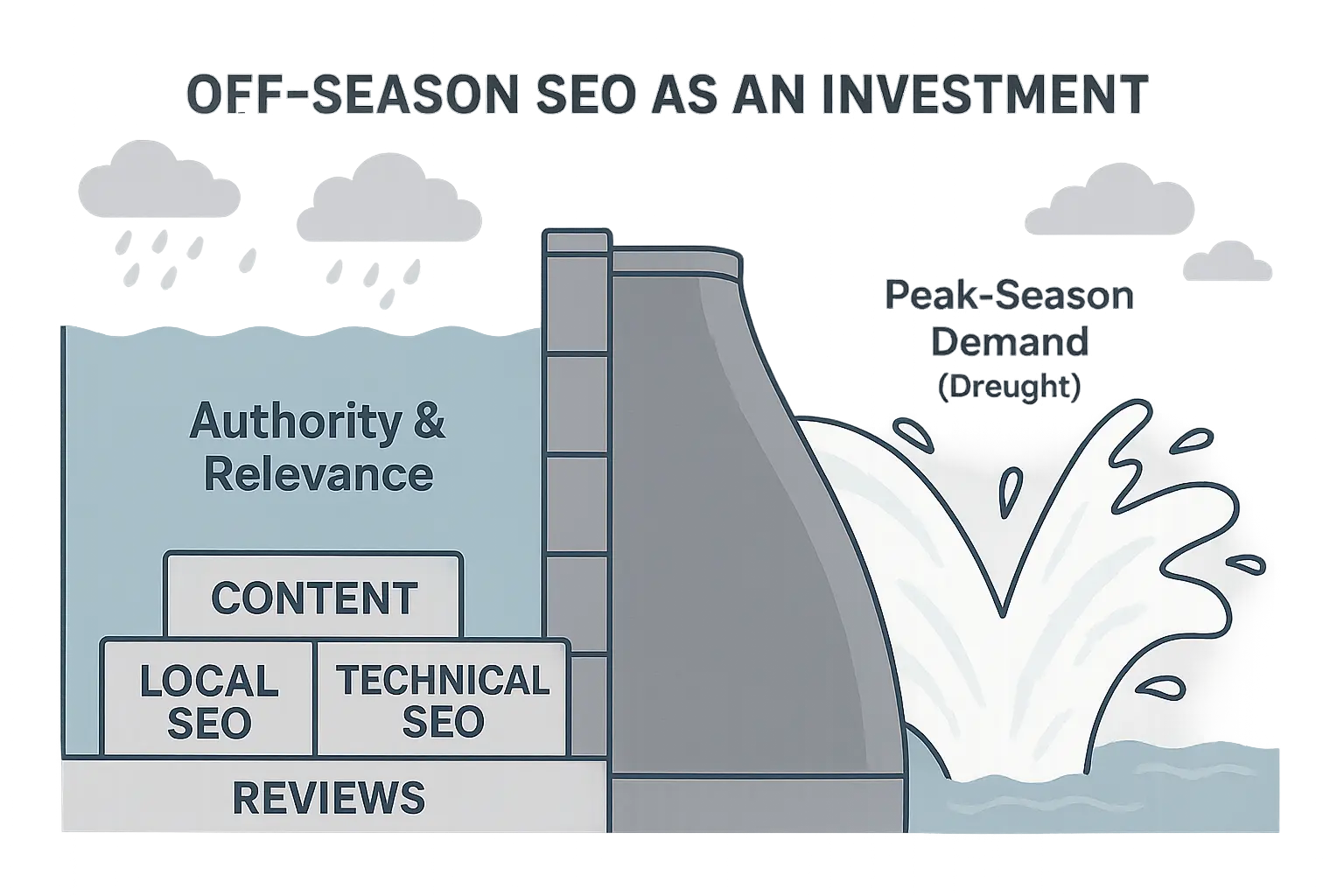
Think of off-season content as an investment. You may not see direct leads from a “planning” blog post in January, but that post is building your site’s authority. This foundational work helps your high-intent “buy now” pages rank much faster when peak season arrives. You’re building momentum so you can sprint when it matters most.
Should my client run paid ads in the off-season?
It can be very effective. Off-season ad costs are often lower, and you can target users in the research phase with content-focused ads, like promoting a “Patio Design Guide.” This builds your audience and captures data on interested homeowners you can retarget during peak season.
My client’s budget is smaller in the off-season. What should I prioritize?
Focus on the highest-impact, lowest-cost activities. This often means content creation and on-page SEO for foundational blog posts and updating the Google Business Profile. Consistency matters more than volume. Publishing two high-quality, strategic posts a month is better than publishing ten generic ones.
Turn Seasonal Challenges into a Competitive Edge
The seasonal nature of home service businesses isn’t a problem to be solved—it’s an opportunity to be seized. By building a content strategy that serves customers in their dreaming and planning phases, you position your clients as the only logical choice when they’re ready to act.
This approach builds a durable moat around their business that competitors focused only on the busy season can’t cross. For agencies looking to deliver lasting value and drive year-round growth, mastering the off-season is the ultimate power play. As you scale these efforts, considering a model of [Link 2: SEO outsourcing for agencies] can provide the expert execution needed to deliver consistent results for every client, every season.