
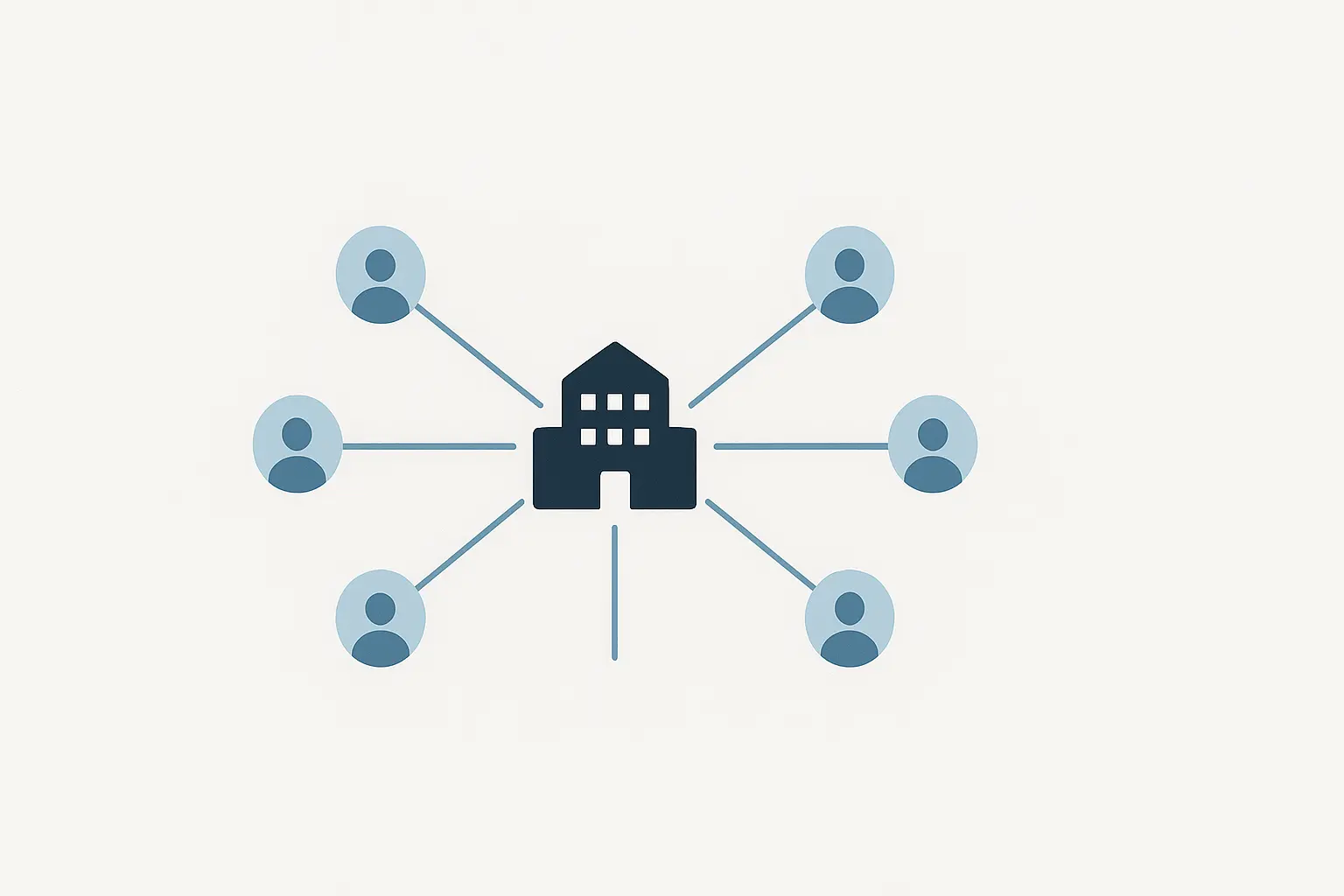
Imagine your client’s CEO just published a powerful article on a major industry site. Her name is buzzing on social media, and people are searching for her online. What do they find? A jumble of social profiles and old conference listings? Or a clear, authoritative connection back to the company she leads, reinforcing her expertise and the brand’s authority all at once?
If it’s the former, you’re missing one of the most powerful and often overlooked opportunities in modern SEO.
Your client’s leadership team—their CEO, founders, and key experts—are their most valuable brand assets. But to search engines like Google, that expertise is invisible unless you explicitly connect the dots. This is where Person schema comes in, transforming a simple “About Us” page from a digital brochure into a strategic signal for E-E-A-T.
Why Google Cares More About People Than Keywords
For years, SEO was a game of keywords. Today, it’s a game of entities. Google isn’t just matching strings of text; it’s building a vast, interconnected web of real-world things, people, and concepts called the Knowledge Graph. It wants to understand who is an expert on what and which organizations they are associated with.
This is the foundation of E-E-A-T: Experience, Expertise, Authoritativeness, and Trustworthiness. Google is actively seeking signals that prove a brand is a credible source of information. And what better signal of credibility is there than the recognized expertise of its leadership?
When a search engine can connect a well-regarded expert to a brand, it transfers some of that individual’s authority to the organization. Structured data like schema markup is the language you use to make these connections explicit. Without it, you’re leaving Google to guess.
By defining these relationships, you feed the Knowledge Graph verifiable facts, building a powerful and defensible layer of trust around your client’s brand. This isn’t just about getting a fancy knowledge panel, though that’s a nice perk. It’s about fundamentally telling Google: “The expert you know and trust, Jane Doe, works for this organization. Therefore, this organization is a trusted source on the topics Jane is an expert in.”
Schema Markup: Your Translation Tool for Google
So how do you communicate these critical relationships to a search engine? Through schema markup.
Think of schema as a vocabulary that you add to your website’s HTML. It doesn’t change what users see, but it adds a layer of context for search engine crawlers. The most common and recommended format for this is JSON-LD, a lightweight script that’s easy to implement and manage.
Using this vocabulary, you can label content as a Person, an Organization, an Article, or a Product. More importantly, you can define the relationships between them. This tutorial will focus on the Person schema type and how to link it directly to the Organization your client represents.
A Practical Guide: Implementing Person Schema for Key Executives
Let’s get tactical. Here’s how you can implement Person schema on your client’s “About Us” or “Team” page to link their key personnel to the parent company.
Step 1: Identify Your Key Personnel
First, decide who to feature. This isn’t about marking up every employee. Focus on the public-facing leaders and subject matter experts who build the brand’s credibility:
- CEO, President, or Founder(s)
- C-Suite Executives (CMO, CTO, etc.)
- Lead Engineers, Head Researchers, or other key technical experts
- Anyone who speaks at conferences, writes for industry publications, or is a recognized authority in their field.
Step 2: Gather the Essential Information
For each person you’ve identified, collect the following details. Consistency is key.
- Full Name: As it appears publicly.
- Job Title: Their official title at the organization.
- Image: A professional headshot URL.
- Bio/Description: A concise description of their role and expertise.
- sameAs URLs: Links to their authoritative professional profiles. This is crucial for entity consolidation. Good examples include their LinkedIn profile, official Twitter/X account, author page on a major publication, or their Wikipedia page.
- worksFor: The name of the organization. This must match the name used in your main Organization schema.
Step 3: Structure the Person Schema with JSON-LD
Now, assemble that information into a JSON-LD script. This block of code can be placed in the head or body of the relevant page, such as the About Us page or their individual bio page.
Here’s a clear example of what the Person schema should look like for a fictional CEO named Jane Doe at Acme Inc.
Let’s break down the most important properties:
- @type: “Person”: Declares that this entity is a person.
- name: The individual’s full name.
- jobTitle: Their official title.
- worksFor: This is the magic link. It contains a nested @type: “Organization” and the name of the company. This explicitly tells Google, “Jane Doe works for Acme Inc.”
- sameAs: This array of URLs helps Google connect this profile with other authoritative online profiles, consolidating her identity into a single, cohesive entity.
Step 4: Connect to Your Main Organization Schema
For best results, your site should already have Organization schema, typically on the homepage or included site-wide. The name property in your Person schema’s worksFor field should exactly match the name in your main Organization schema. This consistency reinforces the connection and ensures Google understands it’s the same company.
What This Means for Your Agency and Your Clients
Implementing this level of technical detail does more than just clean up code; it delivers strategic value.
- It builds a stronger E-E-A-T foundation. You’re providing concrete evidence of the expertise behind the brand.
- It creates a competitive moat. Competitors can copy keywords, but they can’t copy your client’s leadership team. This turns their human capital into a defensible SEO asset.
- It increases the potential for rich results. Properly structured data can lead to enhanced search features, like inclusion in knowledge panels, which boosts visibility and click-through rates.
Implementing schema across an entire client roster can be a detailed process. For growing firms, leveraging an agency seo partner is a way to deliver these advanced tactics without bogging down internal teams. If you’re looking to add new service lines, seo outsourcing for agencies can provide the execution engine to get started profitably, while a dedicated white-label seo partner can handle the entire implementation process—from audits to deployment—all under your brand.
Frequently Asked Questions About Person Schema
Question: What is JSON-LD and why should I use it?
Answer: JSON-LD (JavaScript Object Notation for Linked Data) is Google’s recommended format for implementing structured data. It’s a script that can be placed neatly in the page’s HTML without mixing with the user-facing text, making it easier to manage and less prone to breaking.
Question: Where do I put this schema code on the website?
Answer: You can place it in the head or body section of the HTML. A common best practice is to place it on the most relevant page—the main “About Us” or “Team” page, or on an individual bio page for that person.
Question: Will this guarantee my client gets a Knowledge Panel?
Answer: While it’s not a guarantee, it significantly helps. A Knowledge Panel is an automated result based on Google’s confidence in the data it finds across the web about an entity. Providing clear, accurate schema drastically increases the chances by giving Google the verifiable information it needs.
Question: Can I do this for every employee on the team page?
Answer: You can, but it’s most impactful for key leadership and publicly recognized experts. Prioritize the people who are true “entities” in your client’s industry, since they carry the most authority.
Question: How do I test if my schema is working?
Answer: Once the code is on a live page, use Google’s Rich Results Test tool. Just enter the URL, and it will show you if Google can parse the Person schema correctly and flag any errors.
From a Name to an Asset
Your client’s leadership team is more than just a list of names and titles on a website. They are the living embodiment of the brand’s expertise and authority.
By using Person schema, you’re not just marking up content—you’re strategically connecting your client’s most valuable assets to their brand in the language search engines understand best. You’re turning a simple bio into a powerful statement of trust that builds a stronger, more resilient presence in search.
Start by auditing your most important client’s ‘About Us’ page. Are you telling Google the full story of their expertise?