
What if your sales team’s primary metric was the number of problems solved, not the number of calls made? For decades, the sales floor has been an engine of volume. More calls, more emails, more leads—a relentless assembly line designed to sift through noise to find a signal. But this model is breaking.
Today, nearly 70% of B2B buyers have already defined their needs before ever speaking to a sales rep. They arrive armed with information, and the last thing they want is a generic pitch. The old playbook of high-volume, low-context outreach is not just inefficient; it’s a liability.
This is where AI changes the game—not as a tool to simply automate more emails, but as an intelligence engine that reshapes the very structure of your revenue team. It’s time to move away from the assembly line and build a strategic hub centered around a new, pivotal role: the Deal Strategist.
The Problem with the Traditional Sales Funnel
The classic sales org chart is a relic of a pre-digital, pre-AI era. It’s built on a linear, volume-based model:
- Marketing generates a high volume of leads (MQLs).
- Sales Development Reps (SDRs) make hundreds of calls and send thousands of emails to qualify them.
- Account Executives (AEs) take the few qualified leads and work them toward a close.
The cracks in this model are showing. SDRs face burnout from repetitive, low-yield tasks, with an average tenure of just 1.5 years. Meanwhile, AEs spend less than 30% of their time actually selling, buried under administrative work and internal meetings. The system is designed for friction, not flow, because it mistakes activity for progress. It’s a model built for a time when information was scarce; today, insight is what’s valuable.
Meet the Modern Sales Team: A New Org Chart
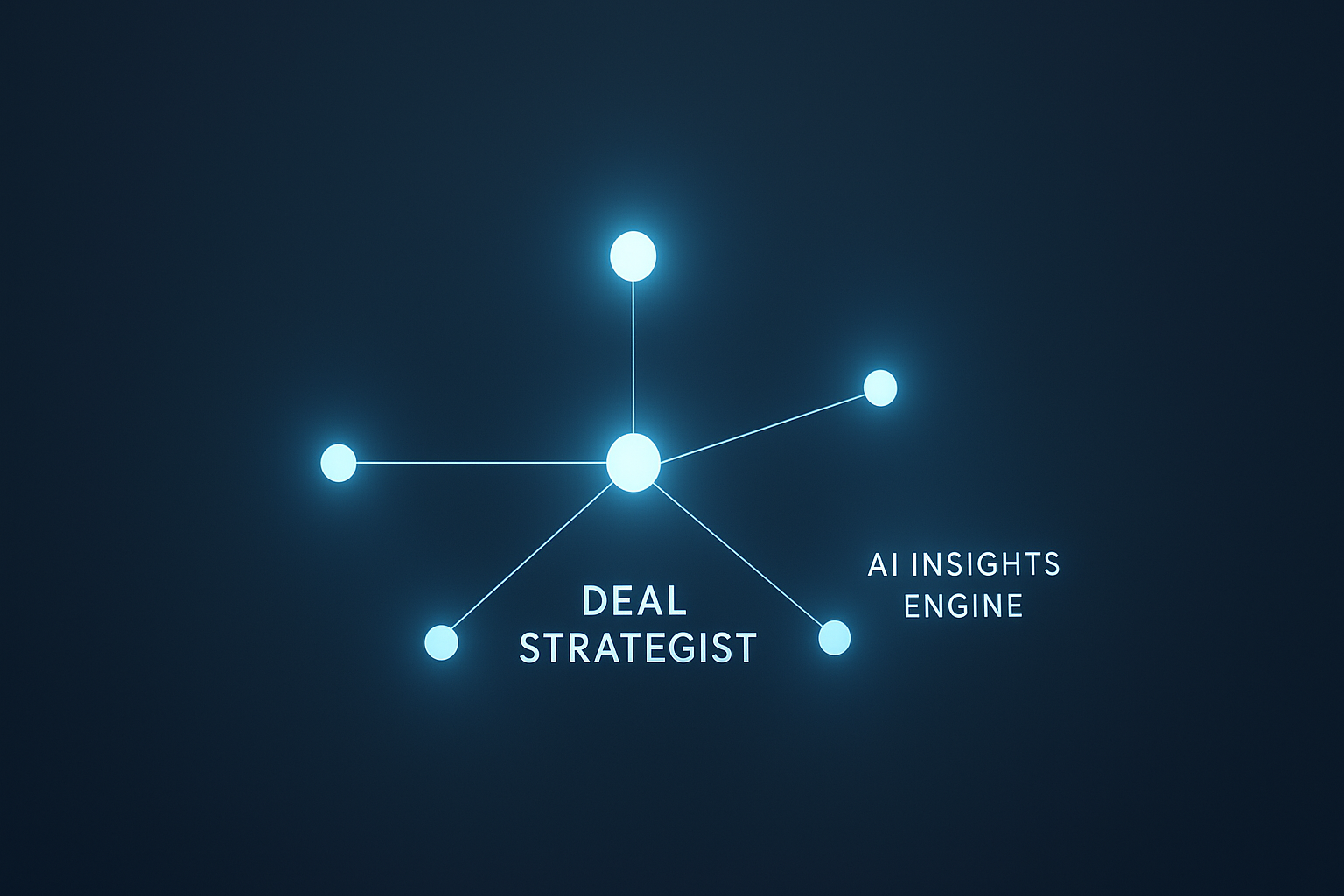
AI allows us to flip the model from volume to value. Instead of a linear funnel, imagine a central intelligence hub where AI provides deep customer insights, empowering a more specialized and effective team.
At the core of this new structure is the Deal Strategist, a role that combines the business acumen of a consultant with the closing power of a top-tier AE.
The Deal Strategist: The Quarterback of Complex Deals
The Deal Strategist isn’t just a closer; they are a consultative partner who orchestrates the entire deal lifecycle. They don’t chase leads—they solve documented business problems.
Key Responsibilities:
- Synthesizing AI Insights: They use AI-powered tools to understand a prospect’s challenges, buying committee, and industry trends before the first conversation. Instead of asking, “What keeps you up at night?” they walk in knowing the answer.
- Architecting Solutions: Armed with deep context, they collaborate with prospects to build tailored solutions. This approach transforms the sales process from a pitch into a joint working session.
- Orchestrating Resources: They pull in marketing, product specialists, and customer success as needed, acting as the central point of contact to ensure a seamless, high-value customer experience.
The Deal Strategist is the future of B2B sales—a senior-level expert who leverages intelligence to close larger, more complex deals faster.
The SDR Team, Reimagined: Quality over Quantity
In this model, the large, high-turnover SDR team is replaced by a small, elite team of “Opportunity Activators.” Their job isn’t to cold call thousands of prospects. Instead, they engage with high-intent leads that AI has already identified and qualified.
Their singular goal is to set the stage for a strategic conversation with a Deal Strategist. They handle inbound inquiries and nurture warm leads, ensuring that the Strategist’s time is spent only on opportunities with a high probability of closing.
Marketing’s New Role: Fueling the AI Engine
Marketing’s function evolves from pure lead generation to “insight generation.” Their primary role is to create and structure the content and data that the AI engine uses to understand the market and identify buying signals. This means focusing on:
- Semantic Content: Creating expert content that clearly articulates the problems your company solves. This attracts buyers while also training the AI on your value proposition.
- Structured Data: Ensuring your digital presence is optimized for machine understanding. This requires a deep knowledge of how AI systems interpret information, a discipline at the core of our white-label AI visibility services.
- Intent Signals: Analyzing behavioral data to pinpoint accounts that are actively in a buying cycle.
When marketing focuses on creating clear, structured, and authoritative information, the AI becomes smarter, and the Deal Strategist becomes more effective.
Customer Success: Closing the Intelligence Loop
Customer Success (CS) is no longer just a post-sale function; it is a critical source of intelligence. The CS team feeds data on customer usage, challenges, and successes back into the AI engine.
This data helps the AI identify expansion opportunities, predict churn, and refine the ideal customer profile. When a customer shows signs of being ready to upgrade, the AI can alert a Deal Strategist to begin a new, proactive conversation.
How It Works in Practice: A Real-World Scenario
Imagine a B2B software company.
The Old Way: An SDR pulls a list of 500 VPs of Operations and starts cold calling. If they’re lucky, they connect with a few, ask generic discovery questions, and try to book a demo for an AE.
The New Way:
- AI Insight: The company’s AI engine flags a target account. It has analyzed news releases, recent hires on LinkedIn, and website behavior, and concludes they are investing heavily in supply chain optimization—a core use case for the software.
- Opportunity Activation: A specialized SDR reaches out to the VP of Operations with a highly relevant message: “Saw your company’s recent expansion into the APAC region. We’ve helped similar firms cut their logistics costs there by 15%.”
- Strategic Engagement: The VP agrees to a meeting. A Deal Strategist takes over. They don’t start with a demo. They start with a conversation, armed with AI-surfaced insights about the company’s specific supply chain challenges, and spend the call validating these insights and co-creating a business case for the solution.
The result is a shorter sales cycle, a more strategic customer relationship, and a deal built on solving a real, documented problem.
FAQ: Restructuring Your Sales Team for the AI Era
Q1: What skills should a Deal Strategist have?
A Deal Strategist needs more than traditional sales skills. Look for business acumen, analytical thinking, and a consultative mindset. They must be comfortable interpreting data and translating it into strategic recommendations. Often, your best AEs who excel at complex, enterprise deals are prime candidates.
Q2: Does this model mean I should fire my SDRs?
Not at all. It means you should repurpose them. The goal is to evolve the SDR role from a high-volume, low-skill position into a more strategic, high-impact one. This shift calls for a smaller, more experienced team focused on quality interactions, not quantity. It’s an opportunity for professional growth, not a reduction in force.
Q3: How do I start transitioning my team?
Start small. Identify one or two of your top-performing Account Executives and pilot the Deal Strategist model with them. Equip them with an AI-powered sales intelligence tool and a dedicated, repurposed SDR. Measure their performance—deal size, sales cycle length, and win rate—against the traditional model.
Q4: What kind of AI tools are needed for this?
This model relies on an “AI Insights Engine,” which is typically a combination of tools. This could include CRM platforms with AI features (like Salesforce Einstein), conversation intelligence software (like Gong or Chorus), and intent data providers (like 6sense or Demandbase). The key is to have a system that can aggregate data and surface actionable insights.
Your First Step into the New Era of Sales
Reorganizing your sales team around AI insights isn’t just a theoretical exercise—it’s a competitive necessity. The era of brute-force sales is over. The future belongs to teams that are intelligent, strategic, and deeply aligned with their customers’ needs.
This transformation begins with understanding how your brand, products, and expertise are perceived by both human buyers and the AI systems they use for research. Before you can leverage AI for sales, you must ensure your digital presence is structured for machine understanding. Conducting thorough AI search audits can reveal the foundational gaps in your visibility and provide a clear roadmap for becoming discoverable in this new landscape.
By embracing this new structure, you can build a revenue engine that is not only more efficient but also more resilient and more human.