

You’ve seen the headlines. You’ve heard the buzz around AI-powered search. And now, your clients are starting to ask the big question: ‘Are we ready for this?’
For many agency owners, this moment is a mix of opportunity and uncertainty. You know there’s a new revenue stream waiting to be tapped, but packaging and pricing a service for something as new as ‘AI Readiness’ can feel like building the plane while flying it.
The good news? You’re not alone. Research shows that while a staggering 77% of executives believe AI will be crucial to their company’s success, a mere 33% actually have a defined AI strategy. That massive gap is where your agency comes in.
This guide will walk you through turning that uncertainty into a profitable, future-focused service. We’ll break down how to scope the work, create sensible pricing models, and communicate the value to your clients in a way that gets them excited, not confused.
What Exactly Is ‘AI Readiness’ Anyway?
Before you can sell it, you need to understand it. Let’s demystify the jargon.
AI Readiness isn’t about ‘optimizing for the algorithm.’ It’s about structuring your client’s digital world so that AI systems can understand, trust, and feature their brand as a definitive answer.
Think of it like this: traditional SEO was about teaching Google what a webpage was about using keywords. AI-driven SEO is about teaching AI systems what your client’s brand is—an authoritative entity.
An ‘entity’ is just a fancy word for a specific person, place, organization, or concept. AI connects these entities to build a web of knowledge, much like a digital brain. Your job is to make sure your client’s entity is clearly defined, consistent, and well-connected across the internet.
This proactive approach is what moves clients from simply ranking for keywords to becoming the source of truth in their niche.
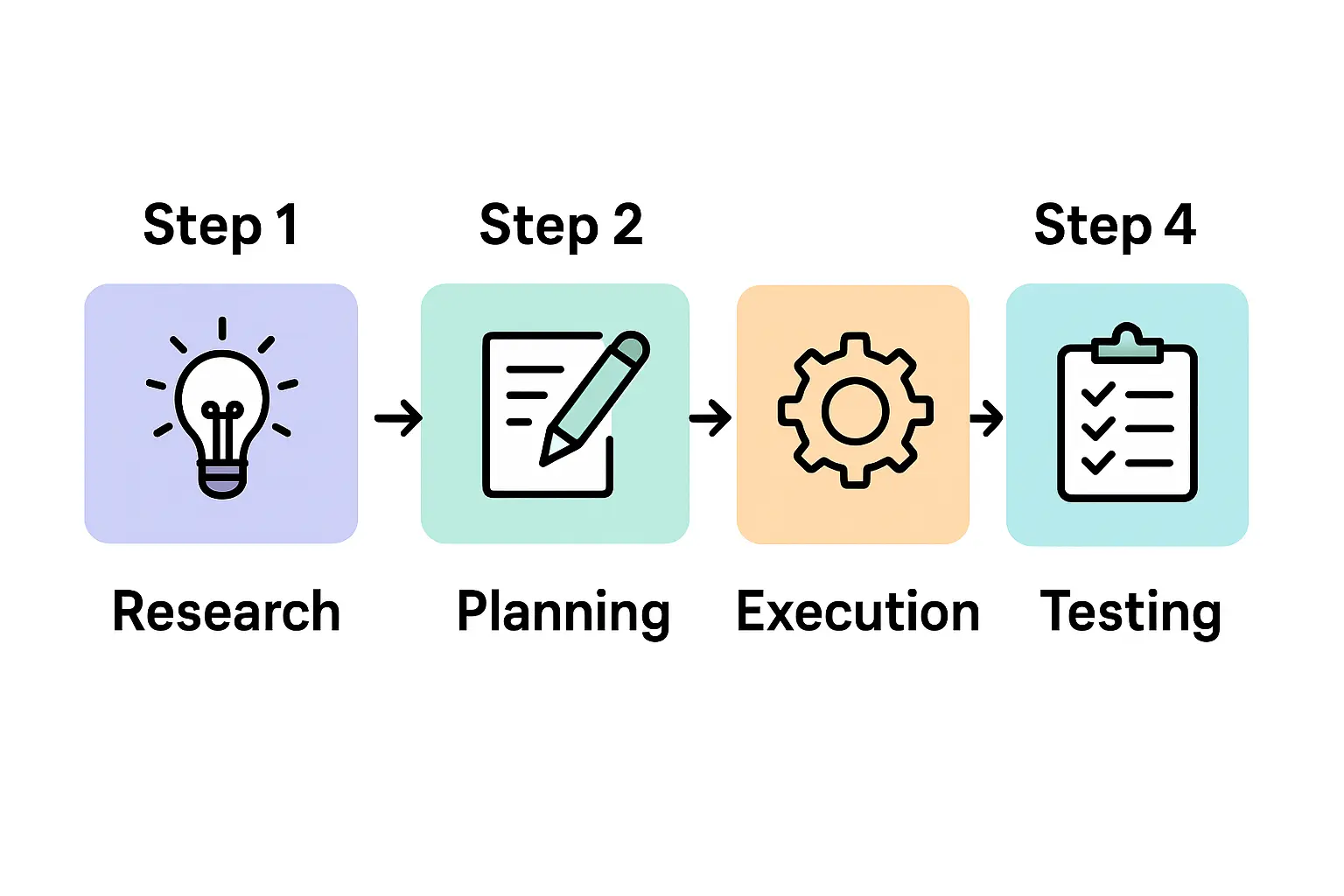
The Core Components of an AI Readiness Service
So, what are you actually selling? An ‘AI Readiness’ service is more than a vague promise—it’s a bundle of tangible deliverables that build a foundation for future success. Here are the core components you can package.
1. The Entity Optimization Audit
This audit is the essential first step: a deep dive into how AI systems currently perceive your client’s brand. The goal is to identify inconsistencies and opportunities to strengthen their digital identity.
Key deliverables include:
- Knowledge Panel Analysis: Does the client have a Google Business Profile or Knowledge Panel? Is the information accurate and complete?
- Brand Mentions and Consistency Audit: Checking for consistent Name, Address, and Phone number (NAP) data across the web.
- Schema Markup Review: Auditing the existing structured data on their site to see if it’s correctly defining the organization, its products, and its people.
2. AI-Ready Content Strategy and Structuring
This component shifts the focus from writing for readers or search engines to writing for readers and machines—structuring content to provide clear, direct answers.
Key deliverables include:
- Question-Based Content Briefs: Creating outlines for content that directly answers the key questions your client’s audience is asking.
- Schema Implementation Plan: A roadmap for adding specific structured data (like FAQPage, Article, HowTo) to content to give AI clear context.
- Internal Linking for Topical Authority: A strategy for connecting related content on the client’s site to demonstrate deep expertise on a topic.
3. Foundational Technical SEO for AI
Like traditional crawlers, AI systems still need a technically sound website to work effectively. Many of these elements overlap with classic SEO, which is why some agencies partner with specialists to handle the heavy lifting through white-label SEO services while they focus on high-level AI strategy.
Key deliverables include:
- Crawlability and Indexability Report: Ensuring AI can easily find and process all important site content.
- Site Speed and Core Web Vitals Assessment: A fast, user-friendly site is a trusted site.
- Structured Data Implementation: The actual hands-on work of adding or fixing the schema identified in the audit.
Scoping and Pricing Models Your Agency Can Use Today
Alright, let’s talk money. How do you price these new services without undervaluing your expertise or scaring clients away? Here are three proven models you can adapt.
Model 1: The Standalone ‘AI Readiness Audit’ (Project-Based)
This is the perfect entry-level offering. It’s a one-time project with a clear beginning and end, making it an easy sell for clients who want to dip their toes in the water.
- Scope: Includes the full Entity Optimization Audit, a high-level content structure review, and a technical SEO assessment.
- Deliverable: A comprehensive roadmap detailing findings and prioritized recommendations.
- Pricing: Fixed-project fee, typically ranging from $2,500 to $7,500. Pricing depends on the complexity of the client’s website and the breadth of their digital footprint.
Model 2: The Monthly ‘AI Optimization’ Retainer
Once you’ve delivered the audit and roadmap, the natural next step is implementation. A monthly retainer allows you to execute your recommendations over time. Ongoing AI optimization requires consistent effort. For agencies looking to scale this offering without scaling headcount, models like SEO outsourcing for agencies can provide the necessary execution power.
- Scope: Ongoing implementation of schema, content updates based on AI-ready briefs, GMB/entity management, and performance monitoring.
- Deliverable: Monthly progress reports and strategic adjustments.
- Pricing: Monthly retainer, often starting where a standard SEO retainer would but with a focus on these new deliverables.
Model 3: The ‘AI Readiness’ Add-On (Upsell)
This is often the easiest way to start. For your existing SEO or content marketing clients, you can position AI readiness as a critical enhancement to the work you’re already doing.
- Scope: Adding a layer of entity optimization and schema implementation to your current SEO activities.
- Deliverable: Integrated into your existing reporting, highlighting the ‘future-proofing’ work being done.
- Pricing: A supplemental fee added to their current retainer, making it a simple and logical upsell.
How to Prove the Value and Get Client Buy-In
Clients won’t pay for something they don’t understand. The key is to connect the dots between ‘entity optimization’ and tangible business goals. Frame the conversation around future-proofing and competitive advantage. Remind them that 64% of business leaders believe AI will increase their company’s productivity—and this is how you make their digital marketing more productive.
Focus on these three benefits:
- Future-Proofing Their Brand: This isn’t a short-term trick. It’s about building a durable foundation that will pay dividends as AI becomes more integrated into search, voice assistants, and other platforms.
- Gaining Visibility in New Formats: Explain how this work is what gets them featured in AI-powered results like Google’s SGE, ‘People Also Ask’ boxes, and rich snippets—the new ‘position zero.’
- Building a Lasting Brand Moat: By establishing their brand as a trusted entity, you’re making it fundamentally harder for competitors to displace them. They won’t just rank; they’ll be recognized as the authority.
Frequently Asked Questions (FAQ)
What’s the difference between ‘AI Readiness’ and regular SEO?
Think of it as an evolution. Regular SEO is heavily focused on keywords and links. AI Readiness builds on that by adding a focus on entities, structured data, and content that directly answers questions, making the brand more understandable to machines.
How long does it take to see results?
This is foundational, long-term work. While technical fixes can have a quick impact, the full value of establishing brand authority as an entity builds over months. It’s about setting the client up for sustained success, not just a temporary ranking boost.
Do I need special tools to offer these services?
While advanced tools exist, you can start with what you have. Google’s own Rich Results Test and the Schema Markup Validator are free and powerful. The most important ‘tool’ is the strategic thinking behind how you structure the client’s information.
Can my existing team handle this?
Absolutely, but there’s a learning curve. The concepts are new, and it requires a shift in mindset from keywords to entities. Many agencies start by focusing on the strategy and client relationship while leaning on a partner for the technical execution.
Is this only for big companies?
Not at all. For a local business, establishing a clear entity is crucial for appearing in AI-powered local search results and map queries. A local plumber wants to be recognized as the trusted plumbing entity in their specific service area.
The Future is Here—And It’s Profitable
The rise of AI isn’t a threat to your agency; it’s the next frontier for growth. By learning to package, price, and sell AI Readiness services, you’re not just adding a new line item to your proposals. You’re becoming an indispensable strategic partner, guiding your clients confidently into the future of digital marketing.
The agencies that start building these foundations today are the ones that will win tomorrow. If you’re considering how an agency SEO partner can provide the scalable execution power to launch these services without the in-house overhead, it’s a conversation worth having.