

Imagine this: you’ve just spent three months and a client’s entire quarterly budget creating the ultimate pillar page. It’s a 5,000-word masterpiece, complete with custom graphics and expert quotes, all targeting a high-volume keyword that your tools promised was a goldmine.
It starts to rank. The traffic comes. But the leads… don’t.
You’ve attracted an audience of researchers, students, and tire-kickers—everyone except the paying customers your client hired you to find. It’s a frustratingly common scenario. The content marketing machine is running, but it’s not producing results.
And it’s no small problem. With 70% of marketers actively investing in content marketing, the pressure to deliver ROI is immense.
The hard truth is that traditional keyword research, focused solely on search volume and difficulty, has a hidden flaw. It tells you what people are searching for, but it often fails to tell you why.
The Billion-Dollar Gap Between Traffic and Intent
In SEO, we’re taught that traffic is the primary goal. But traffic that doesn’t convert is just a vanity metric. The real currency is intent—the motivation behind a search query.
Is someone searching for “CRM software” looking to buy today, compare options for a future purchase, or just find a definition for a school project? A keyword tool can’t tell you the difference. This ambiguity is why so many agencies are flying blind.
Research from the Content Marketing Institute reveals that only 57% of B2B marketers have a documented content strategy. Many are simply creating content and hoping for the best.
When you consider that the average cost to produce a single blog post hovers around $2,000, with major assets costing over $5,000, “hoping” becomes a very expensive strategy.
So, how do you de-risk this massive investment for your clients and know for sure if a keyword will drive revenue before you commit to the time and expense of ranking for it organically?
You send in a canary.
What is the PPC Canary Test?
Think of the old coal mining practice. Miners would bring a canary into the mine because its sensitivity to toxic gases provided an early warning of danger. If the canary stopped singing, it was time to get out before disaster struck.
The PPC Canary Test applies the same principle to your SEO strategy. Instead of spending months and thousands of dollars to rank for a keyword, you first run a small, low-budget Pay-Per-Click (PPC) campaign for it.
This “canary” campaign is your early warning system. For a tiny fraction of your content budget, you can buy immediate traffic for your target keywords and measure one thing with precision: do these searchers actually convert into leads or customers?
It shifts the SEO workflow from a linear “build and pray” model to a smarter, data-validated loop.
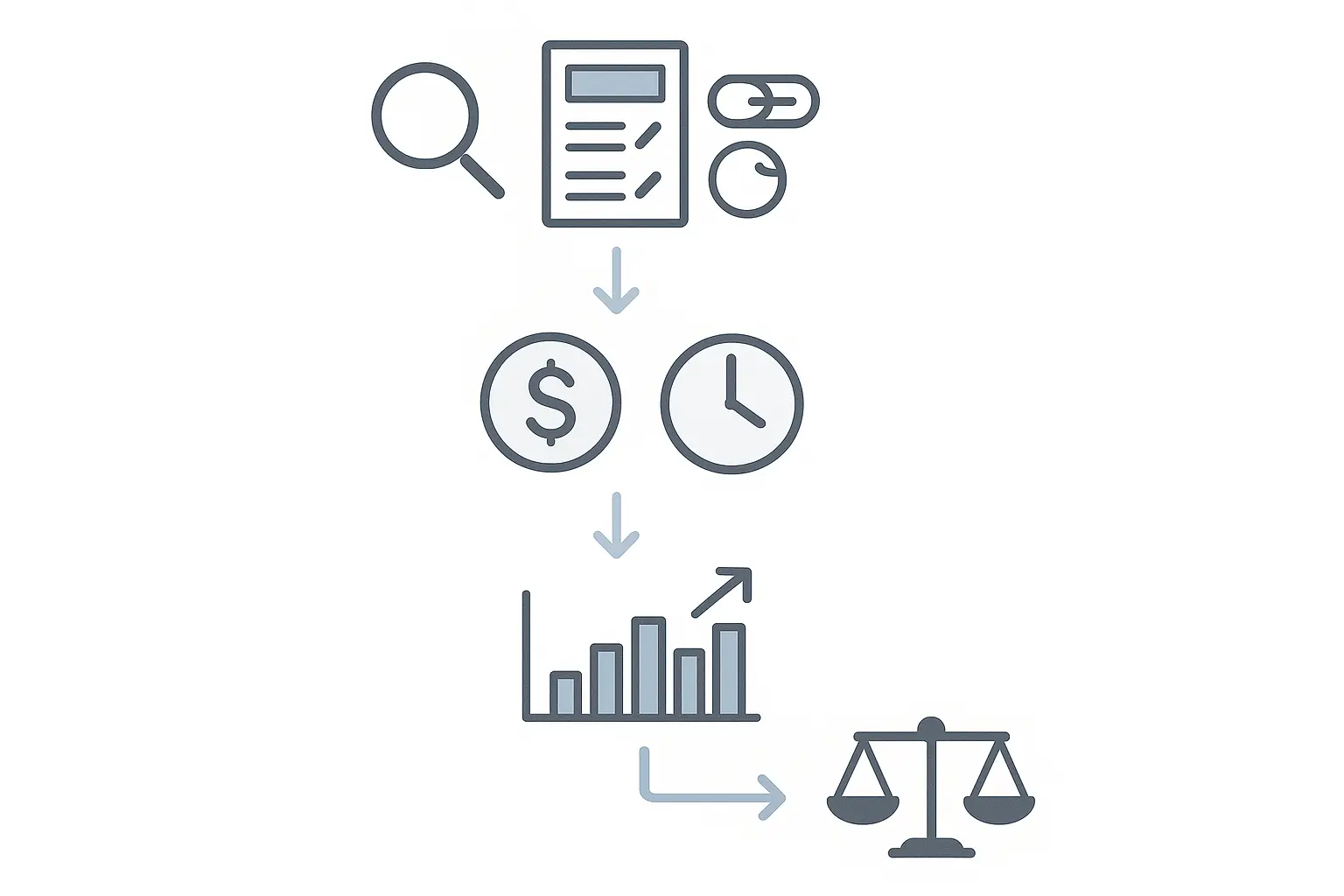 How to Run Your Own PPC Canary Test (A Simple 4-Step Guide)
Setting up a test is faster and cheaper than you might think. You don’t need a complex campaign, just a way to gather clean data on user intent.
Step 1: Choose Your High-Stakes Keywords
Identify three to five high-value keywords you’re considering for a major content initiative. These should be terms that, if they converted, would be a significant win for your client. Focus on keywords with clear commercial potential, such as those including terms like “services,” “solutions,” or “for small businesses.”
Step 2: Set Up a Micro-Budget Campaign
Create a simple search campaign in Google Ads. You don’t need a massive budget; $10–$20 per day for 7–10 days is often enough to gather meaningful data.
Your goal is to isolate variables. Keep targeting focused on your ideal geographic and demographic audience. Use “exact match” and “phrase match” keywords to ensure you’re only testing the specific queries you care about. Direct traffic to a simple, existing page that has a clear call-to-action (like a service page, a contact form, or a demo request page). Don’t build a new page for the test; use what you have.

Step 3: Write Intent-Focused Ad Copy
Your ad copy is part of the test. Write headlines that speak directly to a user with commercial intent. For example, instead of a vague headline like “Learn About Project Management,” try something more direct like “Affordable Project Management Software. Get a Free Demo Today.”
If users click on an ad promising a solution, you’re already filtering for higher intent.
Step 4: Analyze the Results (and Find the Winner)
After a week or two, it’s time to check on your canary. You’re looking for one thing: the conversion rate. Which keyword is actually driving form fills, phone calls, or demo requests?
Remember, the goal isn’t a profitable PPC campaign. You’re simply buying data.
Let’s say you tested three keywords:
- Keyword A: 50 clicks, 0 conversions (High traffic, no intent)
- Keyword B: 35 clicks, 1 conversion (Some intent, but maybe not the best)
- Keyword C: 42 clicks, 5 conversions (Clear winner!)
In this scenario, Keyword C is your validated winner. You can now confidently invest your client’s SEO budget into creating a comprehensive content piece around that topic, knowing it’s backed by real-world conversion data. You’ve just turned a high-risk gamble into a calculated investment.
Why This Changes Everything for Your Agency
Integrating the PPC Canary Test into your process shifts your agency from a service provider to a strategic partner. You’re no longer just delivering traffic; you’re delivering a data-driven growth strategy.
Research shows that paid search traffic often has a higher average conversion rate (3.75%) than organic search traffic (2.4%). This doesn’t mean PPC is “better” than SEO. It means PPC is a powerful tool for qualifying which organic targets are worth pursuing for the long term.
By validating keywords first, you can:
- De-risk Client Investments: Justify content budgets with data, not just search volume estimates.
- Prioritize with Confidence: Focus your team’s efforts on content that is proven to perform.
- Deliver Faster Wins: Show clients traction and data within weeks, not months.
- Improve Overall Strategy: The insights from these tests can inform your entire marketing ecosystem, from ad copy to landing page optimization.
For agencies looking to scale, this level of strategic validation is essential. It’s a core component of delivering modern, effective SEO services that stand out in a crowded market. Many of these validation processes can even be streamlined with AI-powered SEO automation to run tests efficiently across multiple clients.
Frequently Asked Questions (FAQ)
How much should I spend on a PPC Canary Test?
A budget of $100–$300 is typically enough to get a clear signal. The goal isn’t profitability; it’s data acquisition. You need enough clicks to determine if a keyword has conversion potential.
How long should I run the test?
Run the test long enough to get at least 100–200 clicks on your primary keywords. This usually takes about 7 to 14 days, which gives you a large enough sample size to make an informed decision.
What if a keyword fails the test and gets zero conversions?
That’s a success! You just saved your client thousands of dollars and months of effort on a content piece that wouldn’t have performed. You can now test other variations or pivot your strategy to a more promising target.
Can’t I just use the “Cost Per Click” (CPC) data in my SEO tool?
CPC data is a good indicator of commercial intent, but it’s not a guarantee. It tells you what advertisers are willing to pay, not what users are actually doing. A live test with your client’s specific offer and landing page is the only way to get true conversion data.
Will my clients have to pay for this?
Position it as a strategic “discovery” or “validation” phase. The small upfront cost of the test acts as an insurance policy against wasting a much larger content budget, making it an easy sell for clients who care about ROI.
From Guessing to Knowing
In an industry filled with variables, the PPC Canary Test offers a rare piece of certainty. It’s a simple, cost-effective framework that bridges the gap between traffic and revenue, allowing your agency to build SEO strategies on a foundation of data, not assumptions.
Stop guessing which keywords will work. Start testing, start validating, and start delivering the results your clients are truly paying for.
If you’re ready to build a more data-driven and scalable SEO strategy for your clients and want to explore how to implement frameworks like this, you can always talk to an expert.