

The champagne has been popped, the new website is live, and it’s a beauty. Your team delivered on design, functionality, and user experience. Then, a week later, the email lands in your inbox.
“The site looks great, but… where are we on Google?”
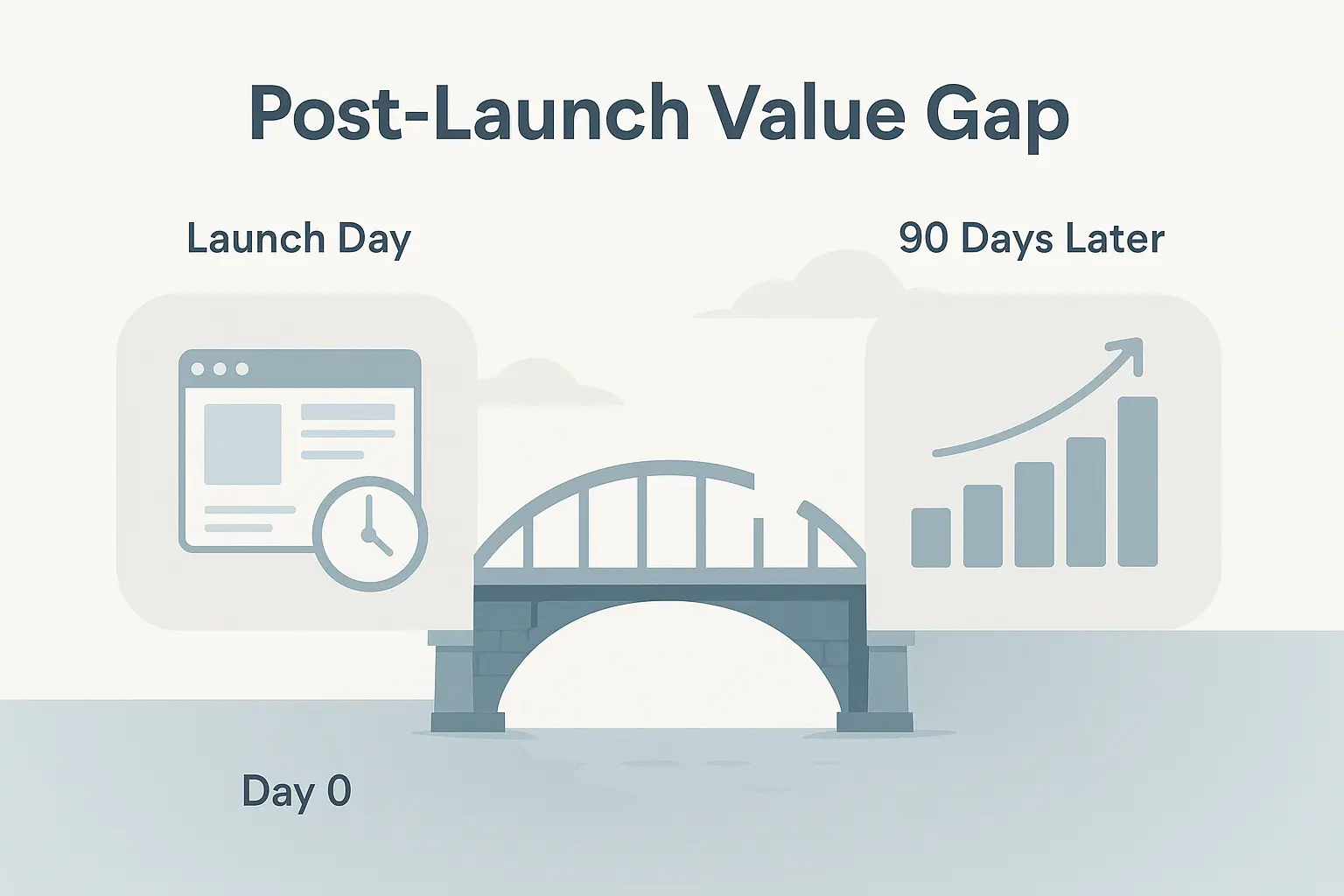
It’s the question every web design agency dreads. You know meaningful SEO results take time, yet your client wants immediate validation of their investment. How do you bridge the gap between a successful launch and the months-long journey to page one?
The answer is to change the conversation. Instead of focusing on what’s not there yet—rankings and traffic—you can prove the immense SEO value you’ve already delivered. The first 90 days aren’t about waiting; they’re about showcasing the high-performance technical foundation you built, the launchpad that makes future growth possible.
The Post-Launch Dilemma: From ‘Live’ to ‘Ranked’
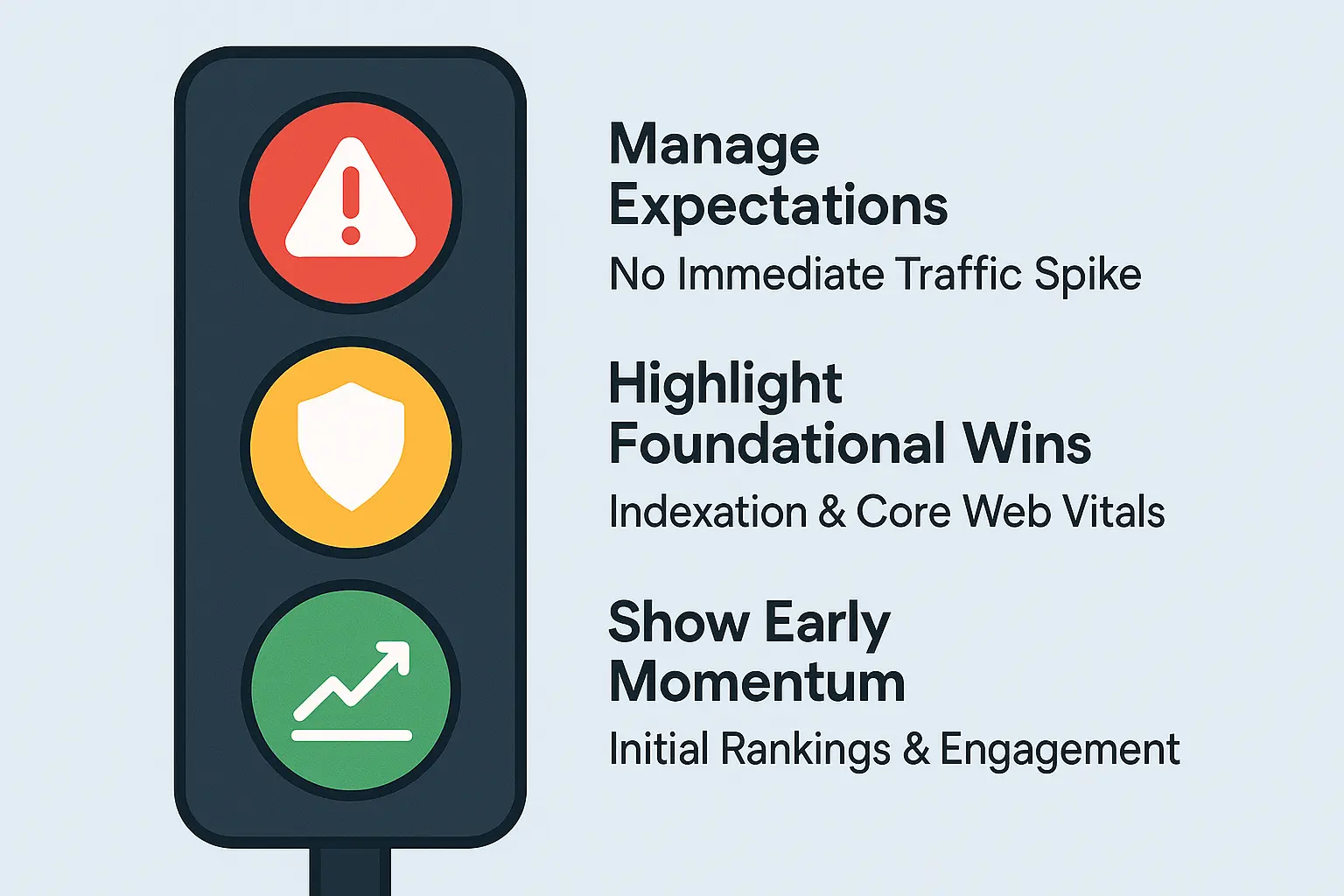
It’s crucial to set client expectations from the start. Organic rankings don’t appear overnight. Search engines like Google need time to crawl, understand, and index a new site before they can determine where it should rank.
But this waiting period is your opportunity to demonstrate value. While traditional metrics like keyword rankings are lagging indicators, you can report on the powerful leading indicators you built into the site from day one. These are the technical wins that prove your agency didn’t just build a pretty brochure; you built a search-engine-friendly powerhouse.
This isn’t just about ticking boxes for Google; it’s about the end-user. After all, research shows that 47% of users expect a webpage to load in 2 seconds or less. By focusing on technical excellence at launch, you’re aligning the new site with both user expectations and Google’s core ranking principles.
The ‘Day One’ SEO Report: Metrics That Matter Immediately
Forget about rankings for a moment. Your first post-launch report should be a celebration of technical health and potential. Here are three key areas to focus on to demonstrate immediate SEO value.
1. Indexation Speed and Coverage
Think of indexation as Google adding your client’s new webpages to its massive library. If a page isn’t in the library, it can’t be shown to searchers.
What it is: It measures how quickly Google discovers and adds your new site’s pages to its index (speed) and what percentage of your important pages have been successfully added (coverage).
Why it matters: Fast, comprehensive indexation is the first sign of a technically sound website. It tells Google your site is easy to find, crawl, and understand. Slow or incomplete indexation, on the other hand, often points to underlying technical issues that can kill SEO potential before it starts.
How to report it: A simple screenshot from Google Search Console’s “Pages” report showing a healthy upward trend of indexed pages is incredibly powerful. It’s visual proof that Google sees and is actively cataloging the new site you built.
2. Core Web Vitals (CWV) and Page Speed
Core Web Vitals are specific metrics Google uses to measure a user’s real-world experience on a page. Here, your agency’s development expertise translates directly into a measurable SEO win.
What they are:
- Largest Contentful Paint (LCP): How long it takes for the main content of a page to load. (Loading performance)
- Interaction to Next Paint (INP): How quickly the page responds to user interactions like clicks or taps. (Responsiveness)
- Cumulative Layout Shift (CLS): How much the page layout moves around unexpectedly as it loads. (Visual stability)
Why they matter: Google explicitly uses Core Web Vitals as a ranking factor. What’s more, speed is directly tied to business outcomes: a 1-second delay in page response can result in a 7% reduction in conversions. By delivering a site with excellent CWV scores, you’ve not only satisfied a key ranking signal but also built a foundation for higher conversion rates. And since 58.99% of all website traffic comes from mobile phones, proving your new site is fast and stable on mobile is a massive, immediate win.
How to report it: Use Google’s PageSpeed Insights tool to generate a report. A screenshot showing green scores across the board is a clear, undeniable demonstration of your work’s quality.
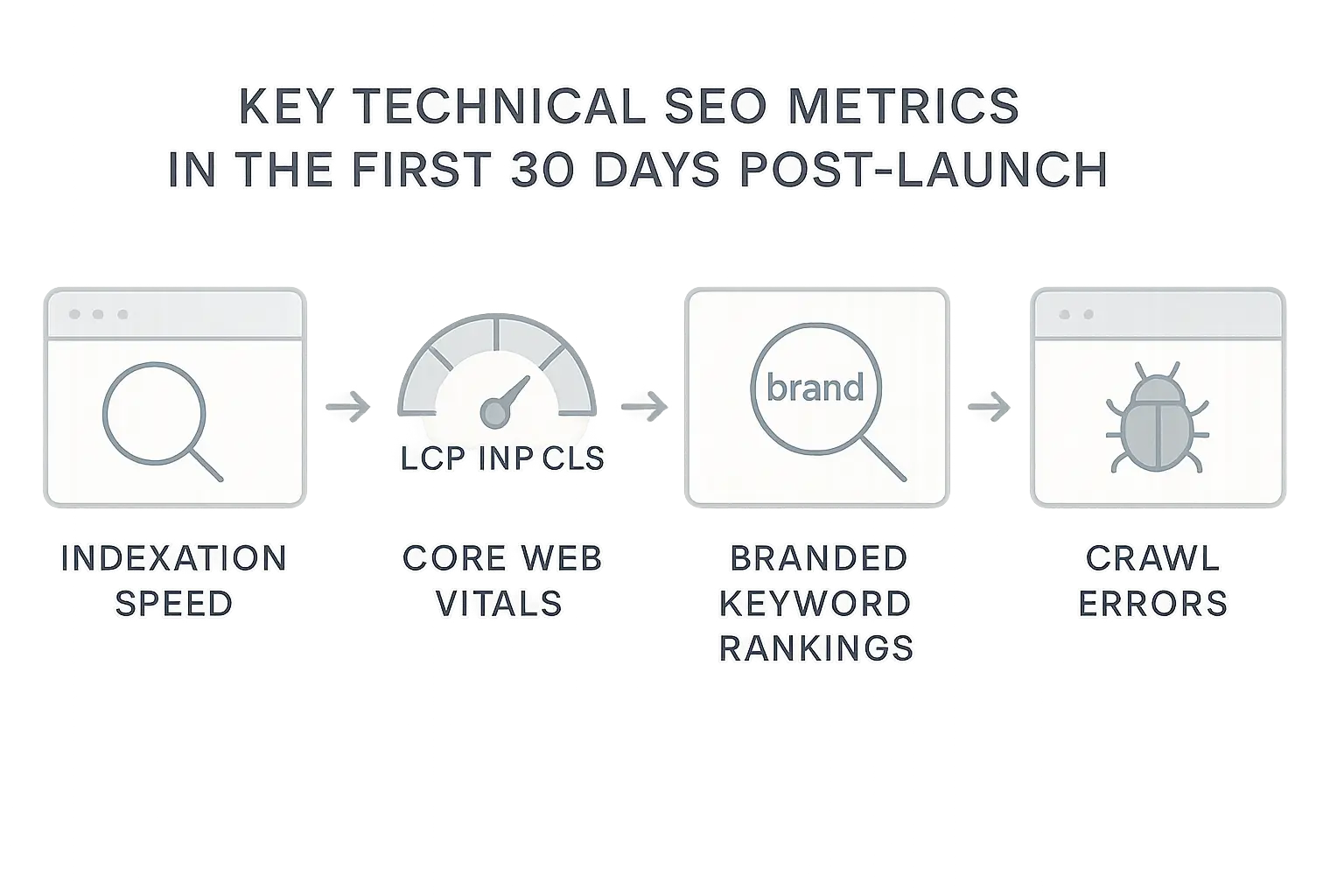
3. Crawlability and Site Health
Before Google can index a page, it has to “crawl” it by sending a bot to read the content and follow its links. A healthy site makes this process as efficient as possible.
What it is: This is about ensuring Googlebot can easily navigate your entire site without hitting dead ends (like 404 errors) or getting lost. It also means having a clean site structure and proper redirects (301s) from any old pages to their new counterparts.
Why it matters: Every site has a “crawl budget”—the resources Google dedicates to crawling it. By launching a site with zero crawl errors and a logical structure, you ensure that budget is spent discovering important pages, not wasted on broken links. This is one of the most critical aspects of any comprehensive technical SEO audits.
How to report it: A screenshot from Google Search Console’s “Crawl stats” report is a great way to show healthy crawl activity. You can also report “Zero new 404 errors since launch” as a key performance indicator, proving the migration was smooth and the site is well-built.
How to Frame the Conversation with Your Clients
Armed with this data, you can confidently change the post-launch narrative. Instead of defending a lack of rankings, you can proactively showcase success.
Frame it like this:
“Before Google can even think about ranking the new site for competitive keywords, it needs to confirm we’ve built a solid foundation. Our data from the first 30 days shows exactly that.
We’ve achieved near-perfect indexation, our page speed scores are in the top tier, and Google is crawling the site efficiently. We’ve successfully completed Phase One: building a high-performance platform. Now we’re perfectly positioned to begin Phase Two: building the authority and content needed to climb the rankings.”
This approach positions your agency as a strategic partner that understands the full SEO lifecycle. For agencies looking to expand their capabilities, partnering with white-label SEO services can provide the expertise needed to deliver these reports and manage the long-term strategy, all under your brand.
Beyond the First 90 Days: The Foundation for Growth
The true value of your work is setting the client up for long-term success. A technically sound website is the bedrock on which all other SEO activities—content marketing, link building, and digital PR—are built. Without the foundation you laid, any future investments would be far less effective.
This foundation enables a more sophisticated, long-term growth plan. As you scale, you can leverage AI-powered SEO automation to continuously monitor site health and performance. This technical base also allows for the seamless integration of a modern omnichannel SEO strategy, connecting search efforts with social media, paid ads, and other channels to drive measurable business growth.
Frequently Asked Questions (FAQ)
How long does it really take to see ranking improvements?
For a brand-new site, it typically takes three to six months to start seeing meaningful traction for non-branded keywords. The technical foundation you build ensures this process happens as quickly as possible and isn’t hindered by preventable errors.
What tools can I use to track these “Day One” metrics?
Google Search Console and Google PageSpeed Insights are your two best resources. They’re free, authoritative, and provide all the data you need to report on indexation, Core Web Vitals, and site health.
My client’s old site had rankings. How do I show we haven’t lost them?
This is where 301 redirects are critical. Your report should confirm that all key pages from the old site have been properly redirected to their new counterparts. You can then monitor Google Search Console for any spike in “Not Found (404)” errors to prove the migration was handled flawlessly.
Is a fast, healthy site enough for SEO?
It’s the essential starting point, but it’s not the whole story. Think of it like a world-class race car. Your agency built the car (the technical foundation). To win the race, the client still needs an expert driver (ongoing strategy), premium fuel (high-quality content), and a great pit crew (link building and promotion).
From Builder to Strategic Partner
By reporting on these “Day One” SEO metrics, you elevate your agency’s role from a one-time website builder to an indispensable strategic partner. You prove your value immediately, build client trust, and set the stage for a long-term relationship focused on what truly matters: sustainable growth. You haven’t just delivered a website; you’ve delivered a launchpad for future success.