

Imagine sitting across from a potential client and saying, “You don’t pay our full fee until you see results.”
It’s a powerful pitch. It instantly demolishes trust barriers and aligns your agency’s success directly with your client’s. In a market projected to hit over $122 billion by 2028, standing out is everything, and a performance-based model can feel like the ultimate differentiator.
But it’s also a high-stakes gamble. You’re betting your time, resources, and payroll on your ability to deliver, knowing full well that SEO is a marathon, not a sprint. The potential reward is massive, but the risk of working for months with no payout is very real.
So, is performance-based SEO a golden ticket for scaling your agency or a financial trap waiting to spring? The difference lies in how you structure the deal and, more importantly, how you manage your costs.
What Exactly Is Performance-Based SEO?
Performance-based SEO is a pricing model that ties an agency’s compensation directly to achieving specific, measurable outcomes. Instead of a fixed monthly retainer, your fee is contingent on hitting pre-agreed key performance indicators (KPIs).
Think of it as moving from being a service provider to a growth partner. Clients love this approach because they’re paying for results, not just effort. For agencies, it can lead to higher earnings and stickier client relationships—if you can deliver.
The trick is defining “performance.” What one client considers a win, another might see as a vanity metric. This is why it’s important to understand the most common models.
The Different Flavors of Pay-for-Performance SEO
Not all performance models are created equal. Each comes with its own set of pros, cons, and tracking complexities.
Pay-per-Ranking
This is one of the oldest models. You get paid when a client’s website hits a certain rank (e.g., page one, top three) for a specific set of keywords.
The Appeal: It’s straightforward and easy for clients to understand. With 53% of marketers citing keyword ranking as their top success metric, this model speaks their language.
The Catch: Rankings are a means to an end, not the end itself. A number one ranking for a keyword that drives zero valuable traffic is worthless, which means you risk getting paid for a metric that doesn’t actually help your client’s business.
Pay-per-Traffic
Your fee is based on the volume of organic traffic you drive to the client’s website. This is often structured with a baseline and bonuses for hitting certain percentage increases.
The Appeal: It’s a step closer to business value than rankings. More traffic generally means more opportunities.
The Catch: Not all traffic is created equal. A surge in unqualified visitors who bounce immediately won’t lead to sales. Success depends on targeting the right keywords to attract the right audience.
Pay-per-Lead or Sale
This is the holy grail of performance SEO. Your payment is tied to the number of qualified leads or direct sales generated through organic search.
The Appeal: This model directly connects your work to the client’s revenue. There’s no ambiguity about the value you’re providing. When you win, they win—and your agency can command significantly higher fees.
The Catch: You have less control. Your SEO can be perfect, driving thousands of qualified visitors, but if the client’s website has a poor user experience, a confusing checkout process, or uncompetitive pricing, those visitors won’t convert, and you won’t get paid.
The Double-Edged Sword: Is It Right for Your Agency?
Before you tear up your retainer agreements, you need to weigh the massive upside against the significant operational risks.
The Upside: Why Agencies Take the Gamble
-
A Killer Sales Proposition: Leading with “pay for results” can be a game-changer for closing deals in a competitive market.
-
Higher Earning Potential: A successful performance campaign can earn you far more than a standard retainer. After all, getting a client to the number one spot on Google can net them a staggering 27.6% of all clicks for that search. You’re justified in taking a larger piece of that valuable pie.
-
True Partnership: This model fosters a deep alignment of goals. When you’re focused on the same bottom-line objectives, you move beyond being a vendor to become an indispensable partner.
The Downside: The Hidden Financial Risks
-
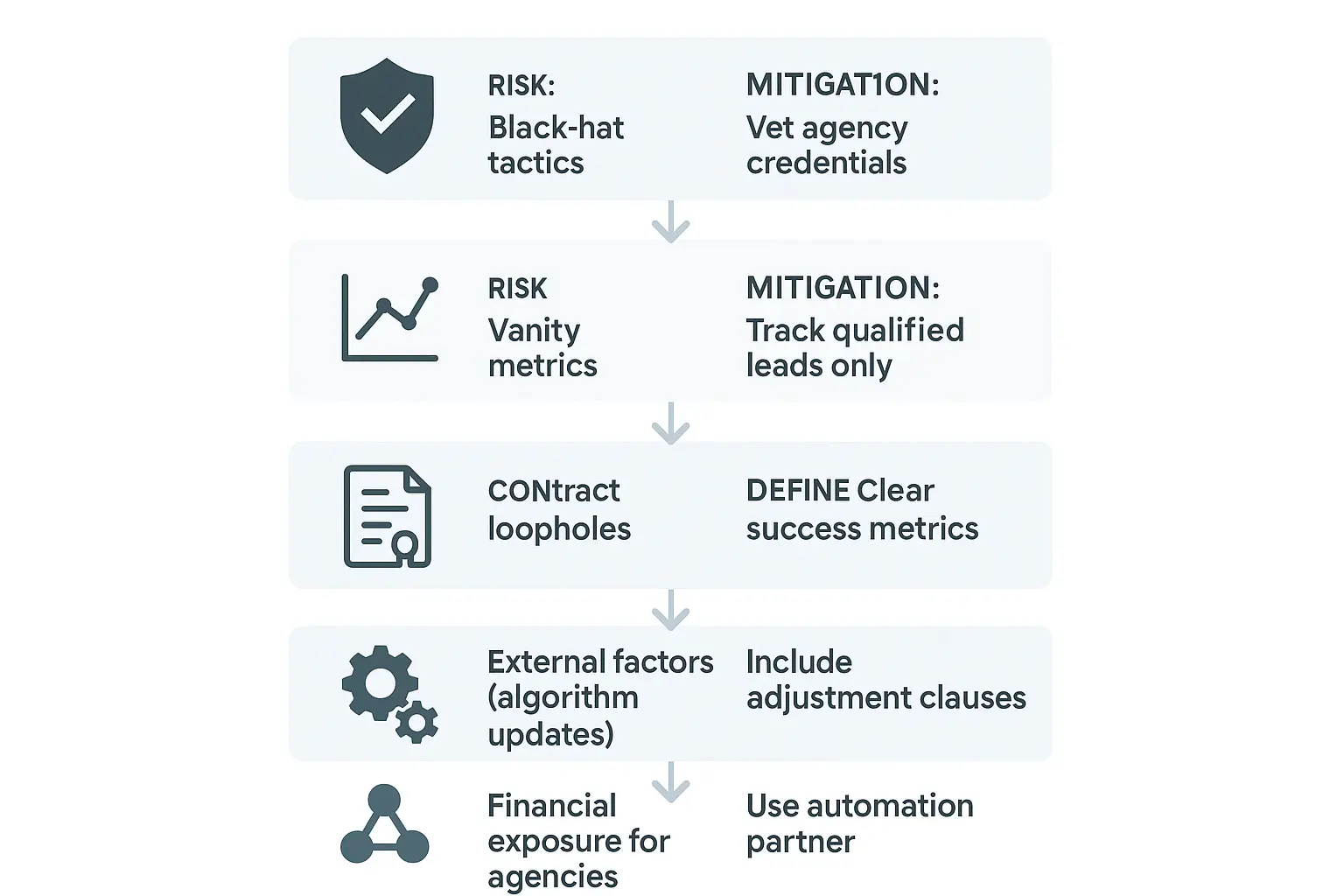
The SEO Time Lag is Real: This is perhaps the most significant hurdle. Research from Ahrefs shows that only 5.7% of pages will rank in the top 10 within a year of being published. Can your agency afford to fund the work for six, nine, or even twelve-plus months before seeing a payout?
-
Factors Outside Your Control: A sudden Google algorithm update, a competitor launching a massive campaign, or a client making unapproved changes to their site can derail your progress overnight.
-
The Cash Flow Crunch: While you wait for results, you still have to pay your team, your software subscriptions, and your overhead. A performance-only model can create a dangerous cash flow gap, especially for smaller agencies.
How to Make It Work: Mitigating the Risk
A pure performance model is too risky for most agencies, but that doesn’t mean you have to abandon the concept. The key is to structure the engagement in a way that protects your cash flow while still offering the upside.
The single biggest factor that makes or breaks this model is your cost of fulfillment. If your cost to deliver is high, so is your risk—but if you can drastically lower that cost, the model suddenly becomes much more viable.
This is where a new approach comes in. By leveraging a white-label SEO partner that uses AI and automation, you can significantly reduce your delivery expenses. Imagine offloading up to 90% of time-consuming tasks—technical audits, rank tracking, content briefing, reporting—to an automated engine.
Internal data shows that AI-driven automation can slash fulfillment costs by up to 60%. This completely changes the financial equation.
Here’s how to put that advantage to work:
-
Propose a Hybrid Model: Start with a small base retainer that covers your reduced fulfillment costs. This ensures your basic expenses are met. Then, add performance bonuses for hitting traffic or lead goals. You get cash flow stability, and the client still gets the pay-for-performance upside they’re looking for.
-
Focus on Execution, Not Overhead: With a fulfillment engine doing the heavy lifting, your team can focus on high-value strategy and client communication. This allows you to scale your agency without hiring more staff, keeping your operational costs lean.
-
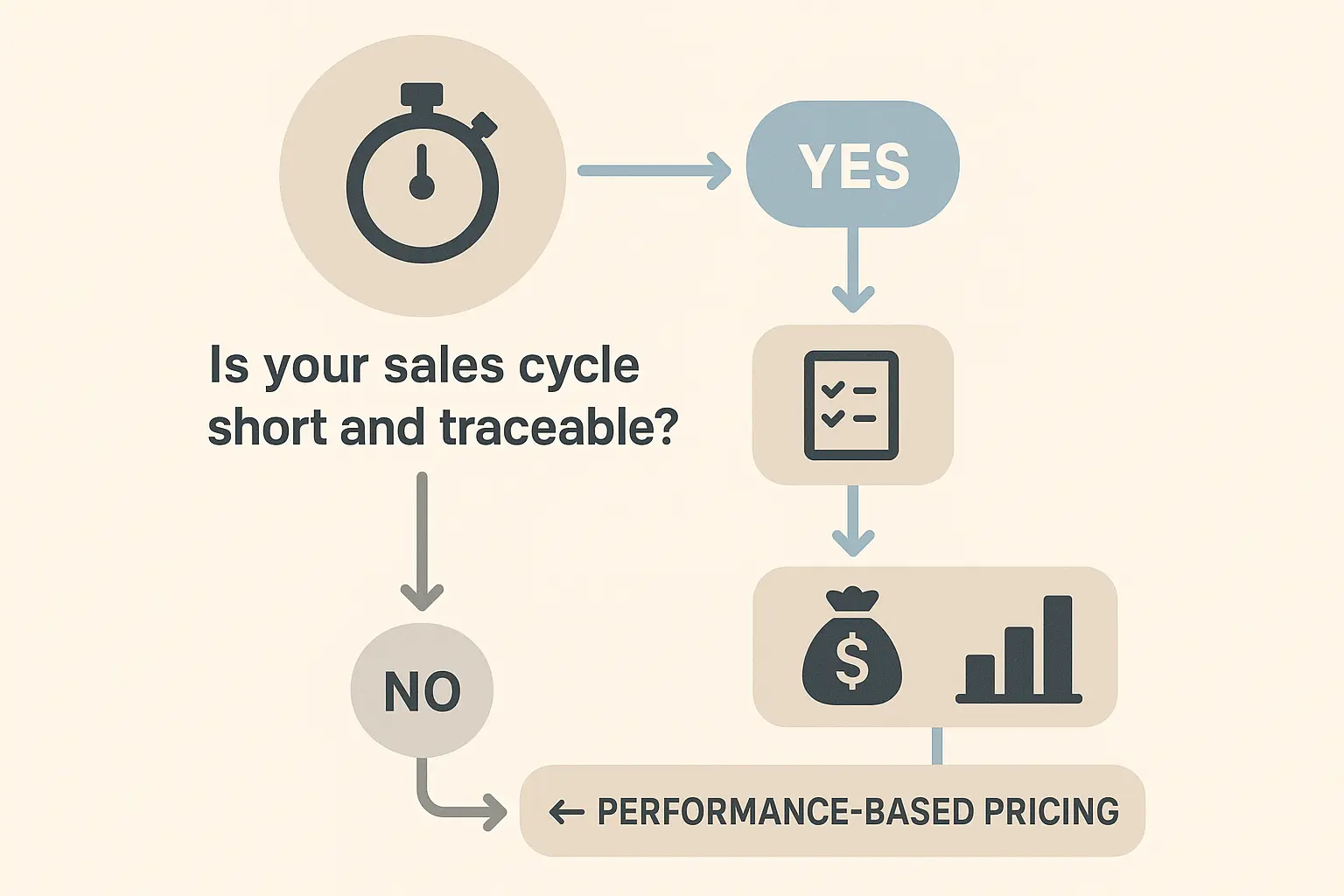
Choose the Right Clients: This model works best for clients with established websites that have some existing authority. A brand-new site will simply take too long to show results, making it a poor fit for any performance-based component.
By lowering your cost basis, you transform a high-risk gamble into a calculated and highly profitable business strategy.
Frequently Asked Questions
What’s the main difference between performance-based SEO and a regular retainer?
With a retainer, clients pay for your time and expertise regardless of the outcome. With performance-based pricing, they pay for the results themselves. A hybrid model, which combines a smaller retainer with performance bonuses, is often the most balanced approach.
Is performance-based SEO a good idea for new websites?
Almost never. New websites have no authority and require a significant amount of foundational work over a long period. The timeline to results is too long and unpredictable, making it a poor fit for a performance model.
How do you track results and get paid?
Clear tracking is non-negotiable. Use tools like Google Analytics, Google Search Console, and third-party rank trackers. For leads, you’ll need access to the client’s CRM or form submission data. All KPIs, tracking methods, and payment terms must be explicitly defined in your contract before you begin any work.
A Calculated Risk, Not a Blind Gamble
Performance-based SEO isn’t a magic bullet. It requires a strong stomach for risk, excellent client communication, and an ironclad contract.
But the viability of this pricing model is ultimately tied to the efficiency of your delivery system. By embracing automation and strategic partnerships to lower your cost of fulfillment, you can protect your downside while keeping all of the upside.
You can then confidently offer more flexible and attractive SEO pricing models, turning what was once a risky bet into your agency’s most powerful growth engine.