

You did everything the experts told you to. You invested in the latest AI outreach platform, set up sophisticated CRM pipelines, and even automated your email warm-ups. The AI copywriter spun up dozens of variations, promising personalized messaging at scale.
You hit “launch,” expecting a flood of demos. Instead, you got silence.
If this sounds familiar, you’re not alone. Many agencies are discovering that even the most advanced automation can’t fix a broken strategy. The problem isn’t the technology; it’s what you’re feeding it. This is the story of how we turned a failing, over-automated campaign into a powerful lead generation engine—not by finding a better robot, but by building a smarter strategy.
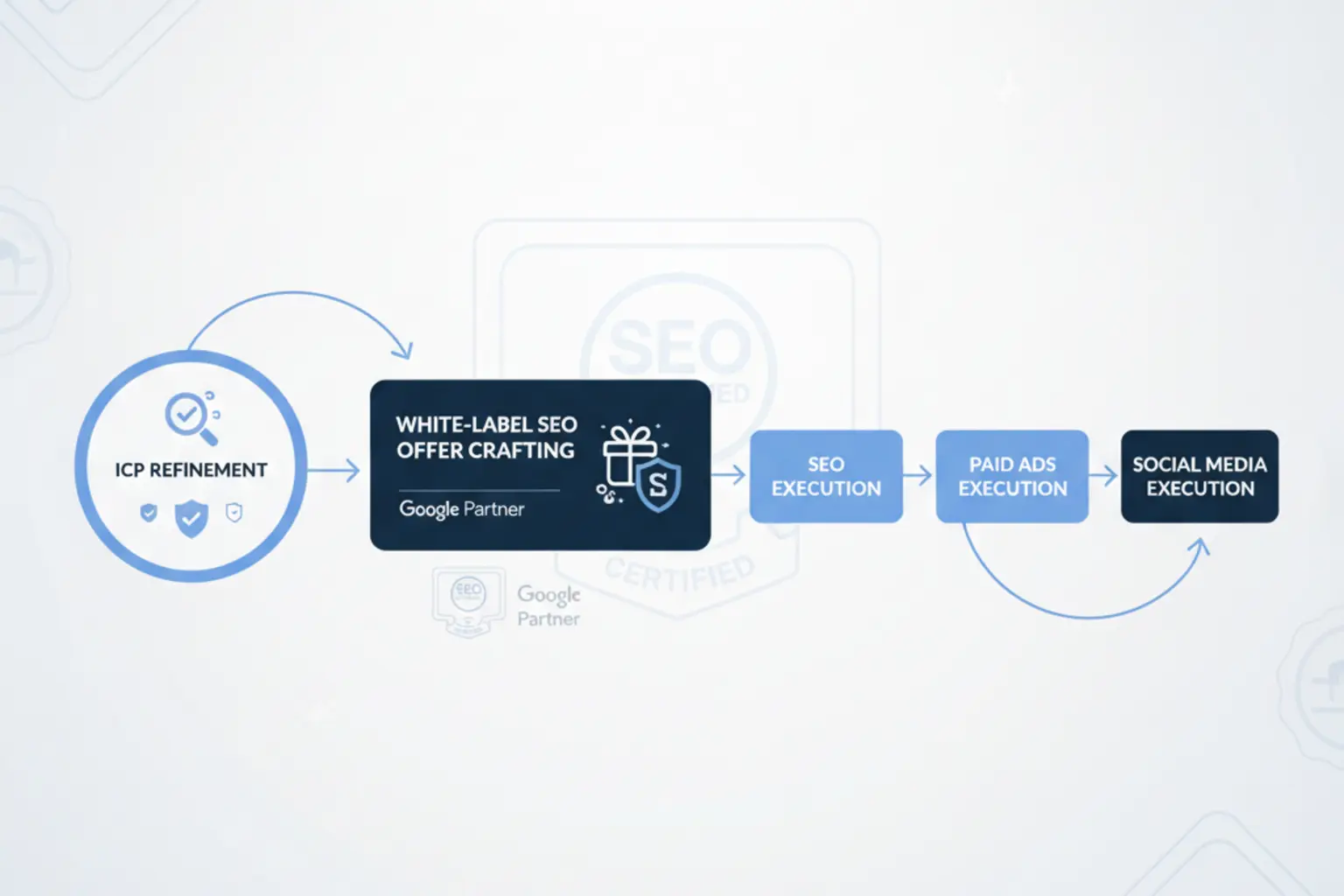
The ‘Before’: Anatomy of a Failed Campaign
Our initial approach was a textbook example of modern outreach “best practices.” We had:
- AI-Generated Copy: The platform created hundreds of email variations based on prospect data.
- Complex Automation Sequences: Multi-step pipelines in the CRM triggered actions based on every conceivable behavior.
- A Broad Target List: We cast a wide net, targeting thousands of “digital agencies” with a generic message.
The result? Abysmal open rates, near-zero clicks, and not a single qualified lead. The expensive tech stack was simply amplifying a message nobody wanted to hear. Ironically, this over-automation—a common pitfall in modern outreach—created the very impersonal communication we were trying to avoid.
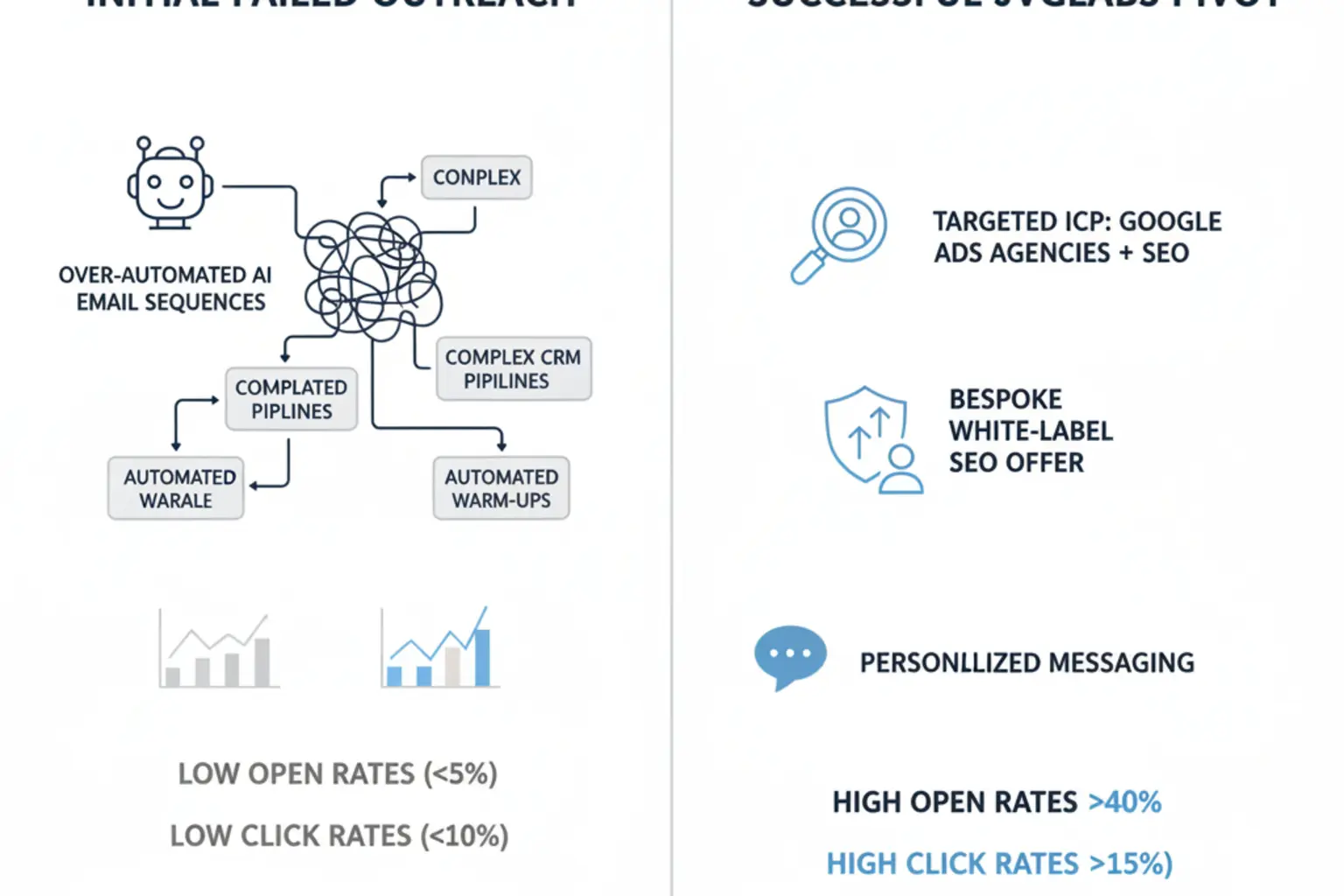
The Diagnosis: Why the Right Tools Still Failed
Competitors in the automation space sell their features as the solution. But technology is an amplifier, not a strategist. Our campaign was failing for two fundamental reasons that no software could fix:
-
A Weak, Undifferentiated Offer: Our message was about “partnering” to “drive results.” It was vague, forgettable, and sounded like every other email in our prospects’ inboxes. It didn’t solve a specific, urgent pain point.
-
An Unfocused Ideal Customer Profile (ICP): “Digital agencies” is not an ICP; it’s a category. We were speaking to everyone and connecting with no one. Web design firms have different needs than social media shops, and our generic message resonated with neither.
This is a critical lesson for any agency evaluating outreach solutions. Success isn’t found in the tool itself but in the strategic clarity you bring to it.
The Strategic Pivot: The JVGLABS Intervention
As a white-label SEO partner for agencies, we went back to our core principles. We paused the machines and started thinking like strategists. The pivot was built on two key decisions.
1. Nailing the Ideal Customer Profile
We stopped chasing everyone and focused exclusively on the agencies we could help most: Google Ads agencies getting client requests for SEO but with no in-house team to deliver it.
This hyper-specific ICP was a game-changer. Suddenly, we knew their exact pain point: turning away profitable work or risking client relationships by saying “no.”
2. Crafting an Irresistible Offer
With a clear ICP, we could create an offer that felt like a perfect solution, not a generic sales pitch. The new message wasn’t about “partnership”; it was about immediate value:
“Add a fully managed, white-label SEO service to your agency in the next 48 hours. Keep your clients, increase your revenue, and let us handle all the execution invisibly in the background.”
This wasn’t just an offer; it was a lifeline. We were no longer selling a service—we were selling a solution to a revenue-killing problem.
The ‘After’: From Crickets to a Pipeline of Qualified Leads
We plugged this new, strategy-led approach back into the same automation tools. The technology hadn’t changed, but the inputs were radically different. The results speak for themselves:
- First Email Open Rate: 55%
- First Email Click Rate: 30%
- Follow-up Email Open Rate: 93%
- Follow-up Email Click Rate: 60%

This wasn’t just a marginal improvement; it was a transformation. We went from shouting into the void to having meaningful conversations with high-fit prospects. The data proves that a focused ICP and a compelling offer are exponentially more powerful than automation alone. And while the average AI-driven campaign boasts a 41% higher open rate, our strategy-first approach blew past even that benchmark.
See the Exact Emails and Full Strategy
Want the templates we used, the follow-up cadence, and a step-by-step breakdown of the ICP refinement process? Download the complete case study PDF for the full story:
Download the Full Case Study Now
The Winning Framework: Quality Over Quantity
Our success came from embracing a simple truth: strategy guides the tools, not the other way around. This reflects a major industry shift, with top-performing teams sending 40% fewer messages to focus on quality and timing.
Here is the replicable framework that any agency can use:
-
Start with Who, Not How: Before you touch any software, define your ICP with ruthless specificity. Who has the most urgent need for what you do? Who is actively feeling the pain of not having your solution?
-
Solve a Burning Problem: Frame your service not as a list of features but as the direct solution to that ICP’s most costly problem. Your offer should be irresistible because it removes a major obstacle to their growth.
-
Use AI for Insight, Not Invention: Use AI to research your ICP and find personalized hooks related to their recent work or company news. This matters; personalized emails can generate up to 50% higher open rates. AI should help you connect authentically, not just generate generic platitudes.
-
Automate the Process, Not the Personality: Use your outreach tools to schedule sends, manage follow-ups, and track engagement. But make sure the core message comes from human insight and genuine empathy for your prospect’s challenges.
Your Outreach Needs a Strategist, Not Just a Robot
As Gartner predicts that 70% of sales organizations will use AI for process automation by 2025, the temptation to let robots run the show will only grow. But as our journey proves, the agencies that win will be those that master the strategy behind the software.
Technology didn’t solve our problem—a deep understanding of our customer and a compelling value proposition did. At JVGLABS, we bring that strategic thinking to everything we do, operating as the invisible SEO department that helps our agency partners grow. We handle the execution so you can focus on the client relationships that matter.
Ready to see how a strategy-first approach can transform your agency’s growth? Get the complete blueprint behind our success.