

Imagine your client, a renowned cardiologist, has a beautifully designed website with dozens of articles explaining complex heart conditions. Yet, when a potential patient searches for “cardiologists near me” or “symptoms of atrial fibrillation,” a competitor’s site shows up with a detailed knowledge panel, star ratings, and a list of conditions treated—right there on the search results page.
What’s the secret? It’s not magic; it’s structured data. Specifically, medical schema markup.
In healthcare, trust is everything. For search engines like Google, that same trust is built on clarity and authority. This guide will demystify medical schema, showing you how to translate your clients’ expertise into a language Google understands and help them connect with the patients who need them most.
Why Medical Schema is No Longer Optional in Healthcare SEO
Every minute, Google fields over 70,000 health-related searches. Patients aren’t just looking for information; they’re making critical decisions. Research shows that 83% of patients visit a hospital website before ever scheduling an appointment. Their journey starts with a search query, and your client’s first impression happens right on the search results page.
Here, Google’s standards for Expertise, Experience, Authoritativeness, and Trustworthiness (E-E-A-T) become non-negotiable. Medical content falls under the “Your Money or Your Life” (YMYL) category, meaning Google holds it to the highest possible standard.
Medical schema is a powerful way to signal E-E-A-T. It’s a vocabulary that adds context to your webpage, explicitly telling search engines things like:
- “This page is about a specific medical condition.”
- “This person is a licensed physician with a specialty in cardiology.”
- “This article describes a common medical procedure.”
Without this clarity, you’re asking search engines to guess. With schema, you’re handing them a verified, structured dossier of your client’s expertise, making it easier to feature their content in rich results, knowledge panels, and other prominent search features.
The Core Trio of Medical Schema Markup
While there are many types of schema, three are foundational for nearly any healthcare provider: Physician, MedicalCondition, and MedicalProcedure. Think of them as the essential building blocks for creating a clear, authoritative digital footprint for your clients.
Physician Schema: Building Digital Trust and Authority
This is the cornerstone for any individual practitioner. The Physician schema type identifies a person as a medical doctor and details their qualifications and specialties. It’s the difference between Google seeing a name on a webpage and understanding that name belongs to a board-certified surgeon.
By clearly defining properties like medicalSpecialty, alumniOf (their medical school), and knowsAbout (the conditions and procedures they specialize in), you directly contribute to their perceived authority. This clarity is crucial, considering that 47% of patients use online reviews and information to select a physician. A well-implemented Physician schema helps surface the very details they’re looking for.
Here’s a practical JSON-LD example for a doctor’s biography page:
{ "@context": "https://schema.org", "@type": "Physician", "name": "Dr. Jane Doe, M.D.", "image": "https://www.yourclinic.com/doctors/jane-doe.jpg", "description": "Dr. Jane Doe is a board-certified cardiologist specializing in interventional cardiology and preventative heart care.", "medicalSpecialty": "Cardiology", "alumniOf": { "@type": "CollegeOrUniversity", "name": "Johns Hopkins University School of Medicine" }, "knowsAbout": [ { "@type": "MedicalCondition", "name": "Hypertension" }, { "@type": "MedicalProcedure", "name": "Angioplasty" } ], "address": { "@type": "PostalAddress", "streetAddress": "123 Health St.", "addressLocality": "Wellnessville", "addressRegion": "CA", "postalCode": "90210" }, "telephone": "+1-555-123-4567"}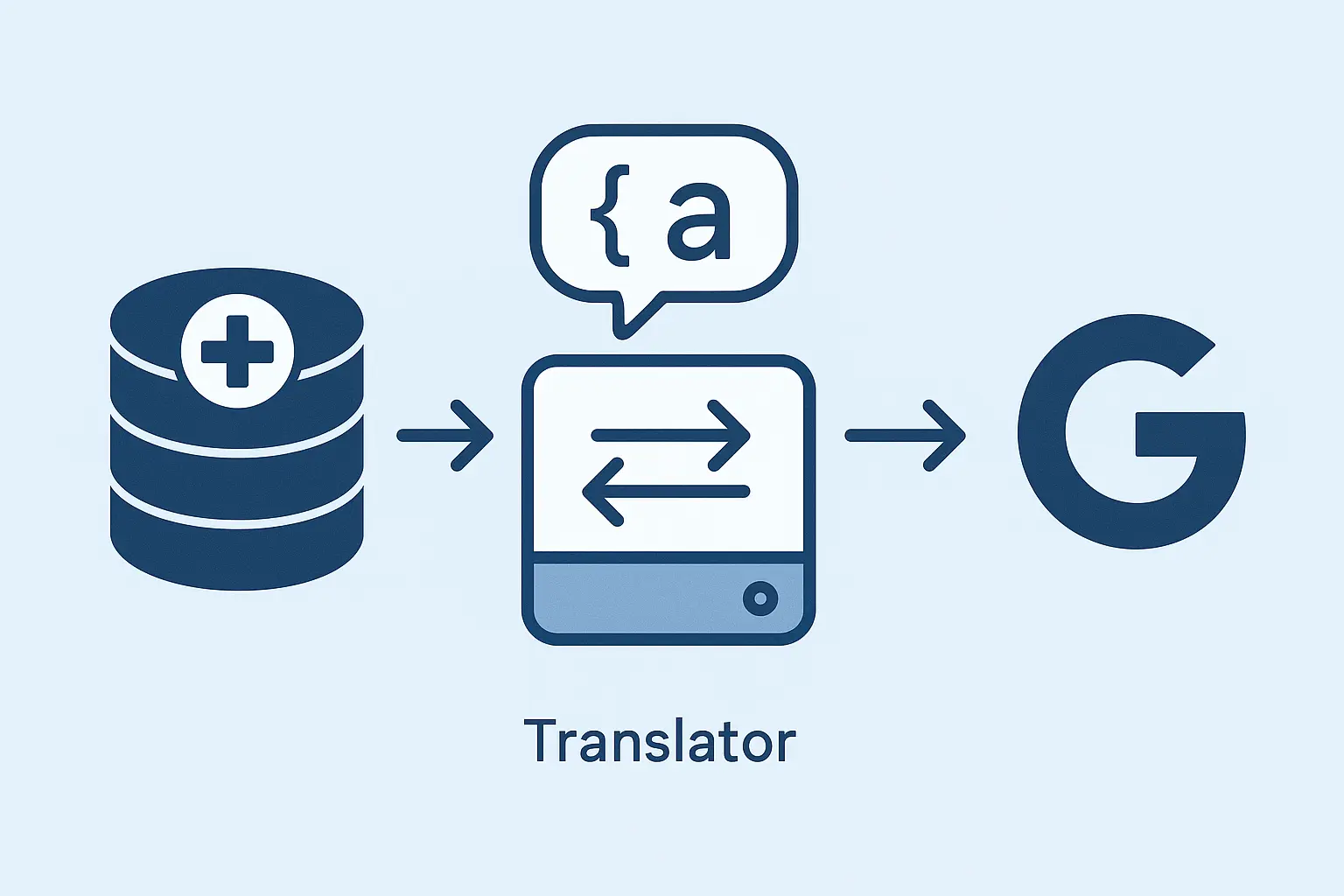
MedicalCondition Schema: Clarifying Health Information
With Google processing over 1 billion health questions every day, providing clear, accurate, and easily digestible information is paramount. The MedicalCondition schema helps structure your content about diseases, disorders, and other health issues so search engines can present it as a trustworthy resource.
This schema type allows you to define key aspects of a condition, such as its symptoms, causes, riskFactors, and possibleTreatment. When implemented correctly, it can help your client’s content appear in rich snippets that answer a user’s question directly on the search results page.
Here’s an example for a page explaining Type 2 Diabetes:
{ "@context": "https://schema.org", "@type": "MedicalCondition", "name": "Type 2 Diabetes", "alternateName": "Diabetes Mellitus Type 2", "description": "A chronic condition that affects the way the body processes blood sugar (glucose).", "symptom": [ { "@type": "MedicalSymptom", "name": "Increased thirst" }, { "@type": "MedicalSymptom", "name": "Frequent urination" }, { "@type": "MedicalSymptom", "name": "Unexplained weight loss" } ], "possibleTreatment": [ { "@type": "MedicalTherapy", "name": "Dietary management" }, { "@type": "MedicalTherapy", "name": "Oral medication" } ], "mainEntityOfPage": "https://www.yourclinic.com/conditions/type-2-diabetes"}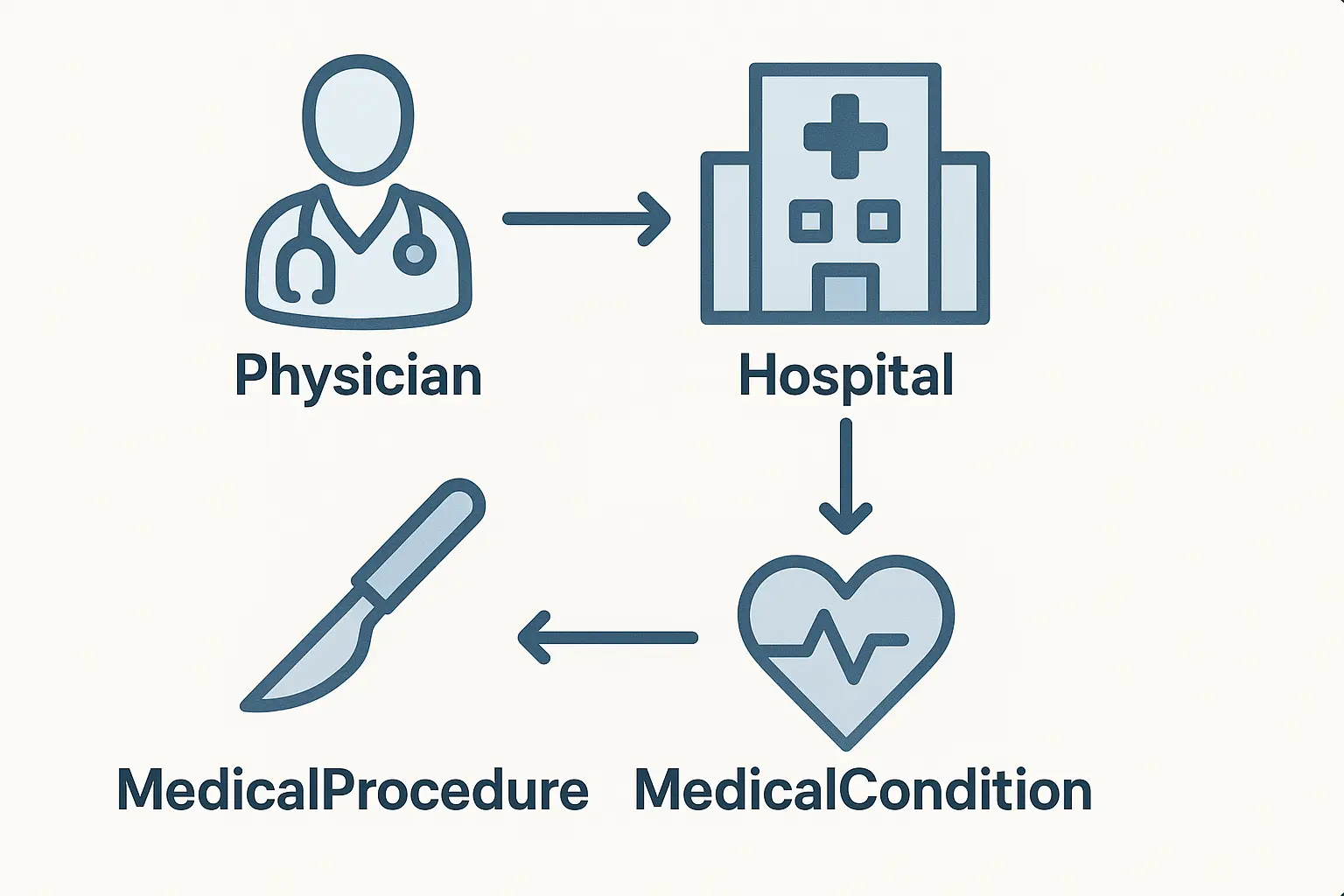
MedicalProcedure Schema: Detailing Medical Services
For surgeons, dentists, and specialized clinics, the MedicalProcedure schema is essential for detailing the services they offer. This markup helps clarify what a procedure is, why it’s performed (indication), and how it’s done.
Clearly defining procedures is a critical part of a comprehensive SEO strategy for healthcare providers, as it connects the conditions they treat with the solutions they provide. It answers high-intent search queries about specific treatments, positioning your client as the expert who can help.
Here’s an example for a page about knee replacement surgery:
{ "@context": "https://schema.org", "@type": "MedicalProcedure", "name": "Total Knee Replacement", "alternateName": "Knee Arthroplasty", "description": "A surgical procedure to resurface a knee damaged by arthritis. Metal and plastic parts are used to cap the ends of the bones that form the knee joint, along with the kneecap.", "procedureType": "SurgicalProcedure", "indication": { "@type": "MedicalIndication", "name": "Osteoarthritis of the knee" }, "bodyLocation": "Knee joint", "mainEntityOfPage": "https://www.yourclinic.com/procedures/knee-replacement"}
How to Implement and Test Your Medical Schema
Getting started with schema might seem technical, but the process is straightforward. By following a few simple steps, you can ensure your markup is clean, correct, and ready for Google.
-
Identify the Right Content: Match the schema type to the page’s purpose. Use Physician on doctor bios, MedicalCondition on informational health pages, and MedicalProcedure on service pages.
-
Generate the JSON-LD Code: Use the examples above as a template. Carefully replace the placeholder information with your client’s specific details.
-
Test Your Markup: Before you put anything on the live site, copy your code and paste it into Google’s Rich Results Test. This tool will tell you if your markup is valid and eligible for rich results.
-
Deploy the Script: Once validated, place the entire script tag in the head or body section of the corresponding page’s HTML.
For agencies managing numerous clients, this process can become time-consuming. Leveraging a white-label SEO partner can help automate and scale these technical implementations, ensuring accuracy and efficiency across all your accounts.
Frequently Asked Questions (FAQ) about Medical Schema
What’s the difference between JSON-LD, Microdata, and RDFa?
These are all formats for writing schema. Google recommends JSON-LD because it’s easier to implement and maintain. It’s a JavaScript object you can place anywhere in the page’s HTML, whereas Microdata and RDFa require you to add tags directly to your existing HTML elements, which can be more complex.
Will adding schema guarantee I get rich results?
No, it doesn’t. Adding valid structured data makes your page eligible for rich results, but the final decision is up to Google’s algorithm. It considers factors like search query, location, device, and overall site quality. Think of it as buying a lottery ticket—you can’t win without it, but it doesn’t guarantee a win.
Can I combine different schema types on one page?
Absolutely! This is a best practice. For example, a doctor’s biography page could use Physician schema nested within WebPage schema. You can also reference other schema types, as shown in the Physician example where it lists the MedicalCondition and MedicalProcedure the doctor “knows about.”
Is medical schema only for hospitals and large clinics?
Not at all. It’s valuable for any healthcare entity, including individual private practices, dentists, chiropractors, physical therapists, and mental health professionals. Any website offering expert medical information or services can benefit from the clarity that schema provides.
Your Next Step in Mastering Healthcare SEO
Implementing medical schema isn’t just a technical SEO task; it’s a fundamental step in building digital authority and trust for your healthcare clients. By structuring their data, you’re translating their real-world expertise into a language that search engines can reward with greater visibility.
Start small. Pick one doctor’s profile or one service page and apply the appropriate schema. Test it, deploy it, and watch how it helps search engines better understand what makes your client a trusted medical authority. You’re not just optimizing a webpage; you’re building a foundation of trust that connects patients with the care they need.