You’ve done it. The client’s report looks fantastic. They’re ranking number one for their own name, their product names—every branded variation you can think of. The branded search report is a sea of green.
Then the client asks the question that cuts through the celebration: “This is great, but what about the customers who don’t know we exist yet?”
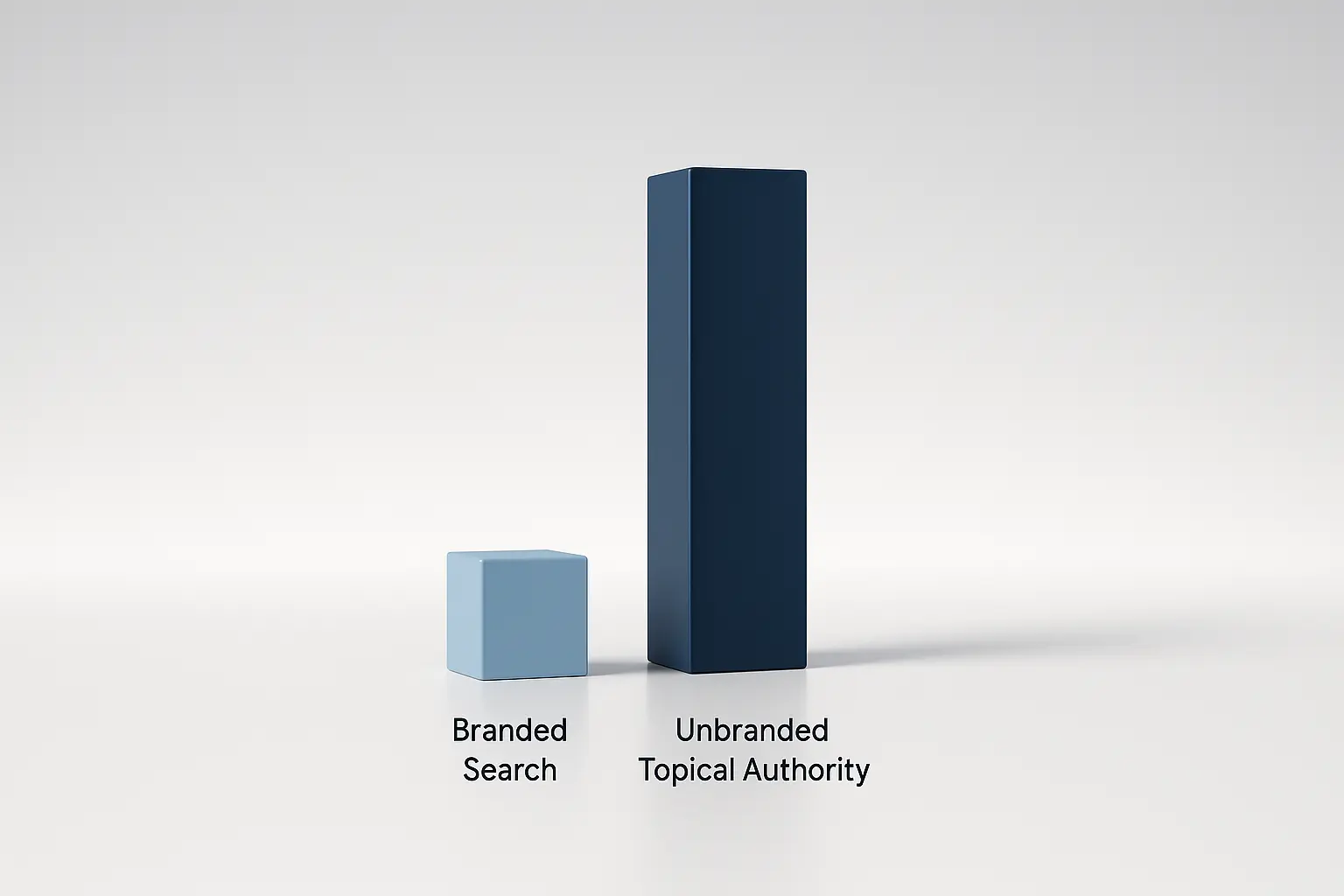
It’s a powerful question. While dominating branded search is crucial for capturing existing demand, it’s like winning a race where you’re the only one running. The real growth, the untapped market share, lives in the vast landscape of unbranded search—the questions, problems, and needs your potential customers are googling every day.
Winning here isn’t about ranking for a handful of keywords. It’s about becoming the default answer for an entire topic. This means building unbranded topical authority—the single most important leading indicator of future market growth.
The Two Worlds of Search: Branded vs. Unbranded
Think of the search landscape as two distinct universes.
Branded Search: This is your home turf. People are specifically looking for you (‘JVGLABS pricing,’ ‘Acme Co. reviews’). They’re already aware of your brand, and it’s essential to capture this bottom-of-the-funnel traffic.
Unbranded Search: This is the open ocean. People are looking for solutions, answers, or products without a specific brand in mind (‘how to scale SEO for my agency,’ ‘best running shoes for flat feet’). This is where discovery happens.
The distinction is critical. A staggering 75% of shoppers report using a Google search to find a new business. If your strategy is hyper-focused on your own brand name, you’re invisible to three-quarters of your potential market. You’re waiting for people to ask for you by name while your competitors are out meeting them where they are.
This isn’t just about traffic; it’s about owning the initial stage of the buyer’s journey. With 68% of all online experiences beginning with a search engine, failing to appear in these unbranded, problem-aware searches means you aren’t even part of the conversation.
From Chasing Keywords to Owning Topics
For years, SEO was a game of whack-a-mole. You picked a keyword, built some links, and watched your rank go up or down. But Google has evolved. It no longer just matches keywords; it understands concepts and intent.
This shift means our measurement has to evolve, too. Tracking a rank for ‘white-label SEO’ is one thing. Measuring your authority for the entire topic of SEO outsourcing for agencies is another.
Topical authority reflects how much Google perceives your website as a definitive expert on a specific subject. When you have high topical authority, you don’t just rank for one or two ‘money’ terms. You start showing up for hundreds, even thousands, of related long-tail questions and queries. You become the go-to resource.
This is the new competitive battleground. It’s no longer about being an option; it’s about becoming the category leader in the eyes of both users and search engines.
How to Measure What Matters: Quantifying Topical Authority
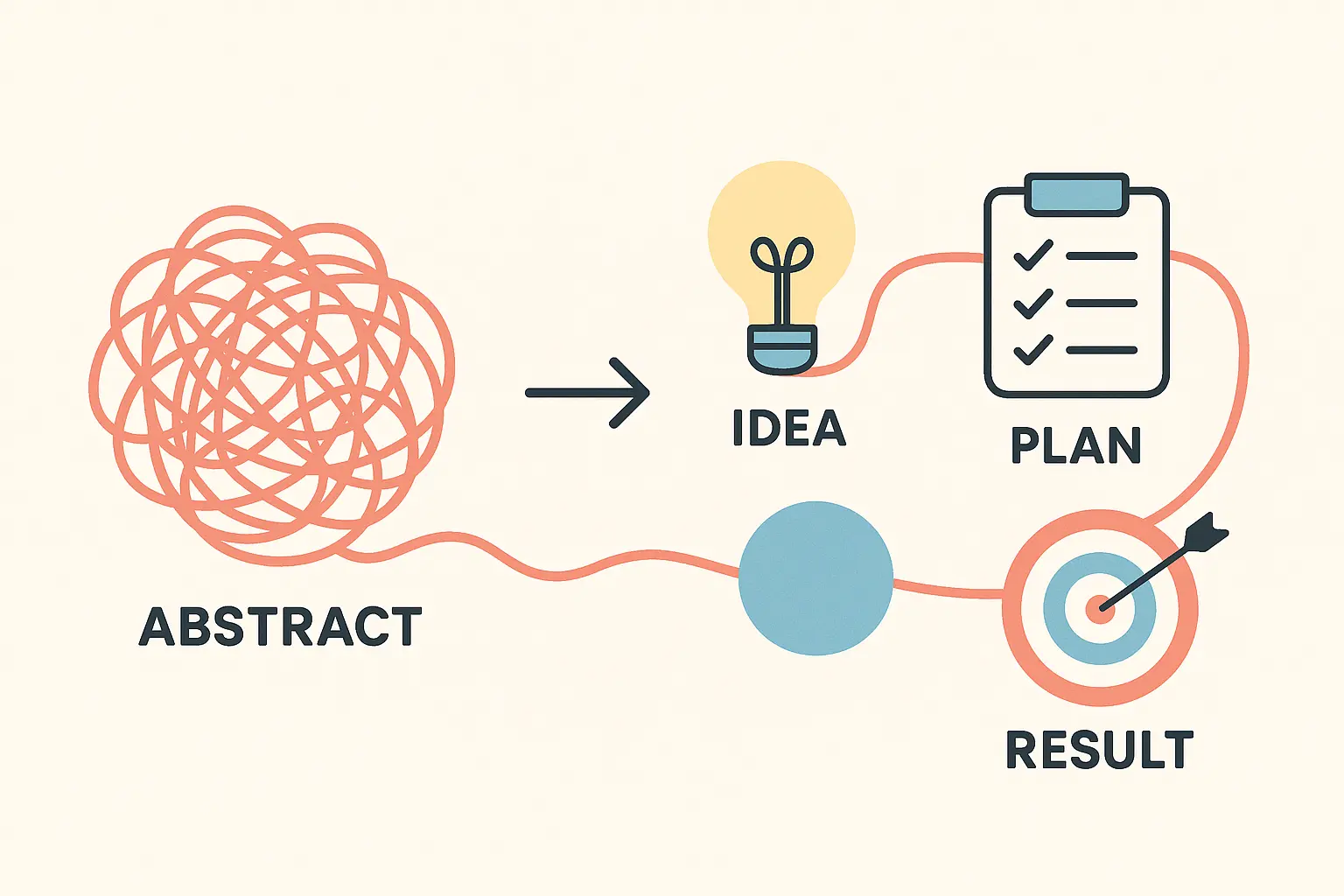
So how do you move from the abstract concept of ‘authority’ to a number you can put in a client report? It comes down to tracking metrics that serve as leading indicators of market share.
1. Define the Topic Universe
First, stop thinking in keywords and start thinking in clusters. For a client that sells project management software, the topic isn’t just ‘project management software.’ It’s everything around it:
Problem-aware queries: ‘how to manage remote teams,’ ‘ways to improve team productivity.’
Solution-aware queries: ‘best collaboration tools,’ ‘Asana vs. Monday.’
Commercial-intent queries: ‘project management software for small business,’ ‘agile software pricing.’
This collection of queries is your ‘Topic Universe’—the territory you want to own.
2. Calculate Unbranded Impression Share
Your Google Search Console is a goldmine for this. Filter out all branded queries to see your performance on unbranded terms. The key metric here isn’t clicks—it’s impressions.
A steadily increasing impression count for your topic universe is the earliest signal that Google is beginning to see you as a relevant authority. It’s testing your content with a wider audience. This is your ‘impression market share,’ and its growth precedes traffic and lead growth.
Doing this at scale requires a robust system, which is why many agencies are exploring new methods to manage data effectively. As you grow, consider exploring an [INTERNAL LINK 1: The Agency’s Guide to AI-Powered SEO] to automate the analysis and reporting of these complex data sets.
3. Track Topical ‘Share of Voice’
Share of Voice (SOV) tells you what percentage of the conversation you own for your topic universe compared to your competitors.
While traditional tools track this for a set list of keywords, a more advanced approach involves tracking visibility across the entire topic cluster. How often do you appear in the top 10 results for the 500 most important queries in your universe versus Competitor A, B, and C?
An increase in SOV directly reflects a gain in market share. As you become more visible, you capture more of the available audience. For those looking to implement this, a [INTERNAL LINK 2: White-Label SEO Fulfillment: A Playbook for Profitable Scaling] can provide a framework for delivering these insights without building the infrastructure from scratch.
4. Connect Authority to Revenue
At the end of the day, clients care about growth. The final step is connecting these leading indicators to bottom-line results. The chain of events looks like this:
Growing Topical Authority → Higher Impression Share → More Unbranded Organic Traffic → More Net-New Leads → Increased Market Share
Remember, SEO drives over 1,000% more traffic than organic social media. By focusing on unbranded topical authority, you build a sustainable engine for acquiring new customers—the ones who didn’t know your client existed until Google introduced them. This is a core pillar of a comprehensive [INTERNAL LINK 3: Omnichannel SEO Strategy for Agencies], where search becomes the foundation for brand discovery.
Frequently Asked Questions (FAQ)
What’s the real difference between a keyword and a topic?
A keyword is a single query, like ‘red running shoes.’ A topic is the entire ecosystem of intent around that query, including ‘best running shoes for marathon,’ ‘how to choose a running shoe,’ and ‘lightweight running shoe reviews.’ Owning the topic means you’re visible across the entire customer journey, not just at the point of purchase.
How long does it take to build topical authority?
It’s a long-term strategy, not a quick fix. Building true authority can take anywhere from 6 to 18 months of consistent, high-quality content creation, technical optimization, and strategic internal linking. It’s a process of proving your expertise to Google over time.
Can a small business compete against huge brands for broad topics?
Yes, by niching down. Instead of targeting the broad topic of ‘marketing,’ a small agency could focus on building authority around ‘inbound marketing for SaaS startups.’ By owning a specific, high-value niche, they can become the dominant player in that space before expanding.
Does this mean branded search isn’t important anymore?
Not at all. Branded search is still critically important for protecting your brand, capturing high-intent traffic, and serving your existing audience. The two work together. Unbranded search fills the top of your funnel with new prospects, and branded search helps convert them once they know who you are.
Your Next Step: From Measuring Ranks to Measuring Reach
Shifting your focus from branded keyword ranks to unbranded topical authority is more than just a reporting change—it’s a strategic evolution. It aligns your SEO efforts with the client’s ultimate goal: sustainable growth and increased market share.
Start by talking with your clients about the customers they haven’t met yet. Show them the massive opportunity waiting in unbranded search, and lay out a plan to not just compete for keywords, but to become the undisputed authority for the topics that matter most.