
The campaign was a home run. Your client landed a feature in a top-tier publication, the kind of placement that makes the whole team celebrate. Social media mentions are pouring in, and the client is thrilled with the brand visibility.
Then comes the question every agency dreads and every client asks: “This is great, but what did it actually do for our SEO?”
If that question gives you a sense of panic, you’re not alone. A recent survey from Aira revealed a startling gap: while 84% of digital PR professionals are confident their work impacts rankings and traffic, a staggering 54% admit they struggle to report on it effectively.
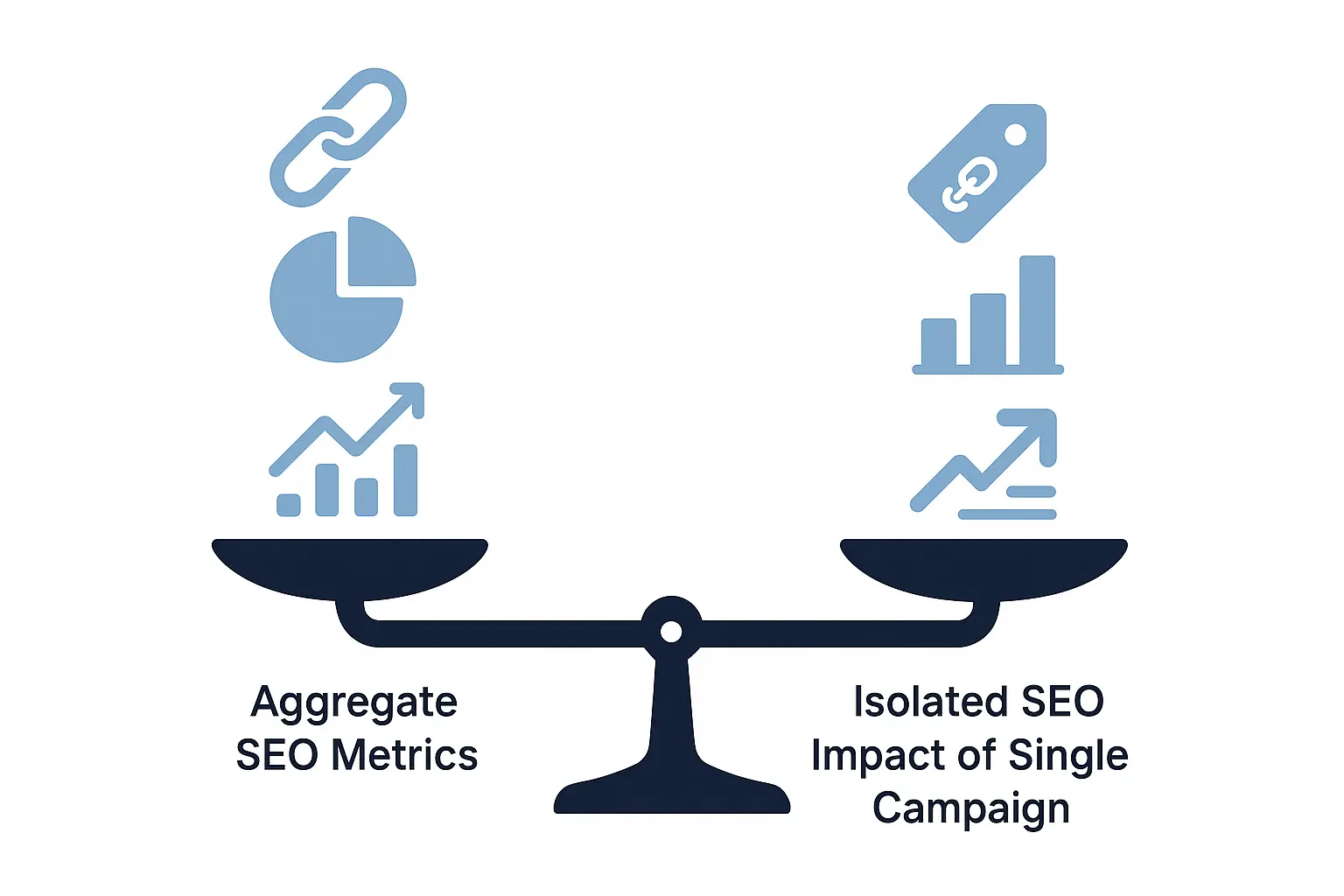
The challenge is understandable. SEO is a long game with countless moving parts. How can you isolate the impact of a single article, link, or campaign and tie it directly to a tangible result like a jump in rankings or a boost in organic traffic?
It’s not just possible—it’s essential for demonstrating the full ROI of your work. This guide lays out a framework for connecting the dots, transforming PR wins from “brand awareness” into measurable SEO performance.
Redefining “SEO Impact” in a Digital PR World
Before measuring impact, we need to define what we’re looking for. The value of a great digital PR placement goes far beyond a single blue link, with influence that ripples across three core areas of SEO.
-
Authority (Link Equity): This is the most direct impact. A link from a respected, relevant website acts as a vote of confidence in Google’s eyes. According to a Search Engine Land survey of SEOs, links remain one of the two most important ranking factors. A high-quality backlink can lift the authority of the specific page it points to, as well as your entire domain.
-
Referral Traffic (Direct Visitors): Never underestimate the power of human curiosity. People who read an article in a major publication and click through to your client’s site are often a highly engaged, pre-qualified audience. This traffic is a valuable and immediate benefit.
-
Brand Signals (The Indirect “Buzz”): This is the most misunderstood yet increasingly crucial element. Great PR makes your client’s brand more visible. As more people see the brand name, they search for it directly. This increase in “branded search” is a powerful signal to Google that the brand is a legitimate, authoritative entity. In an era where SparkToro research shows over half of all Google searches are “zero-click,” just having your brand name appear in search results is a win in itself.
Isolating your campaign’s impact means looking for changes across all three of these pillars, not just one.
The Investigator’s Toolkit: What You’ll Need
You don’t need a massive, expensive software stack to get started. Most of what you need is likely already at your fingertips.
- Google Analytics 4 (GA4): For tracking referral traffic and on-site user behavior.
- Google Search Console (GSC): For monitoring organic traffic, keyword impressions, clicks, and branded search volume.
- A Rank Tracking Tool (e.g., Ahrefs, Semrush, Moz): For monitoring keyword positions over time.
- A Backlink Monitoring Tool (often part of the tools above): To verify when new links are indexed by Google.
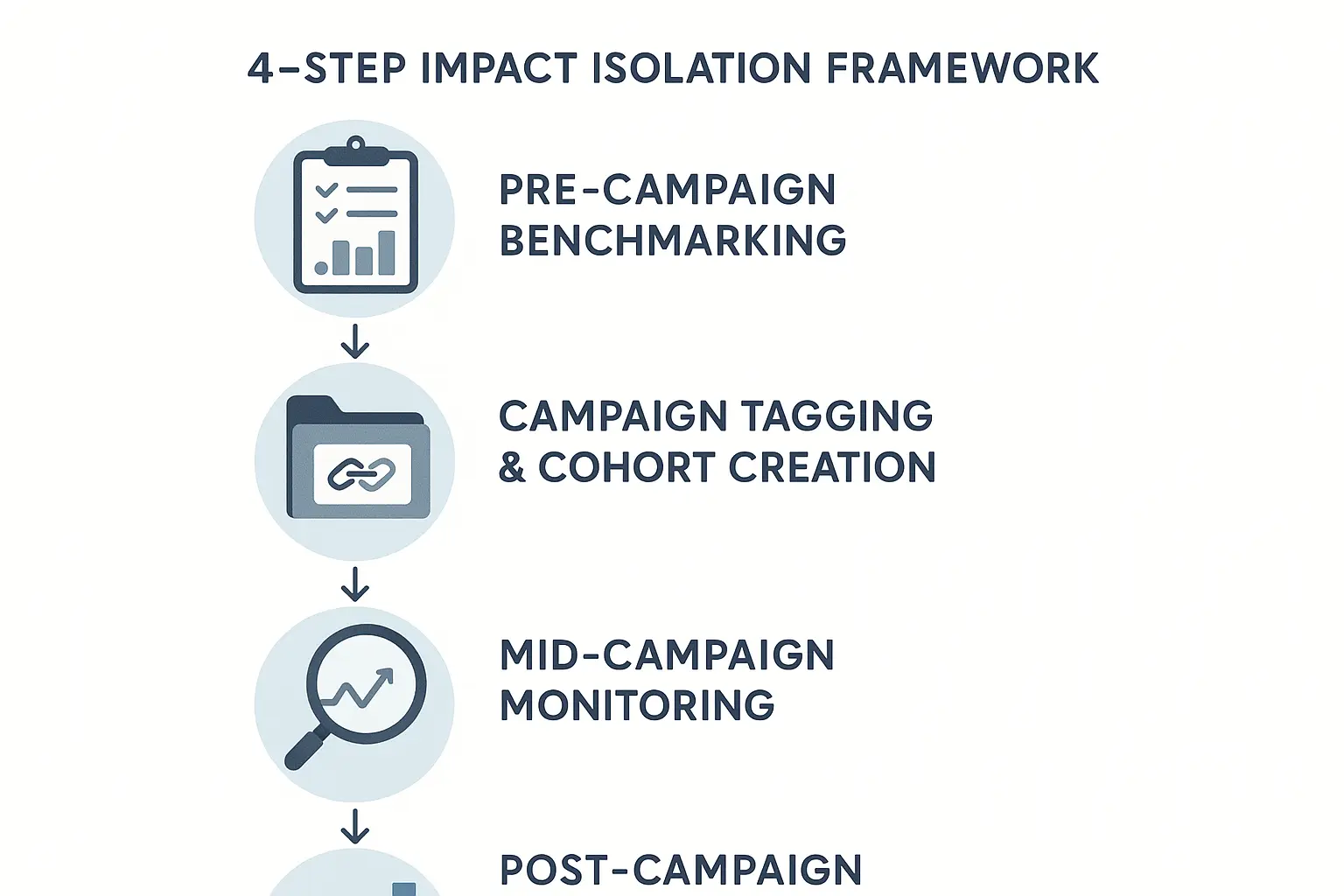
A 4-Step Framework for Isolating PR Campaign Impact
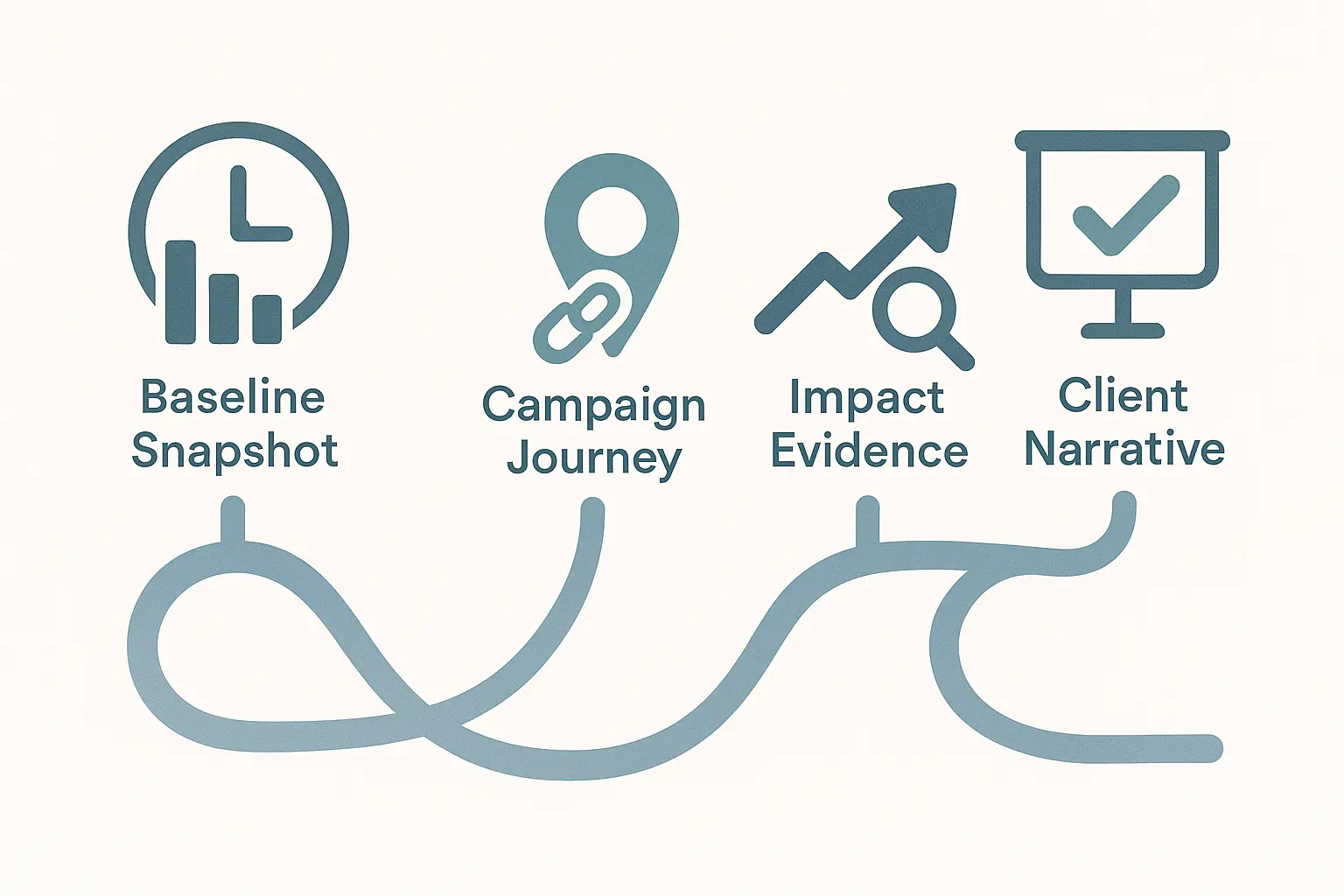
Think of yourself as a detective. You need to gather evidence before, during, and after the event to build a convincing case.
Step 1: Set Your Baseline (Before the Campaign Goes Live)
You can’t prove something changed if you don’t know where it started. Before your campaign’s key placements go live, take a snapshot of your client’s current SEO health. This is your “before” photo.
Record these key metrics:
- Target Keyword Rankings: Identify 3-5 primary keywords for the page(s) you hope to influence. Note their exact positions.
- Domain Authority/Rating: Log your site’s overall authority score (e.g., DR from Ahrefs, DA from Moz).
- Organic Traffic to Target Pages: Note the average monthly organic traffic for the specific URLs that will be linked to.
- Branded Search Volume: Use GSC to find out how many people are searching for the brand name directly each month.
Step 2: Track the Direct Ripple Effects (During & Immediately After)
As soon as your PR placement is published, the investigation begins. Here, you’re looking for the campaign’s immediate results.
Confirm the Authority Boost:
Use your backlink tool to see when the new link is discovered and indexed. This is sometimes immediate, but it can also take a few days or weeks. Note the date it appears—this is your “event” marker.
Measure the Referral Traffic:
This is your first and most tangible piece of evidence.
- In GA4, go to Reports > Acquisition > Traffic acquisition.
- Filter the report for the timeframe immediately following the article’s publication.
- In the search bar above the table, type the name of the referring publication (e.g., “forbes.com”).
This will show you exactly how many people clicked through from that article to your client’s website. This isn’t SEO traffic, but it’s a direct result of your campaign and a powerful metric to share.
Step 3: Measure the SEO Shockwaves (Weeks & Months Later)
This is where the real “aha moment” happens. A PR campaign’s most significant SEO benefits don’t appear overnight. They are secondary effects that build over time.
Monitor Keyword Rankings:
Remember those baseline rankings you recorded? Start tracking them weekly, looking for movement after your “event” marker—the date the link was indexed. A single, powerful link can absolutely push a keyword from the bottom of page one into a top-three position.
Why does this matter so much? Research from Backlinko shows the number one result in Google gets an average of 27.6% of all clicks. Moving from position 5 to 2 isn’t a small victory—it can fundamentally change the amount of traffic a page receives.
Analyze Organic Traffic to Target Pages:
Go back into GA4 and GSC. Is the page that received the link now getting more organic traffic than it did during your baseline period? A clear increase is a strong indicator that the new link’s authority is having an effect.
Look for a Rise in Branded Search:
In Google Search Console, go to the Performance report. Filter by query and type in your client’s brand name. Compare the impressions and clicks from the 30-day period before the campaign to the 30-day period after. An uplift here shows your PR efforts have increased brand recall, which is a powerful, long-term SEO asset.
Step 4: Weave the Data into a Compelling Story
Raw numbers are just that—numbers. Your job is to weave them into a narrative that demonstrates value. Instead of simply presenting a dashboard, tell the story.
Before: “Our target page for ‘small business accounting software’ ranked number 8 and received an average of 150 organic visitors per month.”
The Campaign: “Our placement in TechCrunch went live on October 15th, generating 850 referral visitors in the first 48 hours.”
The Aftermath: “Within three weeks of the link being indexed, our ranking for ‘small business accounting software’ moved from number 8 to number 4. By the end of the quarter, the page was averaging 400 organic visitors per month—a 166% increase—which directly correlates with the authority passed from the new backlink.”
This level of analysis is powerful, but it’s also time-consuming. As you scale, managing this process for every client can become a major resource drain. It’s why many firms explore SEO outsourcing for agencies to handle the detailed execution and reporting.
Common Pitfalls to Avoid
- The Attribution Fallacy: Be honest. If other SEO work (like on-page optimizations or additional link building) was happening at the same time, acknowledge it. Present your PR link as a significant contributing factor, not the sole cause.
- Impatience: SEO takes time. Don’t promise a client they’ll be number one a week after the article goes live. Set expectations that the real impact will be measured over weeks, if not months.
- Ignoring “No-Follow” Links: A “no-follow” link might not pass direct authority, but a placement in a major publication like The New York Times still drives incredible referral traffic and brand signals. It absolutely has SEO value.
Answering Your Top Questions
How long does it take to see SEO results from a PR link?
The initial referral traffic is immediate. Ranking improvements can take anywhere from a few weeks to a few months, depending on the authority of the linking site, the competitiveness of the keyword, and your client’s overall site health.
What’s more important: one amazing link or ten okay links?
Quality almost always trumps quantity. One link from a highly authoritative, industry-relevant publication is far more valuable than dozens of links from low-quality directories or irrelevant blogs.
Can I do this without expensive tools?
Yes, you can get surprisingly far with just Google Analytics 4 and Google Search Console. They are free and powerful. Paid tools make the process faster and more efficient, but the core principles remain the same.
What if a PR campaign doesn’t generate any links?
Even a linkless brand mention in a prominent publication can drive a surge in branded searches. You can measure this effect using Google Search Console, proving the PR effort still had a positive impact on your client’s search visibility.
From Measurement to Mastery
Proving the SEO value of digital PR is about shifting your perspective from chasing placements to tracking performance. By establishing a baseline, monitoring immediate ripples, and measuring long-term shockwaves, you can turn every campaign into a data-backed success story.
This process transforms your services from a “cost center” into a provable revenue driver for your clients. As your agency grows, however, dedicating resources to this granular reporting for every client becomes a challenge. Many firms find that working with an agency SEO partner allows them to focus on strategy while ensuring the foundational execution and reporting are handled flawlessly.
By mastering this skill, you not only retain clients longer but also empower them to see the true, comprehensive value of building their brand online. For agencies looking to deliver these sophisticated results at scale, exploring white-label SEO services can provide the necessary firepower without the in-house overhead.