

A news alert flashes across your screen: The FDA has issued a warning about a popular prescription drug, linking it to severe, unexpected side effects. Almost overnight, search queries for “[Drug Name] lawsuit” and “side effects of [Drug Name]” explode.
For the law firms you represent, this is a critical moment. It’s a land rush for high-value cases, and the firms that establish themselves as the authority on this new litigation will attract the vast majority of qualified plaintiffs.
But how do you get your client from zero to the top of Google’s results for a topic that didn’t exist yesterday?
The answer lies not in chasing a few keywords, but in rapidly building topical authority—becoming the definitive, trusted resource that both potential clients and search engines turn to for answers. This is the new battleground for mass tort campaigns, and the agencies that master it will deliver incredible value to their legal clients.
Why Speed and Authority Are Non-Negotiable in Mass Tort SEO
In legal marketing, mass torts operate on a completely different timeline. A typical personal injury campaign is a marathon; a mass tort campaign is a sprint. When news of a defective product or dangerous drug breaks, a massive and immediate wave of time-sensitive searches follows.
Capturing this traffic means deeply understanding modern search behavior. After all, research shows that 81% of people search online before ever hiring a lawyer. For sensitive and urgent topics like mass torts, that number is likely even higher.
Potential plaintiffs aren’t just looking for a lawyer; they’re looking for information, reassurance, and expertise. They want to know:
- Am I affected?
- What are the risks?
- What are my legal options?
- Who can I trust to guide me?
Your client’s content must answer all these questions. Firms offering only a single, thin “We Handle [Drug Name] Cases” page will be left behind by competitors who build a comprehensive library of resources. The window of opportunity is small, and being first with the best information creates a powerful competitive advantage.
Beyond Keywords: What Is Topical Authority in Legal SEO?
Think of your favorite subject in school. You probably had a teacher who didn’t just recite facts—they knew the subject inside and out. They could answer any question, connect different concepts, and make complex ideas easy to understand. In Google’s eyes, that’s what topical authority looks like.
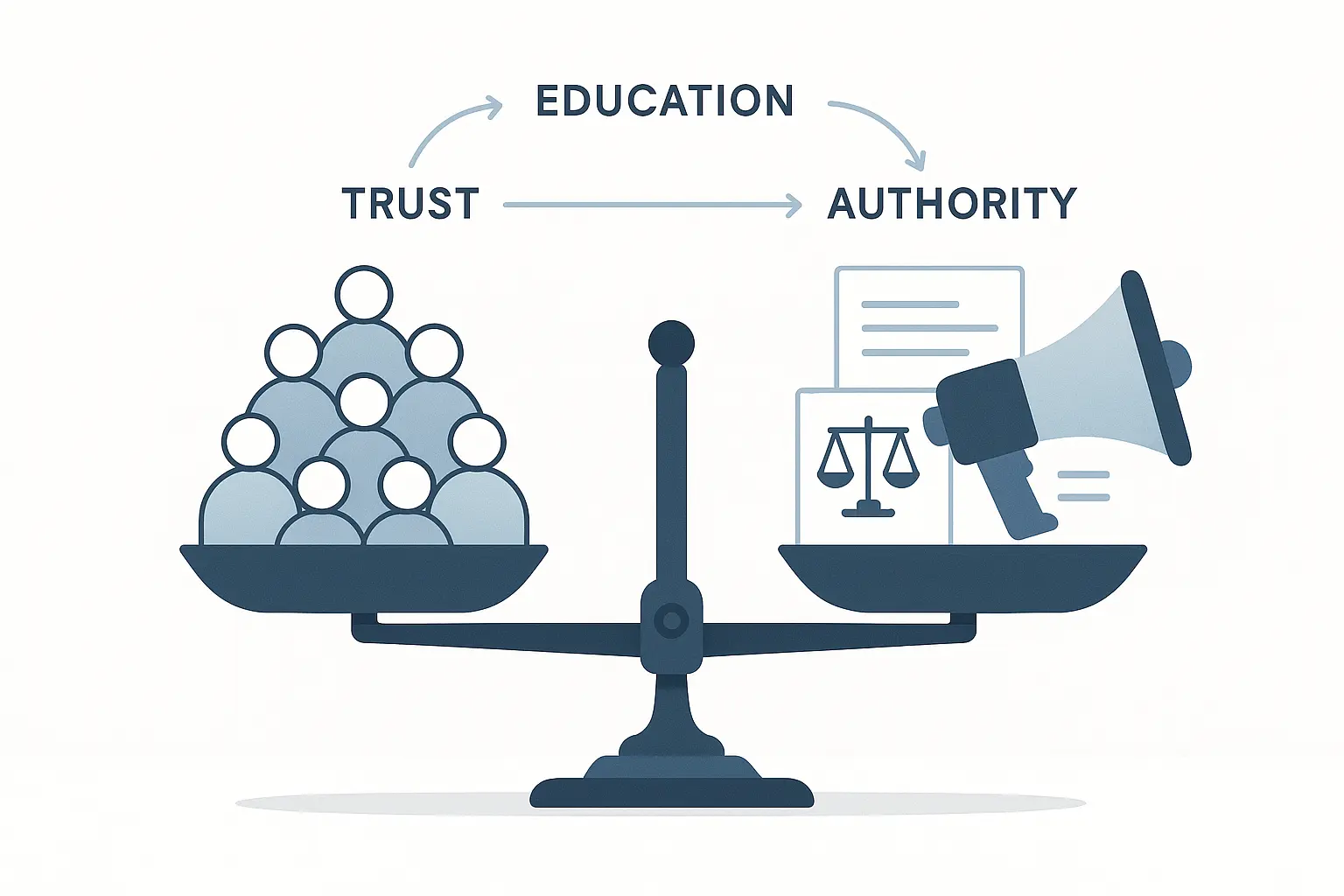
Topical authority means proving to search engines that you are an undisputed expert on a specific subject. This goes beyond ranking for one or two keywords; it’s about creating a web of content so comprehensive and interconnected that Google sees your client’s website as the most reliable destination for the entire topic.
For “Your Money or Your Life” (YMYL) topics like legal and medical advice, this is paramount. Google’s E-E-A-T guidelines (Experience, Expertise, Authoritativeness, and Trustworthiness) heavily favor sites that demonstrate deep, credible knowledge. A strong topical authority strategy is the most effective way to signal E-E-A-T and earn those coveted top rankings.
The 3-Phase Framework for Building Mass Tort Authority
So, how do you build this authority from scratch, and at high speed? It comes down to a structured, three-phase approach focused on the pillar-and-cluster content model.
Phase 1: The Foundational Pillar Page
This is your central hub—the single most comprehensive resource on the internet for this specific litigation. Your pillar page isn’t just another blog post; it’s a dynamic, constantly updated guide that serves as the foundation for your entire campaign.
A powerful mass tort pillar page should include:
- Litigation Status: A clear, up-to-date summary of current legal proceedings.
- Plaintiff Qualifications: A detailed checklist helping visitors understand if they have a case.
- Scientific Evidence: Explanations of and links to studies connecting the product to the injury.
- Defendant Information: Background on the company being sued.
- Frequently Asked Questions: Direct answers to the most common user queries.
This page becomes the gravitational center for all your internal and external links on the topic. It’s the “book,” and the next phase involves writing all its “chapters.”
Phase 2: The Content Cluster Ecosystem
With your pillar in place, it’s time to build out your clusters. These are individual articles, guides, or FAQ pages that each target a specific, long-tail question related to the mass tort. Each cluster page then links back to your main pillar page, creating a powerful, organized site architecture.
Examples of cluster content could include:
- What Are the Long-Term Side Effects of [Drug Name]?
- How to Join the [Product Name] Class Action Lawsuit
- Statute of Limitations for [Defective Device] Injury Claims
- [Drug Name] Lawsuit Settlement Amounts: What to Expect
By creating dedicated content for each of these specific queries, you signal to Google that you’ve covered the topic from every possible angle. This network of interconnected content is what truly solidifies your authority.

Phase 3: Authority Amplification
Great content is the foundation, but in a competitive space, you also need external validation. This phase is all about earning signals that reinforce your expertise.
- Digital PR & Link Building: Proactively reach out to legal news outlets, medical publications, and journalists covering the litigation. Offering your client’s attorneys for expert commentary can secure high-authority backlinks that are invaluable for SEO.
- Expert Authorship: Ensure all content is attributed to a specific, qualified attorney at the firm. An author bio detailing their experience in this area of law builds immense trust. Remember, 74% of potential clients who read a lawyer’s blog are more likely to hire them. Authoritative content doesn’t just attract traffic; it converts it.
This three-phase framework transforms a law firm’s website from a simple brochure into a living, breathing resource center that dominates search results.
The Execution Challenge: Can Your Agency Keep Up?
The framework is clear, but executing it is a monumental task. Building topical authority for a new mass tort requires an immense, front-loaded effort that includes:
- Rapid Research: Quickly digesting complex medical and legal information.
- High-Volume Content Production: Writing dozens of expert-level articles in a matter of weeks.
- Technical SEO: Ensuring perfect site structure and internal linking.
- Strategic Outreach: Securing high-authority backlinks and media mentions.
For many agencies, this is where the strategy breaks down. Internal teams are often stretched thin, and finding specialized writers and SEOs who can move at this speed is a significant challenge. The reality is that many agencies simply lack the bandwidth to compete effectively.
This resource gap is a major barrier. As the legal marketing landscape becomes more competitive, many agencies find that handling this level of execution in-house is unsustainable. This has led to a rise in specialized partnerships, where agencies use white-label SEO services to scale their delivery capacity without adding headcount. By embracing a model of SEO outsourcing for agencies, they can focus on client strategy while a dedicated partner handles the intensive execution. The most advanced solutions even utilize AI-powered SEO automation to accelerate research, content briefing, and reporting, giving their agency partners a critical speed advantage.
Frequently Asked Questions (FAQ)
How quickly do we need to act when a new mass tort is announced?
Immediately. The firms that publish comprehensive pillar pages and initial content clusters within the first few days or weeks capture the lion’s share of initial search interest and build a lasting authority advantage.
What’s the difference between a pillar page and a regular service page?
A service page is a sales pitch; a pillar page is an educational library. While a service page might say, “We handle these cases,” a pillar page aims to be the definitive resource on the entire litigation, answering every conceivable question a potential plaintiff might have.
Can’t we just use paid ads for mass tort campaigns?
Paid ads are a crucial part of a mass tort campaign, but they work best in tandem with a strong organic strategy. An authoritative content hub builds a level of trust and credibility that ads alone cannot. It also captures the vast audience of people who are in the research phase and not yet ready to click an ad.
How do you measure the success of a topical authority strategy?
You’ll measure success by more than just a #1 ranking for one keyword. Key metrics include:
- An increase in organic traffic across a wide range of related keywords.
- Rankings for dozens or even hundreds of long-tail search queries.
- A high number of qualified leads generated through organic search.
- Increased brand visibility and media mentions.
Your Next Move: From Taker to Authority
In the high-stakes arena of mass tort litigation, being a passive participant is no longer an option. The agencies that thrive will be the ones that empower their law firm clients to become the definitive authority on emerging legal topics.
By adopting a topical authority framework, you can move beyond simple keyword rankings and build a lasting, defensible competitive advantage. It’s a strategy that not only wins search results but also builds the trust that turns anxious searchers into confident clients.
Ready to explore how to build scalable SEO solutions for your legal clients? Dive deeper into our white-label SEO services designed to help agencies like yours execute with speed and precision.