
You’ve done everything right for your client, a local plumbing company. You launched a Local Service Ad (LSA) campaign, and the ‘Google Guaranteed’ badge is working its magic. The phone is ringing with qualified leads for emergency repairs, and it feels like a huge win.
But when you check their organic search performance, something’s off. They’re still stuck on page two for ‘water heater installation in [City],’ a high-value service. While the LSA campaign is bringing in business today, it isn’t building the long-term authority they need to dominate the market tomorrow.
This scenario is incredibly common. Agencies often treat LSAs and Search Engine Optimization (SEO) as separate tools. But what if they aren’t just two tools in the same toolbox? What if they’re two gears designed to fit together, creating a powerful engine that drives sustainable, long-term growth?
Integrating your LSA strategy with your core SEO efforts creates a feedback loop that helps your clients dominate the entire top of Google’s search results, from the paid ads to the coveted Local Pack.
The ‘Google Guaranteed’ Shortcut: Understanding Local Service Ads
Before we connect the dots, let’s cover the basics. Local Service Ads are the listings you see at the very top of Google search results for providers like plumbers, electricians, and HVAC technicians. They feature the powerful ‘Google Guaranteed’ or ‘Google Screened’ badge, a potent trust signal for consumers.
Research from Search Engine Land suggests this badge alone can boost click-through rates by 30-50%. And unlike traditional Google Ads where you pay per click, LSAs operate on a pay-per-lead model, which is highly attractive for service businesses.
This prime real estate is why so many agencies and businesses jump straight into LSAs.
For a customer with a burst pipe, that green checkmark is often all they need to see to make a call. It feels like a shortcut to immediate business, but relying solely on this shortcut is like building a house with no foundation.
The Problem with Two Engines, One Destination
When you run LSAs and SEO in separate silos, your marketing campaigns never talk to each other, creating significant missed opportunities.
The LSA-Only Weakness: You get leads, but you aren’t building a lasting digital asset. Your visibility is rented, not owned. The moment you pause the campaign, you disappear, becoming completely dependent on ad spend.
The SEO-Only Weakness: You’re building that crucial long-term asset, but you could be missing out on high-intent customers who need help right now. With 97% of consumers using the internet to find local businesses, being absent from the top LSA spot means you’re invisible to the most urgent buyers.
The biggest hidden cost? You’re ignoring a goldmine of data. Your LSA campaign is a direct line to what customers are actually booking and paying for—insights that are priceless for a smart SEO strategy.
The Flywheel Effect: How LSAs and SEO Power Each Other
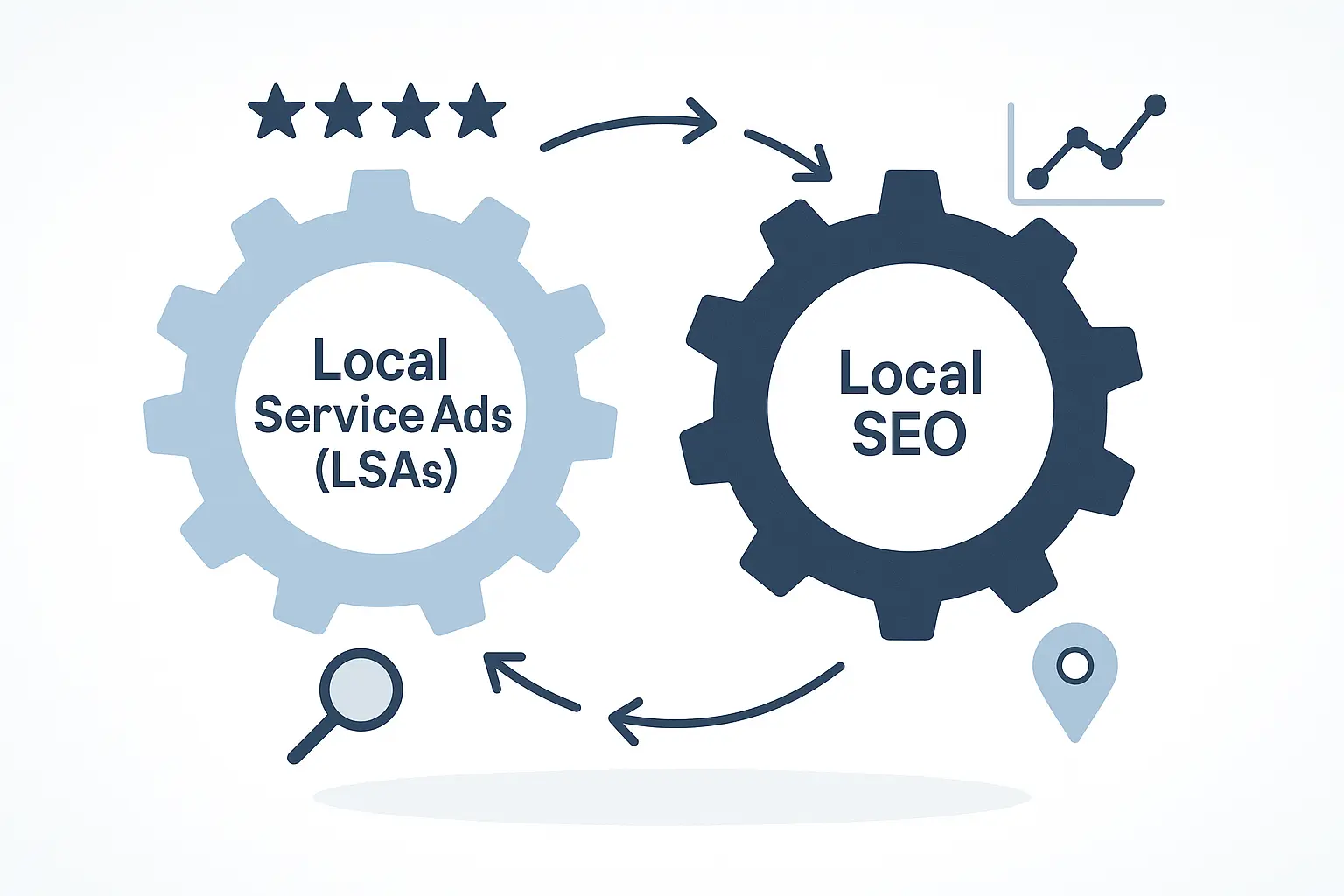
The real magic happens when you stop seeing LSAs and SEO as separate line items and start seeing them as a single, interconnected flywheel. When one side gains momentum, it accelerates the other.
Here’s how it works:
1. Reviews Fuel Everything
The most important factor for LSA ranking is the quantity and quality of customer reviews. At the same time, reviews are a critical ranking factor for your Google Business Profile (GBP) in the organic Local Pack. In fact, a BrightLocal study found that 87% of consumers read online reviews for local businesses.
Instead of managing separate processes, create a unified strategy for generating reviews. Every happy customer, whether from an LSA lead or another channel, should be guided to leave a review on the client’s GBP. This single action boosts both LSA visibility and organic local rankings.
2. LSA Data Informs SEO Strategy
Your LSA dashboard is a treasure trove of first-party data, showing you exactly which job types are being booked and which ones are most profitable.
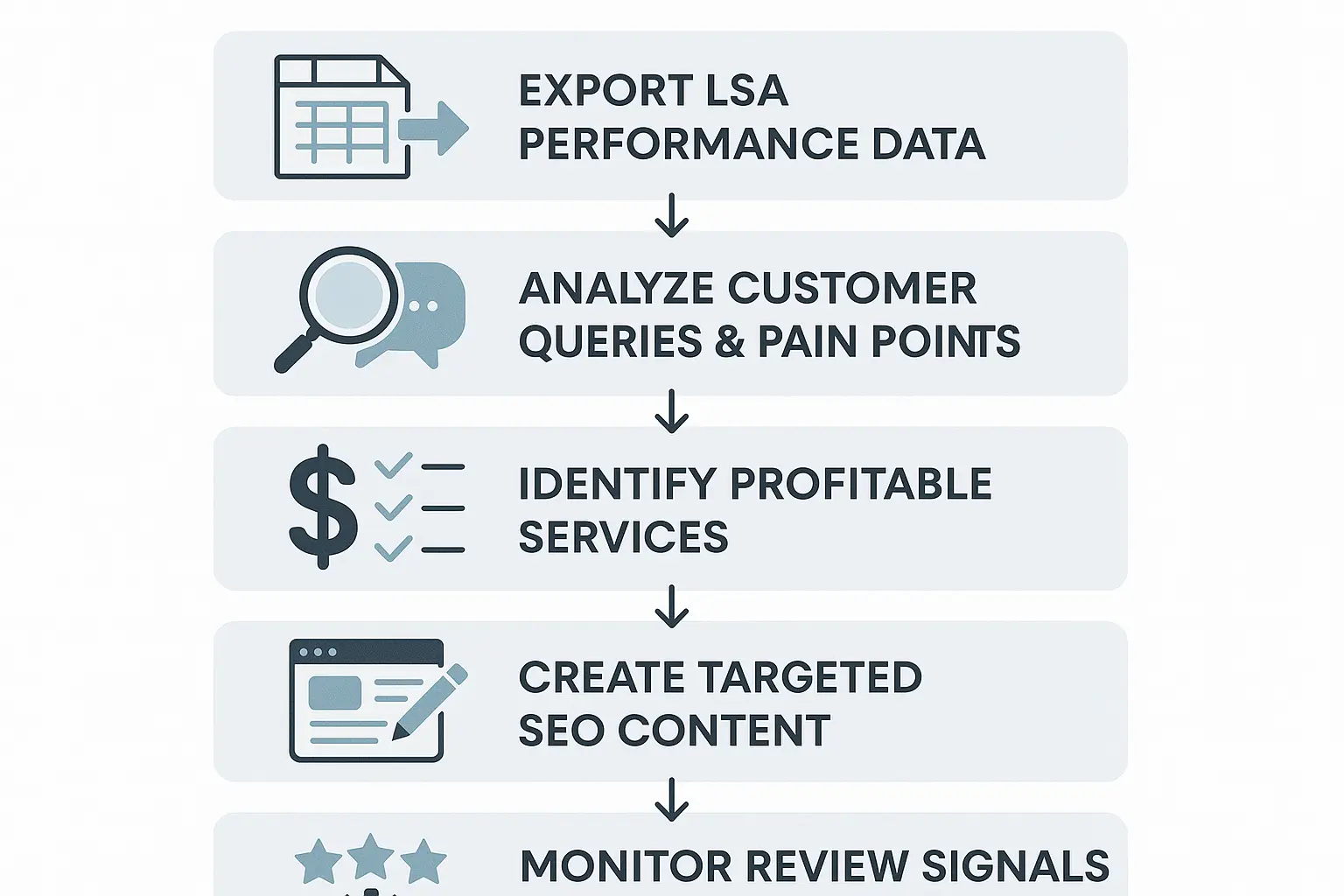
Let’s say the dashboard shows a high volume of ‘drain cleaning’ leads. You can use this insight to sharpen your SEO content strategy. Instead of a generic blog post, you could create hyper-specific content like:
- A service page dedicated to ‘Emergency Drain Cleaning Services in [City].’
- A blog post answering, ‘What Are the Signs You Need Professional Drain Cleaning?’
- A GBP post highlighting a special on drain cleaning.
This data-driven approach ensures you’re creating content that targets the services real customers are actively paying for, moving beyond simple keyword research.
3. SEO Authority Strengthens LSA Performance
This is where the loop closes. Google doesn’t evaluate your LSA eligibility in a vacuum—it looks at your entire digital footprint. A well-optimized website, a complete and active Google Business Profile, and strong local citation signals all contribute to your overall authority.
A strong SEO foundation makes you a more trusted entity in Google’s eyes, which can improve your LSA ranking and even your eligibility to participate in the program. The foundational work you do for core local SEO services pays direct dividends in your paid campaigns, creating a powerful, self-reinforcing cycle.
Why This Integrated Approach Is an Agency’s Secret Weapon
For agencies, this integrated strategy is a powerful differentiator. While your competitors sell separate LSA and SEO packages, you can offer a holistic growth solution. You’re not just getting clients leads today; you’re building them an untouchable market position for the future.
This is how you turn a one-off campaign into a long-term partnership. You can demonstrate how ad spend is not just buying leads but also generating invaluable data that strengthens their core digital asset. And with 78% of location-based mobile searches resulting in an offline purchase, connecting these online efforts to real-world revenue becomes undeniable.
Executing this kind of sophisticated, data-driven strategy across multiple clients requires efficiency and scale. For agencies looking to deliver these advanced results without getting bogged down in manual execution, working with a white-label SEO partner can provide the necessary firepower and expertise, freeing you to focus on client strategy and growth.
Frequently Asked Questions About LSAs and SEO
Do I need good SEO to run Local Service Ads?
While you can run LSAs without a strong SEO presence, it’s not recommended. A well-optimized Google Business Profile and website act as trust signals that can improve your LSA eligibility and ranking. Since 56% of local businesses have not even claimed their GBP, getting this foundation right is the absolute minimum.
Can LSA reviews help my organic rankings?
Yes, absolutely. Reviews generated through the LSA platform are posted to your Google Business Profile. These reviews are a critical ranking factor for the organic Local Pack, where businesses in the top three spots get over 75% of all clicks.
Is it better to spend my budget on LSAs or SEO?
This is a false choice. The best strategy is to allocate your budget to both and use them to inform each other. LSAs deliver immediate leads, while SEO builds a long-term, sustainable asset. The LSA data makes your SEO budget more efficient, and strong SEO improves your LSA performance.
How is this different from regular Google Ads?
Local Service Ads are pay-per-lead, so you only pay when a customer contacts you directly through the ad. Traditional Google Ads are typically pay-per-click (PPC). LSAs also require a verification process to earn the ‘Google Guaranteed’ badge, which isn’t a feature of standard search ads. Managing both can be complex, and many agencies turn to AI-powered SEO automation to help streamline reporting and analysis across channels.
From Silos to Synergy: Your Next Step
Stop thinking of Local Service Ads and SEO as items on a checklist. Start seeing them for what they are: a powerful, interconnected growth engine.
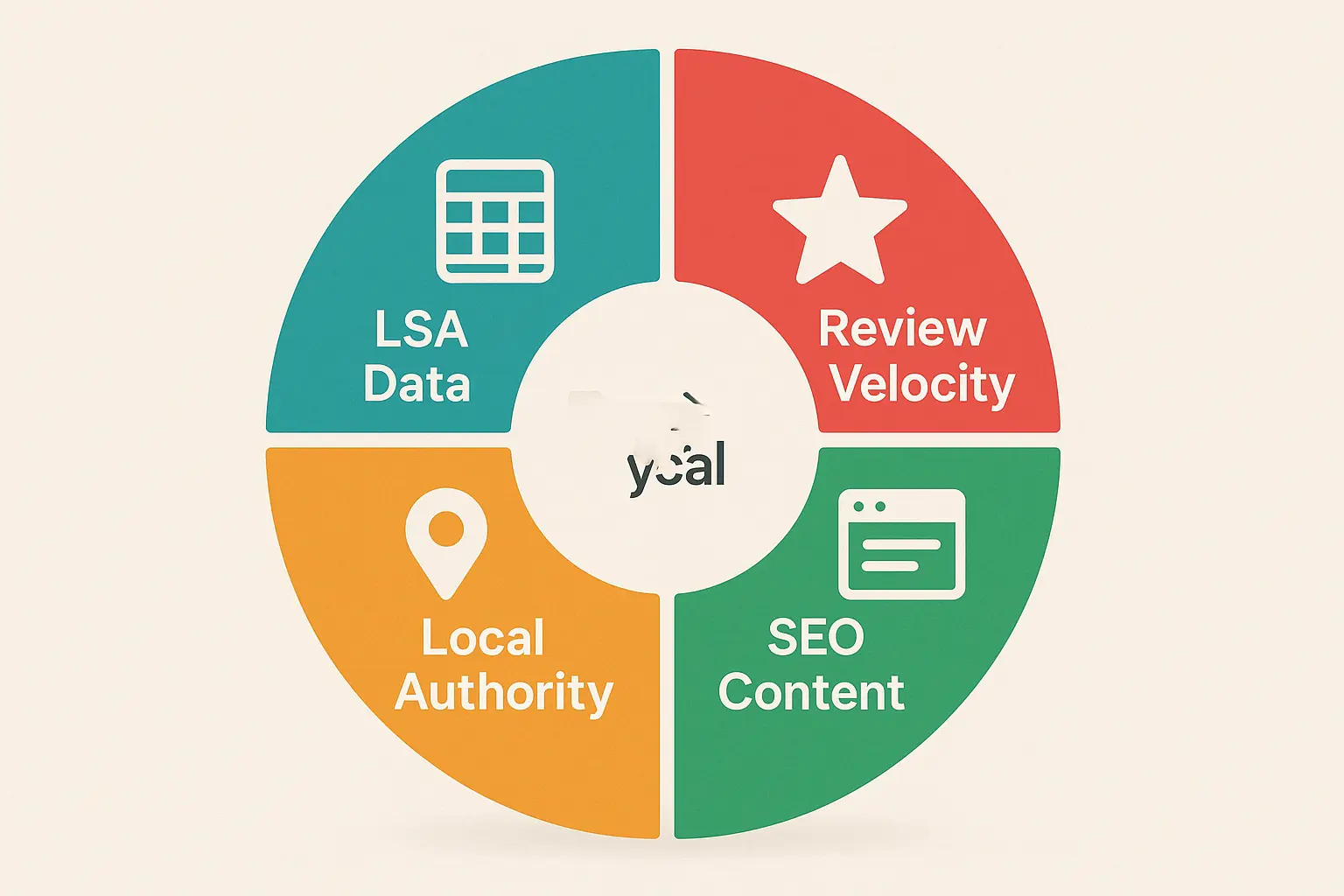
By creating a flywheel where reviews, data, and authority flow between your campaigns, you can help your clients dominate the entire search results page. You’ll secure immediate, high-intent leads with the ‘Google Guaranteed’ badge while simultaneously building the organic foundation that will make them the undisputed leader in their market for years to come.
This synergy is no longer a ‘nice to have’—it’s the new standard for local marketing success.