
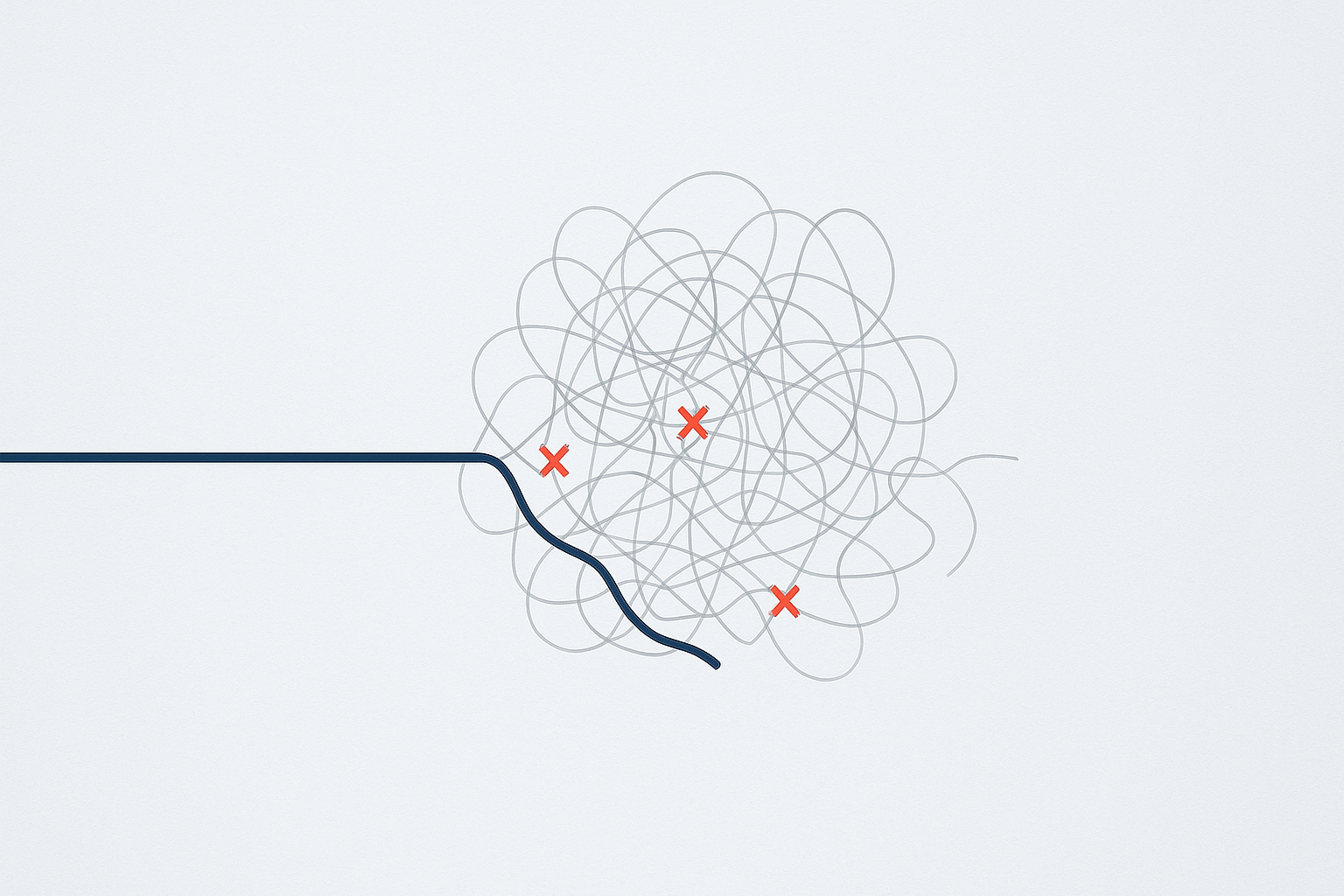
Your team just had a record-breaking week for inbound leads. The dashboard is a sea of green and everyone is celebrating, but a month later, the sales numbers haven’t moved. The pipeline is full of leads that went dark, prospects who “weren’t a good fit,” and deals that just fizzled out.
What happened?
The answer is almost always hidden in the chaotic and critically important window right after someone clicks “submit”: the first 48 hours. We celebrate the form fill but ignore the journey. We treat leads like data points in a CRM instead of people navigating a new, and often confusing, process. This is where deals are won and lost before a salesperson ever joins a call.
Welcome to inbound lead forensics—a method for dissecting this crucial 48-hour window to uncover the hidden friction silently killing your growth.
Why the First 48 Hours Are a Black Box of Lost Opportunity
Most marketing and sales teams have a blind spot. They track the top of the funnel (impressions, clicks, lead volume) and the bottom (closed-won deals), but the messy middle remains a mystery.
This is a massive oversight. Research from the Journal of Marketing Research shows that the most predictive indicators of a lead’s potential aren’t their job title or company size. It’s their behavioral signals and the timing of their engagement within the first few hours.
The study finds that companies obsessed with high-level metrics like “Marketing Qualified Leads” (MQLs) consistently miss the “micro-failures” that happen right after conversion. A broken link in a welcome email, a confusing calendar booking process, or a slow response time—these small moments of friction are the invisible barriers that stop qualified buyers in their tracks.
The Crushing Cost of Early Friction
What exactly is friction? It’s any obstacle, big or small, that makes the lead’s journey harder, slower, or more confusing than it needs to be.
Common friction points include:
- The Waiting Game: A lead requests a demo at 9 AM on Monday and doesn’t get a human response until Tuesday afternoon.
- The Confusing Confirmation: The “thank you” page says “Check your email!” but the email that arrives is a generic newsletter subscription confirmation, not the promised guide.
- The Broken Path: The call-to-action in the follow-up email leads to a 404 error or the wrong landing page.
- The Automation Mismatch: A lead receives five automated nurture emails before a single sales rep has even reviewed their request.
These aren’t just minor annoyances; they are deal-breakers. The data is clear: friction in the first 48 hours dramatically reduces the chances of conversion. A prospect’s initial excitement and intent have a short half-life. Every hour of delay or confusion gives them time to lose interest, find a competitor, or question whether your company is competent enough to solve their problems.
![A dashboard showing lead response time analytics, with a prominent chart indicating a sharp drop-off in engagement after the first few hours.]
That sharp drop-off you see isn’t just a line on a chart. It’s the visual proof of wasted marketing spend and lost revenue.
Your Diagnostic Toolkit: A Step-by-Step Guide to Lead Forensics
The good news is you don’t need expensive software or a data science degree to diagnose these problems. All you need is about an hour and the willingness to experience your own process firsthand.
Step 1: Become the Lead
Grab a personal email address (like a Gmail or Outlook account) and go to your own website. Fill out one of your primary conversion forms—”Request a Demo,” “Contact Sales,” or “Download Our Guide.” Be the prospect. Use real, but non-work, information.
Step 2: Document Every Touchpoint (The 48-Hour Timeline)
Start a timer and create a simple log. For the next 48 hours, document every single interaction that happens (or doesn’t happen).
Your log should include:
- The Confirmation Page: What did it say? Were the next steps clear?
- The First Email: When did it arrive? Who was it from (a person or “Marketing Team”)? What did it ask you to do?
- Follow-Up Communications: Note the timestamp and content of every email, text, or phone call.
- The Human Touch: How long did it take for a real person to reach out? What did they say?
Check every link. Read every line of copy. Scrutinize the entire experience from the perspective of a busy, distracted, and slightly skeptical buyer.
Step 3: Map the Journey and Identify the Friction
Now, visualize the journey you just took. You can use a simple whiteboard or a flowchart tool. This map will make the friction points stand out.
![A detailed flowchart mapping out a complex lead journey with multiple touchpoints and decision trees, highlighting potential friction points with red markers.]
As you map the process, look for common culprits:
- Time Delays: How many hours passed between steps? Where were the longest gaps?
- Messaging Gaps: Did the email copy match the promise of the landing page?
- Technical Gaps: Did any links or tools fail to work as expected?
- Ownership Gaps: Was it clear who was responsible for the next step—the lead or your team?
You will almost certainly find at least one “aha moment” where you realize, “Wow, no wonder people are confused.”
From Insight to Action: Fixing the Leaks
Once you’ve identified the friction, the fixes are often surprisingly straightforward. Group your findings into three categories:
- Automation Fixes: Is your auto-responder too slow? Is lead routing sending demos to the wrong team? These are often quick adjustments in your marketing automation platform.
- Messaging Fixes: Rewrite confusing email copy. Clarify the next steps on your “thank you” pages. Ensure your messaging is consistent from ad to landing page to follow-up.
- Process Fixes: If sales reps are taking 24 hours to respond, you have a process problem, not a technology problem. This requires setting clear SLAs (Service Level Agreements) for lead follow-up.
This forensic audit does more than plug holes in your funnel; it helps build a culture of operational clarity. And in today’s digital landscape, that clarity is everything. To win, your brand must be clear to both search systems and people, ensuring you attract the right prospects from the start.
Beyond the Funnel: Why Operational Clarity Powers Modern Growth
Fixing your lead’s first 48 hours is foundational. A seamless, trustworthy customer journey is the bedrock of any modern growth strategy. After all, what’s the point of achieving incredible AI search visibility if the traffic you earn is funneled into a broken and frustrating experience?
When a lead lands on your site from an AI Overview or a conversational search, they arrive with high intent. Squandering that intent with operational friction isn’t just a missed opportunity—it’s a failure to capitalize on the future of search.
Frequently Asked Questions (FAQ)
How often should we run this “lead forensics” audit?
A good cadence is quarterly and any time you make significant changes to your website, forms, or marketing automation sequences. Think of it as a regular health checkup for your revenue engine.
What’s the single biggest friction point you see companies miss?
The dead zone between the first automated email and the first personalized human outreach. This gap can last anywhere from hours to days. It’s where excitement dies and competitors win. The goal should be to make this transition feel like a single, seamless conversation.
Can’t our CRM data show us this?
Your CRM shows you what happened (e.g., a lead’s status changed from “New” to “Contacted”). A forensic audit shows you the why and the experience. It reveals the qualitative friction that quantitative data will never capture, like a confusing sentence in an email that causes 20% of leads to stall.
How does this relate to SEO or getting found online?
They are two sides of the same coin. Getting found is step one; converting that attention into a qualified sales opportunity is step two. A broken onboarding journey undermines all the hard work you put into being discovered.
Your First 48 Hours Start Now
The biggest opportunities for growth aren’t hiding in a new marketing channel or a complex new strategy. They’re hiding in plain sight, buried in the small, broken, and overlooked steps of your lead’s first two days.
Stop guessing where your leads are going. Run this audit, map the journey, and see for yourself.
For agencies and brands looking to ensure their entire discovery-to-demo process is optimized for the modern search landscape, it may be time to partner with AI visibility experts who understand how to win the complete journey.