You’ve done everything right. You launched a beautiful new website for your real estate brokerage client, integrated an Internet Data Exchange (IDX) feed, and watched as thousands of property listings instantly filled the site. It looks fantastic—full of valuable information for potential homebuyers.
But weeks turn into months, and organic traffic is flat. The phone isn’t ringing. You check your search rankings, and the site is nowhere to be found for competitive local terms. What’s going on?
The culprit might be the very tool you rely on for content: your IDX feed. While essential for business, it also creates one of the most significant and misunderstood challenges in real estate marketing—a massive duplicate content problem that can make your website nearly invisible to Google.
What is IDX, and Why Does it Create a Duplicate Content Nightmare?
Think of an IDX feed as a syndicated news wire for property listings. The local Multiple Listing Service (MLS) gathers all the property data—photos, descriptions, prices, specs—and distributes that exact same information to every participating broker’s website.
This is incredibly efficient for agents and buyers. For search engines, however, it’s a catastrophe.
Google’s primary goal is to provide users with the best, most relevant, and original search results. When its crawlers find the exact same listing for “123 Main Street” on your site, on Zillow, on Redfin, and a dozen other local brokerage sites, they get confused. Who is the original source? Which page should rank?
This is no small issue. Some brokerage websites with active IDX feeds have tens of thousands of pages with content identical to their competitors’. Faced with this ocean of duplicates, Google often defaults to ranking the large, established portals, pushing smaller brokerage sites deep into the search results.
Google’s View on Duplicate Content: A Quick History Lesson
To understand why this matters, it helps to look back at Google’s long-standing mission to clean up the web. Years ago, search results were cluttered with low-quality sites that simply copied content from others to try and rank. To fix this, Google released its “Panda” algorithm update, designed specifically to penalize sites with thin, low-quality, or duplicated content.
While your brokerage site isn’t intentionally spamming, the IDX feed makes it look guilty by association. With over 75% of real estate searches beginning on Google, you can’t afford to be on the wrong side of its quality guidelines. You need to send clear signals to Google that you understand the rules and are providing unique value, even when using syndicated content.
The Two-Part Solution: Canonical Tags and No-index Directives
So, how do you use an essential tool like IDX without getting penalized for duplicate content? You need to give Google clear instructions on how to crawl and index your site. This requires a precise, two-part technical strategy: canonicalization and no-indexing.
Part 1: The Canonical Tag – Telling Google “They’re the Original”
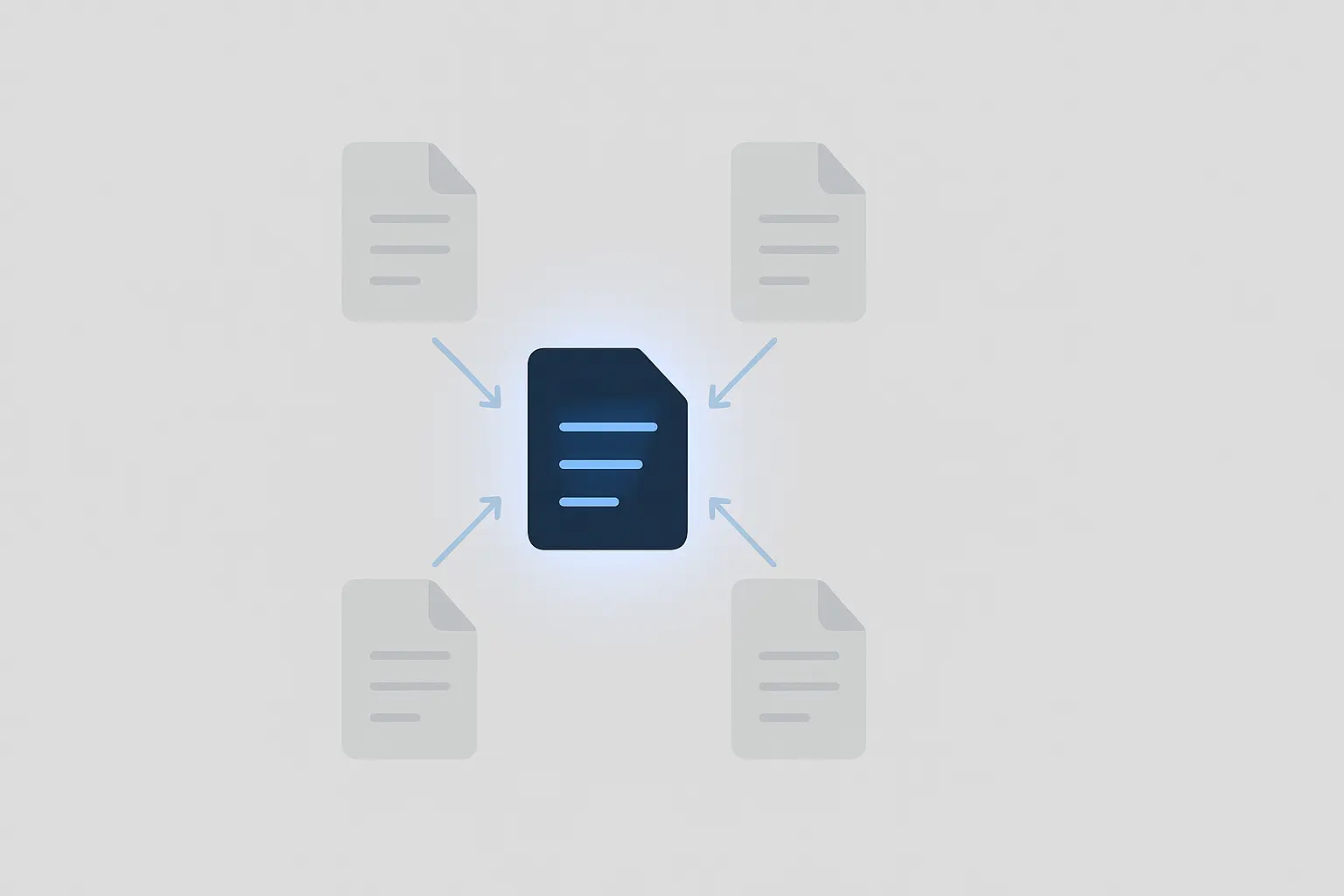
A canonical tag is a small piece of code in a webpage’s header that acts like a footnote. It tells search engines, “Hey, the content on this page is a copy. Please give all the SEO credit and ranking power to the original source over there.”
For IDX listings, this is your primary weapon. Implementing a canonical tag on your property detail pages essentially tells Google: “I’m displaying this listing for my users’ convenience, but the original source is the main MLS listing. Please rank that one and don’t hold this duplicate page against me.”
This simple act accomplishes two critical things:
- It helps you avoid the duplicate content penalty.
- It preserves the user experience by keeping the listing on your site.
Major search engines like Google, Bing, and Yahoo have supported canonical tags for years, making them a reliable and universally accepted solution.
Part 2: The No-index Directive – Asking Google to “Please Ignore This Page”
While canonical tags are for individual listing pages, the no-index directive is for pages that offer little to no unique value. Consider the thousands of filtered search result pages your IDX system can generate:
- “3-bedroom homes in downtown.”
- “Homes under $500k with a pool.”
- “Apartments for rent with 2 bathrooms.”
These pages are just thin slices of the main database. They are useful for users in the moment, but they also create countless low-quality, “thin content” pages that can dilute your site’s overall SEO authority.
By adding a no-index tag to these pages, you are telling Google, “You don’t need to store this page in your index. Please ignore it.” This cleans up your site’s SEO profile, allowing Google to focus its crawling and ranking power on your most important pages—like your homepage, your blog, and your unique neighborhood guides.
Building Your IDX Content Strategy: Beyond Technical Fixes
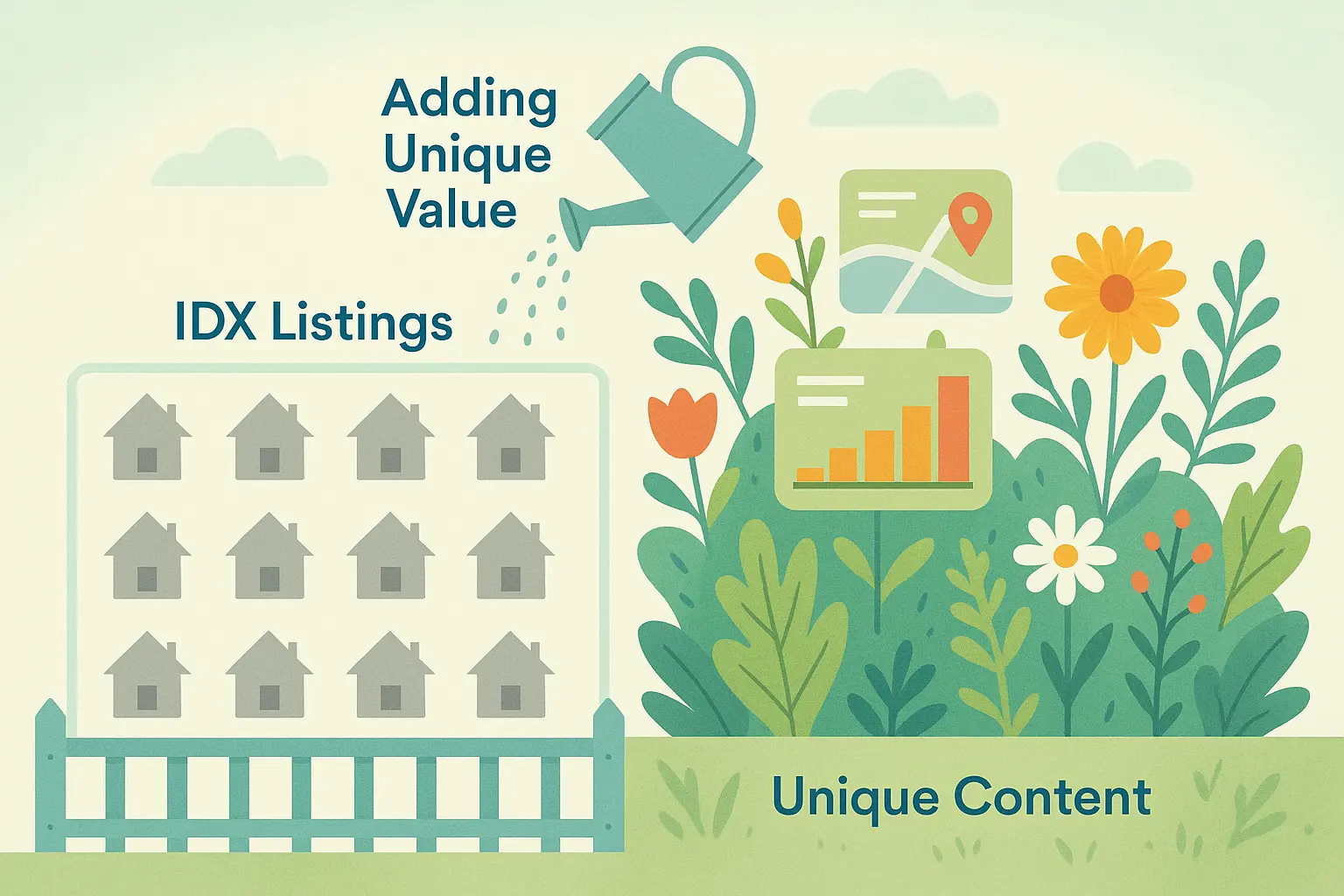
Fixing the duplicate content issue is the first step. The next is building real authority. The most successful real estate websites use the IDX feed as a foundation, not the entire house.
The goal is to create unique, hyperlocal content that the big portals can’t replicate. While they have the national data, you have the local knowledge. This is where a comprehensive strategy for white-label SEO for real estate agencies moves beyond technical fixes and into true brand building.
Consider creating content like:
- Neighborhood Guides: In-depth articles about local communities, including schools, parks, restaurants, and market trends. You can embed relevant IDX listings within these unique pages.
- Market Trend Reports: A quarterly blog post analyzing local market data, providing insights that position you as the local expert.
- Agent Profile Pages: Unique bios for each agent that highlight their local expertise and community involvement.
Creating unique pages for every neighborhood and agent can seem daunting, but this is where real estate marketing automation tools and scalable processes can make all the difference, helping you build a library of valuable, original content over time.
Frequently Asked Questions (FAQ)
Will using a no-index tag on my listing pages hurt my SEO?
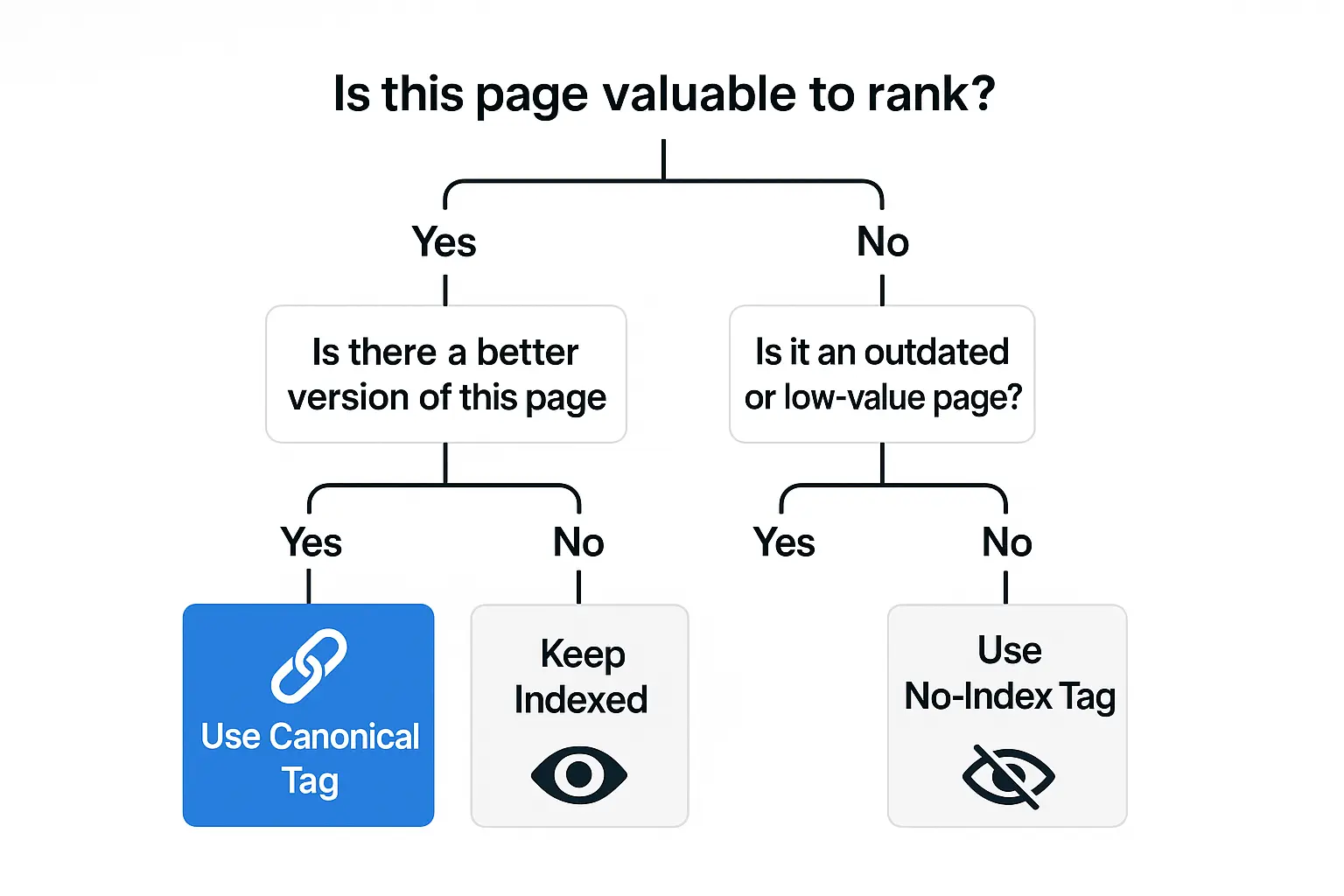
You shouldn’t use no-index on your individual listing detail pages—that’s what canonical tags are for. You should use no-index on the thin, automatically generated search result pages (e.g., “all 2-bedroom condos”). This actually helps your SEO by preventing Google from indexing thousands of low-value pages.
What’s the difference between a canonical and a no-index tag again?
- Canonical: “This page is a copy. Please credit the original source, but feel free to show this page to users.” (Use on individual duplicate listing pages).
- No-index: “Please ignore this page completely. Do not put it in your search results.” (Use on thin search result pages).
Can I implement these changes myself?
It depends on your IDX provider and website platform. Some modern IDX plugins have these controls built-in, while others may require help from a developer to modify the page templates. It’s a technical task that must be done correctly to avoid mistakes.
Is just adding these tags enough to rank #1?
No. This strategy is about removing a major obstacle holding your site back. It’s the critical first step that cleans the slate and allows your other SEO efforts—like content creation, link building, and local SEO—to actually work.
From Duplicate Content to a Dominant Local Brand
Solving the IDX duplicate content problem isn’t just about avoiding a penalty; it’s about taking control of your online presence. By providing clear instructions to Google, you lay the foundation for a powerful SEO strategy. You free up Google’s resources to focus on the unique, valuable content that only you can create.
Stop letting your most valuable asset—your listings—work against you. Implement a smart canonical and no-index strategy, and you’ll be on your way to turning your website into the authoritative local resource Google is looking for.