
Your top sales rep, Sarah, stares at her screen. The new AI-powered CRM is brilliant—it automates follow-ups, scores leads with scary accuracy, and even drafts outreach emails. But today, its recommendation feels off.
It’s suggesting an aggressive upsell for a legacy client, citing “high engagement signals” and an “ideal customer profile match.” But the AI doesn’t know what Sarah knows: the client’s champion just left the company, their industry is facing a downturn, and the last thing they need is a sales pitch. They need a partner.
Ignoring the AI’s prompt, Sarah drafts a simple check-in email, offering support and asking about the transition. She overrides the machine and saves a multi-million dollar relationship.
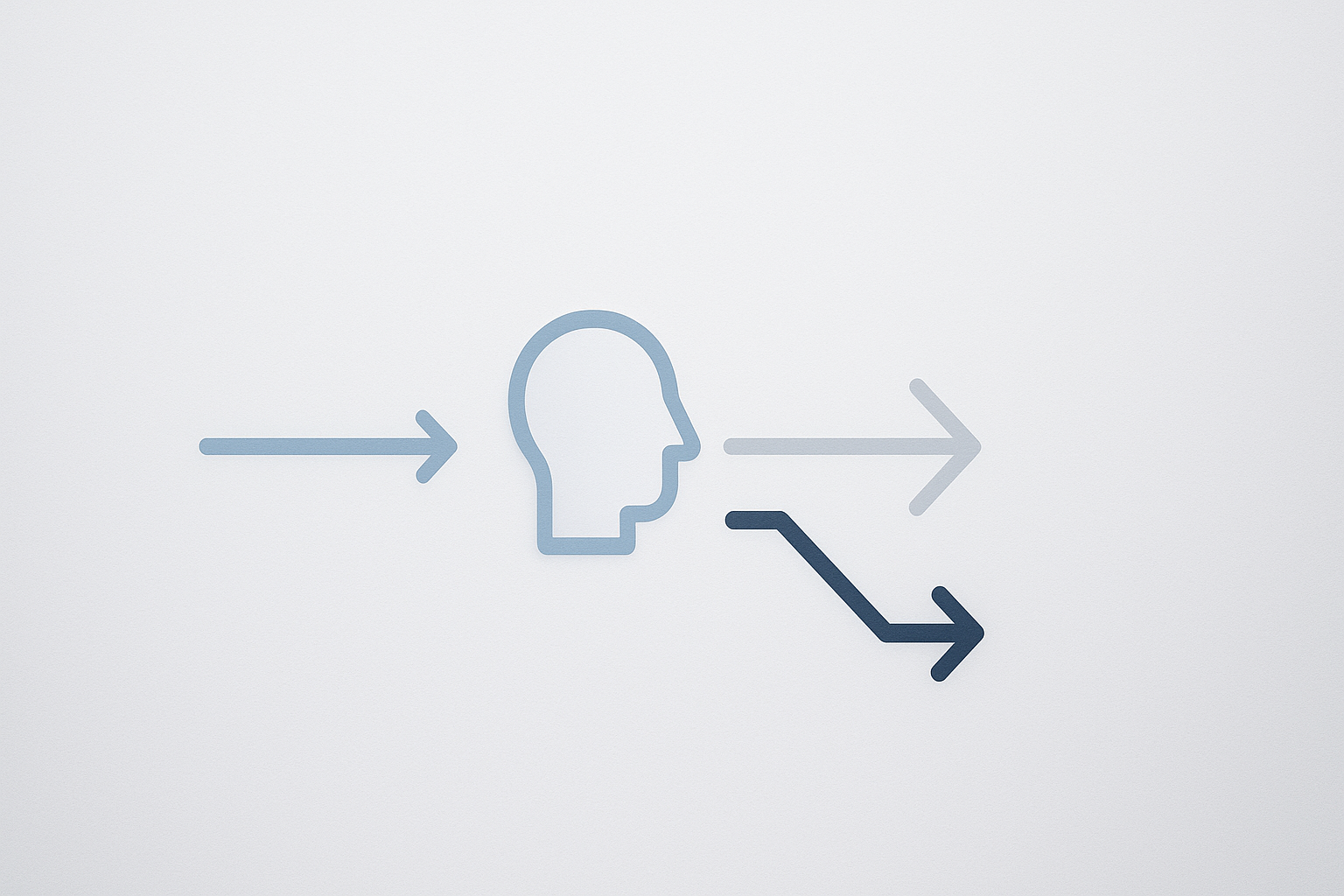
This moment isn’t a failure of AI; it’s a masterclass in how modern sales teams must operate. The future isn’t about blindly following automated recommendations but about creating a powerful partnership between machine efficiency and irreplaceable human wisdom. It’s about building a “human-in-the-loop” system that recognizes when a person’s gut feeling is the most valuable data point of all.
The Myth of Full Automation in Sales
The push toward automation is understandable. Sales reps, on average, spend a staggering 72% of their week on non-selling activities like data entry and administrative tasks. AI is a powerful tool to reclaim that time. It can analyze data at a scale no human team ever could, identifying patterns and opportunities hidden in plain sight.
But the rush to automate has created a dangerous myth: that the goal is to remove humans from the equation. AI lacks the nuanced understanding that defines great salesmanship. It doesn’t grasp context, the political dynamics within a client’s organization, or the subtle emotional cues that signal a deal is about to go sideways.
That’s why Gartner predicts that by 2025, a majority of pre-sales tasks once performed by humans will be automated, but it also highlights a critical need for oversight. Data without context is just noise. An AI recommendation is a hypothesis, not a command. The human in the loop is the one who validates it against the complex, messy reality of human relationships.
Trust, But Verify: A Framework for AI Overrides
Empowering your team to override AI isn’t about encouraging anarchy; it’s about formalizing their expertise. A clear protocol ensures overrides are strategic, documented, and used to make the system smarter.
Experienced reps need a framework that validates their intuition and gives them the confidence to act on it. A human override isn’t just acceptable in some situations—it’s essential. Here are four of the most critical.
1. The Relationship Context Override
When to use it: When you know something about the client relationship that the data doesn’t reflect.
The AI knows the what: purchase history, support tickets, email open rates. The sales rep knows the who and the why: the budget battles they just endured, the internal advocate who championed the last purchase, the CEO’s pet project that’s diverting all resources.
- Example: The AI suggests re-engaging a “cold” lead based on their title and company size. The rep knows that lead’s company just went through a major acquisition and all purchasing is frozen. Override.
- Protocol: Document the reason as “Internal Client Politics” or “Recent Org Change.” This helps the AI learn to correlate such events with purchasing pauses.
2. The Market Intelligence Override
When to use it: When real-world events are moving faster than the data can be processed.
AI models are trained on past data. They can’t predict a surprise industry merger, a new piece of legislation, or a competitor’s sudden product launch. Your team on the front lines is your real-time intelligence network. They hear the rumors and see the trends long before they show up in a dataset. While an AI can scrape public news, it can’t capture the private intel your team possesses.
- Example: The AI recommends a sales cadence focused on Feature A. Your rep just learned from a contact that a major competitor is about to release a far superior version of Feature A. The rep pivots the conversation to your company’s unique Feature B. Override.
- Protocol: Tag the override with “Competitive Intelligence.” This data can be invaluable for marketing and product teams.
3. The “Black Swan” Event Override
When to use it: For unpredictable, high-impact events that invalidate all previous assumptions.
A global pandemic, a major supply chain collapse, a sudden financial crisis—these are “black swan” events that algorithms can’t foresee. In these moments, historical data becomes almost useless. The only thing that matters is empathetic, human-to-human communication.
- Example: During a regional natural disaster, the AI continues sending automated promotional emails to affected clients. A sales manager initiates a system-wide pause and instructs the team to conduct personal welfare check-ins instead. Override.
- Protocol: An “Emergency Pause” or “External Crisis” flag should be built into any sales automation system to allow for immediate, top-down intervention.
4. The Ethical Boundary Override
When to use it: When an AI recommendation feels manipulative, tone-deaf, or misaligned with your company’s values.
AI optimizes for a specific outcome, like “close deal” or “book meeting.” It doesn’t have a moral compass. It might suggest a tactic that, while technically effective, could damage trust or harm your brand’s reputation in the long run. While you can program an AI with your company’s values, the final check must be human.
- Example: The AI identifies a client’s personal pain point from public social media posts and suggests using it as leverage in a negotiation. The rep rejects this, deeming it an invasion of privacy. Override.
- Protocol: Document this as an “Ethical Override.” Consistently tracking these instances can help you refine the AI’s operational boundaries.
Turning Intuition into a Data Asset
The most critical part of an override protocol is the feedback loop. When a rep overrides the AI, they shouldn’t just ignore the suggestion; they should briefly explain why. This is where your team’s intuition becomes a priceless data asset.
This feedback achieves two crucial things:
- It justifies the decision: It provides a clear, documented reason for deviating from the automated path, which is crucial for management and training.
- It trains the AI: This structured feedback is the most valuable training data you can generate. It teaches the model the nuances of your market, your customers, and your team’s expertise. Over time, the AI’s recommendations will become smarter, more contextual, and more aligned with reality.
This process transforms the relationship between your sellers and your technology. The AI is no longer a black box issuing commands; it’s a junior partner making suggestions that the senior partner—the experienced sales professional—can refine, correct, and build upon. While nearly 88% of executives believe AI is a competitive necessity, the true advantage lies in how you integrate it with your human talent.
Frequently Asked Questions (FAQ)
What is “human-in-the-loop” (HITL)?
Human-in-the-loop is a model that combines machine and human intelligence. The AI handles the heavy lifting of data processing and pattern recognition, but it requires a human to review, validate, or correct its outputs, especially in complex or ambiguous situations. In sales, this means the AI suggests, and the human decides.
Will my sales team resist using AI if we let them override it?
Quite the opposite. A clear override protocol often increases adoption. It shows your team that you respect their expertise and aren’t trying to replace them. It positions the AI as a tool to help them, not a manager that’s micromanaging them. When reps know they hold the final say, they are more likely to trust and engage with the technology.
How do we start creating an override protocol?
Start simple. Identify three to five common scenarios where your reps’ knowledge is critical (like the ones listed above). Create a simple dropdown menu in your CRM for reps to select a reason when they deviate from a recommendation. The goal is to make the feedback process take less than 10 seconds.
Doesn’t overriding the AI defeat the purpose of having it?
Not at all. The purpose of sales AI isn’t 100% automation; it’s to improve performance. An AI that is 80% accurate but gets corrected the other 20% of the time is infinitely more valuable than a human working without any data-driven insights. The overrides are what close the gap, ensuring you get the best of both worlds: the scale of the machine and the wisdom of the person. It’s the same way modern search engines improve—by learning from user interactions and feedback.
Your People Are Your Ultimate Advantage
Building a sales process for the age of AI isn’t about choosing between people and technology. It’s about creating a system where each makes the other better. By establishing clear protocols for when and why your team should trust their own judgment, you empower them to do their best work while building a smarter, more effective AI in the process.
The machine can find the lead, but only a human can build the relationship. Give them the framework to do both.