
You’ve done the hard work. You’ve created great content, built authority, and now high-quality organic traffic is flowing to your client’s website. Visitors are landing on key pages—checking out pricing, diving into case studies, maybe even visiting the contact page. Then… nothing.
If this sounds familiar, you’re not alone. Research shows that a staggering 97% of first-time visitors leave a website without converting. They came, they saw, they thought, “I’ll come back later,” and vanished into the digital ether.
It feels like pouring water into a leaky bucket. But what if you could patch the biggest leaks? What if you could build a system that automatically identifies your most interested organic visitors and gently guides them back when they’re ready to take the next step?
This isn’t about generic, annoying ads that follow people around the internet. It’s about creating a smart, respectful, and incredibly effective feedback loop between your SEO and paid media efforts.
The Disconnect Between Organic Interest and Action
Organic search is a champion at building initial trust and awareness. Someone has a problem, they search for a solution, and your client’s website appears. It’s the perfect first touchpoint.
The challenge? The journey from awareness to purchase is rarely a straight line, especially in B2B, where the average sales cycle is 5.5 months. That initial visit is just the beginning. They’re gathering information, comparing options, and getting budget approval.
By the time they’re ready to make a decision, they might not remember where they found that one perfect case study. This is the critical gap where high-intent prospects get lost. Bridging this gap means connecting the intent they showed organically with a timely, hyper-relevant reminder.
This is where the High-Intent Audience Loop comes in.
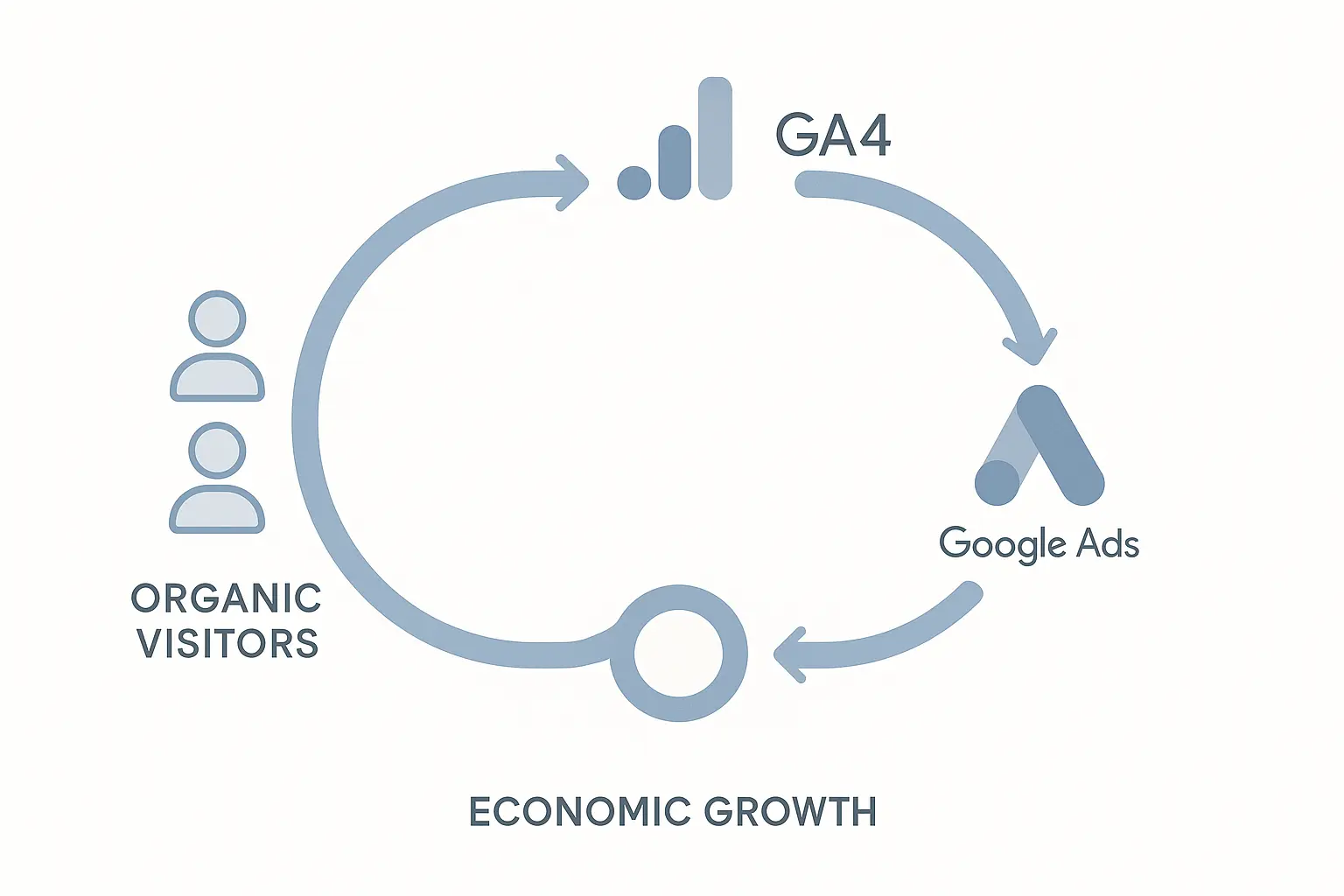
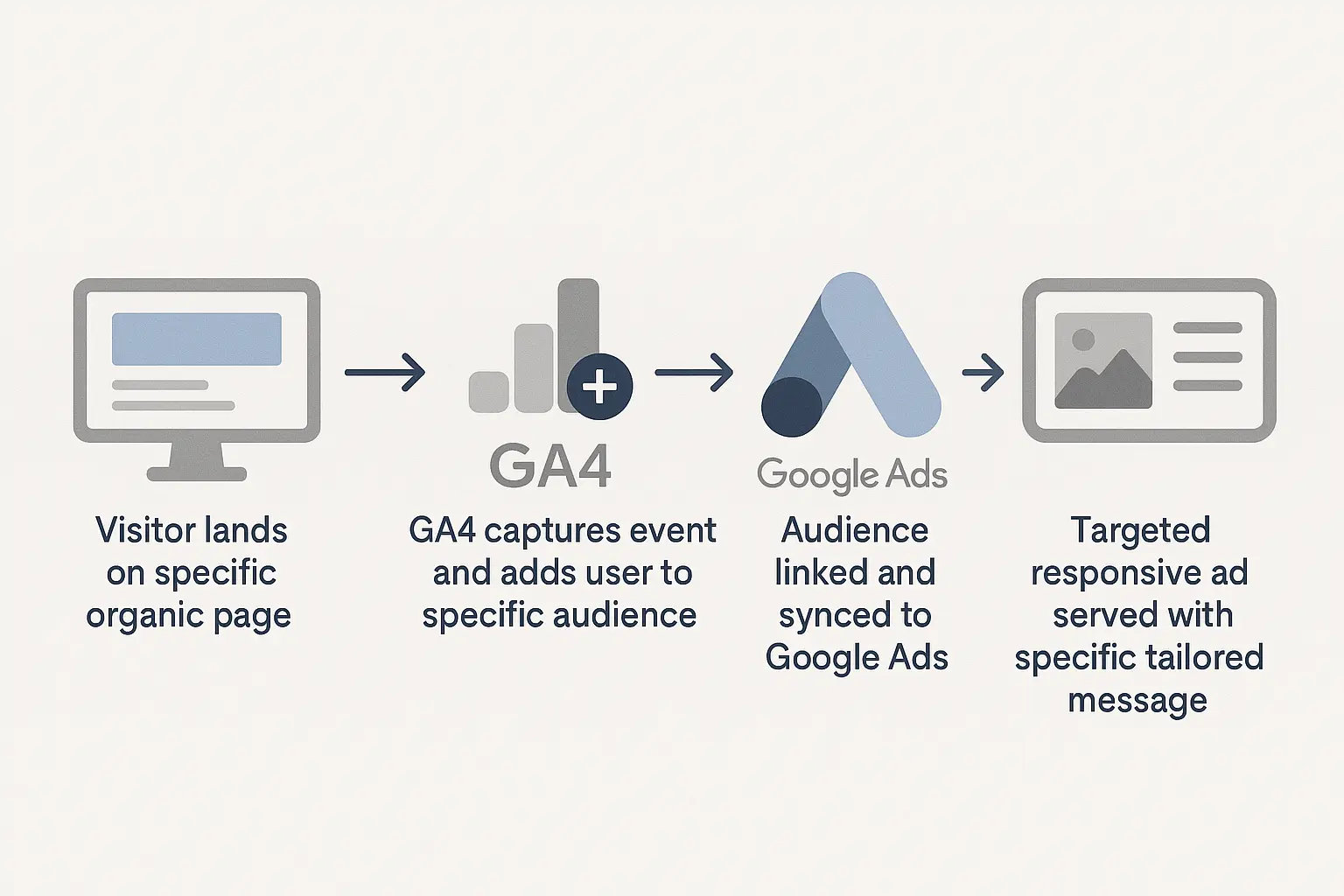
The concept is simple but powerful: instead of retargeting everyone who visited the website, you create small, potent audiences based on who came from organic search and visited a page that signals strong interest.
How to Build Your First High-Intent Audience Loop
Putting this strategy into practice requires connecting Google Analytics 4 (GA4) and Google Ads, but the logic is straightforward. Here’s a step-by-step guide to building your foundational loop.
Step 1: Identify Your High-Intent Pages
First, put on your strategist hat. Look through your client’s website and identify the pages a visitor would only look at if they were seriously considering a purchase. These are your “golden” pages.
Common examples include:
- /pricing or /plans
- /case-studies or /portfolio
- /request-a-demo
- /contact-us
- Specific service or product pages that solve a bottom-of-the-funnel problem.
Don’t choose the homepage or a top-of-funnel blog post. The goal here is precision, not volume.
Step 2: Create a Hyper-Specific Audience in GA4
Now, you’ll build an audience in GA4 to isolate this specific group of users.
- Navigate to Admin > Audiences > New audience.
- Select Create a custom audience.
- Name your audience something clear, like “Organic Visitors – Pricing Page.”
- Set the first condition: Include users when First user medium exactly matches organic. This ensures you’re only targeting users whose first-ever interaction was through SEO.
- Add a second condition using an “AND” clause: page_location contains /pricing (or whatever URL fragment you identified in Step 1).
Set the membership duration to a 30- or 60-day window, which is a great starting point. Anyone who meets these criteria will remain in the audience for that period, giving you a chance to reconnect. Then, save the audience.
Step 3: Activate the Audience in Google Ads
Before your audience can be used, you need to ensure GA4 is linked to Google Ads and that you’ve enabled Google Signals in GA4 for remarketing.
Once linked, your newly created audience will automatically be available in your Google Ads account under Tools & Settings > Shared Library > Audience manager. It may take 24-48 hours to populate.
From there, you can apply this audience to your campaigns in two powerful ways:
- For Display/YouTube: Target this audience directly with visual ads that remind them of the value they saw.
- For Search (RLSA): Apply this audience to your existing search campaigns with a bid adjustment (e.g., bid 25% higher when someone from this audience searches for your core keywords). This prioritizes your ad spend on the people most likely to convert.
Step 4: Craft Ads That Speak Their Language
With your audience active, it’s time to craft ads that speak their language. You aren’t addressing a cold prospect; you’re re-engaging someone who has already expressed specific interest, and your ad copy and creative should reflect that.
Generic Retargeting Ad: “Brand X – The Leader in [Industry].”Hyper-Specific Ad: “Saw Our Pricing? See How [Client Name] Saved 30% in 6 Months. Read the Case Study.”
This level of personalization is incredibly effective. Studies show that personalized calls-to-action (CTAs) convert 202% better than default or generic versions. By segmenting your audience based on the page they visited, you can tailor your message to their exact stage in the buyer’s journey.
And this specificity pays off. Retargeted visitors are, on average, 43% more likely to convert, and by focusing your efforts on the highest-intent segment of that group, you can amplify those results even further.
Frequently Asked Questions (FAQ)
Q: How is this different from standard website retargeting?
A: Standard retargeting often lumps all website visitors into one large bucket. The High-Intent Audience Loop is about precision. It isolates a small, highly qualified segment—those who arrived via organic search and viewed a key conversion page—making your ad spend more efficient and your messaging more relevant.
Q: How big does my audience need to be?
A: For Google Display Network campaigns, you need a minimum of 100 active users within the last 30 days. For Remarketing Lists for Search Ads (RLSA), the minimum is 1,000. If your client’s site doesn’t have enough traffic yet, you can combine a few high-intent pages (e.g., pricing + case studies) into one audience to reach the threshold.
Q: Won’t this just annoy people?
A: This is a valid concern, and it’s why hyper-specificity is so important. When an ad is directly relevant to a problem you’re actively trying to solve, it feels less like an interruption and more like a helpful reminder. Generic ads burn users out, but this approach avoids that pitfall. Research on ad fatigue shows click-through rates can drop by nearly 50% over several months. Relevant, targeted ads like these combat that fatigue by providing genuine value.
Q: Can this be used for both B2B and B2C clients?
A: Absolutely. For B2B, you might retarget pricing page visitors with a case study or a demo offer. For a B2C e-commerce client, you could retarget organic visitors who viewed a specific product category with a special offer or reviews for products in that category. The core principle is the same: use demonstrated intent to inform your next touchpoint.
From Leaky Bucket to Growth Engine
By closing the loop between organic discovery and paid re-engagement, you transform a passive website into an active lead-nurturing machine. You stop losing those valuable, high-intent prospects and instead create a system that accelerates the sales cycle and maximizes the ROI of every click.
This is just one of many modern omnichannel SEO strategies that blend data from different channels to create a more powerful whole. For agencies, mastering these techniques is no longer optional—it’s essential for delivering game-changing results for clients.
If you’re looking to scale your agency’s SEO services with advanced, data-driven strategies like this one, partnering with the right team is crucial. Working with a dedicated white-label SEO partner can provide the execution power and strategic oversight needed to implement complex campaigns seamlessly, letting you focus on client relationships and growth.