
The healthcare vertical is one of the most lucrative and fastest-growing markets for digital agencies. It’s also one of the most complex. For every agency that sees the opportunity, another is intimidated by the high stakes of compliance, the demand for deep expertise, and the risks of getting it wrong.
You’re likely here because you’re evaluating that trade-off. You know that mastering medical SEO could unlock significant growth for your agency and your clients, but the path forward seems guarded by complex regulations and intense competition.
This guide is more than a blog post—it’s a playbook for agencies ready to move past the uncertainty. We’re not just going to tell you what to do; we’re going to show you how to build a compliant, scalable, and authoritative healthcare SEO service that wins clients and drives real patient growth.
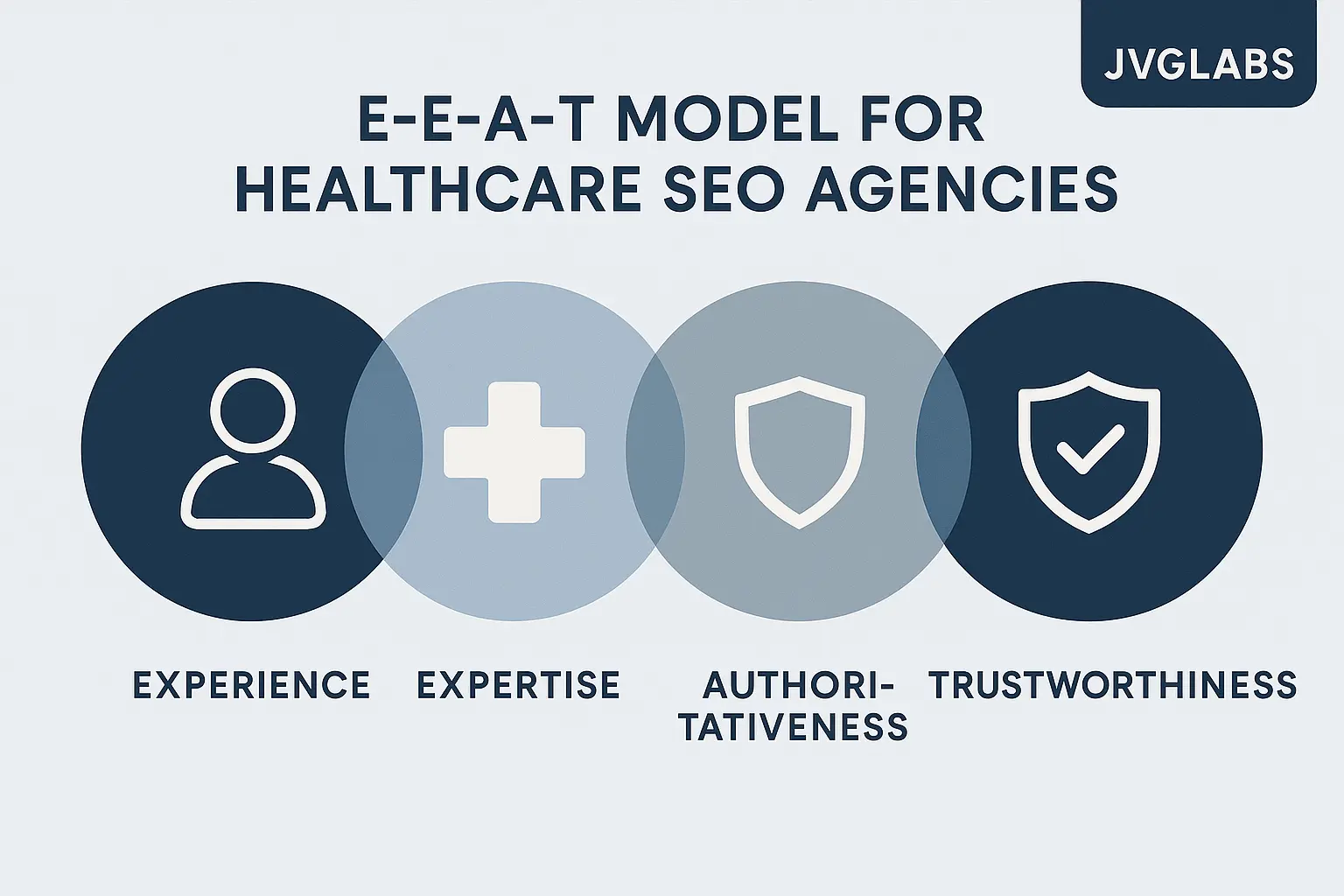
Underpinning this entire approach is a non-negotiable principle Google calls E-E-A-T: Experience, Expertise, Authoritativeness, and Trustworthiness. In healthcare, this isn’t a suggestion—it’s the foundation of a successful and ethical digital presence.
Chapter 1: The New Patient Journey Runs on Search
The modern patient journey no longer starts with a referral; it starts with a search query. According to industry data, nearly 80% of all patients use online search to find medical information and choose their providers. With Google fielding over 90% of those queries, your client’s visibility in search results is directly tied to their ability to attract new patients.
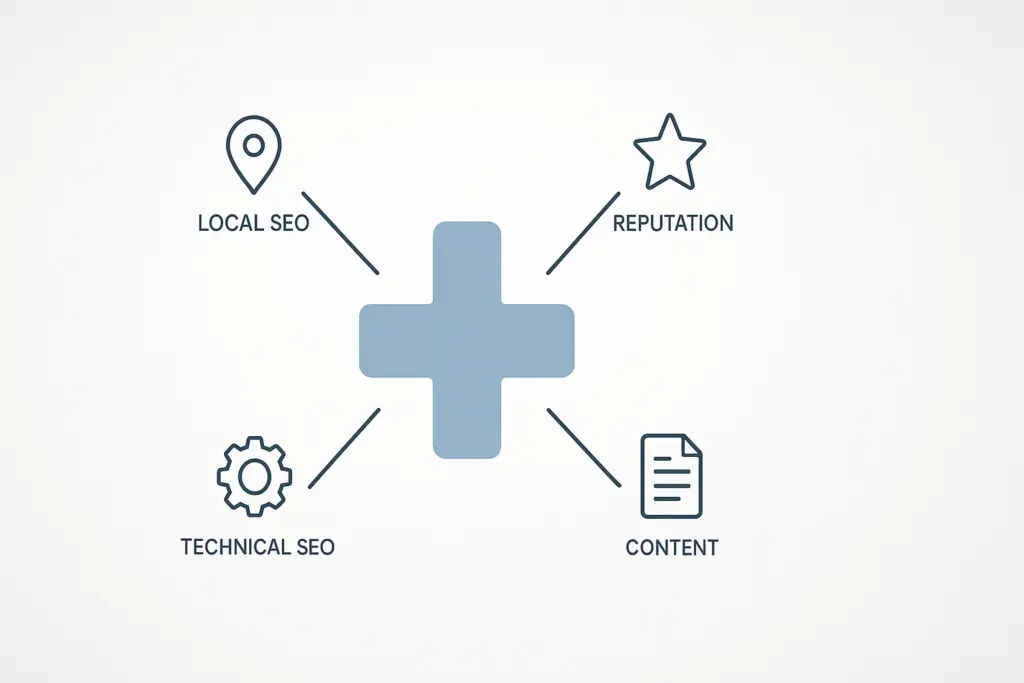
This fundamental shift requires agencies to master four core pillars of healthcare SEO. While traditional tactics provide a starting point, the healthcare vertical demands a specialized approach to each.
The Core Four of Healthcare SEO
1. Technical SEO: The Bedrock of Trust
For a medical website, technical SEO is about more than just speed and crawlability. It’s about signaling to search engines that the site is a secure and authoritative source of medical information.
- Schema Markup: Use MedicalEntity, Physician, Hospital, and MedicalCondition schema to give search engines structured data about your client’s practice, specialties, and the conditions they treat. This helps them appear in rich results and positions them as an authority.
- Site Architecture: A logical site structure is crucial. Group content by medical conditions, treatments, and practitioner specialties. This makes it easy for both users and search engines to navigate complex medical information.
- Mobile-First & Accessibility: The patient journey often happens on a smartphone. A fast, mobile-responsive site that is accessible to people with disabilities isn’t just a best practice; it’s an ethical imperative that builds trust.
2. Local SEO: Winning the Neighborhood
For clinics, private practices, and hospital systems, SEO is fundamentally local. Patients are typically looking for a provider “near me,” and your strategy must be built to win that high-intent search.
- Google Business Profile (GBP) Mastery: Optimize separate GBP listings for each practitioner and location. Include services, insurance information, and high-quality photos. Encourage patients to leave reviews directly on the GBP listing.
- Practitioner Pages: Create dedicated pages for each doctor or provider. These pages should detail their credentials, specialties, and personal philosophy on patient care. This builds a direct connection with prospective patients and helps individual practitioners rank for name searches.
- Location-Specific Content: Develop content that addresses the specific health needs and concerns of the local community. This could be a blog post about managing seasonal allergies in your city or a guide to local resources for a specific condition.
3. Content Strategy: Authority Meets Empathy
Medical content is held to the highest standard of quality on the web. It must be factually accurate, medically reviewed, and written with genuine empathy for the patient’s concerns.
- Establish Authorship: Every piece of medical content should have a clear author bio, preferably from a licensed medical professional. Include their credentials and link to their practitioner page.
- Patient-Centric Topics: Your keyword research should focus on the questions and concerns real patients have. Use tools to find “people also ask” queries and build content that provides clear, reassuring answers.
- Demonstrate Experience: Go beyond stating facts. Include patient testimonials (with consent), case studies, and first-hand accounts that show the provider’s real-world experience in treating a condition.
4. Reputation Management: The Digital Word-of-Mouth
Online reviews are the new word-of-mouth referral. A steady stream of positive patient reviews is one of the most powerful signals of trust for both potential patients and search engines.
- Systematize Review Generation: Implement an automated, HIPAA-compliant system to request reviews from satisfied patients after their appointments, whether via email or SMS.
- Respond to All Reviews: Acknowledge and thank patients for positive reviews. For negative reviews, respond professionally and take the conversation offline to resolve the issue. This shows you are engaged and care about patient feedback.
- Showcase Social Proof: Use widgets and schema markup to display star ratings and positive reviews directly on your client’s website and in search results.
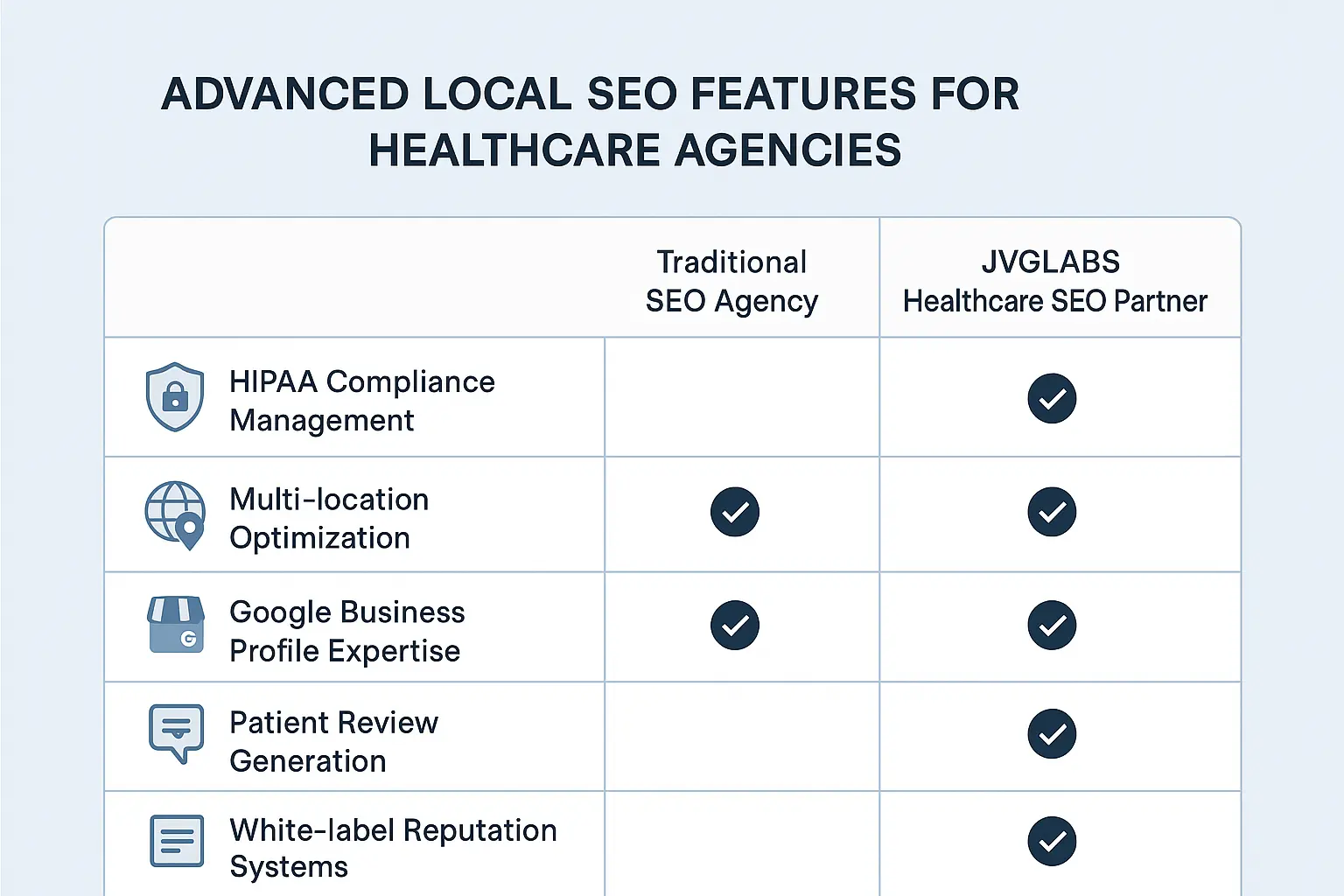
Chapter 2: The Compliance Gauntlet: Navigating HIPAA in Digital Marketing
This is where most agencies hesitate. The Health Insurance Portability and Accountability Act (HIPAA) carries strict rules about protecting patient information, and the penalties for violations are severe. But compliance shouldn’t be a barrier to entry; it simply requires a clear process.
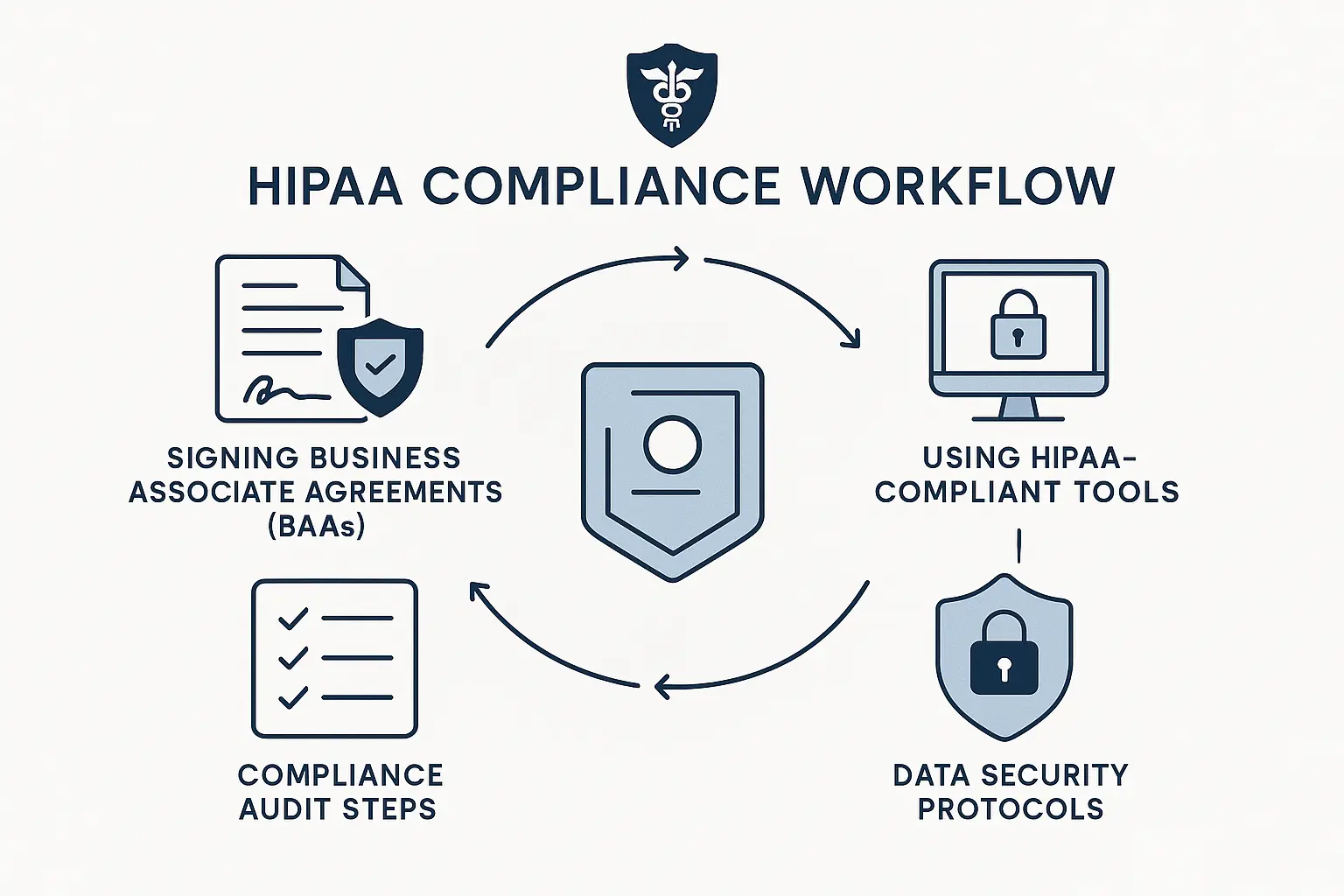
Any agency working with healthcare clients must understand its role as a “Business Associate.” This means you are legally obligated to protect any patient data you come into contact with.
Here’s the framework for building a compliance-aware SEO strategy:
- Sign a Business Associate Agreement (BAA): Before you begin any work, you and your client must sign a BAA. This legal contract outlines your responsibilities for protecting patient health information (PHI).
- Audit Your Tech Stack: Any tool that touches potential PHI—from contact forms to analytics platforms to your CRM—must be HIPAA-compliant. You must also have a BAA in place with each of these vendors.
- Secure Lead Generation: Website contact forms are a common point of failure. Ensure forms are encrypted and that any submissions are routed directly to a HIPAA-compliant email or patient management system. Never store PHI on your website’s server.
- Anonymize Your Data: In analytics and reporting, focus on aggregated, anonymous data. Track conversions like “form submissions” or “calls booked” without ever collecting or storing a patient’s personal details.
Navigating this landscape is about having the right partner and the right process. At JVGLABS, our entire workflow is built around these security standards, enabling our agency partners to deliver results without taking on unnecessary risk.
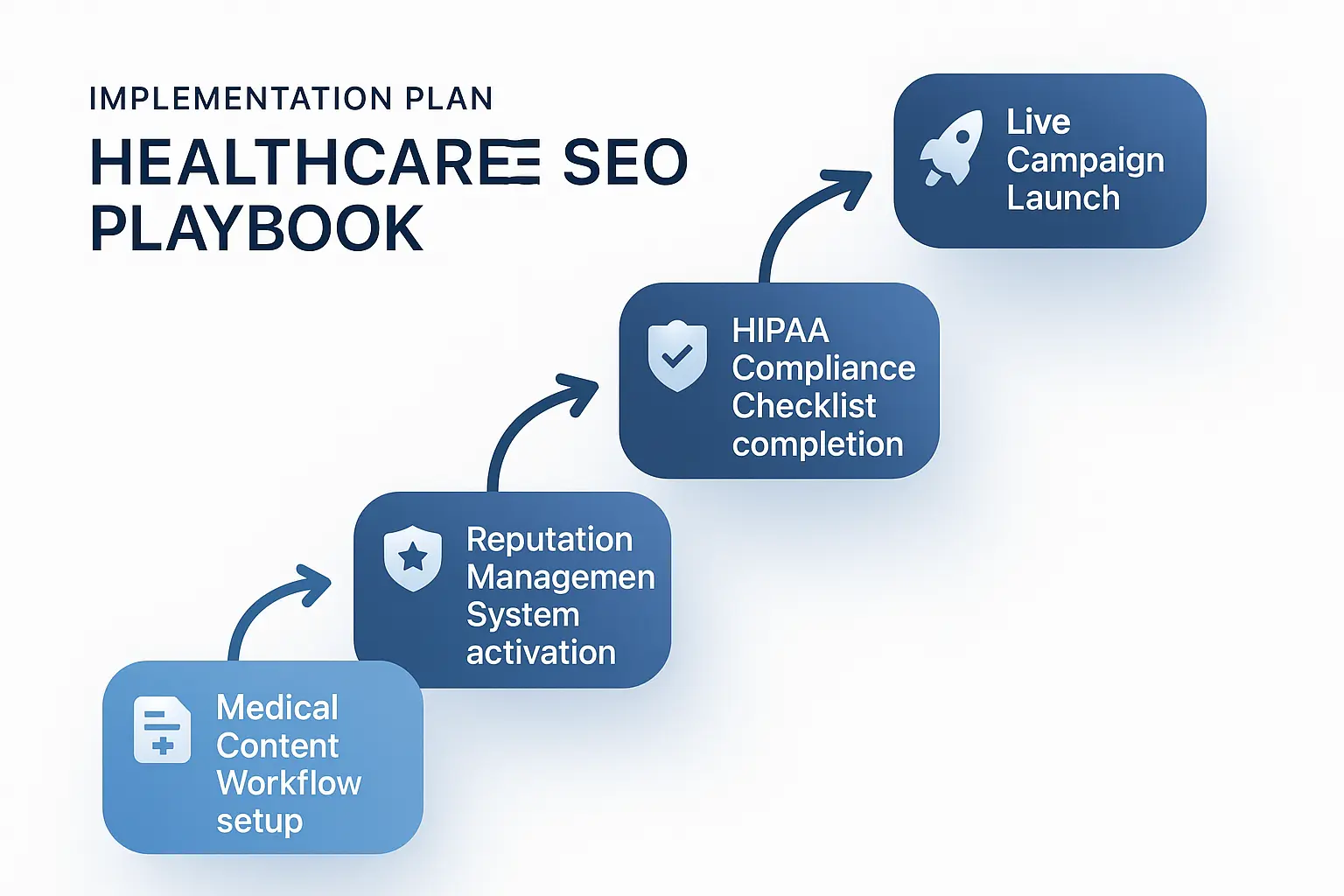
Chapter 3: The Healthcare SEO Playbook in Action
Understanding the principles is one thing; executing them at scale across multiple clients is another. The difference between a struggling agency and a thriving one often comes down to repeatable, scalable systems. This is where AI and automation, guided by human expertise, can provide a decisive advantage. With over 60% of healthcare marketers already expecting AI to improve their strategies, adopting these tools gives you a crucial competitive edge.
We’ve developed a set of frameworks that our partners use to deliver consistent, high-quality healthcare SEO under their own brand.
Your Downloadable Execution Frameworks
To help you get started, we’ve made our internal checklists and workflow templates available. These are the exact tools we use to power our white-label SEO services for agencies just like yours.
- Medical Content Workflow Template: A step-by-step process for creating, reviewing, and publishing E-E-A-T compliant content, from keyword brief to medical review.
- White-Label Patient Review System: A blueprint for setting up an automated system to generate patient reviews for your clients.
- Compliance-Aware SEO Audit Checklist: A comprehensive checklist to audit a new healthcare client’s website for technical, local, and on-page SEO issues while keeping HIPAA compliance top-of-mind.
Frequently Asked Questions for Agencies
- How can my agency manage healthcare SEO without medical experts on our team?
You don’t need an in-house doctor, but you do need a process for medical review. The most effective model is a partnership. Your team handles the SEO strategy, content creation, and technical execution, while the client provides a qualified medical professional to review and approve the content for accuracy. A partner like JVGLABS can manage this entire workflow, ensuring content is both SEO-optimized and medically sound.
- Is the liability for HIPAA violations too high for a marketing agency to take on?
The liability is significant, but it can be managed with the right processes and partners. By using HIPAA-compliant tools, signing BAAs with all clients and vendors, and never storing patient data on insecure platforms, you dramatically reduce your risk. This is a core part of the value an expert execution partner provides—we manage compliance so you can focus on strategy.
- How do we prove ROI to a skeptical medical practice that is used to referral-based marketing?
Shift the conversation from rankings to patient acquisition. Track metrics that matter to their bottom line:
- Increase in qualified appointment requests from the website.
- Growth in phone calls from Google Business Profile.
- Higher volume of new patient intake forms submitted.
- Growth in rankings for high-intent keywords like “[specialty] in [city].”
- Can we really white-label something this complex and specialized?
Absolutely. The best white-label partnerships are built on deep expertise. Our entire model is designed to operate as your agency’s invisible, specialized healthcare SEO department. We provide the execution, the compliance framework, and the reporting—all under your brand. You maintain the client relationship and strategic oversight.
Your Agency’s Next Growth Frontier
Entering the healthcare vertical doesn’t require you to hire a team of medical writers and compliance officers. It requires a smart, scalable strategy and a reliable execution partner. By mastering the core four pillars and building your services on a foundation of compliance, you can offer a premium service that is in high demand.
You don’t have to build this capability from scratch. JVGLABS provides the AI-powered SEO automation and expert oversight needed to handle the complexities of healthcare SEO, allowing you to scale profitably.
If you’re ready to add high-value healthcare clients to your portfolio without the risk and overhead of building an in-house team, let’s talk. We’re ready to work as your dedicated agency SEO partner, operating invisibly behind your brand to deliver results.