
A franchise owner moves her thriving coffee shop one block over to a bigger, brighter space. The new sign is up, the espresso machine is humming, but online, it’s a disaster. Google Maps keeps sending loyal customers to the old, empty storefront. Soon, angry reviews pop up: “Drove all the way here and they’re closed!” Phone calls drop. Foot traffic plummets.
This isn’t a rare mishap; it’s the predictable outcome of underestimating one of the most critical elements of local marketing: NAP consistency.
When a franchise location moves, changes ownership, or even just gets a new phone number, it triggers a complex digital ripple effect. Simply updating your website and Google Business Profile isn’t enough. Your business information lives in a vast, interconnected web of directories, apps, and data aggregators. Getting this wrong doesn’t just frustrate customers—it severely damages your local search rankings.
This checklist will guide you through a location change of address, helping you protect your online visibility and ensure customers find you at your new doorstep.
Why Inconsistent NAP is Local SEO Kryptonite
NAP stands for Name, Address, and Phone number. Along with your website, these four pieces of information form your business’s digital identity. For search engines like Google, consistency across these data points is the ultimate signal of trust and legitimacy.
Think of it this way: if you tell ten different people ten slightly different addresses for a party, you’ll cause chaos and confusion. People won’t trust your directions. Google feels the same way about your business. When it finds conflicting information across the web, it loses confidence in which data is correct. That uncertainty makes it less likely to show your business in the local map pack or in “near me” searches.
And the data backs this up. Studies show that up to 80% of consumers lose trust in a local business if they see incorrect contact details online, with 73% losing faith in the brand as a whole. Since 90% of consumers now use Google to find local businesses, earning the search engine’s trust is non-negotiable.
For a franchise, where brand reputation is paramount, this erosion of trust can be devastating, turning a positive move into a revenue-losing nightmare.
The Hidden Data Ecosystem: Beyond Google and Yelp
So where is all this information coming from? Most people think of major sites like Google Maps, Yelp, and Apple Maps. But those are just the tip of the iceberg. Underneath the surface lies a network of core data aggregators.
Data aggregators like Data Axle and Foursquare are the “wholesalers” of business location data. They collect, verify, and distribute business information to hundreds of other online directories, GPS systems, and mobile apps.
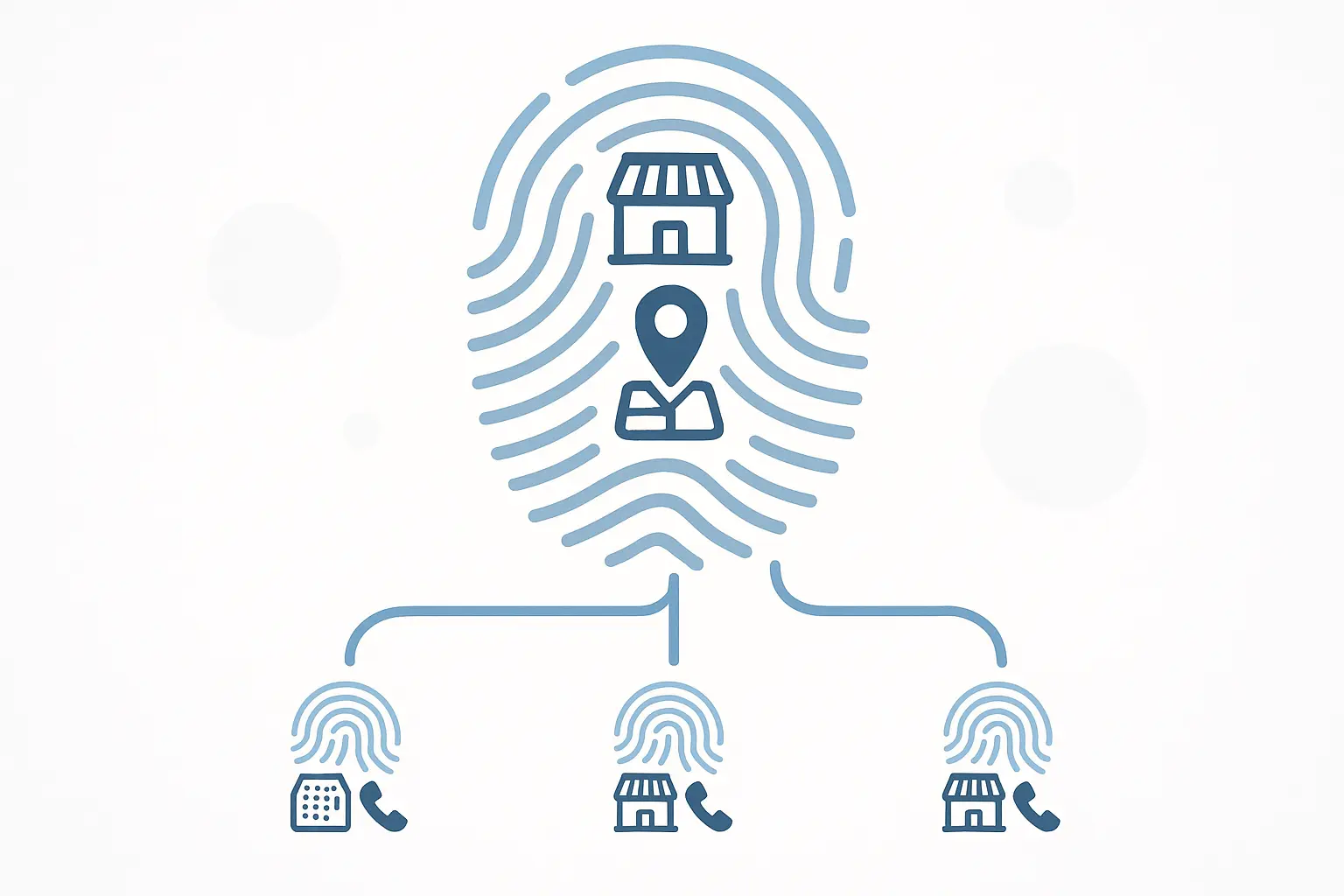
Here’s the problem: if an aggregator holds onto your old address, it will keep feeding that incorrect information to its entire network. You might fix your listing on one directory, only for the old, incorrect data to reappear a few weeks later, overwriting your hard work. This creates endless data conflicts that confuse search engines and send your customers to the wrong place.
A successful change of address requires a systematic approach that addresses the entire ecosystem, from the aggregators up.
The Ultimate Franchise Change of Address Checklist
Follow these phases to ensure a smooth and SEO-friendly transition for any franchise location.
Phase 1: Pre-Move Preparation (The Blueprint)
Doing the legwork before the move is the single most important factor for success.
-
Audit Your Existing Citations: Before you change anything, you need to know where your business is currently listed. Use a citation tracking tool or conduct manual searches to create a master spreadsheet of all your online listings and their accuracy.
-
Establish a “Single Source of Truth”: Create a document with the exact new Name, Address, and Phone number. Pay obsessive attention to detail. Is it “Street” or “St.”? “Suite 100” or “#100”? Every character matters. This document is your guide for all future updates.
-
Secure Your Key Profiles: Ensure you have claimed and have full access to your most important listings, especially your Google Business Profile (GBP), Bing Places, and Apple Maps. Trying to gain access after the fact can cause significant delays.
Phase 2: Move Day (Flipping the Switch)
On the day of the move (or as close to it as possible), update your most critical, high-authority digital assets first.
-
Update Your Website: Your website is the ultimate source of truth. Update the address in the footer, on the contact page, and on any location-specific pages.
-
Update Your Google Business Profile: This is your top priority. Do not create a new profile. Doing so would sacrifice your hard-earned reviews, photos, and ranking history. Instead, log in to your existing GBP dashboard, go to the “Info” tab, and edit the address field. Google has a specific process for business moves that preserves your authority. Getting this right is a fundamental part of maintaining your local SEO.
-
Update Core Social and Directory Profiles: Immediately update other major platforms where you have direct control, such as Facebook, Yelp, and your industry’s most important directories.

Phase 3: Post-Move Cleanup (The Marathon)
The real work begins after the move. This phase is about systematically updating the broader data ecosystem and cleaning up any lingering incorrect information.
-
Submit to Data Aggregators: Use a service or manually submit your new, correct NAP information to the major data aggregators. This is the most efficient way to seed the correct information across the web, stopping the spread of outdated data at its source.
-
Manual Citation Cleanup: Using the audit spreadsheet you created in Phase 1, go through every single listing and update it manually. Start with the highest-authority directories and work your way down. For agencies managing this process for dozens of franchise locations, this manual cleanup is where a specialized partner can provide massive scale and efficiency.
-
Mark the Old Location as Closed: If your old Google Business Profile still exists as a separate entity (sometimes a duplicate is created), claim it and mark it as “Permanently Closed.” This sends a clear signal to Google and keeps it from showing up in search results.
-
Monitor, Monitor, Monitor: Use monitoring tools to get alerts when new or incorrect citations appear. The digital ecosystem is always changing, and old data can resurface. Be prepared to correct inaccuracies as they pop up over the next few months.
FAQ: Your Franchise Relocation Questions Answered
How long does it take for citation changes to appear everywhere?
Be patient. While you can update key profiles like Google Business Profile instantly, it can take anywhere from a few weeks to several months for the changes to filter through the entire data aggregator ecosystem.
What if I can’t access an old listing to update it?
Most directories have a process for claiming an unmanaged business listing. This usually involves verifying your connection to the business via a phone call, email, or postcard. It can be time-consuming but is essential for gaining control.
Is it really that bad to create a new Google Business Profile?
Yes. You should always move your existing profile. Your GBP has ranking authority, customer reviews, photos, and a history with Google. Starting a new profile means starting from scratch—a major setback for your local SEO.
My old location still shows up in search results. What do I do?
First, ensure your new location’s GBP is fully optimized and verified at the new address. Second, make sure any duplicate profile for the old address is officially marked as “Permanently Closed.” This tells Google to stop showing it and to consolidate any ranking signals with your new, active profile.
How does this process work if a franchise is sold to a new owner but stays in the same physical location?
The process is very similar, but the focus shifts from updating the Address to updating the Name, phone number, and website. The core principle remains the same: create a single source of truth for the new owner’s information and systematically clean up all online citations to reflect that new ownership, preventing confusion between the old and new owners.
From Logistical Headache to Local SEO Win
A franchise location change of address is more than just a logistical task—it’s a critical moment that can make or break your local search visibility. By treating it with a proactive, structured approach, you can avoid the common pitfalls of customer confusion and lost revenue.
A clean NAP profile across the web reinforces brand trust, strengthens your local SEO foundation, and ensures that when customers look for you, they find you.
Mastering the complexities of multi-location SEO is a journey. For agencies aiming to build a scalable, repeatable process for their franchise clients, this level of detail is the first step toward driving greater, more predictable growth.