
You’re seeing it in your own SERP analysis: AI Overviews are claiming top real estate, user queries are becoming more conversational, and the old SEO playbook feels increasingly outmatched. For agencies, the central question is no longer just “How do we rank our clients for keywords?” but “How do we make our clients the authoritative answer that AI algorithms trust?”
The landscape has shifted from strings to things—from matching text on a page to understanding real-world concepts, or entities. This isn’t a future trend; it’s the new foundation of search visibility. Google has been building this foundation for over a decade with its Knowledge Graph, and generative AI is just hitting the accelerator.
For agencies poised to lead their clients through this transition, mastering entity-based SEO is a critical competitive advantage. It’s about teaching search engines who your client is, what they offer, and why they are the definitive authority in their space. This guide provides the framework to do just that, transforming your agency from a service provider into an indispensable strategic partner for the AI era.
The Seismic Shift: Why Keywords Are No Longer Enough
The move toward entity-based understanding began long before the recent AI boom. Google’s Hummingbird update in 2013 was the first major step, focusing on the meaning behind queries. Since then, algorithms like RankBrain and BERT have further refined how well search engines comprehend context, nuance, and intent.
Now, with generative AI integrated into search, this understanding is paramount. AI models don’t just scan for keywords; they access and synthesize information from a vast web of interconnected data points to construct answers. This shift is so profound that, according to Gartner, traditional search engine volume is projected to drop by 25% by 2026 as users turn to AI chatbots and other generative tools.
Your clients’ survival depends on becoming a recognized node in this web of data. When a user asks an AI-powered search engine a question, you want your client to be cited as the source. This is the essence of modern E-E-A-T (Experience, Expertise, Authoritativeness, and Trustworthiness), and a well-defined entity is the strongest signal of authority you can send.
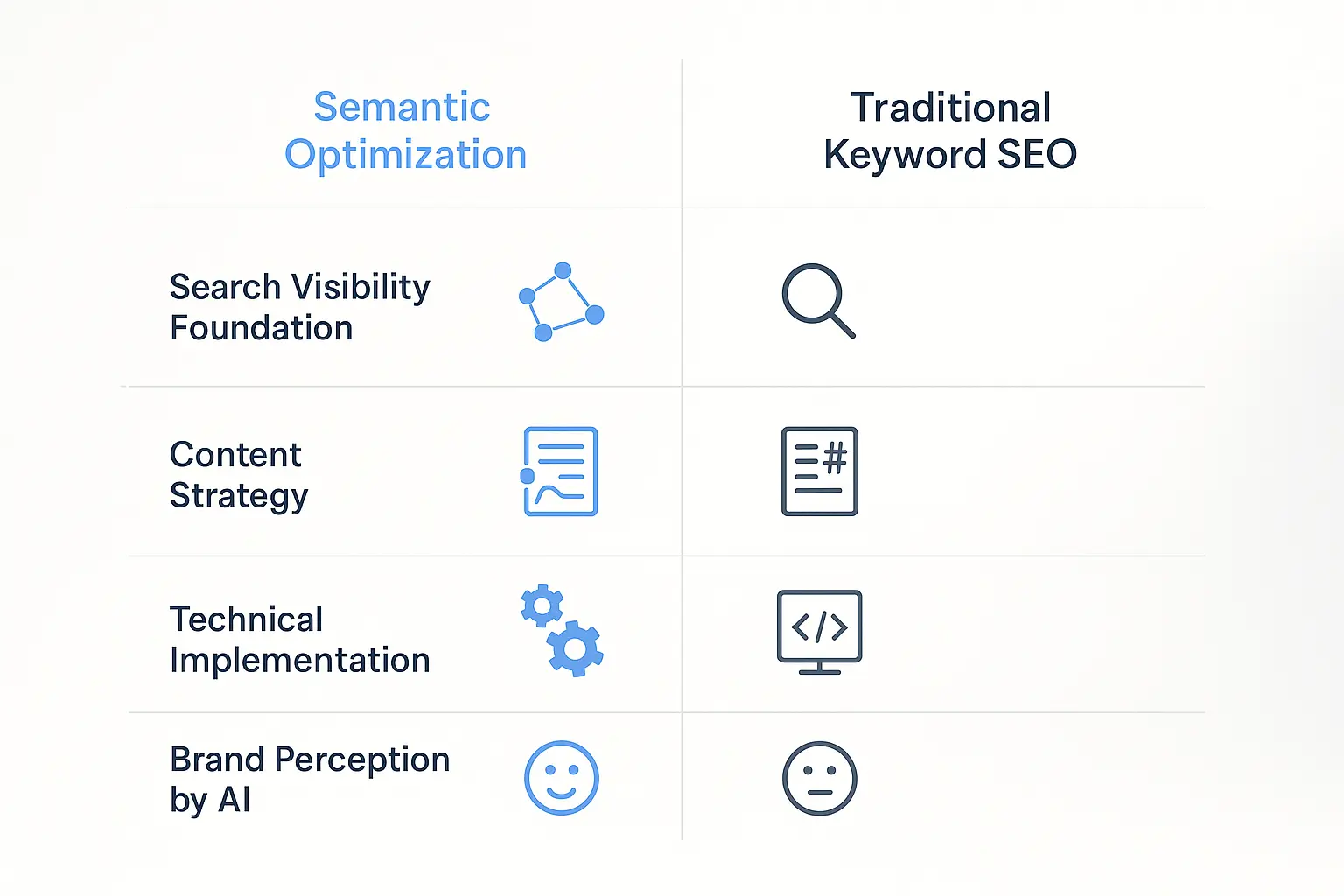
Semantic Optimization vs. Traditional Keyword SEO: What Agencies Need to Know
To guide your clients effectively, you first need to articulate the fundamental differences between the old and new approaches. While keywords still play a role, their function has evolved from a primary target to one component of a much broader semantic strategy.
This isn’t about abandoning keyword research; it’s about elevating it. You’re no longer just targeting a keyword—you’re aiming to own the entire topic surrounding it. This requires a deeper level of strategic thinking that connects content, structured data, and off-page signals into a cohesive narrative about your client’s brand.
The Three Pillars of Modern Entity SEO
Building a brand into an authoritative entity isn’t magic. It’s a systematic process grounded in three core pillars. Agencies that master these pillars can deliver durable, defensible search visibility that holds up against algorithm updates.
1. Structured Data: Speaking the Language of Search Engines
Structured data, primarily through Schema.org markup, is the vocabulary you use to explicitly tell search engines what your content is about. It’s like adding descriptive labels to your website’s information, removing any ambiguity for machines.
Think of it this way: without structured data, a search engine sees “John Smith.” With it, you can specify that this “John Smith” is a Person, the founder of an Organization named “Acme Inc.,” who is an alumniOf “State University” and is the author of specific Articles.
This clarity is critical. Research shows that comprehensive structured data not only helps secure rich snippets but also directly feeds information into Google’s Knowledge Graph—the very database AI models use to understand the world.
2. Entity Reconciliation: Creating a Single Source of Truth
Your client’s brand exists across the web—on their website, social profiles, business directories, and in press mentions. Entity reconciliation means ensuring all these digital footprints are consistent and point back to a single, unambiguous entity.
Inconsistent information creates confusion for algorithms. If a business address is listed differently across three directories, or the CEO’s name is spelled inconsistently, it erodes the machine’s confidence in the data.
A robust reconciliation process involves auditing all brand mentions, correcting inconsistencies, and using structured data (like sameAs schema) to link separate profiles together. This consolidates authority and tells search engines, “All of these mentions refer to the same, single entity.”
How JVGLABS Empowers Agencies with Entity Reconciliation Expertise
A structured process is key to achieving this at scale. By auditing digital footprints, aligning data across platforms, and implementing clarifying schema, agencies can eliminate the ambiguity that weakens brand authority in the eyes of AI. This systematic approach ensures every brand mention reinforces a single, authoritative entity.
3. Semantic Content Frameworks: Building Topical Authority
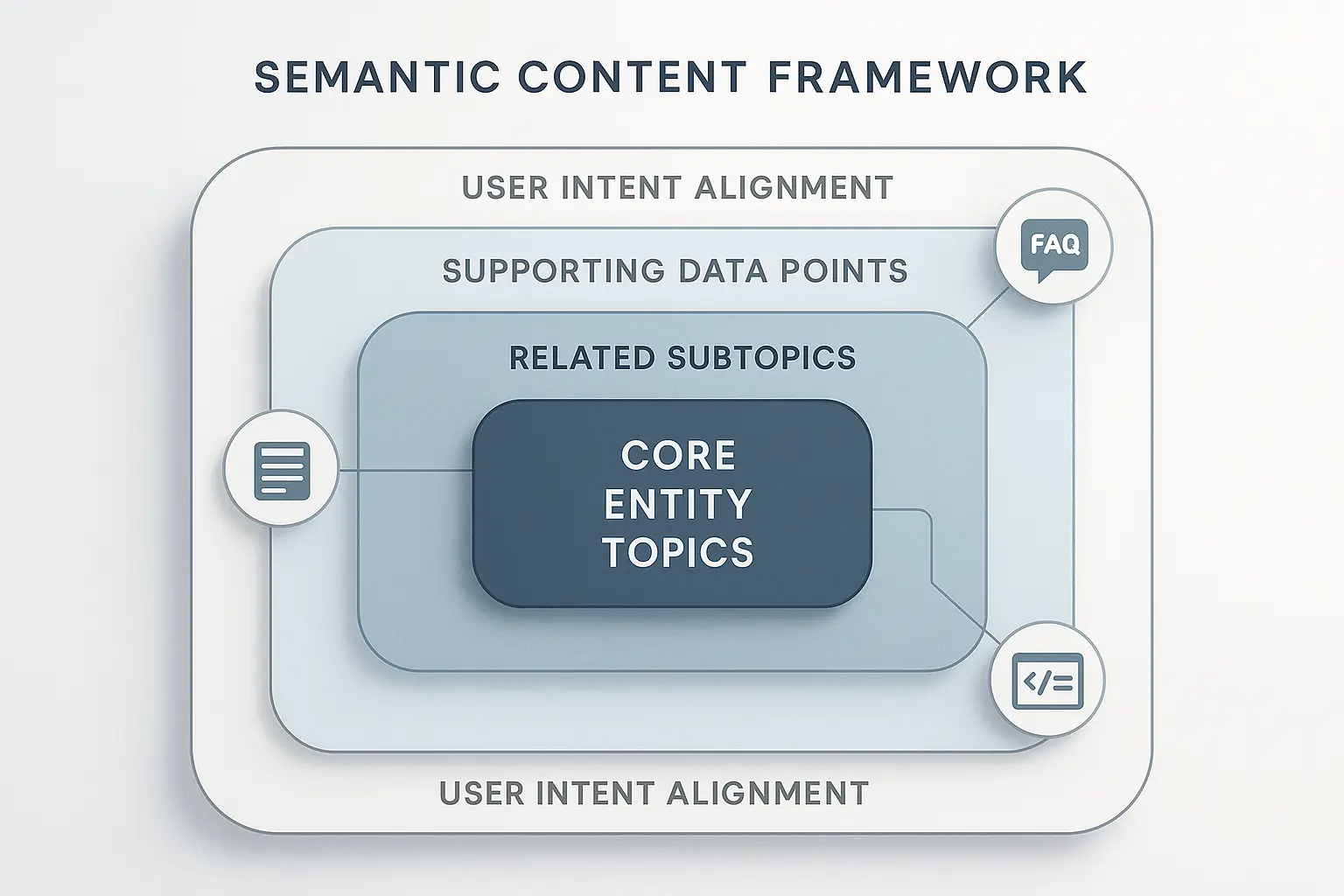
A single blog post, no matter how well-optimized, is no longer enough. To be seen as an authority, your clients need to demonstrate comprehensive knowledge of their core topics. This is achieved by building semantic content frameworks, often called topic clusters.
Instead of one-off articles, you create a central “pillar” page covering a broad topic, which is then supported by a cluster of in-depth articles exploring related subtopics. These pieces are all internally linked, creating a dense, interconnected web of content that signals deep expertise.
For example, an accounting firm wouldn’t just write a blog post on “small business tax deductions.” They would build a pillar page on “Small Business Tax Strategy” and link out to cluster content covering deductions, payroll taxes, entity selection (S-Corp vs. LLC), and quarterly estimated payments. This structure proves to search engines that they are a comprehensive resource, making them a more trustworthy source for AI-generated answers.
A Scalable Workflow for Agencies
The challenge for most agencies isn’t understanding these concepts but executing them efficiently at scale across multiple clients. This is where a defined process, powered by the right combination of automation and expertise, becomes critical. A repeatable workflow is essential for successfully delivering white label SEO services in the AI era.
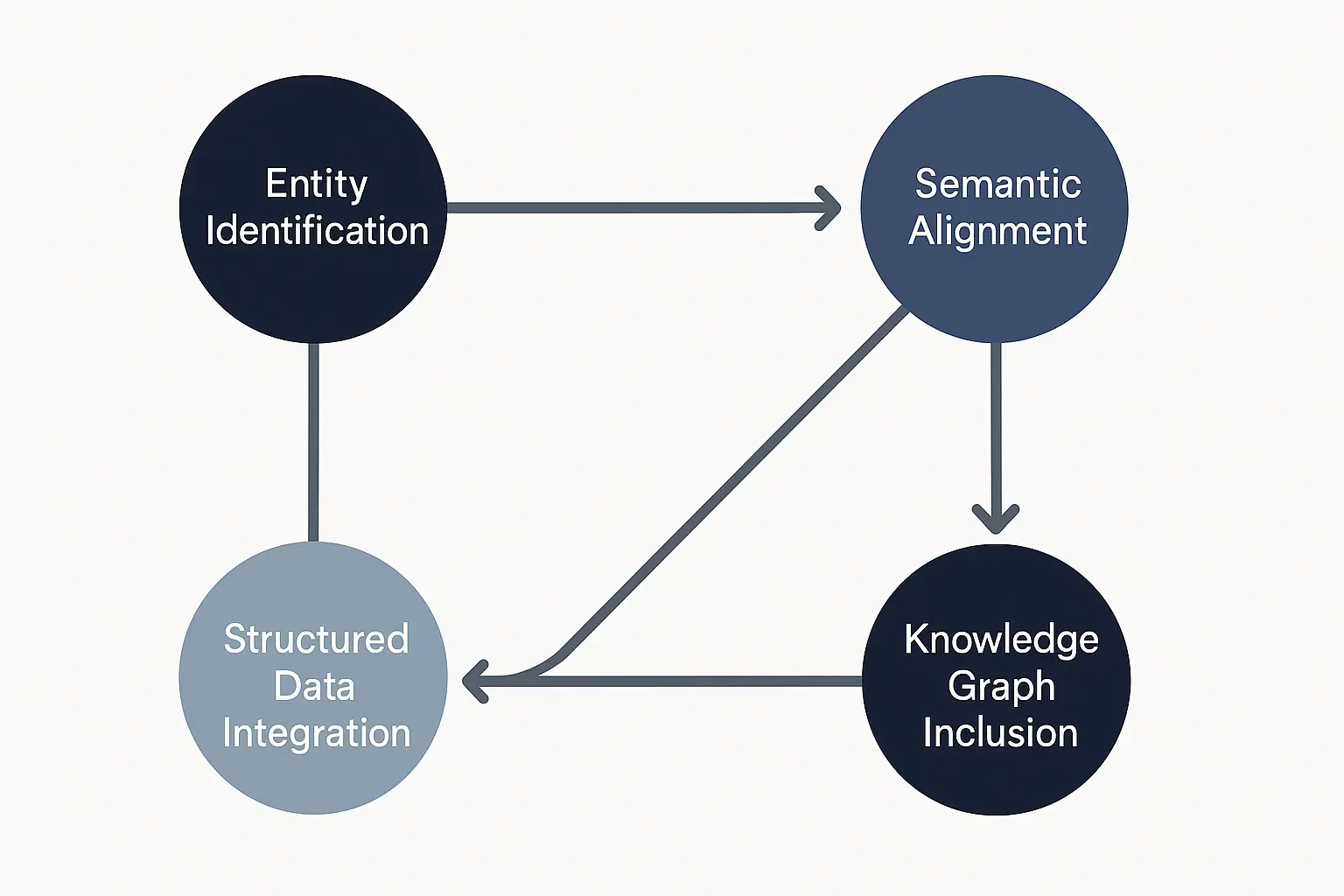
- Entity Discovery & Audit: Begin by identifying the client’s core entities—the brand itself, key products or services, and principal figures (like the founder or CEO). Audit their current digital presence to identify inconsistencies.
- Knowledge Graph Alignment: Implement comprehensive Organization, Person, and Service/Product schema on the client’s website to explicitly define these core entities and their relationships.
- Semantic Content Planning: Develop a topic cluster model based on the client’s core expertise. Plan and create content that comprehensively covers each topic, internally linking pieces to establish strong semantic relationships.
- Off-Page Entity Reinforcement: Ensure consistency across all third-party platforms (Google Business Profile, social media, industry directories) and pursue link-building opportunities from other authoritative entities in the same field.
- Monitoring & Refinement: Track performance using entity-focused metrics, not just keyword rankings. Monitor Knowledge Panel appearances, brand mentions in AI Overviews, and organic traffic growth to entire topic clusters.
Measuring What Matters: Proving the ROI of Entity SEO
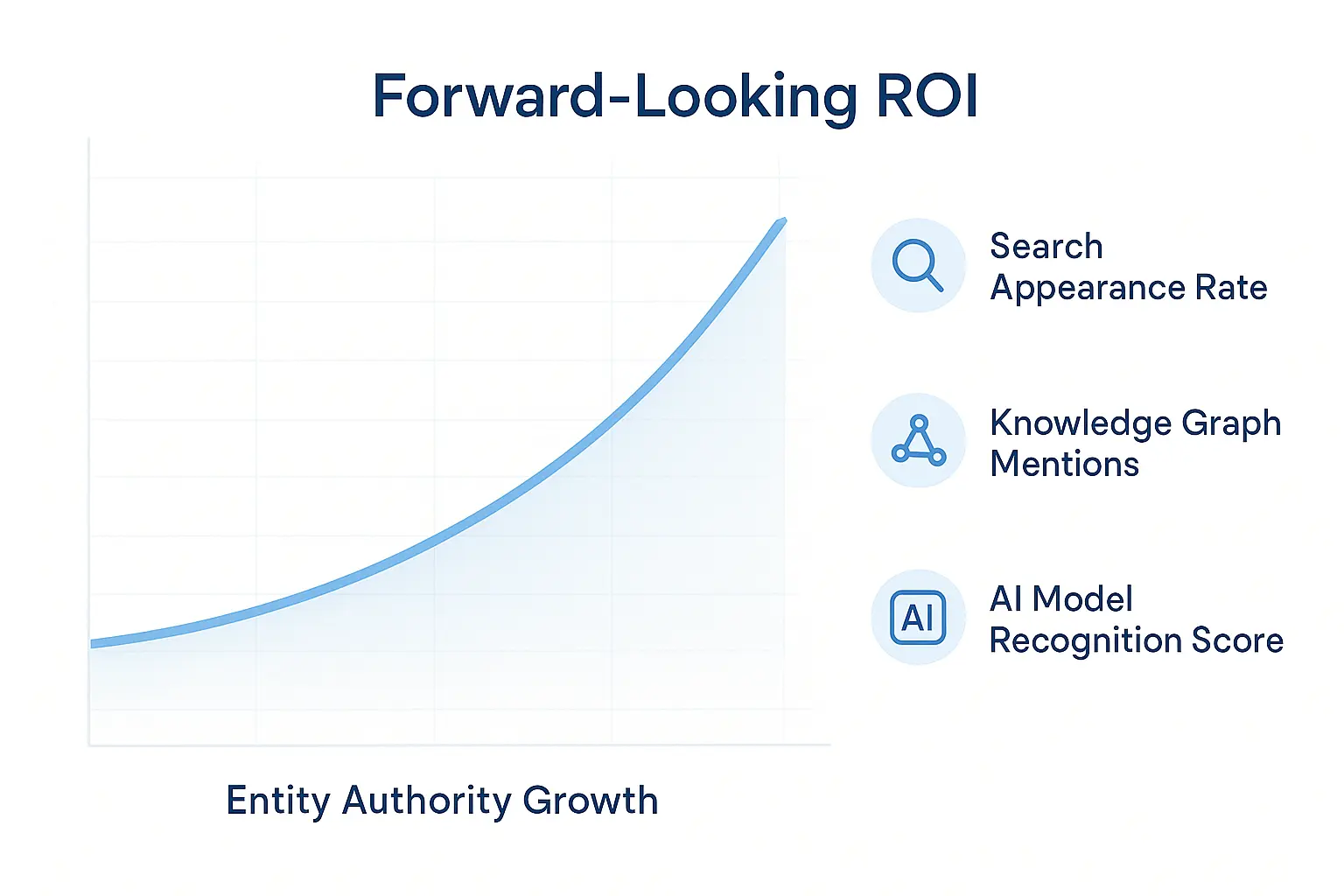
Selling entity SEO requires a shift in how you report on success. While keyword rankings can still be a useful diagnostic tool, they don’t capture the full value. Your reporting should focus on metrics that reflect growing authority and brand recognition.
Focus your client conversations on these key performance indicators:
- Knowledge Panel Presence: Is the client’s brand, product, or key person appearing in a Knowledge Panel for relevant searches?
- Share of Voice in AI Overviews: How often is your client cited as a source in AI-generated answers for your core topics?
- Branded Search Growth: An increase in users searching directly for the brand name is a powerful indicator of growing authority.
- Non-Branded Traffic to Topic Clusters: Are you seeing traffic growth across the entire cluster of content, not just one or two pages?
Frequently Asked Questions about Entity SEO
How long does it take to see results from entity SEO?
Entity SEO is a long-term strategy. Unlike chasing short-term keyword rankings, you are building a foundation of authority. Initial signals like improved rich snippets can appear in weeks, but establishing the brand as a recognized entity and seeing a significant impact in AI Overviews can take 6-12 months of consistent work.
Is this just for large brands?
Absolutely not. A local plumbing company can become the dominant entity for “plumbing services in [City Name].” For small and local businesses, entity SEO is a powerful way to build a defensible moat against larger, less-focused competitors by establishing deep topical and geographic authority.
Do keywords still matter at all?
Yes, but their role has changed. They are now clues that reveal user intent and help structure your topic clusters. You use them to ensure your content addresses the specific questions and language your audience uses, but the goal is to satisfy the broader topic, not just rank for the keyword string.
How does this fit with our existing content strategy?
It acts as a strategic overlay. You can audit your client’s existing content and identify opportunities to group articles into topic clusters, update them with structured data, and fill content gaps to build out a more comprehensive semantic framework. It enhances what you’re already doing by making it more intelligent and machine-readable.
Can we build an entity SEO practice in-house, or do we need a partner?
Building this capability in-house requires a significant investment in specialized training, tools, and time. These are often resources better spent on client strategy and relationships. For many agencies, leveraging an agency SEO partner provides a faster, more scalable path to offering this sophisticated service. It allows you to tap into proven workflows and expert execution without the overhead, letting you focus on what you do best. It’s a key consideration when evaluating models like SEO outsourcing for agencies.
Take the Next Step: Become Your Clients’ AI-Era SEO Authority
The shift to an entity-first search world represents a massive opportunity for agencies ready to adapt. By moving beyond keywords and focusing on building true brand authority, you can deliver more resilient results and position your agency as an essential partner for growth.
The question isn’t whether your clients need entity SEO, but how your agency will deliver it.
Ready to explore how a white-label partnership can equip your agency with the tools and expertise to deliver cutting-edge entity SEO at scale? Let’s discuss how you can build your next high-value service offering and lead your clients confidently into the future of search.