
A potential client has just been in a fender bender. Shaken and standing on the side of the road, they pull out their phone. What do they type into Google?
Not a complex legal query, but four simple words: “car accident lawyer near me.”
In that moment, the entire digital marketing landscape shrinks to a tiny map on their screen with three highlighted law firms. This is the Google Map Pack, and for a personal injury lawyer, it’s the most valuable real estate on the internet. Winning a spot isn’t just about rankings; it’s about capturing high-intent, high-value clients at their exact moment of need.
But in a hyper-competitive space where the average cost-per-click can soar into the hundreds of dollars, how do you ensure your firm is the one that appears?
This isn’t about chasing vanity metrics. Research shows that a staggering 46% of all Google searches have local intent, and more importantly, 76% of people who search locally on their phone visit a related business within 24 hours.
The opportunity is massive, but seizing it requires a precise, multi-layered strategy. This playbook shows you how.
The Three Pillars of Map Pack Dominance
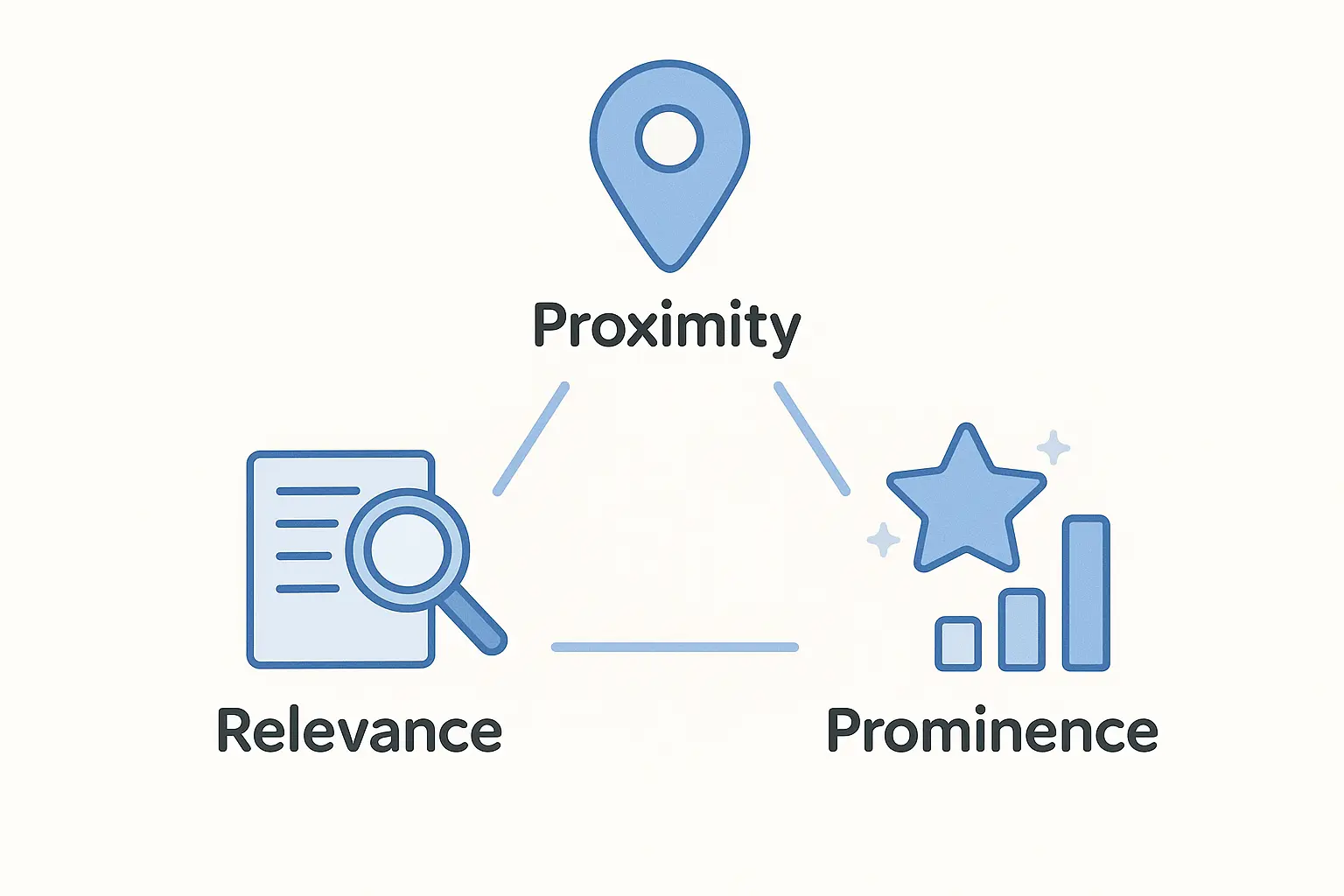
Think of ranking in the Map Pack like building a case. You need a solid foundation, compelling evidence, and a trustworthy reputation. In local SEO, these translate into three core pillars: your Google Business Profile (GBP), your website’s on-page signals, and your off-site authority.
Pillar 1: Your Google Business Profile is Your Digital Front Door
Your GBP is no longer just a listing; it’s a dynamic, interactive profile that Google uses as its primary source of truth about a local business. Getting this right is non-negotiable.
The Foundational Five:
-
Nail the NAP: Keep the firm’s Name, Address, and Phone number perfectly consistent across your GBP profile, website, and all other online directories. A single discrepancy can erode Google’s trust.
-
Choose the Right Category: Your primary category must be “Personal Injury Attorney.” You can and should add secondary categories like “Trial Attorney,” but the primary choice carries the most weight for relevant searches.
-
Craft a Compelling Description: Use the 750 characters to clearly state what you do, the areas you serve (e.g., “serving the greater downtown area”), and what makes your firm unique. Weave in keywords naturally, focusing on terms like “car accident lawyer” and “auto injury attorney.”
-
Leverage Every Feature: Google rewards active profiles. Regularly publish GBP Posts with case updates or safety tips, proactively answer questions in the Q&A section, and detail every service you offer (e.g., “Motorcycle Accident Claims,” “Truck Accident Litigation”).
-
Make Reviews a System: Reviews are a massive ranking factor. It’s not just the star rating that matters, but also the quantity of reviews, the velocity at which you get them, and the quality of your responses. Create a simple, automated process for satisfied clients to leave a review, and always respond professionally to every one—positive or negative.
Pillar 2: Connecting Your Website to Your Location
Your GBP tells Google what you are and where you are. Your website’s job is to prove it with detailed, location-specific evidence. The goal is to forge an undeniable link between your digital presence and your physical office.
Key On-Page Tactics:
-
Create Hyper-Local Service Pages: Don’t just have a single “Car Accidents” page. Build out pages for “Downtown Car Accident Lawyer” or “South Suburb Auto Injury Attorney.” These pages should feature unique content relevant to that specific area—mentioning local landmarks, highways, or common accident spots. This signals powerful relevance to Google for geo-specific searches.
-
Embed Your Google Map: On your contact page and every local service page, embed the firm’s Google Map listing. This creates a direct, powerful signal connecting the webpage back to your GBP profile.
-
Use Local Business Schema: This snippet of code on your website speaks directly to search engines. It explicitly identifies your business type, address, phone number, and opening hours, removing any guesswork for Google. A comprehensive SEO audit for law firms will almost always identify opportunities to improve or implement this crucial element.
Pillar 3: Building Authority and Trust Across the Web
Once your GBP and website are aligned, Google looks for external validation. Are other reputable local websites talking about this law firm? This is where you build off-site authority.

-
Local Link Building: This isn’t about acquiring thousands of random links. It’s about getting high-quality, relevant local links from sources like a sponsored charity event, the local Chamber of Commerce, or a feature in a neighborhood blog. These links act as powerful votes of confidence from the community.
-
Citation Consistency: A citation is any online mention of the firm’s NAP. These must be consistent across major directories like Yelp, Avvo, and other legal-specific sites. Inconsistencies create confusion and dilute authority.
These three pillars—an optimized GBP, geo-targeted on-page SEO, and local authority building—work in concert to send a powerful signal to Google that your client is the most relevant, trustworthy answer for a “car accident lawyer near me” search.
The LSA Multiplier: Combining Paid and Organic for Total Dominance
While the playbook above focuses on organic rankings, you can’t ignore the ads at the very top of the search results: Local Service Ads (LSAs). These are the “Google Screened” listings that appear above the Map Pack.
The secret is that LSAs and organic Map Pack rankings have a symbiotic relationship.
The reviews you work hard to earn for your organic GBP profile are the same ones that appear on your LSA. A strong, 5-star GBP reputation directly improves the performance and click-through rate of your paid LSAs. Conversely, the increased visibility and trust from a “Google Screened” badge can lead to more clicks and, indirectly, more positive signals that benefit your organic presence.
By combining an aggressive organic local SEO strategy with a targeted LSA campaign, you can dominate the entire top section of the search results, leaving no room for competitors. This integrated approach is essential for agencies looking to provide comprehensive solutions, making it a core component of effective white-label local SEO services.
Frequently Asked Questions (FAQ)
How long does it take to rank in the Map Pack?
Local SEO is a marathon, not a sprint. For a new business in a competitive market like personal injury law, it can take 6-12 months of consistent effort to see significant movement into the top three. Factors include the level of competition, the age of the GBP, and the consistency of your strategy.
Can a law firm rank in a city where they don’t have a physical office?
It’s extremely difficult and generally against Google’s guidelines. The Map Pack is designed to show results physically near the searcher. The most effective strategy is to build authority around the registered physical address. While Service Area Businesses have some flexibility, a verifiable office is key for lawyers.
What’s more important: reviews or links?
It’s not an either/or question, as they serve different purposes. Reviews are a direct trust signal to both potential clients and Google, heavily influencing conversions and local rankings. Links are a signal of authority and reputation across the broader web. A winning strategy needs a consistent focus on acquiring both.
How should we handle a negative review?
Always respond, and do it quickly and professionally. Acknowledge the reviewer’s experience without being defensive, state your firm’s commitment to client satisfaction, and offer to take the conversation offline to resolve the issue. How you handle a negative review can be a powerful positive signal to other potential clients.
Your Path to Local Dominance
Mastering the “near me” search is about more than technical SEO; it’s about understanding user intent and building a web of trust signals that all point to your client as the best local solution. Success requires a disciplined, ongoing effort focused on your Google Business Profile, website content, and off-site reputation.
For many agencies, executing this complex, multi-front strategy for multiple clients is a significant challenge. Learning how to scale your agency’s SEO fulfillment is the key to delivering these results without burning out your team. By systemizing this playbook, you can turn the most competitive digital battleground into your clients’ greatest source of new business.