

Imagine you’ve just helped a client launch a brilliant new product. The website is sleek, the service is revolutionary, and the team is ready. But when you launch, all you hear are… crickets. The digital stage is empty: no traffic, no brand searches, and no signs of life.
This is the “cold start” problem—one of the toughest challenges in marketing and SEO. You’re trying to spin up a heavy brand flywheel from a dead stop. You know that once it’s moving, it will generate its own momentum, attracting customers, earning links, and climbing the ranks. But how do you give it that crucial first push?
Many agencies fall into the trap of treating a new launch like an established brand, focusing on technical SEO and keyword targeting. But without initial brand authority, even the most perfectly optimized page is just a whisper in a hurricane. The research is sobering: a staggering 90.63% of content gets zero traffic from Google. You’re not just competing; you’re fighting for the very first eyeball.
Why the Cold Start Is SEO’s Toughest Challenge
Modern search engines like Google are biased toward trust. They use a concept called E-E-A-T (Experience, Expertise, Authoritativeness, and Trustworthiness) to evaluate websites. An established brand has years of signals proving its authority: articles, reviews, social media mentions, and people searching for its name.
A new business has none of that. It’s facing a digital catch-22:
You need brand authority to rank and get traffic.
But you need traffic and visibility to build brand authority.
This is where the flywheel feels impossibly heavy. After all, with over 67.6% of all clicks going to the first five organic results, failing to generate initial momentum means you remain invisible. The cold start isn’t just about being new; it’s about overcoming Google’s inherent preference for the known over the unknown.
Shift Your Mindset: From SEO to Brand Signal Generation
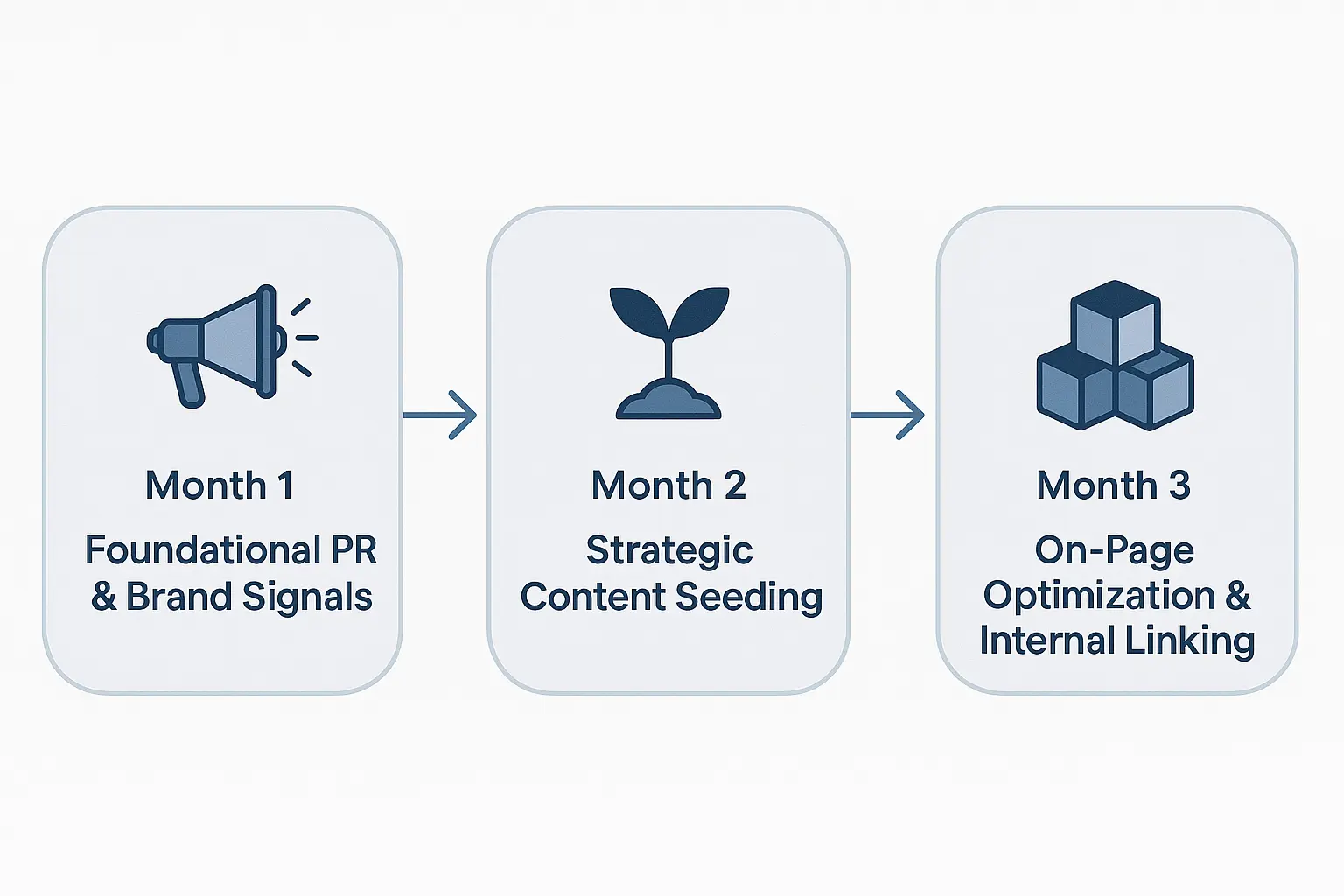
Solving the cold start problem requires a mental shift. For the first 90 days, your primary goal isn’t to rank for competitive keywords. Your goal is brand signal generation.
Think of it this way: instead of asking Google for attention, you’re giving Google reasons to pay attention. Brand signals are the digital footprints that prove your existence and relevance outside your own website.
These signals include:
- Unlinked brand mentions in articles, blogs, and forums.
- Guest appearances on podcasts or webinars.
- Citations in local or industry directories.
- Social media conversations about your brand.
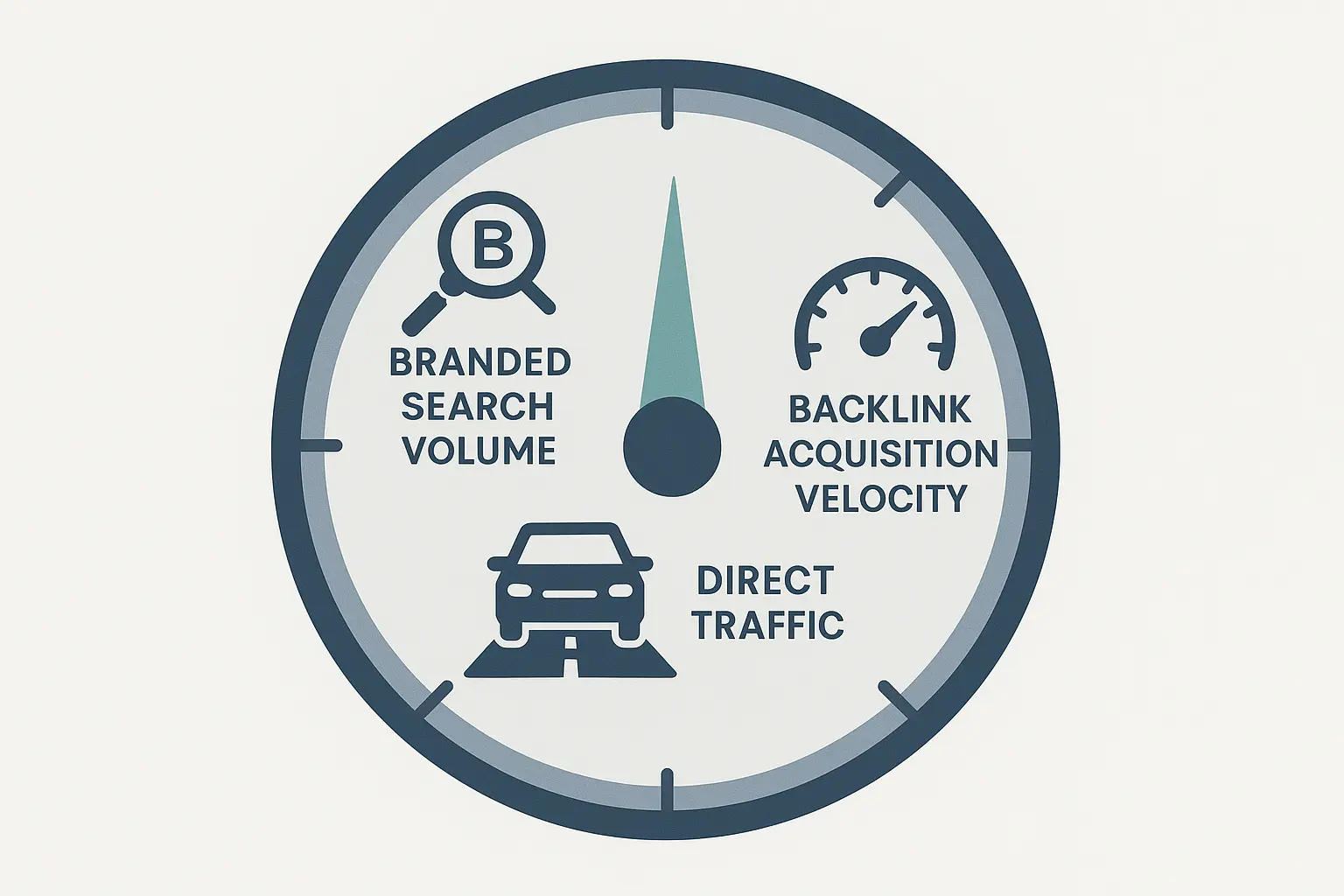
- An increase in direct and branded search queries (people typing your company name into Google).
This foundational work is what makes traditional SEO effective later on. It’s about creating a narrative that search engines can discover. This matters because a consistent brand presentation across all platforms can increase revenue by up to 23%, and that consistency starts with these initial signals.
Three Strategies to Kickstart Your Brand Flywheel
So, how do you generate these crucial early signals? You can’t wait for them to appear organically—you have to be strategic and proactive. Here are three methods to get the flywheel moving.
1. Borrow Authority with Strategic Partnerships
When you have no audience of your own, the fastest way to get noticed is to borrow someone else’s. Strategic partnerships put your brand in front of an established, trusting audience and create powerful, authoritative signals.
- Guest on Podcasts: Find podcasts your client’s ideal customer listens to. A single appearance can generate brand mentions, a high-authority backlink in the show notes, and social media buzz.
- Co-Host a Webinar: Partner with a complementary, non-competing brand to host a webinar. You both promote it, sharing audiences and creating an asset that can be referenced for months.
- Write for Industry Publications: Move beyond simple guest posting. Target respected industry blogs or online magazines where your client’s expertise can shine. The goal is credibility first, a link second.
Because this kind of high-touch outreach requires real expertise, many agencies find that leveraging white-label SEO services allows them to offer this sophisticated strategy without building a dedicated PR team from scratch.

2. Manufacture Momentum with Digital PR
Digital PR is about creating newsworthy stories that journalists, bloggers, and influencers want to talk about. This isn’t about asking for links; it’s about earning mentions by being interesting. Research from Demand Metric shows that 70% of consumers prefer to learn about a company through articles rather than ads, and Digital PR feeds that preference directly.
- The “Reactive” Approach: Use services like HARO (Help a Reporter Out) to provide expert quotes for articles journalists are already writing. This is a quick way to get your client’s name and business mentioned in reputable publications.
- The “Proactive” Approach: Create a story yourself. Conduct a small survey, analyze public data to find a unique trend, or create a compelling infographic. Then, pitch this unique story to relevant journalists. For example, a real estate software company could release a report on the “Top 10 Most Affordable Suburbs for Remote Workers.”
- Launch and Founder Stories: Don’t underestimate the power of a good story. Pitch the founder’s journey or the “why” behind the new product to business or niche publications.
3. Seed Your Ecosystem with Foundational Content
While you’re building external signals, you also need to create on-site assets that make your brand a destination for information. This isn’t just blogging for keywords; it’s about creating “linkable assets”—cornerstone pieces of content so valuable that other sites will naturally want to reference them.
- The Definitive Guide: Create the single best resource on a niche topic relevant to your client. Go deeper and be more comprehensive than anyone else.
- Original Research or Data Study: Even a small-scale survey can become a primary source that others cite. This is a powerful way to build authority and earn high-quality backlinks over time.
- Free Tools and Templates: Create a simple, useful tool that solves a common problem for your client’s audience. A mortgage calculator, a content planning template, or a headline generator can become a magnet for links and brand mentions.
Creating and executing a robust content strategy takes significant resources. For agencies looking to scale their capacity, SEO outsourcing for agencies can provide the necessary talent to produce these high-value assets consistently.
FAQs: Answering Your Cold Start Questions
How long does it take to see results from these strategies?
Brand signal generation is about planting seeds. You may see initial mentions and referral traffic within the first 30-60 days. The real SEO impact—like improved rankings and organic traffic—typically starts to build after 3-6 months as Google recognizes the new patterns of authority.
Is this different from regular link building?
Yes. While these activities often result in backlinks, the primary goal is different. Traditional link building is link-focused; the cold start strategy is brand-focused. A brand mention in a major publication with no link can be more valuable in the early days than a keyword-rich anchor text link from an unknown blog.
Can’t we just use paid ads to kickstart things?
Paid ads are excellent for generating immediate traffic and leads, but they do little to build sustainable, long-term brand authority in Google’s eyes. The signals from earned media (PR, guest posts) carry far more weight for organic search. A smart strategy uses both: paid ads to capture demand while these methods build underlying brand equity.
What’s the single most important first step?
Start with the “lowest-hanging fruit” of Digital PR. Sign up for HARO and start responding to relevant queries immediately. It’s a low-cost, low-risk way to practice telling your client’s story and can yield surprisingly powerful brand mentions and links very quickly.
From a Cold Start to a Hot Topic
Solving the brand flywheel cold start problem requires you to think like a publicist before you think like an SEO. You don’t have an authority problem; you have an awareness problem. By focusing the first 90 days on generating brand signals through partnerships, Digital PR, and foundational content, you give the flywheel the strong, strategic push it needs to start spinning.
Once it’s in motion, every new mention, every new link, and every new branded search makes it spin faster. The momentum builds on itself, and that’s when traditional SEO efforts begin to deliver exponential returns. You’ve successfully turned your client from an unknown entity into a recognized name—the foundation of all great SEO success.
If you’re ready to implement these advanced strategies for your clients, an agency SEO partner can provide the specialized expertise and execution you need to master the cold start and beyond.