
Picture this: your sales team is in the final stages of a landmark deal. The prospect, impressed but cautious, asks a highly specific technical question about API compatibility. Your account executive, an expert relationship builder but not an engineer, fires off an email to the pre-sales team.
Silence.
Pre-sales is buried in demos for other accounts. When they finally respond a day later, their answer is technically correct but lacks the vital context of the sales conversations. Meanwhile, your customer success team has onboarding data from three other clients who asked the exact same question, but that knowledge is locked away in a separate system.
The deal stalls. The buyer feels a flicker of uncertainty. What felt like a seamless experience suddenly feels disjointed. This small moment of friction points to a much larger, often invisible problem: cross-functional misalignment. According to research from Forrester, it costs B2B companies 10% or more in annual revenue.
The Hidden Cost of Disconnected Teams
In today’s complex B2B buying journey, customers don’t interact with a single person; they interact with a company. They expect a consistent, intelligent conversation whether they’re talking to sales, getting a technical demo, or planning their onboarding. A Salesforce report found that 76% of customers expect consistent interactions across departments.
The reality is, most organizations aren’t built to deliver this. Sales, pre-sales, and customer success teams often operate in functional silos, each with their own goals, tools, and data. They rely on manual handoffs, ad-hoc emails, and endless internal meetings to stay coordinated. The result is a broken customer experience and staggering internal inefficiency.
The data paints a stark picture: Forrester reveals that a mere 8% of companies report strong alignment between their sales, marketing, and customer-facing teams. This isn’t just an internal headache; it’s a direct inhibitor of growth.
AI as the Central Nervous System for Your Revenue Teams
For years, the solution to misalignment was thought to be “better communication” or more software. But adding another messaging app or CRM module doesn’t fix the underlying issue. The problem isn’t a lack of tools; it’s the absence of an intelligent layer connecting them.
This is where AI changes the game.
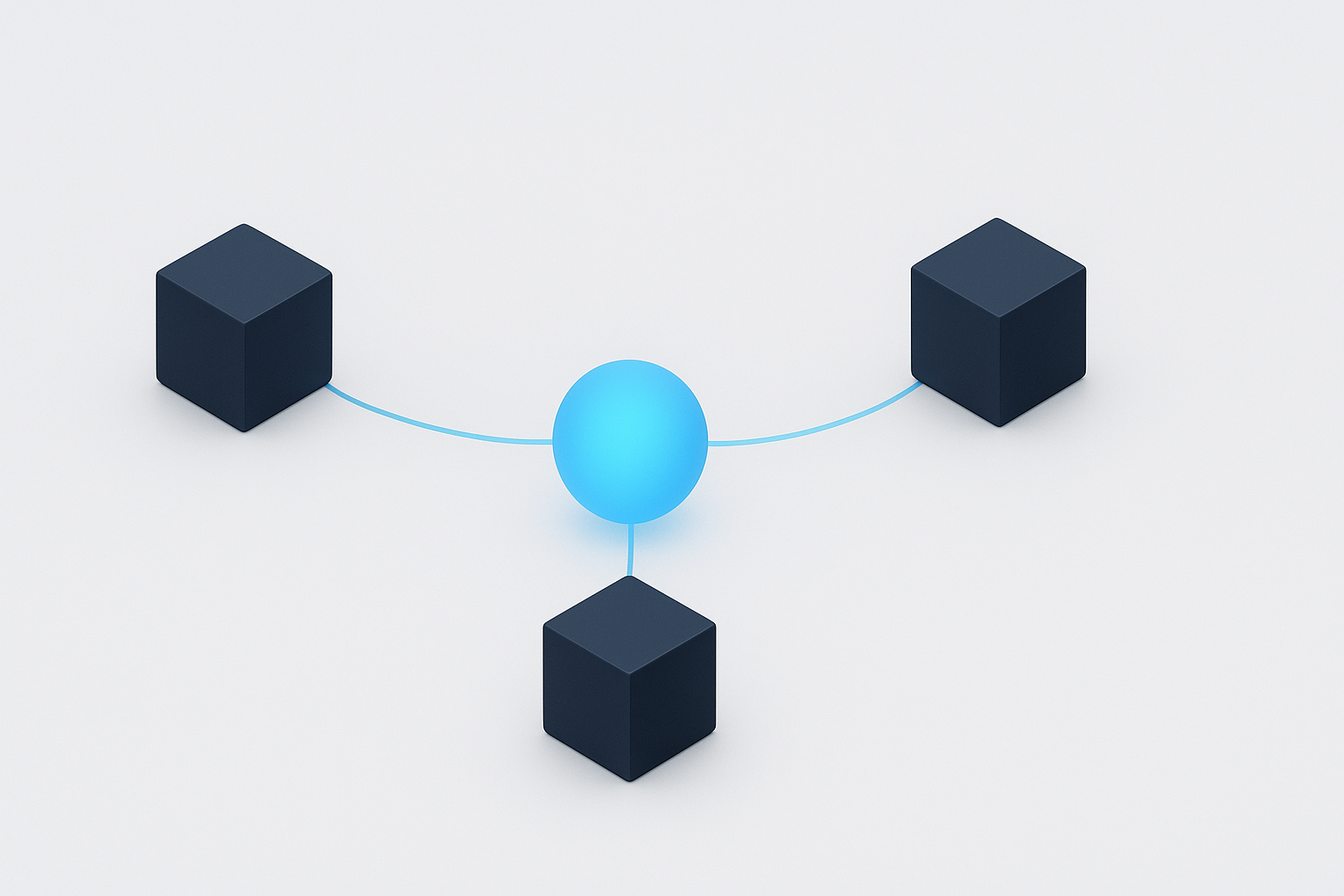
Instead of just another tool for a single department, AI can act as a central nervous system for your entire go-to-market motion. It listens to, understands, and acts on signals buried within your team’s daily activities—from emails and call transcripts to support tickets and CRM notes.
By automating the flow of information and triggering tasks between teams, AI builds the missing connective tissue. It transforms a collection of high-performing but separate functions into a single, coordinated organism.
This isn’t about replacing human expertise; it’s about augmenting it. Research from McKinsey shows that AI can reduce administrative tasks for sales reps by up to 30%, freeing them from manual data entry and follow-ups to focus on what they do best: selling.
From Theory to Reality: AI-Powered Alignment in Action
So, how does this work in the real world? It’s not about a single, monolithic “AI platform.” It’s about creating specific, automated workflows that solve real-world friction points.
Play 1: The Intelligent Handoff (Sales to Pre-Sales)
Let’s revisit our opening scenario. A prospect asks a technical question on a call.
- The Old Way: The AE manually emails pre-sales, pastes in their notes, and waits.
- The AI-Powered Way: An AI tool analyzes the sales call transcript in real-time. Detecting technical keywords like “data residency” or “SOC 2 compliance,” it instantly triggers three actions:
- It creates a task in the pre-sales team’s project board (e.g., Jira or Asana).
- It populates the task with the relevant transcript excerpt, the prospect’s CRM record, and a link to the call recording.
- It notifies the appropriate pre-sales engineer in Slack.
The pre-sales expert gets everything they need to provide a fast, context-rich answer, turning a potential 24-hour delay into a one-hour response.
Play 2: Proactive Insights from Success to Sales
Your customer success team is a goldmine of information about what clients truly value and where they struggle. But this information rarely makes it back to the sales team in a structured way.
- The Old Way: The success team might mention a trend in a quarterly meeting, but the insight is quickly forgotten.
- The AI-Powered Way: AI analyzes support tickets, survey responses, and customer check-in notes. It identifies a recurring theme: customers in the manufacturing sector are consistently asking about a specific integration. The AI automatically generates a “battle card” for the sales team, summarizing the issue, providing approved talking points, and linking to a case study. The next time a sales rep talks to a manufacturing prospect, they can proactively address a need before it’s even mentioned.
Play 3: The Unified Customer Brief for Renewals
When it’s time for a renewal or upsell conversation, the customer success manager (CSM) often has to manually piece together a customer’s history from disparate sources.
- The Old Way: The CSM spends hours digging through the CRM, old emails, and support logs to prepare.
- The AI-Powered Way: A week before a scheduled renewal meeting, an AI-powered workflow compiles a dynamic “Customer Health Brief.” It pulls key business objectives mentioned during the initial sales cycle, summarizes the top three technical challenges solved by pre-sales during evaluation, and highlights the most recent positive support interactions. The CSM walks into the meeting with a true 360-degree view, ready for a strategic conversation.
The Business Impact of a Unified Front
When teams are aligned, the benefits ripple across the entire organization. This isn’t just about making internal processes smoother; it’s about winning more business and keeping customers happier.
The results are clear. According to MarketingProfs, companies with strong sales and marketing alignment achieve up to 38% higher sales win rates. The impact doesn’t stop at sales. A HubSpot study found that these highly aligned organizations see 208% more revenue from their marketing efforts.
Ultimately, a company that feels cohesive on the inside presents a more compelling, trustworthy, and intelligent face to the outside world.
Frequently Asked Questions About AI-Powered Team Alignment
-
Isn’t this just another complicated tool to manage?
Not at all. The goal of AI-powered orchestration is integration, not replacement. These systems work in the background, connecting the tools your teams already use—like Salesforce, Slack, Outlook, and Jira—to automate workflows without forcing everyone to learn a new platform. -
Will AI replace our sales or success managers?
No. The goal is to automate low-value, repetitive administrative work to free up your experts for high-value strategic activities. AI handles task routing and data aggregation so your team can focus on building relationships, solving complex problems, and thinking strategically. -
Where do we even start with something like this?
Start small. Don’t try to boil the ocean. Identify the single biggest point of friction in your current go-to-market process. Is it the handoff from sales to pre-sales? Or the communication of customer feedback from success back to product? Pick one workflow, pilot an automated solution, and measure the impact. -
What kind of AI is needed for this?
This functionality is typically driven by a combination of technologies, including Natural Language Processing (NLP) to understand text and speech from calls and emails, and workflow automation engines that execute tasks based on specific triggers and rules.
Your First Step Toward a Unified Front
Team misalignment is a silent growth killer, draining revenue and frustrating both customers and employees. For years, it has been accepted as an unavoidable cost of doing business.
AI offers a powerful new way forward. By acting as an intelligent orchestrator that connects your teams and automates the flow of crucial information, it breaks down the silos that hold you back.
The journey starts not with buying software, but with a simple question: “Where does work get stuck between our teams?” Answering that question is the first step toward building a more connected, efficient, and customer-centric organization.