
You’ve done everything right. Your keyword research was meticulous, the writer was briefed perfectly, and the final article is a masterclass in on-page SEO. It ranks beautifully on the traditional blue-link SERP.
Then you see it: right at the top of the page, Google’s new Search Generative Experience (SGE) has generated its own AI-powered answer, citing three of your competitors and pushing your hard-earned ranking below a massive, conversational block of text.
If this scenario is unsettling, you’re not alone. With analysts predicting that AI-driven search could displace up to 40% of organic search volume, it’s clear the content briefs that brought us this far are no longer enough. It’s time for an upgrade.
We’ll break down why your current content briefs are becoming obsolete and provide a downloadable, AI-ready template to ensure every piece of content your agency produces is built for this new era of search.
What is SGE, and Why Does It Change Everything?
Think of Google’s Search Generative Experience (SGE) as an AI research assistant built directly into the search engine. Instead of just providing a list of links, it synthesizes information from multiple sources to deliver a direct, conversational answer to a query.
This isn’t just another featured snippet; it’s a fundamental shift from a ‘list of results’ to a ‘source of answers.’
For agencies, this shift is monumental. Our job is no longer just to rank a URL but to become a trusted, citable source for the AI itself. Content teams are already feeling the pressure, with research showing that over 65% are struggling to adapt their strategies to the demands of AI. The old playbook of focusing only on a primary keyword and its variants is no longer enough.
Why Your Old Content Briefs Are Falling Short
Traditional content briefs are built for a world of keywords and clicks. They excel at guiding writers to target specific phrases but often miss the bigger picture that AI now demands.
Here’s where they typically fall short:
-
Keyword-Centric, Not Answer-Centric: They prioritize the keyword, not the concise, authoritative answer the user (and the AI) is looking for.
-
Lacks Semantic Context: They fail to define the key concepts (entities) and the relationships between them, which is how AI understands topics.
-
Doesn’t Prioritize Citability: They don’t explicitly instruct writers to include easily citable statistics or expert quotes that SGE loves to reference.
-
Ignores the User’s Full Journey: They focus on a single search query rather than the cluster of related questions a user might have.
To win in the age of SGE, we need to move from telling writers what to write about to showing them how to become the definitive answer. This requires a new way of thinking, planning, and briefing.
Building the AI-Ready Content Brief: 5 Essential Upgrades
An AI-ready brief is a strategic document designed to show a generative AI that your content is authoritative, trustworthy, and citable. It’s about building in the signals of expertise from the ground up.
Here are five new sections to add to your agency’s template.
1. The Target AI Snippet
This is the most critical addition. Before writing begins, define the ideal two- to three-sentence answer you want SGE to extract. This forces strategic clarity, transforming the goal from simply ‘ranking for a keyword’ to ‘becoming the source of the answer.’
This pre-written, concise response to the user’s primary question acts as a North Star for the writer, ensuring the most important information is presented clearly and authoritatively upfront.
2. Key Entities and Definitions
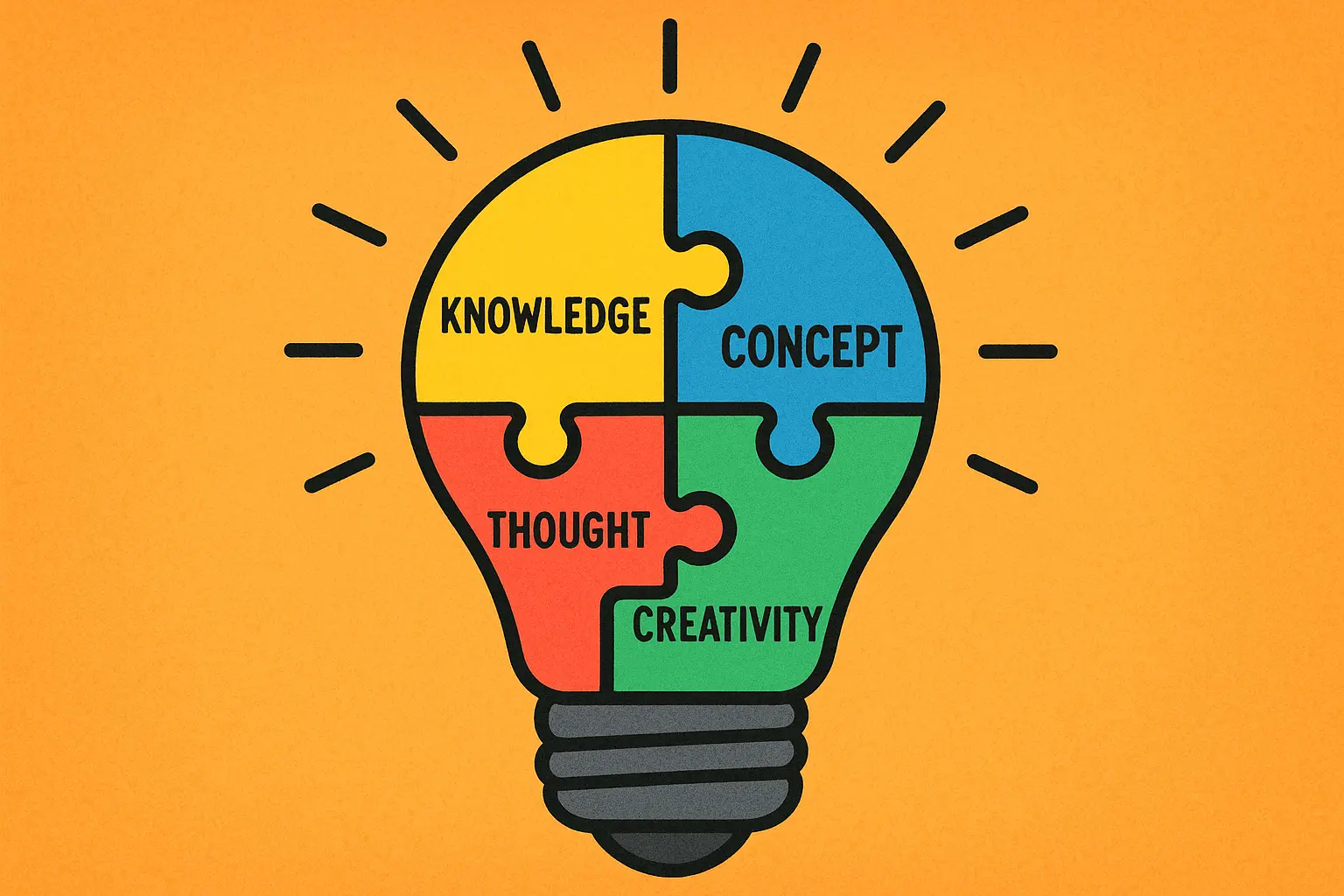
AI doesn’t just read keywords; it understands concepts, or ‘entities’—the people, places, and ideas that define a topic. Your brief should explicitly list these core entities with simple definitions.
This list of primary nouns (e.g., SGE, Content Brief, SEO Agency), along with a brief explanation of how they relate, helps the writer connect the dots. More importantly, it provides the semantic context that search engines use to verify your content’s topical depth. Scaling this kind of deep analysis across dozens of clients is where an expert white-label SEO partner can provide immense value.
3. Citation-Ready Stats and Expert Quotes
SGE results rely heavily on citations to build credibility, so your brief should make it effortless for writers to include these trust signals. Include a section with pre-vetted statistics, data points, or quotes from industry experts, complete with source links. This directly aligns your content with E-E-A-T (Experience, Expertise, Authoritativeness, and Trustworthiness) principles. In fact, a recent study found that content demonstrating strong E-E-A-T signals saw a significant advantage in AI-driven search visibility.
4. Multi-Intent Question Clusters
A user rarely has just one question. Someone searching for ‘AI content briefs’ might also wonder, ‘How will AI change SEO?’ or ‘What tools can help with this?’ Your brief should map out this entire conversational journey. By including a collection of primary, secondary, and tertiary questions related to the core topic, you can create comprehensive content that satisfies multiple user intents in a single piece. This makes your article a more valuable resource for both users and AI. The process of identifying these question clusters can be streamlined significantly with AI-powered SEO automation.
5. Structured Data and Schema Directives
Don’t make the AI guess what your content is about; use schema markup to label its structure explicitly. The brief should include a simple directive for the writer or developer, indicating which schema to use (e.g., ‘Implement FAQPage schema for the Q&A section’ or ‘Use HowTo schema for the step-by-step guide’). Think of schema as a clear, machine-readable map for search engines. It removes ambiguity and helps them understand how to feature your content correctly.
Your Downloadable AI-Ready Content Brief Template
To help you put this theory into practice, we’ve combined these five upgrades into a comprehensive, ready-to-use template for your agency. Use it as a starting point to build a content workflow that’s prepared for the future of search.

Frequently Asked Questions (FAQ)
What exactly is SGE?
SGE (Search Generative Experience) is Google’s initiative to integrate generative AI directly into its search results. Instead of just a list of links, SGE provides a conversational, AI-generated summary at the top of the page that answers the user’s query directly, citing its sources.
Will keywords still matter with AI search?
Yes, but their role is evolving. Keywords are no longer just targets to rank for; they are signals of user intent. Understanding the ‘why’ behind a keyword is more important than ever. The focus is shifting from a single keyword to the entire cluster of questions and topics around it.
How can our agency implement this without overwhelming our writers?
Start small. Introduce one new section from the AI-ready brief at a time. Begin with the ‘Target AI Snippet.’ Mastering that one element will create a significant positive impact on your content’s clarity and focus. Once your team is comfortable, introduce ‘Key Entities.’
Does this approach replace traditional on-page SEO?
Not at all. It builds upon it. Strong technical SEO, quality backlinks, and great user experience are still fundamental. This AI-ready approach is an essential strategic layer on top of those foundations, ensuring your content is optimized for how search engines understand and present information today.
The Future is Answer-Centric
The shift to AI-driven search isn’t a distant threat; it’s an immediate opportunity for agencies willing to adapt. By re-engineering your content briefs to be answer-centric, entity-aware, and built for citation, you aren’t just optimizing for an algorithm. You’re future-proofing your clients’ content and positioning your agency as a leader in the new search landscape.
As the lines between organic, paid, social, and search continue to blur, this foundational content planning becomes a critical component of modern omnichannel SEO strategies. The time to evolve your workflow is now. Download the template, start a conversation with your team, and begin building content that doesn’t just rank—it answers.