

Your agency just delivered a masterpiece: a comprehensive Q3 industry report for your B2B client. It’s packed with original research, sharp insights, and stunning visuals. You publish it, run a promotion, and see a nice initial spike in traffic.
Then, a week later, someone asks their favorite AI assistant, ‘What are the latest trends in supply chain logistics?’
The AI confidently provides a bulleted list citing three different sources. Your client’s masterpiece isn’t one of them.
This isn’t a failure of content quality, but of communication. Your client’s brilliant data is speaking a language that AI doesn’t yet understand. As search engines evolve into answer engines, publishing great content is no longer enough. That content needs to be packaged for AI consumption. This guide is your agency’s playbook for doing just that using Dataset schema.
What Is Dataset Schema, and Why Does It Suddenly Matter?
For years, we’ve used schema markup to translate our web content into a language search engines can easily understand. Article schema tells Google, ‘This is a blog post,’ and Product schema says, ‘This is something for sale.’
Dataset schema is a specific type that says, ‘This page contains structured data—like research, statistics, or a report—that is a citable source of information.’
Historically, this was used for scientific studies or government databases. But today, its importance has exploded. Why? Because Large Language Models (LLMs) and AI-powered search (like Google’s SGE) are desperately looking for authoritative, well-structured data to use as sources for their answers.
As SEO expert Jason Barnard puts it, this is about ‘Digital Information Packaging.’ You’re not just writing an article; you’re creating a verifiable, citable package of knowledge that AI can reference. When an AI cites your client’s report, it doesn’t just send traffic—it confers trust and establishes your client as a definitive authority in their space.
For B2B companies, being the source of truth for an AI-generated answer is the new top-of-funnel gold.
The B2B Goldmine: Identifying ‘Dataset’ Opportunities for Your Clients
Your clients are likely already sitting on a wealth of untapped ‘datasets.’ Your job as their agency partner is to identify and structure them. Before you think about code, you need to think like a researcher.
Look for these opportunities across your client roster:
- Original Research & Surveys: Any report based on proprietary survey data is a prime candidate (e.g., ‘The 2024 State of B2B Marketing’).
- Proprietary Industry Analysis: Reports that synthesize market data to provide a unique perspective (e.g., ‘Analysis of SaaS Pricing Models’).
- Anonymized Customer Data: Trends and insights derived from your client’s own platform or customer base (e.g., ‘E-commerce Return Rate Benchmarks’).
- Quantifiable Case Study Data: A deep-dive analysis of aggregated results from multiple case studies (e.g., ‘A Study of 50 Cloud Migrations Reveals Key Performance Drivers’).
- Comprehensive Data Compilations: Even a thoroughly researched product comparison or a pricing index for an industry can be treated as a dataset.
The key is that the data must be original, credible, and presented as a factual resource. If you can imagine a journalist or analyst citing it, it’s probably a good fit.
The Agency Playbook: A Step-by-Step Guide to Implementing Dataset Schema
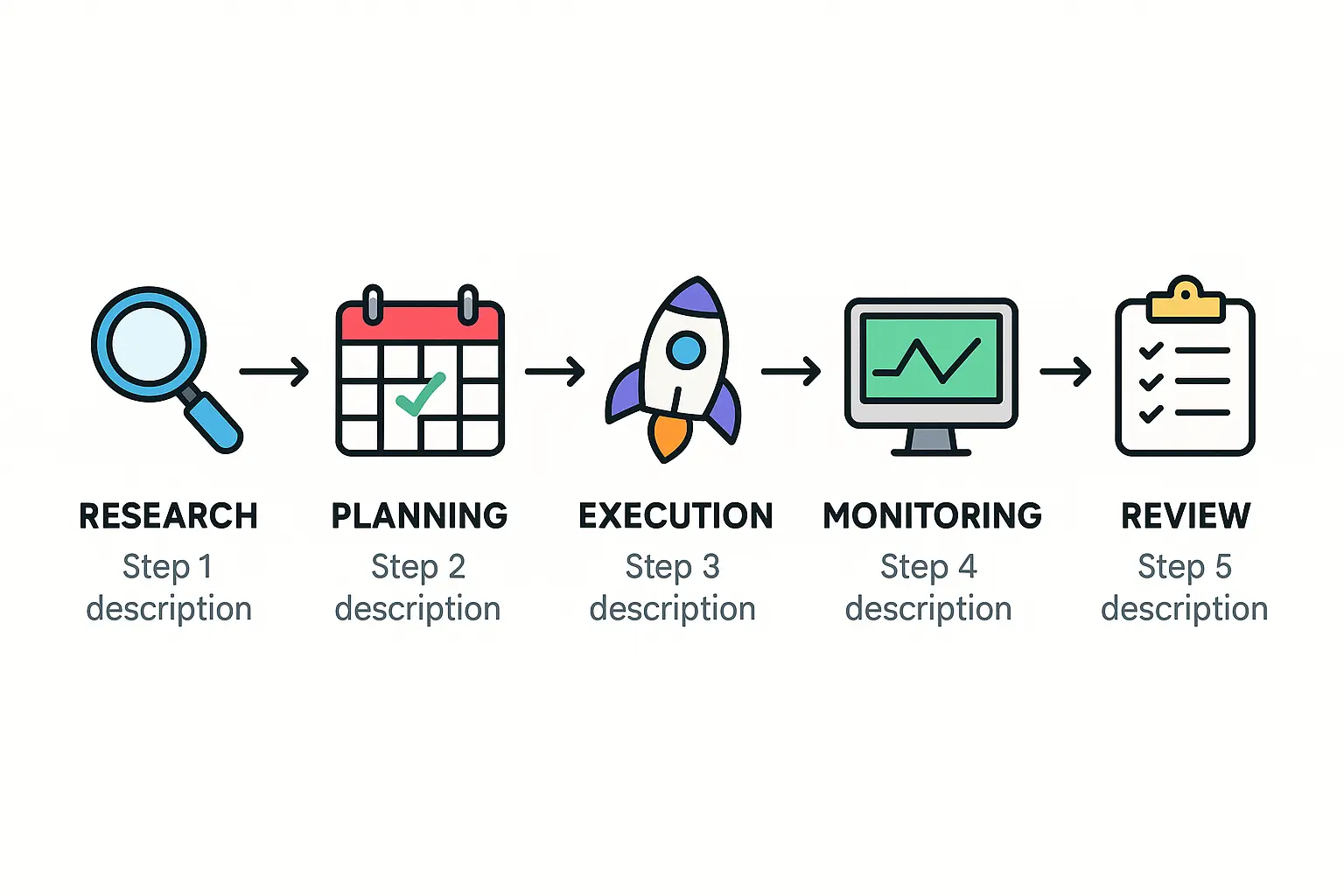
Once you’ve identified a qualifying piece of content, it’s time to package it for AI. This three-step process turns a standard web page into a machine-readable source of truth.
Step 1: Consolidate Your Data on a Dedicated URL
Every dataset needs a permanent, single home. This should be the canonical URL where the full report, research, or data tool lives. It could be a dedicated landing page, a blog post, or a page in a ‘Resources’ section.
Avoid spreading the core data across multiple pages. Answer engines need one definitive source to point to. Make sure this page is well-structured, user-friendly, and clearly presents the information.
Step 2: Structure Your Data with JSON-LD
JSON-LD is the format Google prefers for schema markup. It’s a script you place in the head of your page that contains all the structured information. Think of it as a digital label for your data.
Here are the most critical properties for Dataset schema, explained in simple terms:
- ‘@type: “Dataset”‘: This tells search engines exactly what this is.
- ‘name’: The official title of your report or data set. Make it clear and descriptive.
- ‘description’: A one- or two-sentence summary of what the data covers. This is often used as the snippet in search results or AI summaries.
- ‘url’: The canonical URL you established in Step 1.
- ‘creator’: The organization that produced the data (your client). This is crucial for establishing authorship and entity recognition.
- ‘license’: A URL pointing to information on how the data can be used. This adds a layer of credibility.
- ‘citation’: This is a powerful field. Here, you can suggest the exact format for citing this work, making it incredibly easy for researchers, writers, and AI to reference it properly.
Step 3: Implement and Validate the Code
Once your JSON-LD script is written, you need to add it to the page. You can do this by:
- Directly editing the HTML: Add the script tag within the head section of the page.
- Using a plugin: Many CMS platforms have plugins that allow you to inject code into the header.
- Google Tag Manager: You can deploy the schema as a custom HTML tag.
After implementation, validation is non-negotiable. Use tools like Google’s Rich Results Test or the Schema Markup Validator to ensure there are no errors. The tool will tell you if Google can see and understand your Dataset markup.
For agencies managing numerous clients, scaling this kind of technical implementation can be a challenge. This is where an expert agency SEO partner can become a strategic advantage, allowing your team to focus on strategy while ensuring flawless execution.
Beyond Rankings: The Business Impact for Your B2B Clients
Implementing Dataset schema isn’t just a technical SEO task; it’s a strategic business move that future-proofs your clients’ content marketing.
- Unmatched Authority: Becoming a cited source for AI solidifies your client’s position as a thought leader in a way that a simple number one ranking cannot.
- Generative Search Visibility: As Google integrates SGE and other AI features, having structured, citable data will be critical for appearing in AI-powered answers.
- High-Intent Referral Traffic: A user clicking a citation from an AI answer is highly qualified. They are actively seeking the exact knowledge your client provides.
This is a forward-thinking service that demonstrates immense value. For many agencies, offering advanced strategies like this becomes possible through SEO outsourcing for agencies, which provides the specialized expertise to execute without the overhead of hiring.
Frequently Asked Questions (FAQ)
Does this guarantee my client’s data will be used by AI?
No, it’s not a guarantee. However, it removes technical barriers and dramatically increases the probability that an LLM will find, understand, and trust your client’s data enough to cite it.
Can I apply this to old blog posts or reports?
Absolutely. A content audit to find older, high-value reports is a perfect starting point. Updating them and adding Dataset schema is a fantastic way to revitalize existing assets.
What’s the difference between Dataset and Article schema?
They serve different purposes and can be used together. Article schema describes the page as a piece of written content, while Dataset schema describes the specific, structured information within that content. You can have an Article that contains a Dataset.
Is this difficult to implement? Do I need a developer?
The concept is straightforward, but technical precision matters. A misplaced comma can invalidate the entire script. While it can be done without a developer using tools like GTM, accuracy is paramount. For agencies looking to scale this, reliable white-label SEO services can ensure every implementation is technically perfect and ready for AI consumption.
Your Next Move: From Learning to Leading
The digital landscape is shifting under our feet. Visibility is no longer just about ranking in a list of blue links; it’s about becoming a foundational piece of knowledge for the AI that informs a new generation of search.
Start by auditing your top two or three clients. Find their most valuable, data-driven report and ask yourself: is this packaged for an AI? If the answer is no, you have a clear opportunity to deliver incredible, future-focused value.
By turning your clients’ expertise into citable, structured data, you’re not just optimizing a webpage—you’re cementing their authority for the next era of digital discovery.