
Picture this: Your client, a top-tier financial advisory firm, just published a brilliant article on retirement planning. It’s well-researched, insightful, and perfectly optimized with all the right keywords.
A week later, a potential customer asks an AI chatbot, “Who is the best financial advisor in Austin for retirement planning?”
The AI confidently gives a detailed answer, listing three of your client’s competitors. Your client is nowhere to be found.
What went wrong?
You did everything right for the old world of search, but in the new era of AI-driven answers, having great content is no longer enough. We can no longer simply hope search engines infer who our clients are and what they’re experts in. We have to teach them explicitly.
If you feel like AI is changing the rules of the game, you’re not alone. Research shows that while over 70% of marketers believe AI will revolutionize the industry, a staggering 85% feel they don’t fully understand how Large Language Models (LLMs) like those behind Google’s SGE and Perplexity AI work.
This is where a powerful—yet surprisingly simple—concept comes into play: semantic triples.
FROM KEYWORDS TO CONCEPTS: SPEAKING THE LANGUAGE OF AI
For years, SEO has revolved around keywords. We find what people are searching for and create content to match. But LLMs don’t just think in keywords; they think in concepts and the relationships between them.
An LLM builds a giant mental map of the world, like a massive, interconnected web of facts. To get your client onto that map, you need to give the AI clear, simple, and unambiguous statements it can understand—which is precisely the job of a semantic triple.
It’s a straightforward way of structuring information into three parts:
[Subject] – [Predicate] – [Object]
Think of it as building a sentence with LEGOs.
- Subject: The main thing you’re talking about (e.g., your client’s brand).
- Predicate: The relationship or action (e.g., is an expert in, offers, is located in).
- Object: The thing the subject has a relationship with (e.g., a service, a location, a concept).
Let’s go back to our financial advisor in Austin. Here’s how we could teach an LLM about them using semantic triples:
- [Austin Wealth Group] – [is a] – [financial advisory firm]
- [Austin Wealth Group] – [is an expert in] – [retirement planning]
- [Austin Wealth Group] – [is located in] – [Austin, Texas]
- [Jane Doe] – [is the founder of] – [Austin Wealth Group]
- [Retirement planning] – [is a service offered by] – [Austin Wealth Group]
Each triple is a single, undeniable fact. When you combine them, you’re not just creating content; you’re building a miniature knowledge graph that explicitly defines your client’s identity, expertise, and authority for any AI to understand.
WHY THIS MATTERS NOW MORE THAN EVER
AI-powered search experiences like Google’s Search Generative Experience (SGE) and Perplexity AI are no longer on the horizon; they’re here. These systems synthesize information from multiple sources to provide a single, direct answer, often bypassing traditional blue links. If your client’s expertise isn’t clearly defined in a way these models can process, they simply won’t be included in the answer.
This isn’t just about showing up in new places; it’s about building trust with the machine. LLMs are notoriously prone to ‘hallucinations’—making things up when they lack clear, factual data. By feeding them structured, factual statements via semantic triples, you provide the ground truth. You’re making it easy for the AI to see your client as a reliable source of information, which is the foundation of digital authority.
The data backs this up: a Moz study found that websites with clear, structured data (the technical vehicle for semantic triples) see up to 30% higher click-through rates in traditional search. As AI becomes more integrated, the impact of this clarity will only multiply. For agencies, this is a massive opportunity to deliver next-level results by future-proofing a client’s digital presence.
HOW TO START BUILDING SEMANTIC TRIPLES FOR YOUR CLIENTS
This might sound complex, but the core process is about clarity and strategy. You don’t need to be a data scientist to get started.
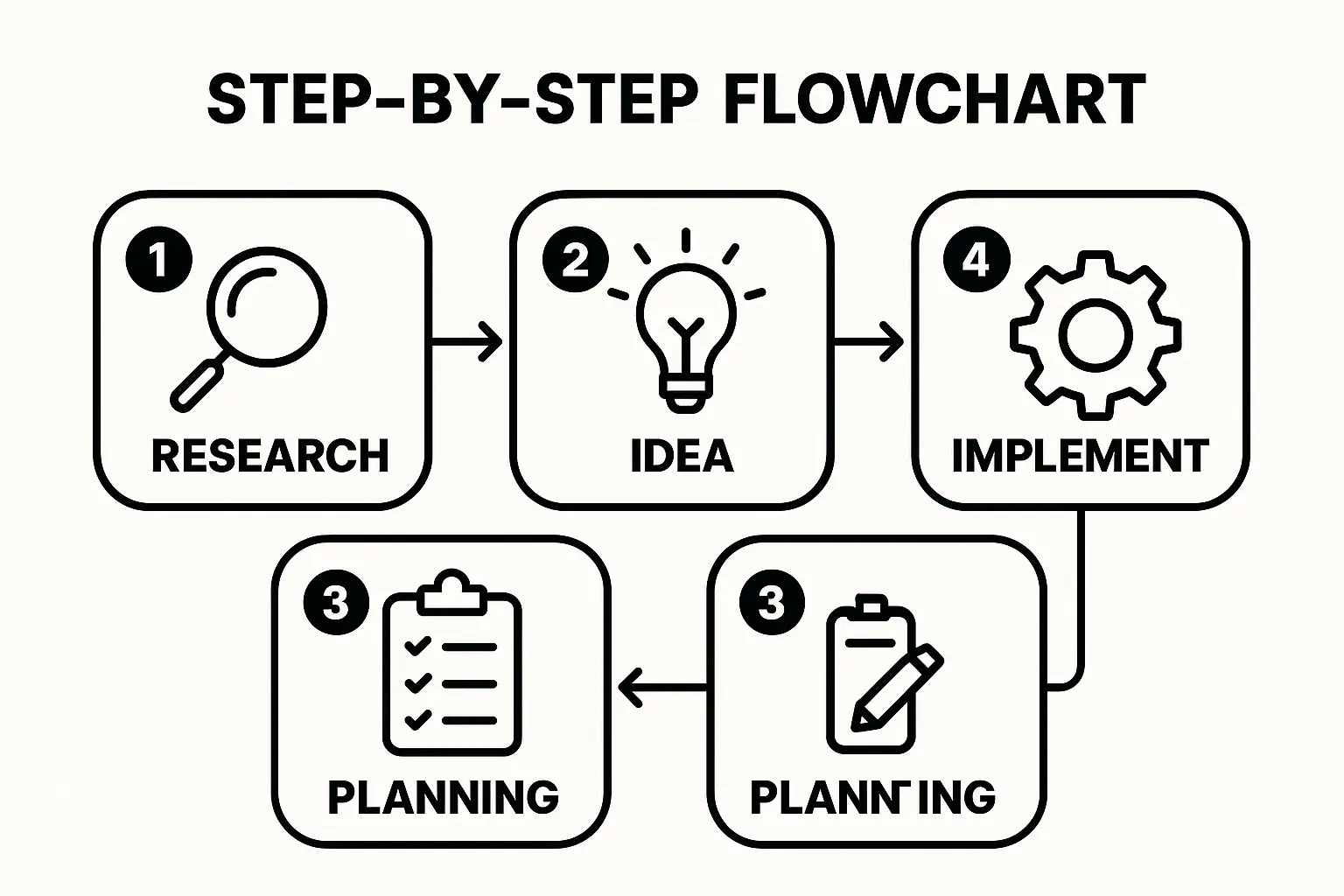
Step 1: Identify Your Client’s Core Entities
Think about the fundamental nouns associated with the business. What are the key ‘things’ that define them?
- The company name
- Key products or services
- Founders or key personnel (the experts)
- The brand’s specific locations
- Unique methodologies or frameworks they use
Step 2: Define the Key Relationships (The Predicates)
Now, think about the verbs. How do these entities connect to each other and to the outside world?
- is a, offers, specializes in
- is located in, serves
- was founded by, is the CEO of
- solves the problem of, is for
Step 3: Write Out the Triples
Combine your subjects, predicates, and objects into clear, simple statements. Start by writing them in plain English.
Let’s try it for a fictional web design agency called ‘Pixel Perfect.’
- [Pixel Perfect] – [is a] – [web design agency]
- [Pixel Perfect] – [is based in] – [Brooklyn, NY]
- [Pixel Perfect] – [specializes in] – [e-commerce websites for startups]
- [E-commerce websites] – [is a service offered by] – [Pixel Perfect]
- [Pixel Perfect] – [uses] – [Shopify and Webflow]
By defining these relationships, you aren’t leaving it to an AI to guess what Pixel Perfect does. You’re giving it a blueprint of their expertise. This explicit approach—a core part of any omnichannel growth strategy—is the cornerstone of building authority in an AI-first world.
FREQUENTLY ASKED QUESTIONS (FAQ)
Is this the same as schema markup?
That’s a great question. They are closely related! Think of semantic triples as the information architecture—the ‘what’ you want to say. Schema markup (like JSON-LD) is the technical format—the ‘how’ you say it in a language search engines can read. You formulate your semantic triples first, then use schema to implement them on a website.
Where do I actually put these semantic triples?
The most common place is within your website’s code using schema markup. You can add them to your homepage, service pages, about page, and even blog posts to give context to the content. This information can also be used to create and populate a Knowledge Graph, further solidifying your client’s entity in Google’s eyes.
Can’t I just write good content and let the AI figure it out?
You absolutely still need high-quality, human-first content. But relying on the AI to ‘figure it out’ is leaving a huge opportunity on the table. LLMs are processing billions of data points. Providing explicit, structured information makes your client’s data easy to digest and trust. It’s the difference between giving someone a 500-page novel and asking them to find a character’s name versus giving them a one-page character summary.
How many triples do I need to create?
Start with the most critical information that defines the business—who they are, what they do, where they are, and what makes them unique. A solid foundation of 10-20 core triples is a great starting point for a small business. The goal is quality and accuracy over quantity. For agencies managing this across dozens of clients, this is where AI-powered SEO automation becomes essential for scaling the process.
THE FUTURE IS EXPLICIT
The shift to AI-driven search isn’t a fad; it’s a fundamental change in how information is found and consumed. For agencies, this represents a new frontier. The ones who thrive will be those who move beyond targeting keywords to strategically define their clients’ authority in a language machines understand.
By embracing semantic triples, you can stop hoping your clients will be understood and start ensuring they are. This gives them a durable competitive advantage that will pay dividends long after the next algorithm update.
Ready to implement these future-proofing strategies at scale? Learn how a white-label SEO partner can help your agency deliver next-generation results without the in-house overhead.