

Imagine you’re about to publish a blog post for your client, a financial advisory firm. The article, “5 Common Retirement Planning Mistakes,” is well-written and optimized. But as you hover over the ‘publish’ button, a small voice in your head asks: “Are you absolutely sure that statistic from three years ago is still accurate? What if this advice is misinterpreted?”
That feeling isn’t just writer’s anxiety. For agencies creating content in finance, health, law, or any other high-stakes niche, it’s a critical business question. Welcome to the world of ‘Your Money or Your Life’ (YMYL) content, where the rules are different, and the cost of getting it wrong can be enormous—for your client and their audience.
In this space, trust isn’t just a nice-to-have; it’s the entire foundation. Building that trust requires a systematic, verifiable approach to every claim you make.
What Are YMYL Topics, and Why Do They Have Different Rules?
Google coined the term ‘Your Money or Your Life’ to classify topics that could significantly impact a person’s health, financial stability, safety, or happiness. Think about it: medical advice, investment strategies, legal guidance, and even major purchasing decisions fall under this umbrella.
For these topics, Google’s algorithms and human quality raters apply the highest standards of scrutiny. Why? Because bad information can cause real-world harm. This is where the concept of E-E-A-T comes into play:
- Experience: Is the content created by someone with firsthand life experience on the topic?
- Expertise: Does the author possess the necessary knowledge and skill in the field?
- Authoritativeness: Is the author or website a recognized, go-to source for this subject?
- Trustworthiness: Is the information accurate, honest, safe, and reliable?
For YMYL content, the ‘T’ for Trustworthiness is paramount. Every unsubstantiated claim, outdated statistic, or vague generalization is a crack in that foundation.
The Trust Gap: When Good Intentions Aren’t Enough
Most agencies have the best intentions. You want to create helpful, accurate content for your clients. But in the digital age, good intentions aren’t a strong enough defense against misinformation.
The internet is swimming in what’s often called “content collapse”—an endless sea of rewritten, unverified, and increasingly AI-generated articles. A recent Reuters Institute study revealed that trust in online information is alarmingly low, and users are growing more skeptical by the day.
This creates a massive challenge, but also a huge opportunity. While others contribute to the noise, you can build a reputation for reliability. That’s where Fact-Based Authoring comes in. It’s not just about writing; it’s about building a verifiable chain of evidence for every key point, creating content that stands up to scrutiny from users, clients, and search engines alike.
Introducing Fact-Based Authoring: A 4-Step Verification Workflow
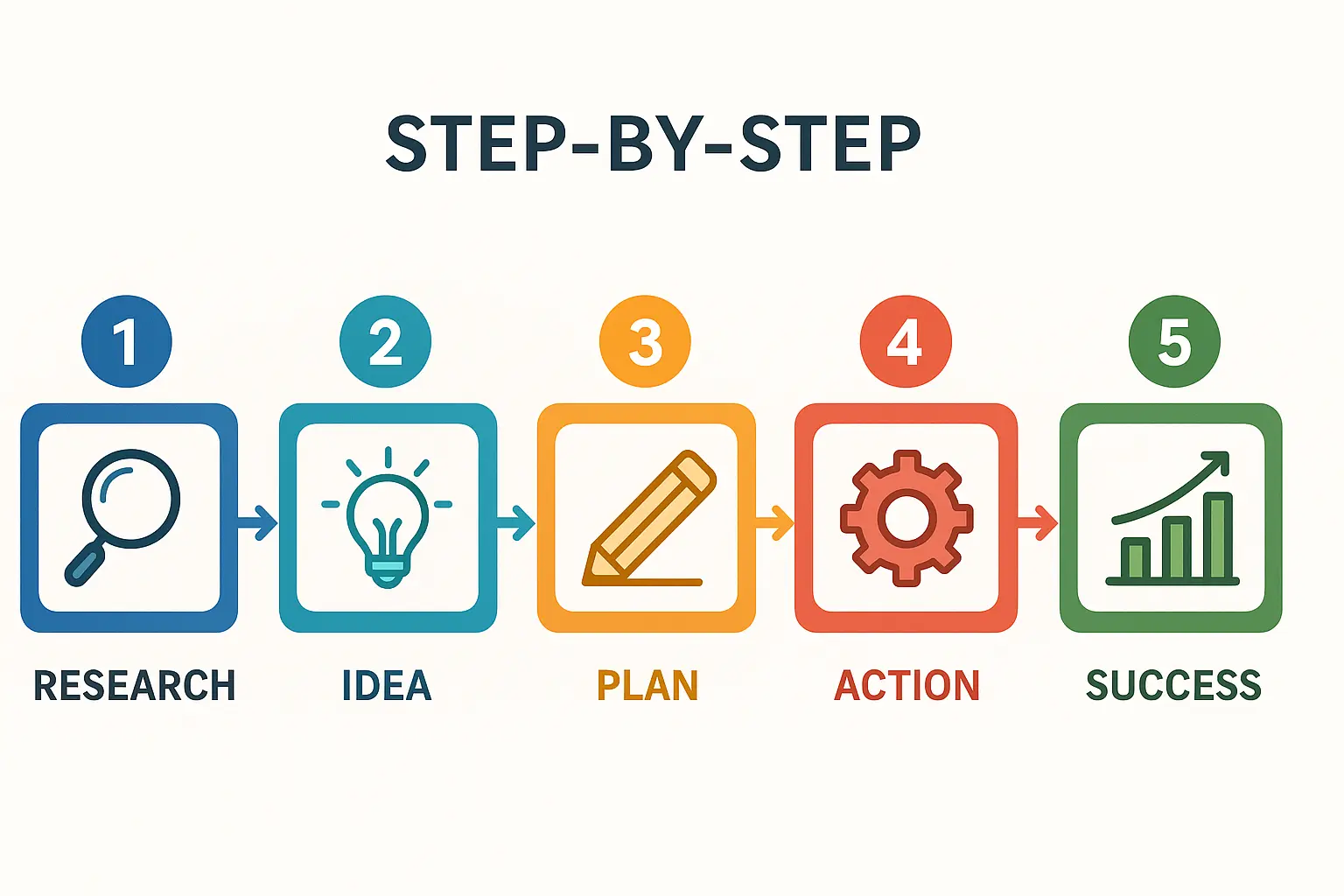
Fact-Based Authoring is a systematic process for grounding your YMYL content in reality. It transforms content creation from a purely creative exercise into a structured, defensible workflow. Here’s how to put it into practice.
Step 1: Source Vetting – The Foundation of Trust
Not all sources are created equal. The strength of your content depends entirely on the quality of your source material. Think of it as a hierarchy:
- Tier 1 (Primary Sources): The gold standard. This includes peer-reviewed scientific studies, official government data (e.g., Bureau of Labor Statistics, CDC), and direct corporate filings.
- Tier 2 (Expert Secondary Sources): High-quality journalism from reputable outlets (e.g., The Wall Street Journal, The New England Journal of Medicine), and analysis from recognized industry experts.
- Tier 3 (General Secondary Sources): Reputable industry blogs or publications that cite Tier 1 or Tier 2 sources. Use these as a starting point, but always try to trace claims back to the original source.
Actionable Tip: For each YMYL client, create a ‘Trusted Sources’ document. For a finance client, list the Federal Reserve and the SEC. For a health client, list the NIH and the Mayo Clinic. This way, your team always starts from a place of authority.
Step 2: In-Line Citation – Making Verification Effortless
Simply listing sources at the bottom of a page is no longer enough. True transparency means connecting each claim directly to its source within the text. This practice, common in academic and journalistic writing, builds immense trust.
Weak Claim: ‘Many people struggle with credit card debt.’
Fact-Based Claim: ‘According to the Federal Reserve’s latest data, total U.S. credit card debt surpassed $1.1 trillion in late 2023.’
This simple change accomplishes two things at once: it proves to the reader you’ve done your homework, and it sends a powerful signal to search engines that your content is well-researched. Algorithms are increasingly sophisticated at following these links to verify the credibility of your claims.
Step 3: The ‘Three-Source’ Rule – Triangulating Your Facts
A single source can be wrong, outdated, or biased. To protect your content from inaccuracies, adopt the journalistic practice of triangulation. For any critical statistic or major claim, try to find at least two other independent, reputable sources that confirm it.
With the explosion of generative AI, this step has become non-negotiable. A 2023 Stanford study highlighted the risk of AI ‘hallucinations,’ where models confidently invent facts and sources. Triangulation is your best defense against accidentally publishing sophisticated-sounding misinformation. If you can’t verify a claim across multiple trusted sources, don’t include it.
Step 4: Expert Review – The Final Quality Gate
For the most sensitive YMYL topics, no amount of research can replace true subject-matter expertise. The final step in the workflow should always be a review by a qualified expert.
For an agency, this expert is often your client—the doctor, lawyer, or financial planner whose name is on the brand. Formalize this process. Have them review the content for factual accuracy, nuance, and completeness.
Once they approve it, showcase their involvement. Add a ‘Reviewed by [SME Name, Credentials]’ byline at the top of the article. It’s one of the most powerful E-E-A-T signals you can send, telling both users and Google that this content has been vetted by a real expert.
Beyond Rankings: How Fact-Based Authoring Drives Business Growth
While this workflow is designed to satisfy search engine quality standards, its benefits go far beyond SEO.
- Increased Conversions: Trust is the currency of conversion. A user who trusts your client’s content is far more likely to become a lead or a customer.
- Enhanced Brand Reputation: In a sea of noise, your client becomes the go-to source for reliable information, building a brand moat that competitors can’t easily cross.
- Future-Proofing Your Strategy: This approach aligns your content with the long-term trajectory of search. As algorithms get smarter, they will only place more value on verifiably true information, making this method a core component of a modern omnichannel SEO strategy, because the authority it builds extends across all digital channels.
Frequently Asked Questions (FAQ)
Is this process necessary for all content?
This rigorous workflow is most critical for YMYL topics. However, the core principles—citing sources and prioritizing accuracy—are best practices that can elevate any piece of content and build brand authority across the board.
Won’t this slow down our content production?
Initially, it requires a shift in process and may feel slower. However, it builds a scalable, defensible system that prevents costly mistakes, client disputes, and ranking drops down the line. Over time, it becomes more efficient. Integrating AI-powered SEO automation can help streamline the initial research and briefing phases, allowing your team to focus on verification and quality.
Where can I find authoritative sources?
Start with domains that have inherent authority, such as government sites (.gov), academic institutions (.edu), and respected non-governmental organizations (.org). For industry-specific data, look for major research firms, peer-reviewed journals, and official corporate reports.
How does this relate to E-E-A-T?
Fact-Based Authoring directly supports every letter of E-E-A-T:
- It demonstrates Expertise by using accurate, nuanced data.
- It builds Authoritativeness by referencing other authoritative sources.
- It establishes Trustworthiness through transparency, verification, and expert review.
- It can even highlight Experience when a subject-matter expert adds their personal insights during the review process.
Building a Foundation of Trust, One Fact at a Time
In the high-stakes world of YMYL content, you are what you can prove. Every claim your agency publishes on behalf of a client is a building block—or a wrecking ball—for their reputation.
By moving away from simple content creation and embracing a rigorous verification workflow, you do more than just chase rankings. You build an asset for your clients that is resilient, authoritative, and deeply trustworthy. You provide the clarity and confidence their audience is desperately searching for.
Ready to put these principles into practice for your clients? Learn how to structure this verified information into a cohesive and scalable white-label SEO content strategy that makes trust its cornerstone.