

Ever had that sinking feeling? An agency partner calls in a panic. Their client, a reputable local business, just got hit with a misleading news article or a string of unfair one-star reviews. Suddenly, the first page of Google for their brand name looks less like a welcome mat and more like a warning sign.
In a world where 94% of consumers report that a negative online review has convinced them to avoid a business, that first impression isn’t just important—it’s everything.
For years, the go-to solution was “online reputation management” (ORM), a reactive scramble to clean up a digital mess. But what if, instead of waiting to douse fires, you could build a fireproof reputation from the start?
This is the principle behind Sentiment Sculpting: a proactive strategy that uses positive content and targeted digital PR to build a fortress of authority around a brand. It’s not about deleting the negative; it’s about rendering it irrelevant by creating a more powerful, positive, and accurate narrative.
What Are Negative Brand Signals (And Why Do They Stick)?
Negative brand signals are any online content that creates a poor perception of a brand. They can include:
- Negative reviews on Google, Yelp, or industry-specific sites
- Critical articles or blog posts
- Unflattering press coverage
- Negative social media mentions that rank in search
These signals are particularly damaging because of a psychological principle called negativity bias. Our brains are wired to give more weight to negative experiences than to positive ones. This isn’t just a psychological quirk; research from Inc. suggests it can take as many as 40 positive customer experiences to undo the damage of a single negative review.
When left unchecked, these signals dominate a brand’s search results, becoming the default story for anyone looking them up. Sentiment sculpting is the art and science of rewriting that story.
How Sentiment Sculpting Works: Displacement, Not Deletion
Imagine a brand’s search results page is a plot of land. Negative signals are like weeds that have sprung up. You could spend all your time trying to pull them, which is often impossible as you don’t own the property they’re on.
Sentiment sculpting takes a different approach. Instead of just pulling weeds, you strategically plant a lush garden of beautiful, healthy flowers. You cultivate a landscape of positive, authoritative content so vibrant and dominant that it naturally chokes out the weeds, pushing them from view.
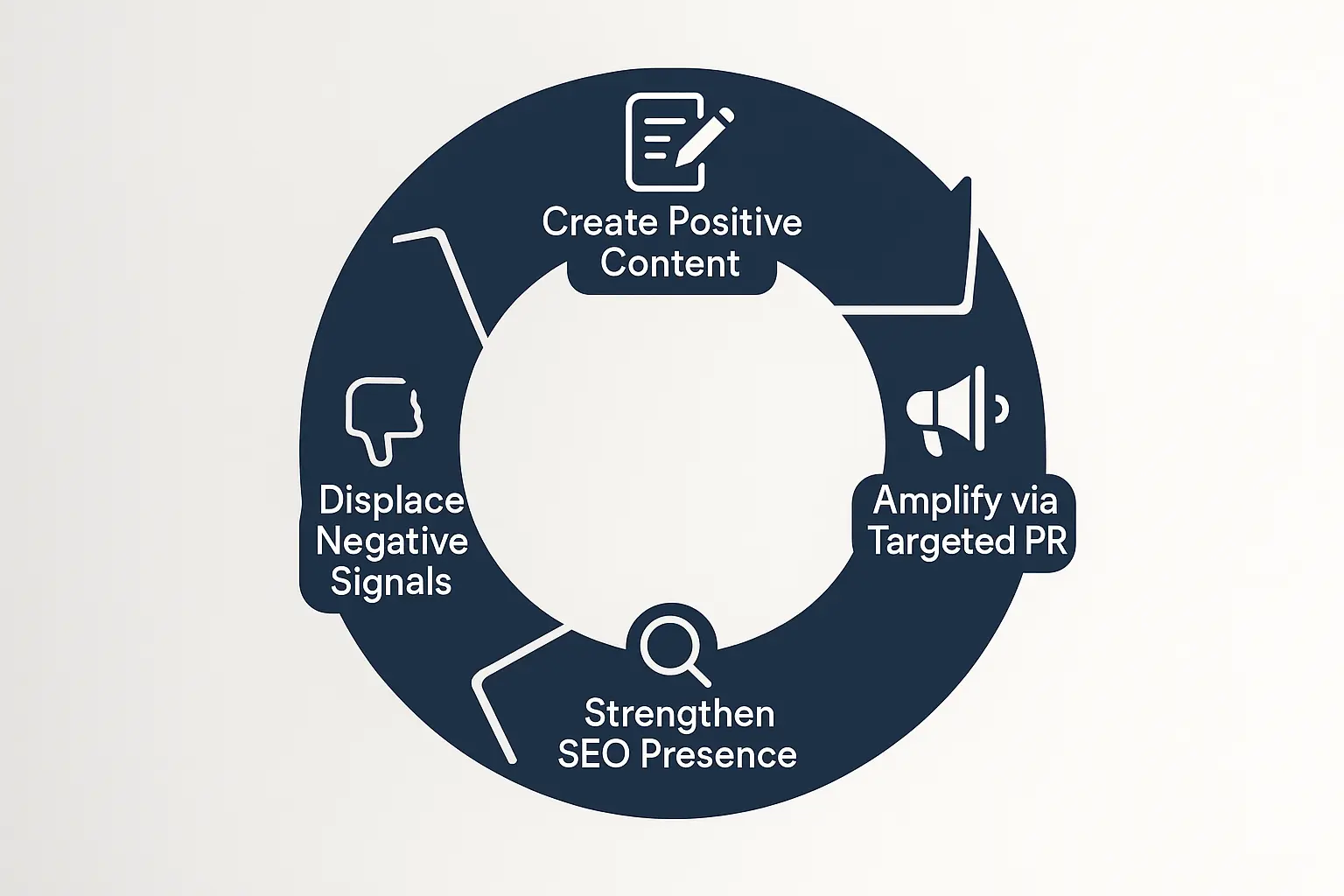
This is the core of the strategy: displacing negative results with positive, brand-controlled, or brand-influenced assets.
You create and promote high-value content that Google deems more relevant and authoritative for the brand’s name, pushing undesirable results down to page two or three—where they become virtually invisible.
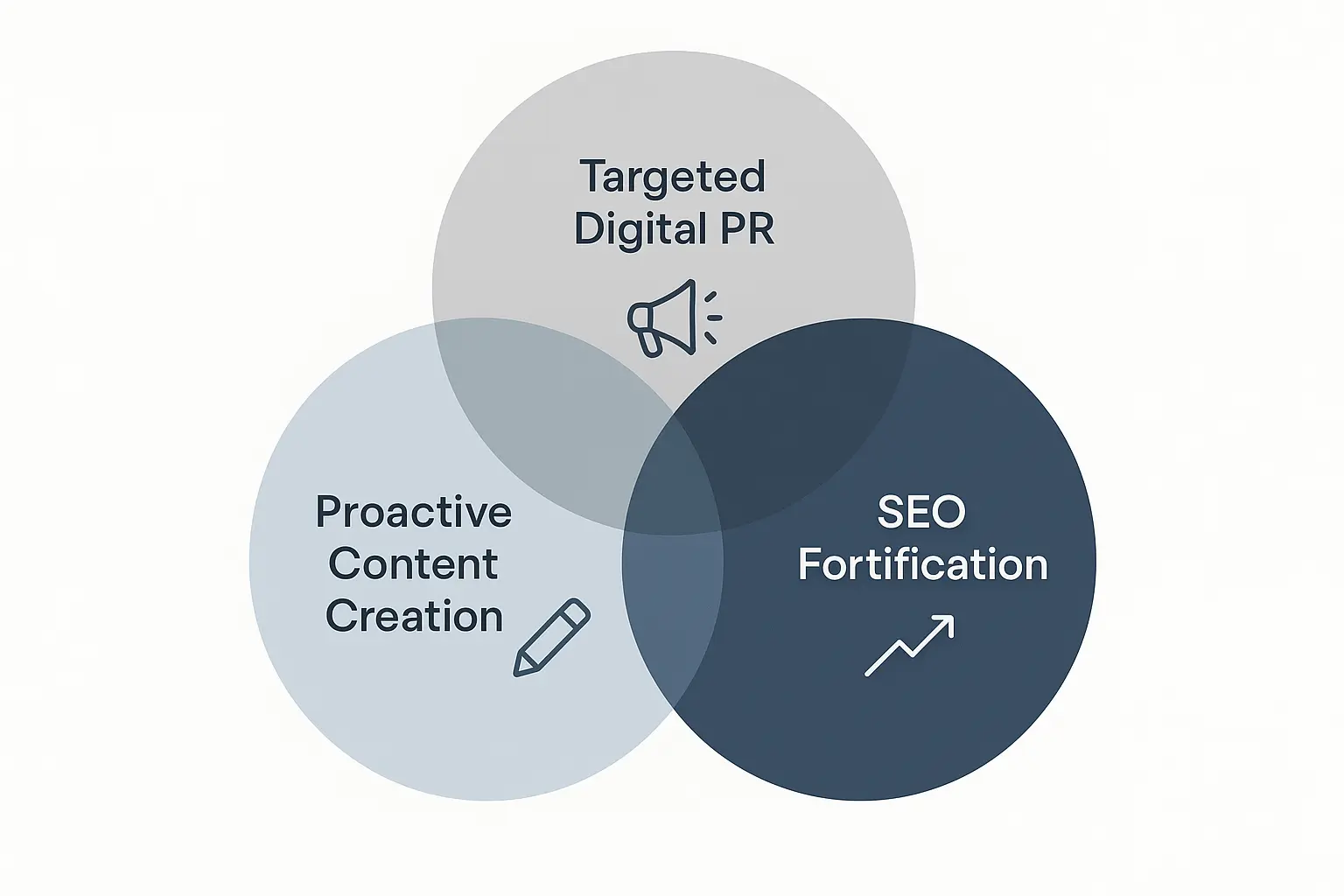
The Three Pillars of an Effective Sentiment Sculpting Strategy
Sentiment sculpting isn’t a one-off campaign; it’s a continuous, integrated effort. It rests on three pillars that work in concert to build a resilient brand presence.
1. Own Your Narrative with High-Authority Content
The foundation of any strong digital presence is owned media—the content you control completely. This is your first line of defense and your most powerful tool for establishing the narrative you want.
- Thought Leadership Articles: Publish in-depth articles on your company blog that showcase expertise and provide genuine value to your audience.
- Case Studies & Success Stories: Turn happy customers into powerful brand assets by documenting their success.
- Company News & Milestones: Announce new hires, partnerships, and achievements. These create a public record of positive growth.
This requires a robust content strategy framework that aligns with your brand’s core expertise and consistently produces high-quality assets.
2. Build External Validation with Digital PR
While owned content is essential, its power is magnified by third-party validation. When other reputable sources talk about you positively, Google listens. This is where digital PR comes in.
- Guest Posting: Contribute articles to respected industry publications.
- Expert Contributions: Participate in roundups and interviews to get your brand name and leadership featured.
- Strategic Press Releases: Announce genuinely newsworthy events. An MIT study found that even a single press release can have a measurable impact on a company’s perceived value.
Strategic outreach like this is a core component of any effective white-label SEO services offering, as it builds the external signals of trust and authority that search engines prize.
3. Amplify Positive Social Proof
Your audience trusts their peers far more than they trust your marketing copy. That’s why amplifying positive social proof is the final, crucial pillar. This involves more than just asking for reviews—it’s about making positive sentiment visible and easy to find.
- Review Management: Actively encourage and respond to reviews on Google Business Profile, G2, Trustpilot, and other key platforms. Remember, 89% of consumers read reviews before making a purchase.
- Profile Optimization: Fully build out and maintain professional profiles on LinkedIn, X (Twitter), and other relevant social networks. These often rank highly for brand name searches.
- Showcasing User-Generated Content (UGC): Share positive customer testimonials and social media mentions to let your fans tell your story for you.
When executed correctly, these three pillars transform a brand’s search engine results page from a liability into a powerful asset.
The Proactive Advantage: Building Your Fortress Before the Storm
Too many brands wait for a crisis to think about their reputation. By then, they’re playing defense—a costly and stressful position.
Sentiment sculpting is reputation insurance. By proactively building a deep reserve of positive, authoritative content, you create a buffer. When a negative signal does appear, it’s like a single raindrop hitting a fortress. It makes little impact because the existing structure is too strong. It fails to gain traction and is quickly buried under the weight of established positive assets.
For agencies, offering this proactive service can be a game-changer for client retention and value. However, it requires consistent, long-term execution—a challenge for many without the right agency SEO partner to handle the strategic heavy lifting.

Frequently Asked Questions (FAQ)
Is this the same as online reputation management (ORM)?
Think of it as the proactive side of ORM. Traditional ORM is often reactive, focused on cleaning up existing problems. Sentiment Sculpting is about building a positive foundation before problems arise, making the brand more resilient to future negative signals.
Can you guarantee the removal of a negative search result?
No, and any service that makes that promise should be a red flag. Deleting content from a third-party site is nearly impossible unless it’s legally defamatory. The goal of sentiment sculpting is displacement, not deletion. We aim to push negative items off the first page by ranking more positive content above them.
How long does it take to see results?
This is a long-term strategy, not a quick fix. Building true authority takes time and consistency. While you might see initial shifts in a few months, building a truly resilient presence in search results can take six months to a year of dedicated effort.
Can a small business or startup benefit from this?
Absolutely. The principles apply to businesses of any size. It can start simply with ensuring your website is optimized, creating a company blog, and actively managing your Google Business Profile. The key is to start early and be consistent.
Don’t Wait for a Crisis to Manage Your Reputation
A brand’s digital first impression is too valuable to be left to chance. Waiting for a negative review or a critical article to appear before taking action is like waiting for a hurricane to start building storm shutters.
By embracing a proactive strategy of sentiment sculpting, you can systematically build a digital presence that reflects the true value of your brand. You stop reacting to the narrative and start writing it yourself.