

You’ve been there. You’re in a monthly review with your e-commerce client, walking them through the latest performance report.
“Great results on Branded Search and Direct traffic this month,” the client says, pointing to the high conversion numbers. “Looks like our brand is really resonating.”
You nod, but you know that’s just the final scene of a much longer movie. The real hero was the non-branded SEO campaign you launched three months ago. It was that blog post on “sustainable running shoes for beginners” that first introduced the customer to the brand. Branded Search just showed up at the end to take the credit.

This is a frustration e-commerce agencies know all too well, and it’s rooted in a deep flaw in how we measure success: last-click attribution bias.
The Last-Click Illusion: Why the Default Setting Is Failing Your Agency
In analytics, last-click attribution is the default. It’s simple: the last marketing channel a customer touched before making a purchase gets 100% of the credit. A click on a branded search ad? The ad gets the win. The URL typed directly into a browser? Direct traffic takes the glory.
It’s clean, easy to understand, and dangerously misleading.
The modern customer journey is rarely a straight line. Research shows that 74% of customers visit at least three different channels before completing a purchase. They might discover a brand through an informational search, see a retargeting ad on social media, read a review on a third-party site, and then finally search for the brand name to buy.
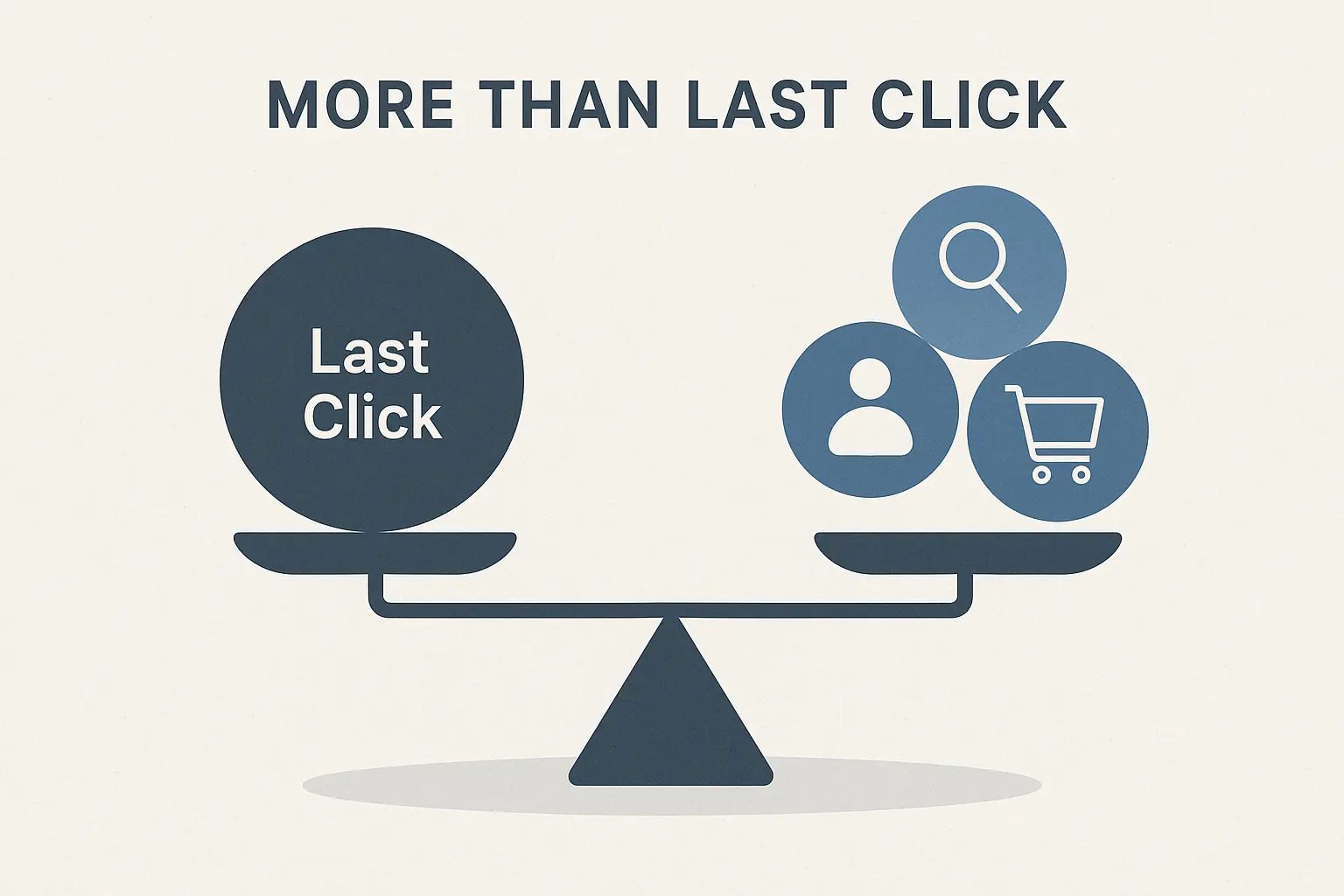
The last-click model ignores this entire journey, creating a skewed picture that overvalues bottom-of-funnel channels while dismissing the hard work done at the top.
The Silent Victims: Top-of-Funnel Channels
When last-click is the sole metric, the channels responsible for creating initial awareness and demand—non-branded SEO, content marketing, and organic social—are systematically undervalued.
How much? The data is staggering. On average, sophisticated multi-touch attribution models show that SEO’s true influence on revenue is 50-80% higher than what last-click models suggest. You’re leaving more than half of your value unreported.
This isn’t just a reporting inaccuracy; it’s a strategic blind spot. If clients think all their sales come from Branded Search, they might pull the budget from the very non-branded SEO efforts that are filling the top of their funnel.
The Real MVP: How Non-Branded SEO Seeds Future Revenue
The biggest casualty of last-click bias is non-branded organic search—the queries from potential customers who don’t know your client’s brand yet but have a problem it can solve.
Think about queries like:
- “best noise-cancelling headphones for travel”
- “how to choose a protein powder”
- “organic cotton baby clothes”
Answering these questions with high-quality content is how brands get discovered. It’s the first handshake, the moment a casual browser becomes an engaged learner. They might not buy today, but you’ve planted a seed. Weeks later, when they’re ready to purchase, they remember that helpful brand and search for it by name.
The result? Research confirms that Branded Search often gets over 90% of its credit from last-click conversions, despite being the final step in a journey initiated by top-of-funnel discovery. Without that initial discovery, the final branded search would never have happened.
Three Steps to Reclaiming SEO’s True Value in Your Reports
Solving last-click bias isn’t just about changing a setting in Google Analytics. It’s about changing the conversation with your clients and telling a more accurate story about how growth really happens.
1. Change the Narrative, Not Just the Numbers
Before you even open a report, set the stage. Explain the customer journey to your clients with a simple analogy.
“Think of it like a soccer game. The striker who scores the goal gets the headlines, but they couldn’t have done it without the midfielder who made the crucial pass or the defender who started the play. Last-click only gives credit to the striker. We need to look at the whole team to understand why we won.”
Educating your client on this concept is the first and most important step. It helps them see SEO not just as a sales channel, but as a strategic growth engine.
2. Explore Better Models in Google Analytics 4
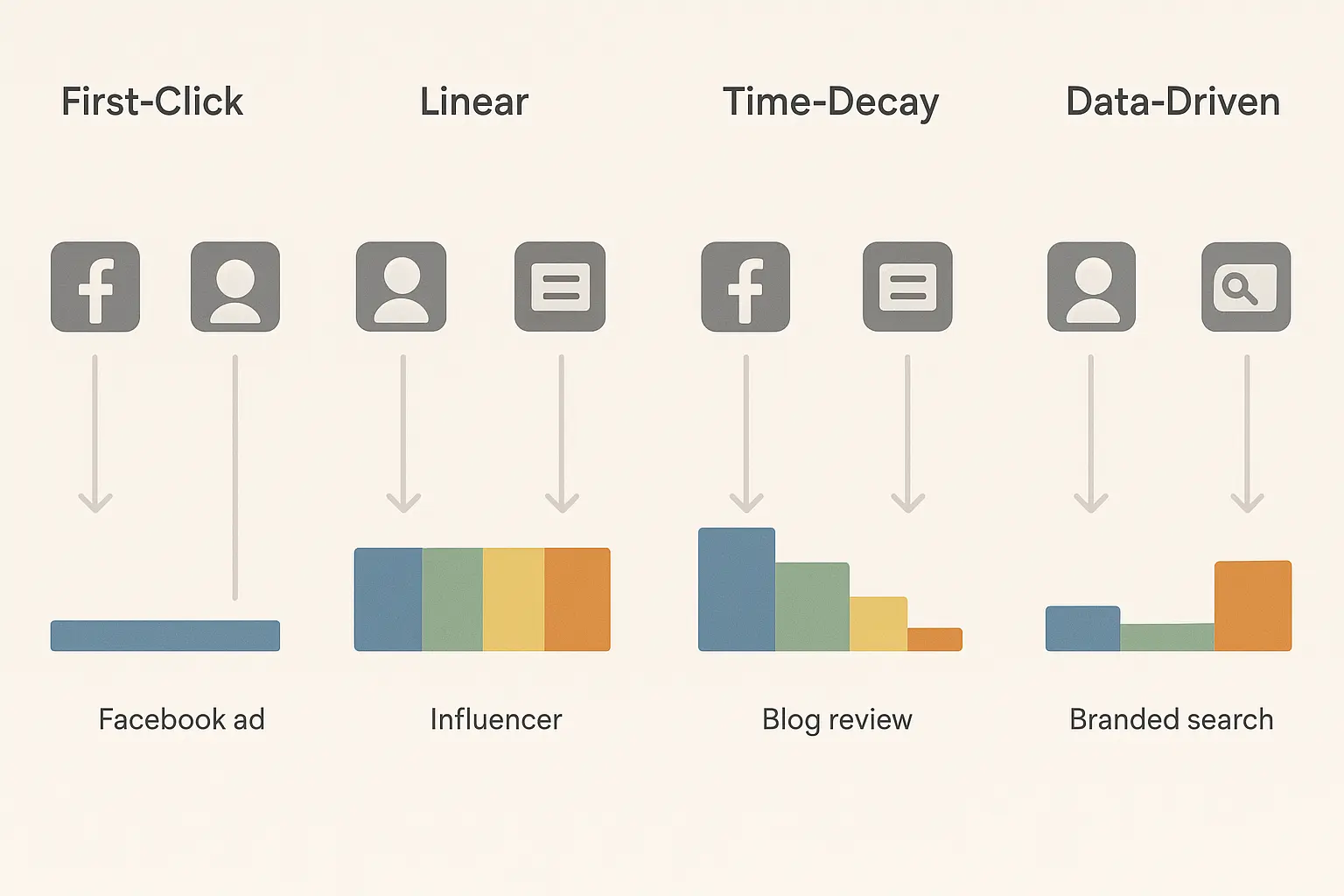
GA4 has moved beyond last-click as the only option, making it easier to tell a more complete story. The default is now the Data-Driven Attribution (DDA) model, which uses machine learning to assign credit across touchpoints.
If you don’t have enough data for DDA, explore other models:
- Linear: Gives equal credit to every touchpoint in the journey. Great for showing how multiple channels work together.
- Time Decay: Gives more credit to touchpoints closer to the conversion. Useful for shorter sales cycles.
- First-Click: Gives all credit to the very first interaction. While just as biased as last-click, comparing first-click and last-click reports is a powerful way to show the difference between discovery and conversion channels. Simply switching to a first-click model can increase the reported revenue from early touchpoints by over 300%—a stat that’s sure to get a client’s attention.
Using these models is a cornerstone of any modern omnichannel growth SEO strategy, connecting disparate activities to a unified goal.
3. Build a More Holistic Picture
While GA4 is a powerful tool, true attribution requires looking beyond a single platform. By connecting data from your client’s CRM, email platform, and ad networks, you can build a comprehensive map of the customer journey.
For agencies managing multiple clients, this can get incredibly complex, which makes scaling your reporting capabilities crucial. Investing in a robust analytics process, powered by AI-powered SEO automation, helps deliver these sophisticated insights consistently without getting buried in spreadsheets. This frees your team to focus on strategy—a vital advantage for firms that use white-label SEO services for execution and need to dedicate their time to high-impact, client-facing work.
Frequently Asked Questions (FAQ)
What is an attribution model?
It’s a set of rules for assigning credit for conversions to different touchpoints in a customer’s journey. Think of it as the judging criteria for which marketing channels were most effective.
Is last-click attribution always bad?
Not necessarily bad, just incomplete. It’s useful for understanding which channels are best at closing deals, but it should never be the only model you use, as it ignores all the channels that created the initial demand.
What is the easiest first step my agency can take to fix this?
Start with the “Model comparison” report in Google Analytics 4. Compare the “Last-click” model to the “Data-driven” or “Linear” model. The visual difference is often the most powerful tool you have for starting this conversation with a client.
How do I explain this to a client who only cares about the final sale?
Frame the conversation around risk and future growth. Explain that by focusing only on the final sale, they risk cutting the budget for the very activities filling their pipeline with future customers. A healthy business needs both “farmers” (top-of-funnel channels that grow new audiences) and “harvesters” (bottom-of-funnel channels that bring in the sale).
From Insight to Impact
Moving beyond last-click attribution is more than a technical adjustment—it’s a strategic imperative. It allows your agency to demonstrate its full value, protect clients from making poor budget decisions, and build more resilient, long-term growth strategies.
By telling the complete story of the customer journey, you shift from being a service provider who delivers clicks to a strategic partner who builds brands. And in the long run, that’s the most valuable position an agency can hold.