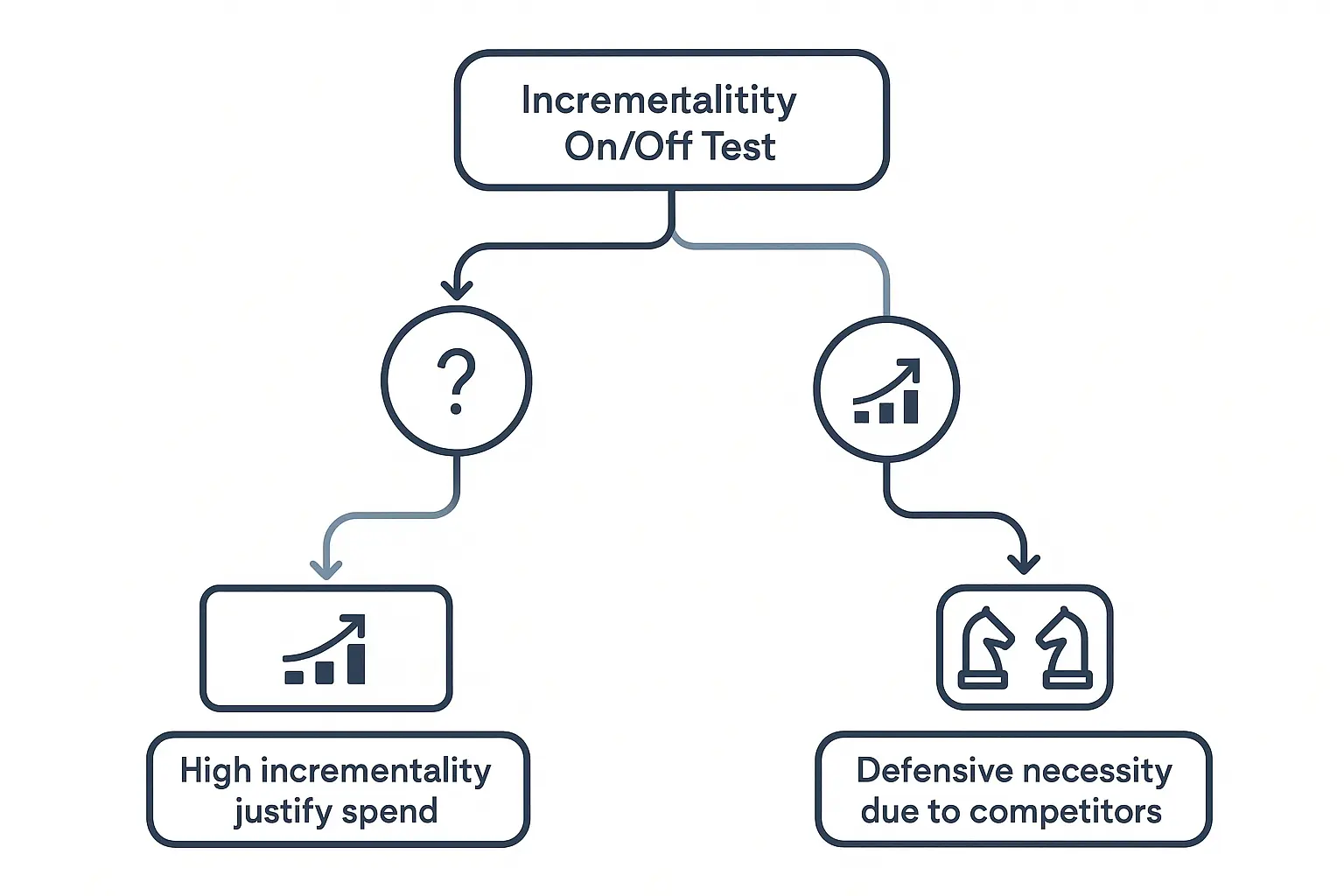
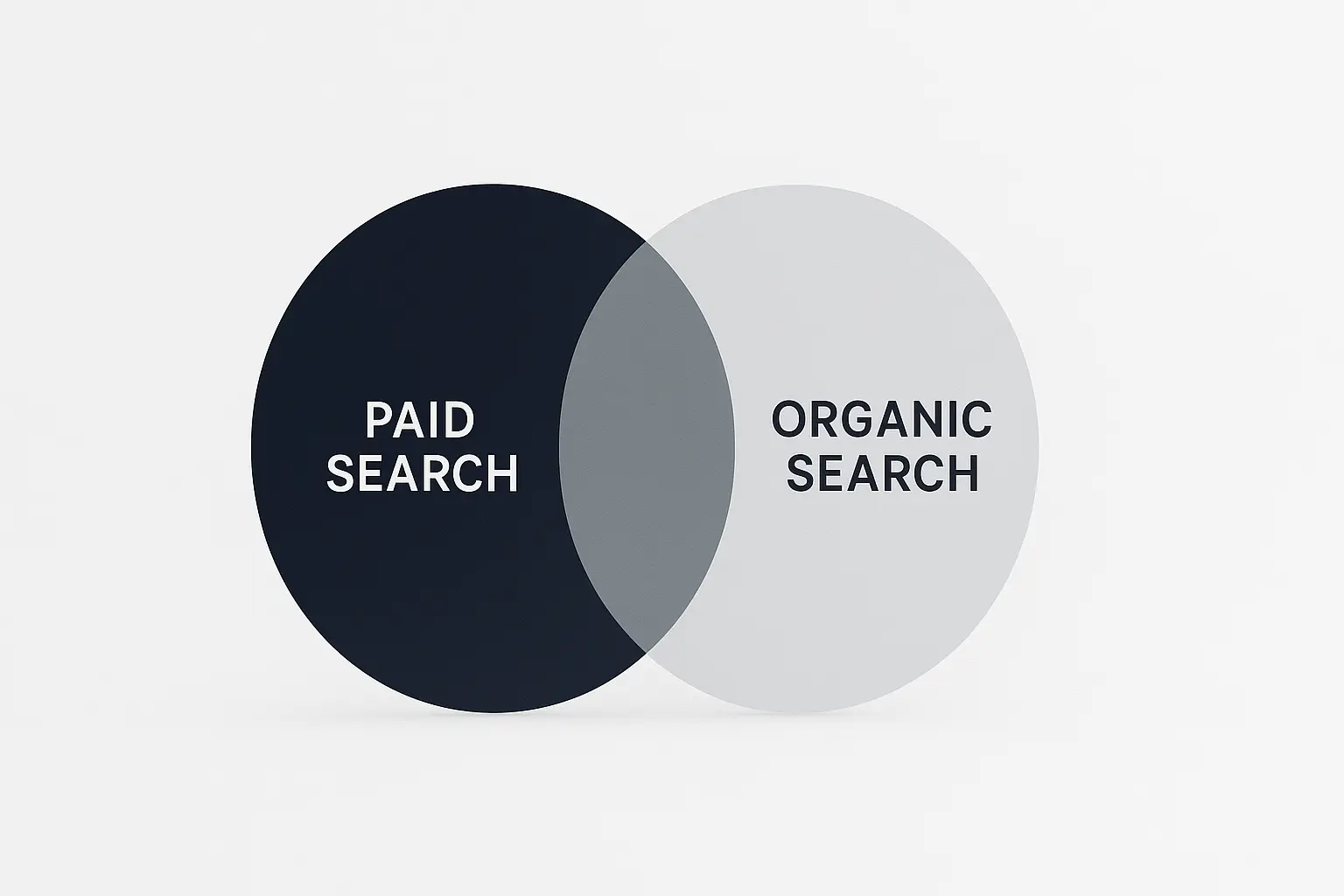
“Wait a minute. We’re already number one on Google for our own name. Why are we paying to show up right above our free listing? Aren’t we just paying for clicks we would have gotten anyway?”
If you’ve run Google Ads campaigns for clients, you’ve heard this question. It’s a common, and perfectly logical, one. On the surface, bidding on your own brand name can seem like a clear case of wasteful spending.
But the reality of the modern Search Engine Results Page (SERP) is far more complex. The decision to bid on branded terms isn’t just about avoiding cannibalization; it’s about SERP domination, message control, and defending against competitors.
Answering this for your clients requires moving beyond gut feelings and embracing a data-driven framework. Let’s break down how.
The Core Debate: Cannibalization vs. Incrementality
At the heart of the branded bidding debate are two competing ideas:
-
The Cannibalization Argument: This argument holds that every click on a branded paid ad is a click you would have received on your organic listing for free. In this scenario, you’re simply paying for traffic that was already yours.
-
The Incrementality Argument: This side argues that paid ads capture a significant number of clicks that would not have otherwise gone to your organic listing. These are “incremental” clicks—net new traffic you gained only because you ran an ad.
For years, agencies and marketers have debated which is true, but comprehensive research has started to paint a much clearer picture. A landmark study by Google found that, on average, 89% of the traffic generated by search ads is incremental.
This means that when search ads are paused, 89% of that traffic is not replaced by organic clicks. It simply vanishes. This single statistic changes the entire conversation from “Are we wasting money?” to “How many new customers are we missing if we don’t run branded ads?”
Why Your Organic Listing Isn’t Enough: A Look at the Modern SERP
The idea that a number one organic ranking guarantees the click is a relic of a simpler time. Today’s SERP is a crowded, competitive battlefield, especially for high-intent branded searches.
Your number one organic result is no longer at the top of the page. It’s pushed down by:
- Your own paid ads (if you run them)
- Competitors’ paid ads bidding on your brand name
- Google Shopping results
- “People also ask” boxes and other features
When a competitor bids on your brand name, they aren’t just trying to steal a click; they’re inserting their brand into your customer’s decision-making process at the most critical moment.
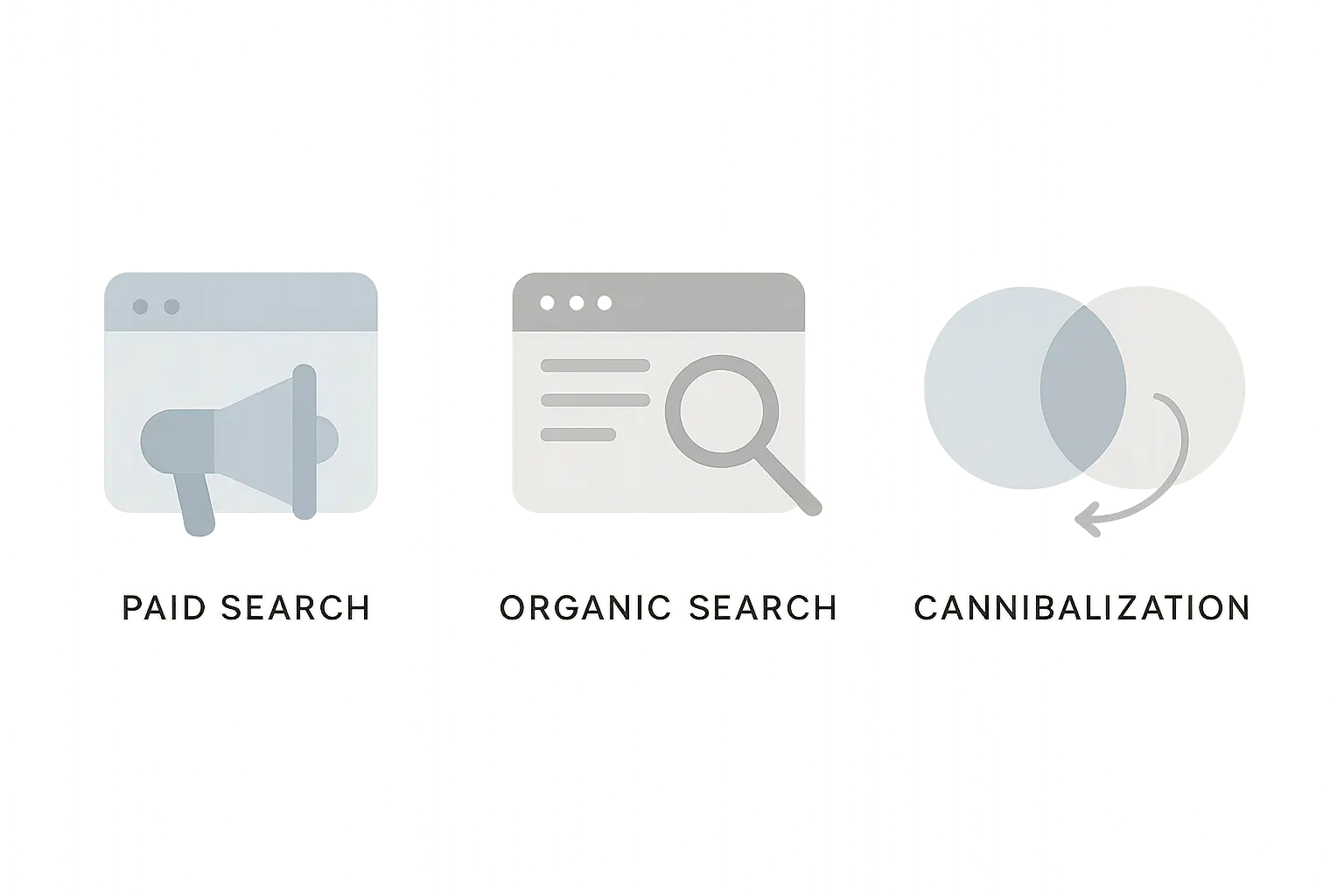
Seeing this in action makes the defensive case for branded bidding crystal clear. If you’re not there, your competitor is—at the very top of the page.
A Simple Framework for Proving the Value of Branded Bidding
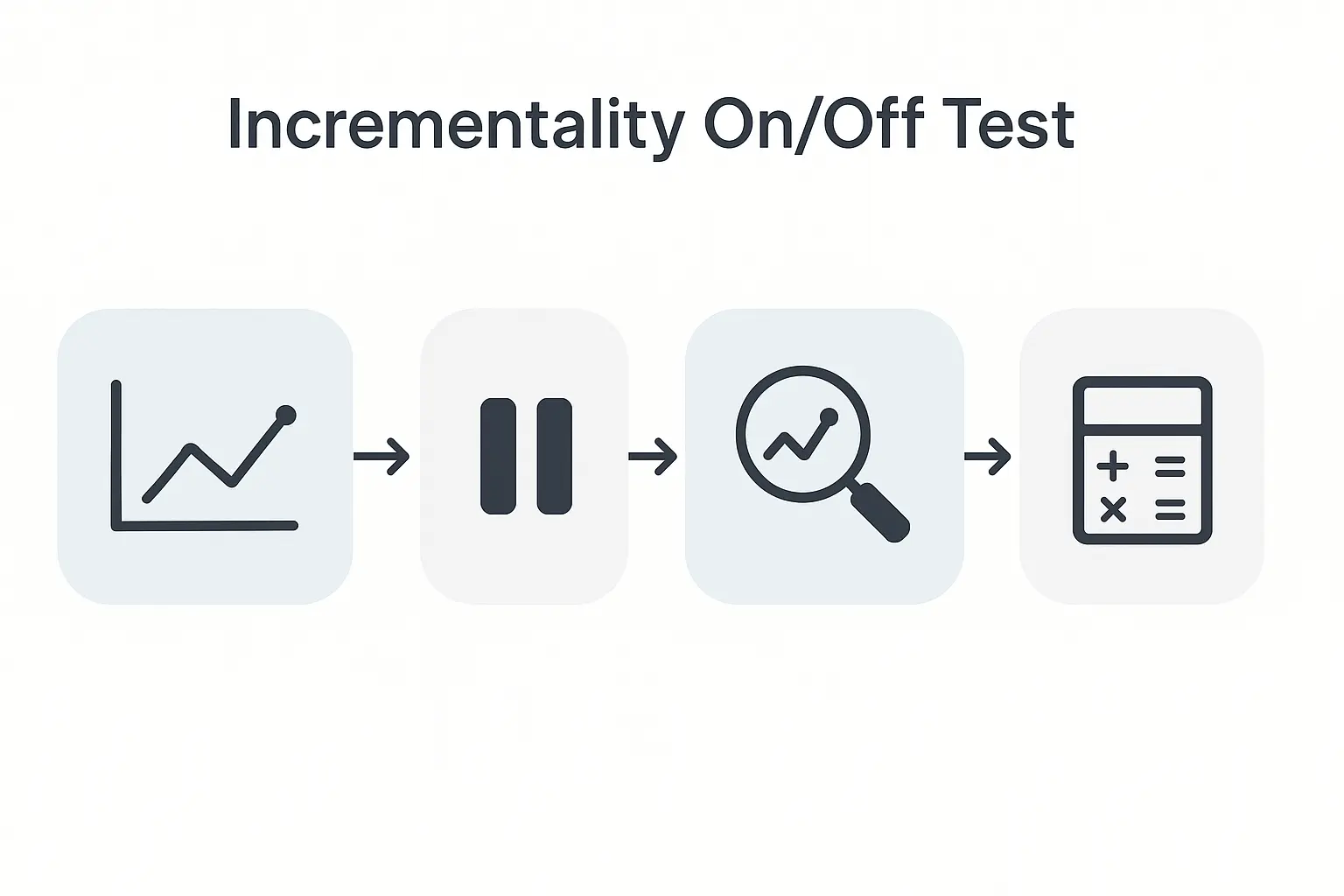
So, how do you move from theory to a concrete, data-backed recommendation for your clients? By running a simple, controlled test to measure the true impact of your branded ads.
This is often called an “incrementality test” or a “pause test.”
Step 1: Establish Your Baseline
Before you change anything, establish a clear baseline. For a two-week period, run your branded search campaigns as usual. At the end of that period, record two key metrics:
- Total clicks from branded paid ads
- Total clicks from branded organic search
Combine them to get your Total Branded Clicks (Ads On).
Step 2: Pause Your Branded Campaigns
Next, pause all campaigns and ad groups targeting your branded keywords. Keep them paused for the same length of time as your baseline period (two weeks is a good start).
During this time, your organic listing will be your only presence for branded searches.
Step 3: Measure the Impact
At the end of the pause period, pull your organic traffic report for these branded keywords. This number is your Total Branded Clicks (Ads Off).
You’ll almost always see a lift in organic clicks—that’s the cannibalization effect. The critical question is: did that lift make up for all the lost ad clicks?
Step 4: Calculate Your True Incrementality
Now you have the data you need to calculate your ad click incrementality rate.
-
Find the Incremental Clicks:(Total Branded Clicks with Ads On) – (Total Branded Clicks with Ads Off) = Incremental Clicks
-
Calculate the Incrementality Rate:(Incremental Clicks / Total Paid Ad Clicks) * 100 = Incrementality Rate %
This percentage represents the portion of your paid ad clicks that were truly net new—clicks you would not have captured with your organic listing alone. Presenting this clear, data-driven number to a client is far more powerful than any opinion. It transforms you from a service provider into a strategic partner who makes decisions based on evidence, which is the foundation of the ultimate guide to agency SEO reporting.
Beyond the Numbers: The Strategic Case for Brand Bidding
While an 89% incrementality rate is a powerful starting point, the strategic advantages of bidding on your brand name go even further.
1. Total SERP Domination
Running paid ads alongside your organic listing doesn’t just give you two results on the page; it lets you dominate the visual landscape. When you use ad extensions like sitelinks, callouts, and structured snippets, your paid result can take up a massive amount of valuable “above-the-fold” real estate.
This pushes competitor ads and other distractions further down the page, creating a branded fortress that’s hard for searchers to ignore.
2. Absolute Message Control
Your organic listing’s title tag and meta description are subject to Google’s algorithms; Google sometimes rewrites them entirely based on the user’s query.
Paid ads give you 100% control over your messaging. You can:
- Promote a limited-time sale or offer.
- Announce a new product launch.
- Tailor ad copy to different audiences.
- Direct users to a specific, high-converting landing page instead of your homepage.
This agility is something organic SEO, for all its power, simply can’t match.
3. Cost-Effective, High-Conversion Traffic
Branded keywords almost always have exceptionally high Quality Scores. Because the ad, keywords, and landing page are all perfectly aligned, Google rewards you. This results in:
- Lower Cost-Per-Click (CPC): Branded clicks are often the cheapest, most efficient clicks in your entire account.
- Higher Ad Position: You can easily secure the top spot without an aggressive bid.
- Higher Conversion Rates: Users searching for your brand are already at the bottom of the funnel. They are ready to convert, and a clear ad pointing them to the right page seals the deal.
Managing these nuanced strategies across a growing client roster can be complex. For many firms, scaling your agency with an SEO partner provides the leverage needed to deliver sophisticated, data-driven results without overwhelming internal teams.
Frequently Asked Questions (FAQ)
Q1: What exactly are “branded terms”?
Branded terms are search queries that include a company’s brand name or a variation of it. For example, searches for “JVGLABS,” “JVGLABS pricing,” or “JVGLABS reviews” are all branded terms.
Q2: Is bidding on your own brand name expensive?
Generally, no. Because your ad and landing page are highly relevant to your brand name, you’ll earn a high Quality Score from Google. This leads to a lower CPC compared to non-branded, competitive keywords. It’s often the most cost-effective campaign an account can run.
Q3: Will running Google Ads for my brand hurt my organic SEO ranking?
No. Google’s paid search and organic search algorithms are completely separate. Running ads has no direct negative impact on your SEO efforts. In fact, by dominating the SERP, you increase your brand’s overall visibility and click-through rate, which can have an indirect positive effect.
Q4: What if I have no competitors bidding on my brand name?
This is a great position to be in! In this case, the decision is less about defense and more about offense. You should still run an incrementality test. You may find that owning the top ad spot still provides significant incremental traffic and allows you to control the user’s journey with a targeted landing page, even without a direct competitor present.
The Final Verdict: From Expense to Investment
The question of whether to bid on branded terms is no longer a simple “yes or no.” The data is clear: for most businesses, a strong organic presence combined with a strategic paid search campaign delivers more traffic and revenue than either channel could alone.
By using the framework above, you can confidently walk your clients through the data, demonstrate the true value of an integrated search strategy, and solidify your role as an indispensable growth partner. Executing these strategies effectively across multiple clients is where streamlined processes become critical. Exploring how white-label SEO can streamline agency operations can be the key to delivering this level of strategic value at scale.