

Your client’s latest report shows Paid Search drove 50 sales this month. Organic Search? Only 10.
Then the email lands in your inbox: “Why are we investing so much in SEO? It looks like paid ads are doing all the work.”
You know SEO is driving value—you see the rising traffic, the higher rankings, the engagement. But your standard report doesn’t tell the whole story. It’s like giving all the credit to the person who scored the goal while ignoring the midfielder who set up the perfect shot.
The problem isn’t your SEO strategy; it’s your attribution story. By focusing only on the final click, you’re letting other channels take credit for the crucial groundwork SEO lays every day. It’s time to change the narrative and show clients the full picture.
The Last-Click Lie: Why Your SEO Reports Are Incomplete
For years, the default in digital marketing has been last-click attribution. It’s simple: whichever channel a user clicked right before converting gets 100% of the credit. If they click a Google Ad and buy, the sale goes to Paid Search.
But is that how people really make decisions?
Think about the last significant purchase you made. Did you see an ad and immediately buy? Probably not. The modern customer journey is a complex, winding path. According to Nielsen research, consumers now consult an average of 10.4 sources before making a purchase, up dramatically from just 5.3 sources in 2020.
They might:
- Discover a problem and search for solutions on Google (First Touch: Organic Search).
- Read a few of your blog posts to understand their options.
- See your brand mentioned on social media.
- Get a retargeting ad a few days later (Paid Social).
- Finally, type your brand name into Google, click an ad, and convert (Last Click: Paid Search).
In a last-click world, Paid Search gets all the glory. But was it the hero? Or was it just the final step in a journey that SEO started? The customer journey is no longer a straight line; as data from Think with Google shows, it’s a messy web of touchpoints.
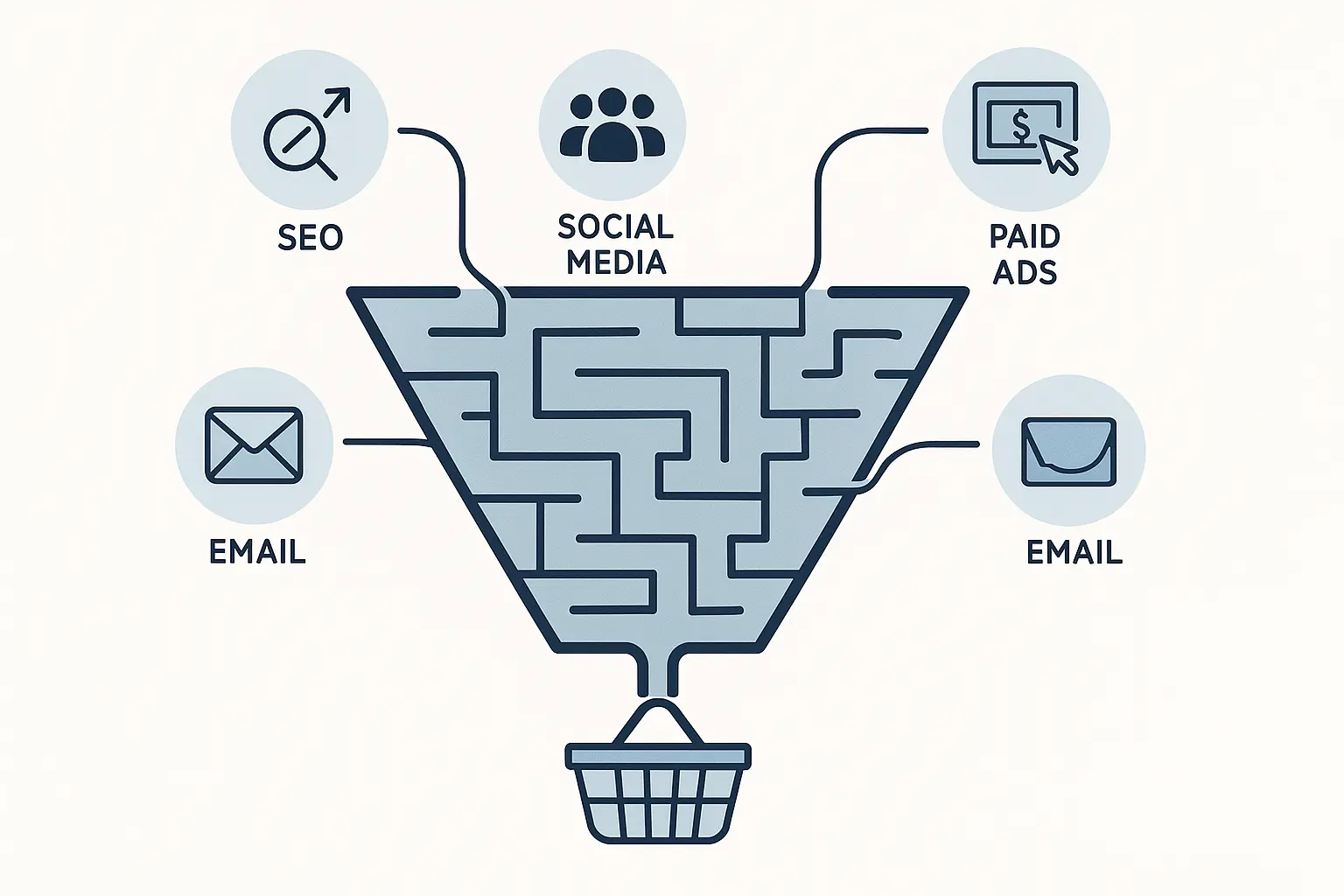
Relying on last-click data is like trying to understand a novel by reading only the last page. You see the outcome, but you miss the entire plot. For agencies, this isn’t just a reporting error—it’s a retention risk.
Uncovering SEO’s Hidden Influence: An Introduction to Assisted Conversions
An assisted conversion is when a channel contributes to a sale but isn’t the final touchpoint. It’s the assist that sets up the goal. Organic Search is the ultimate “midfielder” of digital marketing, often playing a critical role early in the research phase.
Forrester research found that 71% of buyers conduct more than half of their research online before making a purchase. And where does that research happen? Google’s own data reveals that 51% of shoppers use Google to research a purchase they plan to make.
This is SEO’s home turf. It excels at answering questions, building trust, and introducing your client’s brand long before a purchase is even considered. In one study of an e-commerce brand, we found that SEO was the first touchpoint for 40% of all transactions, even when another channel got the final click.
You can find this data right inside Google Analytics. The Top Conversion Paths report shows you exactly how different channels work together. You’ll often find Organic Search at the very beginning of these journeys.
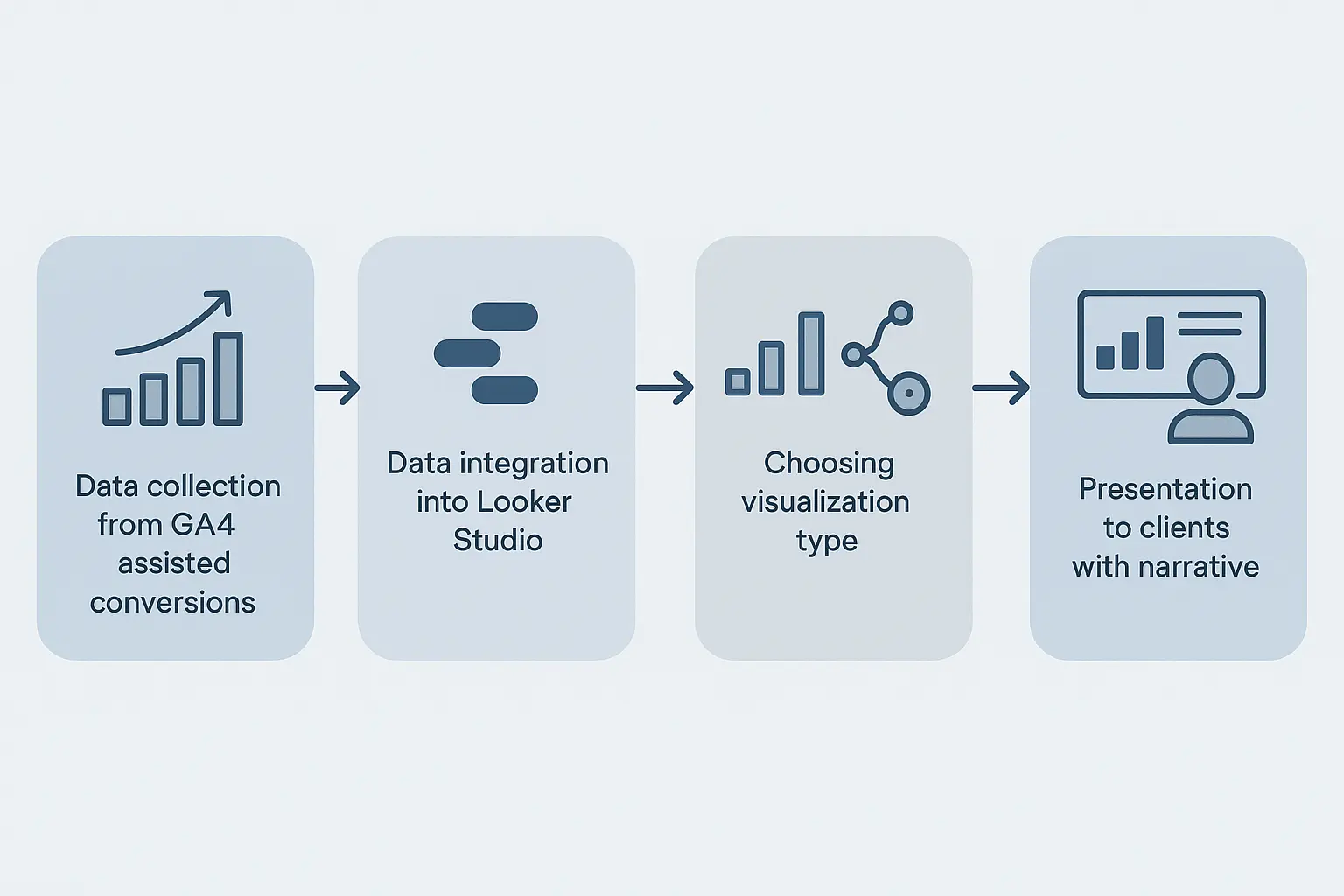
For agencies that want to demonstrate their full-funnel value, understanding this data is essential.
The 3-Part Dashboard That Tells the Full SEO Story
To move the conversation beyond the last click, you need to tell the entire story visually. A simple dashboard—built in Looker Studio or your reporting tool of choice—can transform your client conversations from defensive to strategic.
Instead of a single “conversions” metric, frame your SEO performance across three key roles: the Opener, the Midfielder, and the Closer.

Here’s how to break down each section for your client.
Part 1: Direct Impact (The Closer)
This is your standard last-click or direct conversion metric. It shows the number of conversions where Organic Search was the final touchpoint. It’s an important number, proving SEO can and does close deals directly.
How to talk about it: “This is the value you’re used to seeing. SEO directly drove [X] conversions last month, proving its power as a closing channel.”
Part 2: Assisted Impact (The Midfielder)
This is the total number of conversions where Organic Search was a touchpoint but not the final one. This metric reveals SEO’s role in nurturing and educating leads.
How to talk about it: “Beyond that, SEO also assisted in an additional [Y] conversions. This shows how our content is educating customers who later convert through other channels, like paid ads or email. We’re building the trust that makes all your other marketing more effective.”
Part 3: First-Touch Influence (The Opener)
This metric highlights how many conversion journeys started with Organic Search. This is arguably SEO’s most powerful—and most overlooked—contribution. It positions SEO as the primary engine for brand discovery and new customer acquisition.
How to talk about it: “Most importantly, our SEO efforts were the very first touchpoint for [Z] of all customers who converted last month. This proves that SEO is our number one channel for introducing new customers to your brand and filling the top of the funnel.”
Putting It All Together: The Conversation with Your Client
Armed with this dashboard, your next client conversation will be completely different. Instead of defending your budget, you’ll be demonstrating undeniable value.
Old Conversation: “I know our organic conversions look low, but…”
New Conversation: “Last month, our reports showed SEO directly drove 10 sales. But when we look at the full picture, our SEO efforts actually influenced an additional 45 sales. It was the first thing 40% of your new customers saw. We’re not just closing deals; we’re starting the conversation and building the trust that helps all of our other channels succeed.”
This approach reframes SEO from an isolated channel into the foundational pillar of a client’s entire digital strategy. A solid white-label reporting process can automate these insights, making these powerful conversations a scalable part of your service.
Frequently Asked Questions (FAQ)
What exactly is an assisted conversion?
An assisted conversion is a conversion that a specific channel (like Organic Search) contributed to, but it wasn’t the last channel the user interacted with before converting. It’s a measure of influence, not just the final action.
Where can I find this data?
In Google Analytics 4, you can find this information under Advertising > Attribution > Conversion paths. This report shows you the common sequences of channels users take on their way to converting.
Is last-click attribution useless?
Not at all. Last-click attribution is very useful for understanding which channels are most effective at closing a sale. On its own, however, it’s an incomplete picture. The best approach is to use it alongside assisted and first-click data to understand the entire customer journey.
How can I explain this to a non-technical client?
Use simple analogies. The most common is the soccer or basketball team: you have players who are great at scoring (closers), but they rely on other players to pass them the ball (assisters). SEO is often the star midfielder, setting up the plays that let others score.
Does visualizing this data require complex tools?
No. You can start by exploring the reports directly in Google Analytics. For more professional and automated client presentations, tools like Google’s Looker Studio are free and can connect directly to your GA4 data to build the kind of dashboard we’ve described.
From Insight to Impact: Telling a Better SEO Story
To prove your worth and build lasting client relationships, you have to tell a story that reflects today’s marketing reality. Last-click attribution is a relic of a simpler time.
By visualizing assisted conversions, you shift the conversation from a narrow view of channel performance to a holistic view of business growth. You position your agency as a strategic partner who understands not just how to rank a keyword, but how search integrates with the entire ecosystem to drive measurable results. As AI automates more data collection, your time is freed up for exactly this kind of high-value strategic storytelling.
Start exploring your own analytics data today. By reframing your reports, you’re not just sharing numbers—you’re demonstrating the true, integrated value of your work.