
It’s the last week of the month. Your team delivered great results, client campaigns are humming along, and new business is in the pipeline. But a familiar sense of dread creeps in: it’s reporting season.
For many agencies, this means hours spent logging into a dozen different platforms, wrestling with spreadsheets, and copy-pasting screenshots into a slide deck—all while the clock is ticking.
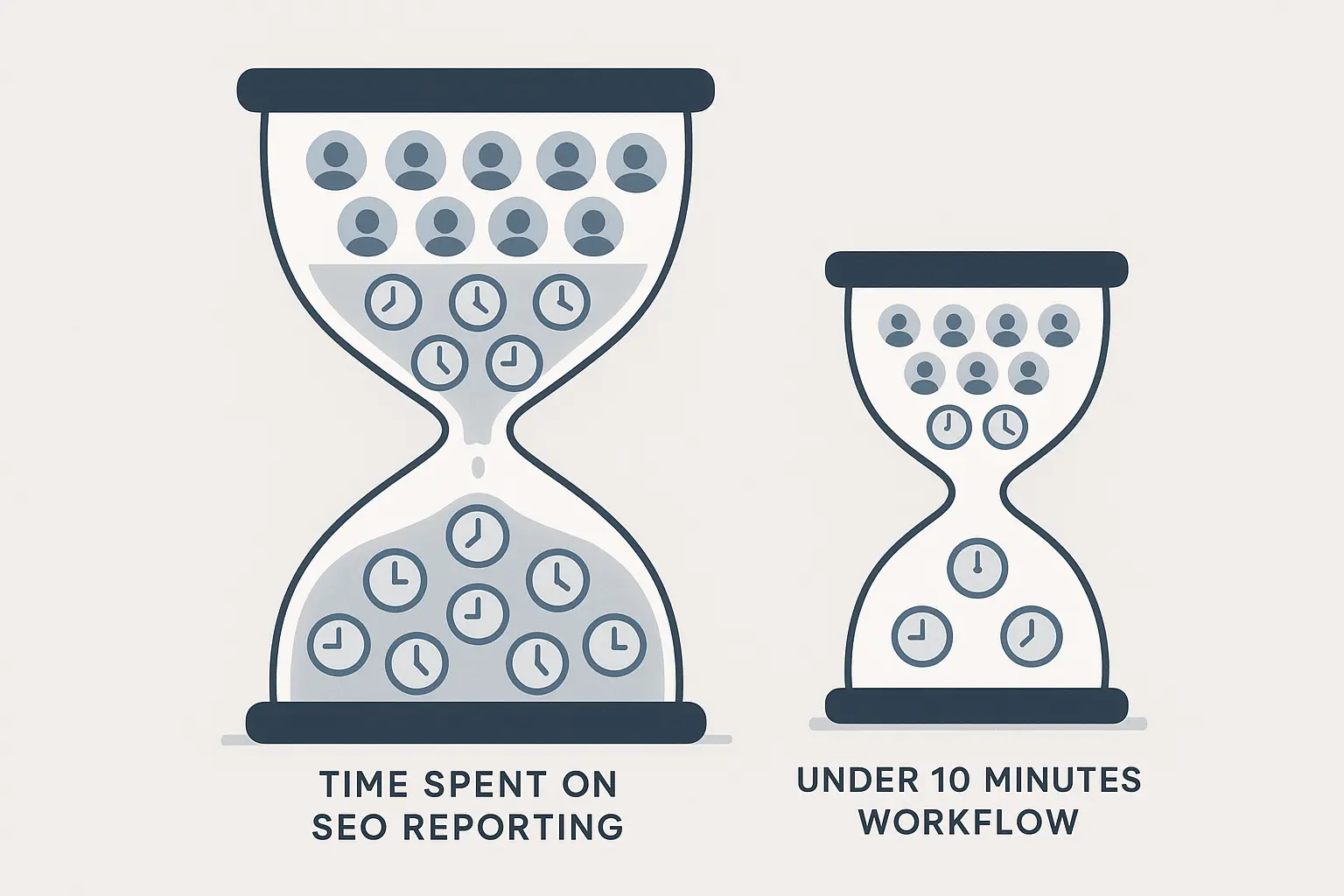
If this sounds familiar, you’re not alone. Research shows that over 50% of agencies spend more than 5 hours per client, per month on reporting alone.
Think about that. For an agency with just 10 clients, that’s over 50 hours—more than a full work week—sunk into a single, repetitive task. This isn’t just a time sink; it’s a bottleneck that stifles growth, frustrates your best talent, and puts client relationships at risk.
But what if you could transform that five-hour marathon into a 10-minute sprint? What if you could create a comprehensive, beautifully branded, client-ready SEO report faster than you can finish your morning coffee? This isn’t a fantasy. It’s the new reality for agencies embracing automated workflows.
The Hidden Costs of Manual Reporting
We often think of manual reporting as just a time-consuming task, but its true cost goes far deeper. It’s a drain on resources, a source of unnecessary risk, and a barrier to delivering the value your clients expect.
The Anatomy of a Manual Report
Let’s break down the traditional, manual process. It’s a multi-step, error-prone journey that looks something like this for every single client:
-
Log In & Export: Sign into Google Analytics 4, Google Search Console, your rank tracking software, your backlink tool, and maybe even Google Ads.
-
Consolidate Data: Copy and paste all that data into a master spreadsheet, where you try to make sense of different date ranges and metrics.
-
Create Visuals: Manually build charts and graphs to visualize performance trends.
-
Add Commentary: Write up your analysis and key takeaways, trying to connect the dots between disparate data points.
-
Brand & Format: Drop everything into a PowerPoint or Google Slides template, add the client’s logo, and fight with formatting to make it look professional.
This convoluted process isn’t just inefficient—it’s a liability. In fact, research shows that manual data entry is the number one source of errors in reporting, leading to a staggering 20% rate of report revisions. Every time you ask a client to “disregard the previous version,” you chip away at their confidence.
The time costs are just as steep. One study found that customizing and branding reports manually can take up to 60 minutes per report. That’s a full hour spent on aesthetics, a task that automation can reduce to under two minutes.
The Shift to Automation: Connecting the Dots Instantly
Automated reporting isn’t about replacing human strategy; it’s about eliminating the manual labor that gets in the way of it. The core principle is simple: instead of you going to the data, the data comes to you.
Modern reporting platforms integrate directly with all the tools you already use—Google Analytics, Search Console, SEMrush, Ahrefs, and more. They pull all that information into a single, unified dashboard.
This solves a critical challenge for agencies today. A recent survey found that while 78% of agency clients want more frequent, data-driven insights, agencies cite time constraints as the main barrier.
Automation breaks down that barrier. It frees your team from the data-gathering phase and empowers them to spend their time on what truly matters: analysis, strategy, and telling a compelling story about performance.
The Under-10-Minute Workflow: A Step-by-Step Breakdown
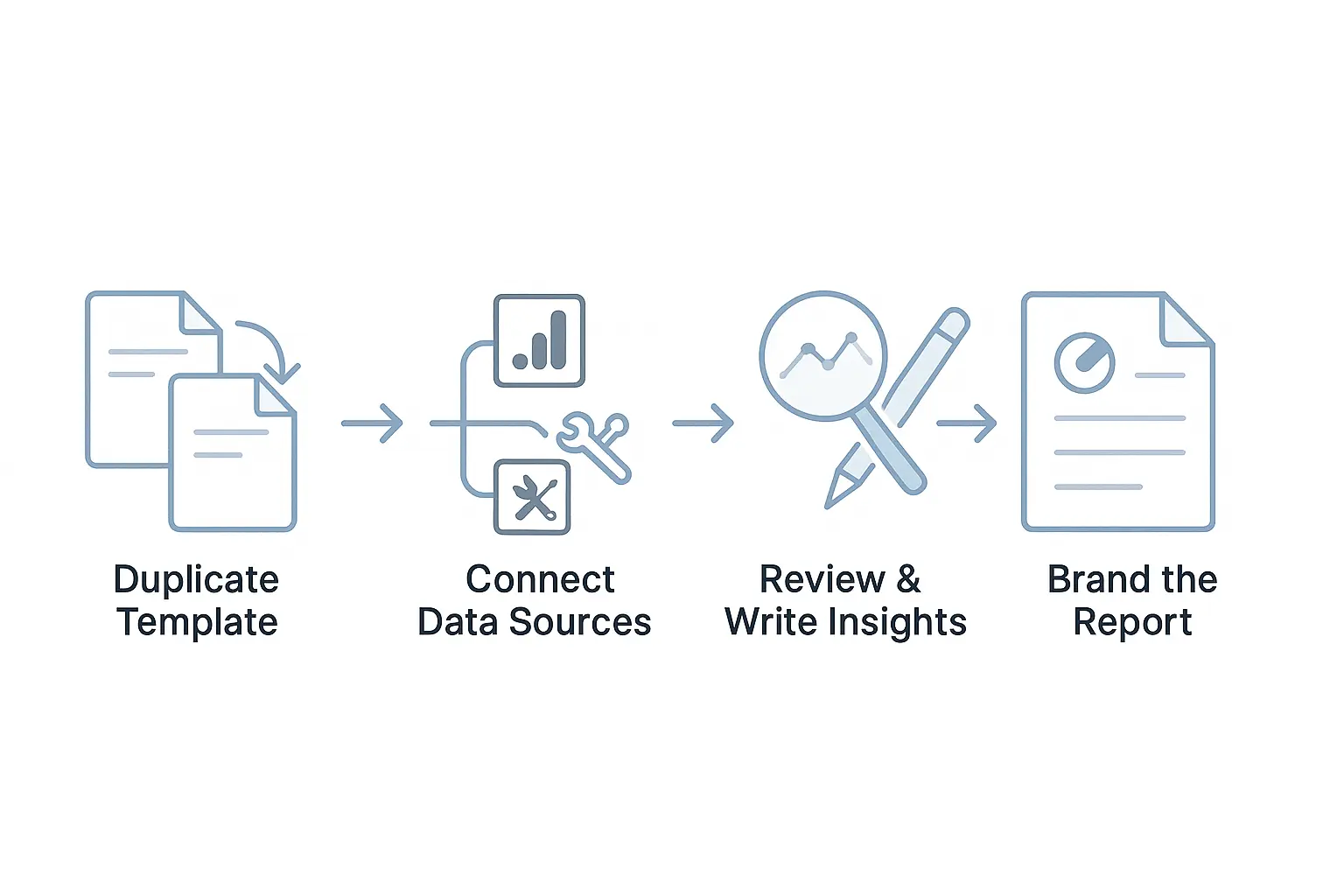
So, how do you get from a mountain of data to a polished, client-ready report in under 10 minutes? Here’s what the automated workflow looks like.
Step 1: Connect Your Data Sources (2 Minutes)
This is a one-time setup. You authorize the reporting platform to access your various data sources. Once connected, the data flows in automatically, forever eliminating the need to log in and export from multiple sites.
Step 2: Select Your Client & Template (1 Minute)
Instead of building each report from scratch, you work from a master template. This template is pre-configured with the key metrics you report on for every client—organic traffic, keyword rankings, conversions, backlink growth, and so on. You simply select the client, and the platform instantly populates the template with their specific data for the chosen date range.
Step 3: Generate & Customize the Report (5 Minutes)
With a single click, the report is generated. All the charts are built, the metrics are calculated, and the branding is applied automatically. This is where your strategist’s expertise shines. Instead of copying data, they spend these five minutes:
-
Reviewing Trends: Quickly spot what’s working and what isn’t.
-
Adding Insights: Type brief, high-value commentary directly into the report to explain the “why” behind the data.
-
Highlighting Wins: Call out key successes to reinforce the value of your work.
The best part? The report is already professionally formatted. The right logo, the right brand colors—it’s all handled automatically, making it a perfect fit for agencies that provide white-label SEO services and need to maintain a seamless brand presence.
Step 4: Review & Send (2 Minutes)
Give the report a final once-over to ensure your commentary is clear and concise. Then, export it as a PDF or share a direct link with your client. Done. From start to finish, the entire process takes less than 10 minutes.
The Real Payoff: How 10-Minute Reports Fuel Agency Growth
Saving dozens of hours a month is a massive win, but it’s just the beginning. The true impact of automated reporting is on your agency’s bottom line and its potential for growth.
The effect on retention is clear: agencies that use automated reporting tools report a 35% higher client retention rate.
Why such a dramatic difference?
-
Consistency: Automated reports are always on time and always accurate.
-
Clarity: They present complex data in a simple, easy-to-understand format.
-
Value: They shift the conversation from “what did you do?” to “what results did we get?” which makes proving SEO ROI far more effective.
By reclaiming the time once lost to manual reporting, you create the bandwidth to scale your agency. Your team can focus on higher-value activities like strategic planning, client communication, and developing new service offerings. Reporting is no longer a cost center; it becomes a streamlined process that drives value and fuels growth.
Frequently Asked Questions (FAQ)
Is automated reporting just a data dump for my clients?
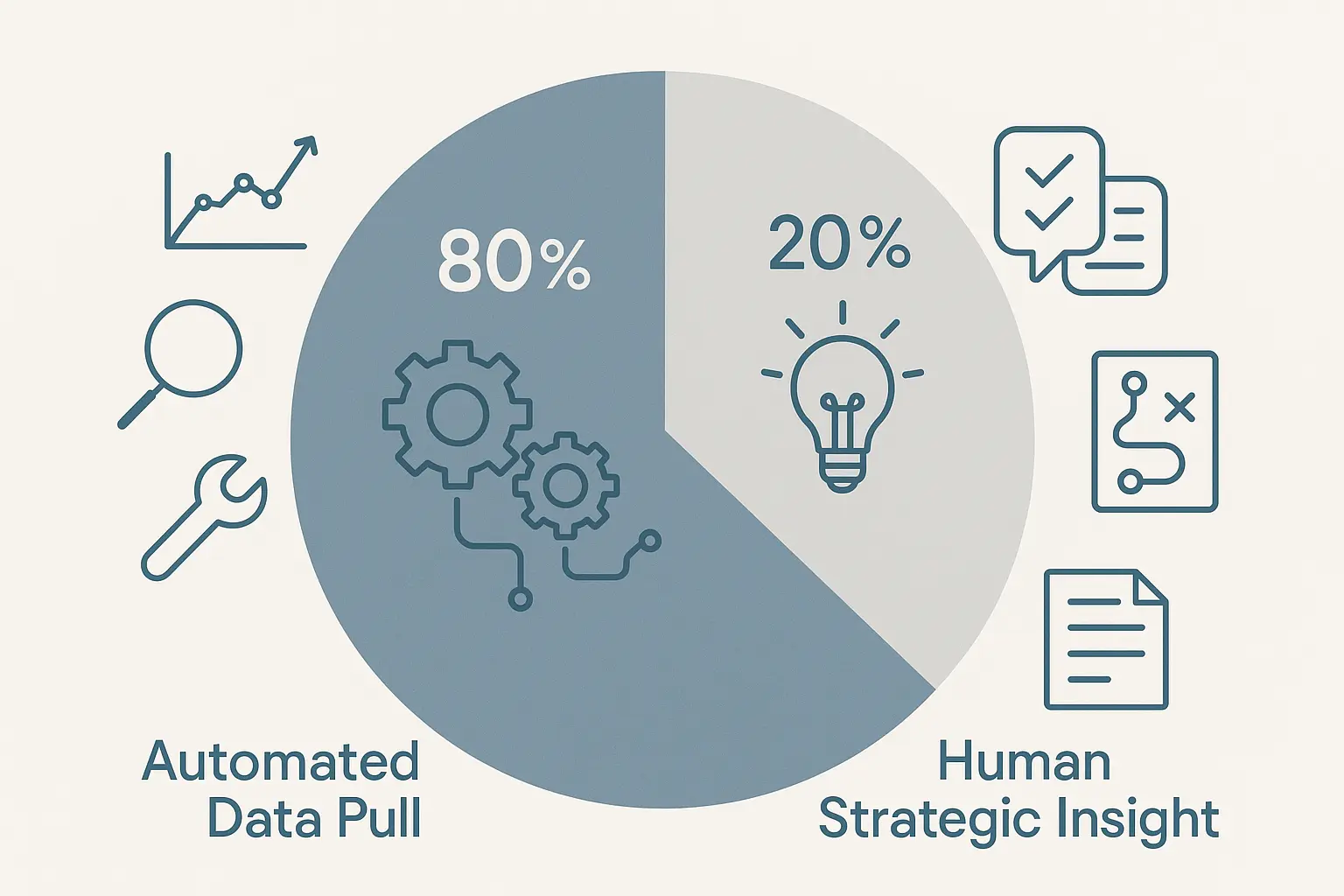
Not at all. The best workflows use automation for data gathering so your human experts can focus on data interpretation. The final report is a blend of automated data and strategic human insight.
Will my client know I’m using an automated tool?
With a true white-label solution, no. The report is 100% branded as your agency. Your logo, your colors, your voice—the tool is completely invisible to the end client.
How difficult is it to set up these automated systems?
Most modern platforms are designed for ease of use. They feature intuitive interfaces and guided walkthroughs for connecting common tools like Google Analytics and Search Console. Typically, you can be up and running in under an hour.
Can I still add my own custom insights and analysis?
Absolutely. The goal is to automate the repetitive tasks, not your strategic thinking. The best platforms have dedicated sections for you to add custom text, images, and notes to explain the story behind the numbers.
From Bottleneck to Breakthrough
Reporting shouldn’t be the most dreaded task on your team’s to-do list. It should be an opportunity to celebrate wins, demonstrate value, and strengthen client relationships.
Shifting from a manual, time-intensive process to a streamlined, automated workflow does more than just save time. You reduce errors, improve client retention, and create the operational capacity needed for sustainable growth. You transform reporting from a painful bottleneck into a powerful breakthrough for your agency.