
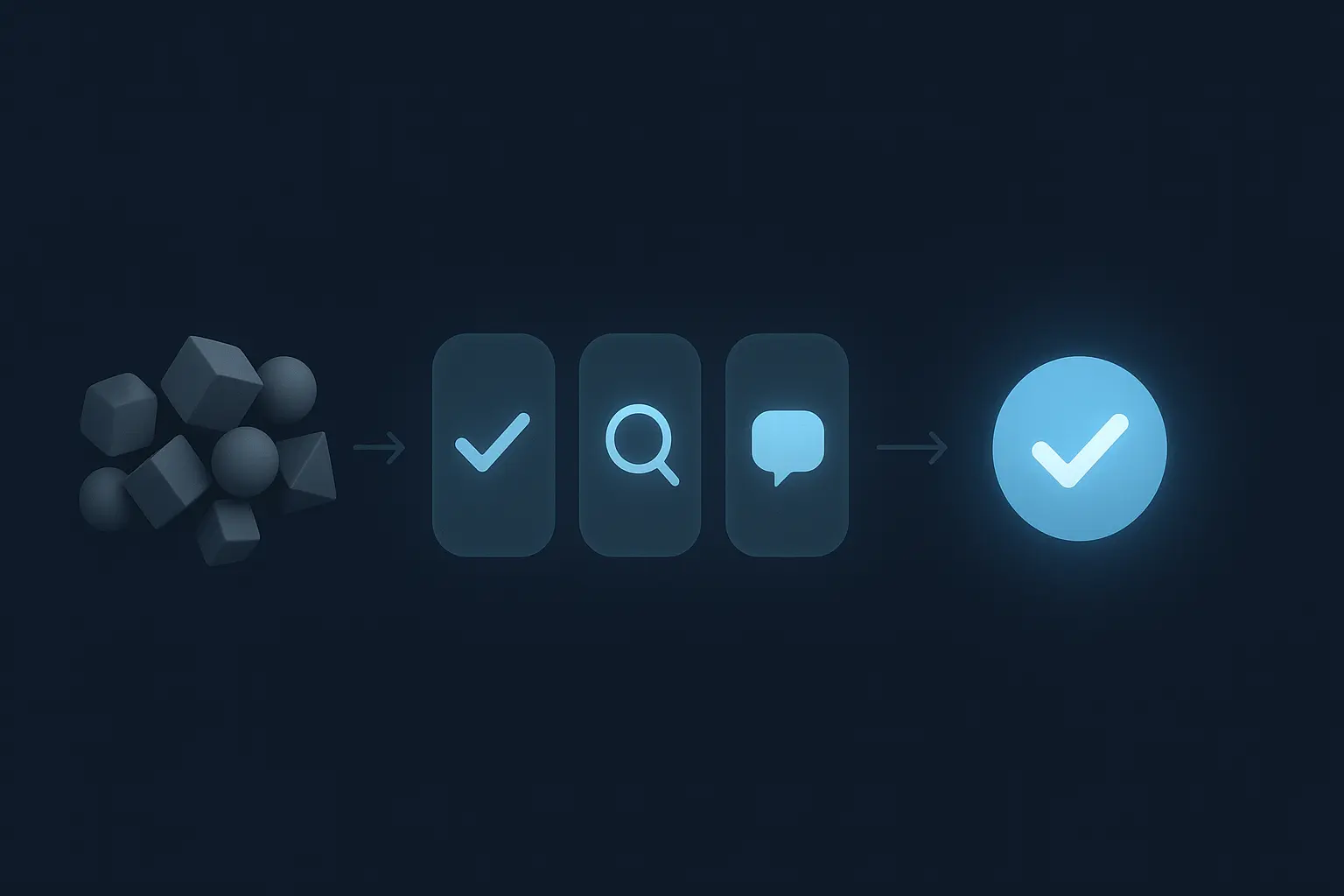
You’ve just done it. You used an AI tool to generate a blog post for a key client. The content looks clean, the grammar is perfect, and it was created in a fraction of the time it used to take.
But as you hover over the “publish” button, a wave of uncertainty hits you.
Is this really original? Are those statistics accurate? Does this truly sound like the client’s brand, or is it just a soulless echo of what’s already out there?
If this scenario feels familiar, you’re not alone. A staggering 63% of marketers are concerned about the accuracy of AI-generated content. This apprehension is more than just a feeling—it’s a critical business challenge for agencies today. In the rush to adopt AI for efficiency, many are skipping the most important step: building a rock-solid quality assurance protocol.
Without a protocol, you aren’t just risking a subpar article; you’re risking the trust your clients have placed in you. The good news? Creating one isn’t complex, and getting it right can become your agency’s new competitive advantage.
Why a Formal Protocol is Non-Negotiable in the Age of AI
In the early days of digital marketing, “winging it” was sometimes an option. With AI, it’s a liability. An AI content protocol is your agency’s formal commitment to quality, originality, and accuracy—a system that ensures every deliverable is client-ready and brand-safe.
The risks of skipping this step are significant:
- Erosion of Client Trust: Delivering content with factual errors or unoriginal ideas is one of the fastest ways to damage a client relationship.
- Brand Damage: Inaccurate information published under your client’s name can harm their reputation and authority.
- “AI Hallucinations”: This is when an AI model confidently presents false information as fact. Research shows these hallucinations can occur in 3% to 27% of AI outputs. A protocol is your defense against these convincing falsehoods.
While the risks are real, the opportunity for agencies that get this right is massive. Currently, only one in ten companies has published formal AI usage policies. By establishing a clear and effective QA process now, you position your agency as a leader—one that leverages cutting-edge technology responsibly and effectively.

The Three Pillars of AI Content Integrity
A robust AI QA protocol doesn’t need to be a 100-page document. It can be built around three simple, actionable pillars. Think of these as the essential checkpoints every piece of AI-assisted content must pass before it reaches your client.
Pillar 1: The Originality Check (Beyond Basic Plagiarism)
The most common fear with AI content is plagiarism. While running text through a tool like Copyscape is a crucial first step, true originality goes deeper. AI models are trained on vast amounts of existing internet data, so they can sometimes produce content that, while not directly plagiarized, feels generic and uninspired—a rehash of widely available information.
Your Originality Check Protocol:
- Plagiarism Scan: Run 100% of the AI-generated text through a reliable plagiarism checker. This is non-negotiable.
- The “Snippet” Test: Copy a few distinctive-sounding sentences from the draft and paste them into a search engine in quotes. If you find multiple identical or near-identical results, it’s a red flag that the content is too generic.
- The Uniqueness Review: The final, most important step is a human review. Ask yourself: Does this piece offer a fresh perspective? Does it add unique value, or is it just summarizing the top five search results? This human layer is what separates commodity content from valuable thought leadership.
Pillar 2: The Accuracy & Fact-Checking Gauntlet
This is where your agency’s credibility is truly on the line. AI models do not “know” things; they predict the next most likely word. This means they can, and do, invent statistics, misattribute quotes, and present outdated information as current.
That’s why nearly half of businesses using AI (48%) now have a dedicated fact-checker on their team. Your protocol is how you formalize that role, even if it’s handled by your existing content team.
Your Fact-Checking Protocol:
- Verify Every Claim: Treat every statistic, date, and factual assertion as unverified until proven otherwise.
- Hunt for the Primary Source: If the AI cites a statistic like “80% of customers prefer X,” don’t just link to another blog that mentioned it. Find the original study or report from the source (e.g., Gartner, Forrester, Pew Research).
- Authenticate Quotes: Ensure quotes are attributed to the right person and in the correct context.
- Cross-Reference Concepts: For technical or complex topics, verify the information with at least two other authoritative sources.
This rigorous process is the backbone of successful [AI-driven content workflows], turning a potentially unreliable tool into a powerful research assistant.

Pillar 3: The Brand Voice & Resonance Audit
An AI can mimic a brand’s tone, but it often struggles with its soul. It can use the right keywords but miss the underlying narrative, values, and nuanced perspective that make your client unique. This final pillar ensures the “human” element is not just present, but prominent.
Your Brand Voice Protocol:
- Read It Aloud: It’s the simplest yet most effective test. Does it flow naturally? Does it sound like something your client would actually say? Awkward phrasing and robotic sentences are easy to catch when spoken.
- Check Against Brand Guidelines: Does the content adhere to the client’s style guide, use brand-specific terminology correctly, and align with their core messaging?
- Infuse Human Experience: Add real-world examples, anecdotes, or expert opinions that an AI could never invent. This often separates good content from great content.
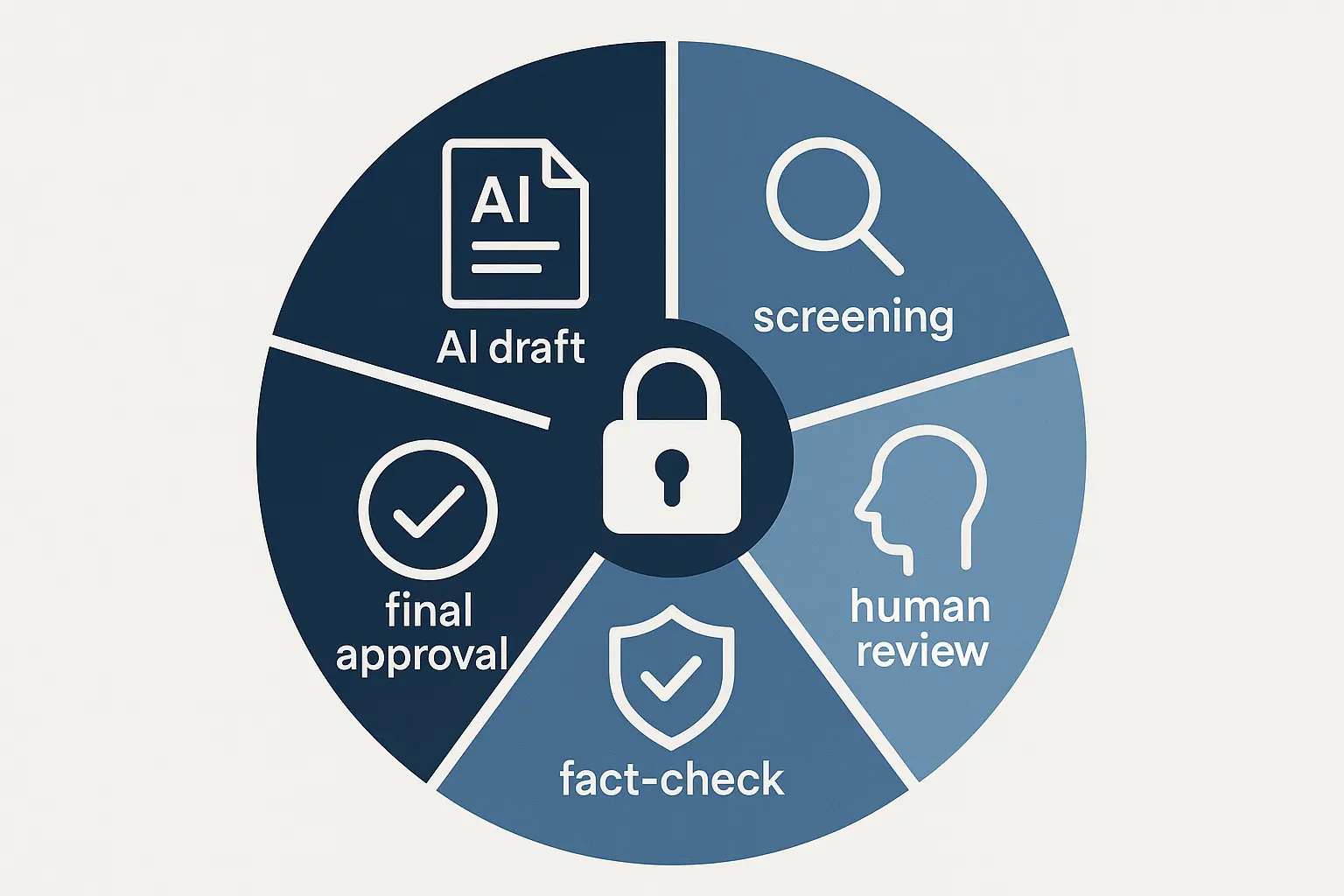
Putting It All Together: Your 5-Step AI Content QA Checklist
To put this into practice, here’s a simple checklist you can implement in your agency for every piece of AI-assisted content.
- Generate & Refine: Use AI as a first-draft-and-research assistant, not a final author. Guide it with detailed prompts and use its output as a starting point.
- Originality Scan: Run the draft through a plagiarism checker and perform “snippet” tests for uniqueness.
- Fact-Check Gauntlet: Verify every statistic, claim, and quote against primary sources.
- Human-Powered Edit: A skilled human editor refines the draft for brand voice, adds unique insights, and ensures it provides genuine value to the reader. This human-AI partnership is powerful: research has found that for certain editing tasks, AI-refined content was preferred over drafts written solely by humans 78% of the time.
- Final Approval: A designated team member gives the final sign-off, confirming the piece meets all quality standards before it’s sent to the client.
Frequently Asked Questions (FAQ)
Q1: What are the best tools for plagiarism and fact-checking?
A1: For plagiarism, tools like Copyscape and Grammarly’s premium checker are industry standards. For fact-checking, there’s no single magic tool. The best approach is manual verification using reputable search engines and prioritizing primary sources like academic journals, government reports, and original market research.
Q2: How much human oversight is really needed?
A2: Every single piece of content intended for publication requires meaningful human oversight. For a simple blog post, a single editor might handle the entire five-step QA checklist. For a more technical white paper, you may need both an editor and a subject matter expert (SME). The key is to never treat AI output as “final.”
Q3: Can Google detect AI-written content? And does it matter?
A3: Google has been clear that its focus is on the quality of content, not how it’s produced. Their official guidance rewards helpful, reliable, people-first content. A rigorous QA protocol is designed to produce exactly that. By focusing on creating exceptional content that is original, accurate, and valuable—whether AI-assisted or not—you align perfectly with what search engines and users want.
Q4: How should we talk about our AI usage with clients?
A4: Transparency is key. Frame your use of AI as a strategic advantage that allows you to work more efficiently and invest more time in high-value areas like strategy, editing, and creative ideation. Present your QA protocol as a safeguard that ensures they receive the highest quality deliverables. This builds trust and positions you as a forward-thinking partner.
From Protocol to Partnership: Scaling with Confidence
Implementing an AI content protocol isn’t about slowing down; it’s about building the necessary guardrails to scale safely and responsibly. It transforms AI from a potential liability into a powerful asset that enhances your team’s capabilities without compromising quality.
For many agencies, mastering this process internally is the goal. For others, focusing on client strategy while relying on a trusted [white-label SEO partner] to handle the execution—backed by these same rigorous standards—is the most efficient path to growth.
Ultimately, this content protocol becomes a core component of your broader [omnichannel growth strategies], ensuring that the foundation of your client’s digital presence is built on trust, accuracy, and authenticity. By taking these steps, you’re not just creating content; you’re building confidence—for your team, for your clients, and for their customers.