

You did everything right. Your agency launched the client’s new e-commerce site with flawless technical SEO. You meticulously crafted Product schema, complete with pricing, availability, and five-star reviews. Within weeks, Google rewarded your efforts. The client’s products appeared in the search results, adorned with beautiful, click-enticing rich snippets. Everyone celebrated.
A month later, during a routine check, you notice they’re gone. The star ratings have vanished. The price information is missing. The client’s products now look just like everyone else’s in the SERPs. Panic sets in. What happened?
You’ve just met the silent killer of SERP features: schema drift. It’s what happens when your perfectly implemented structured data slowly breaks down over time—not from a major error, but from the tiny, everyday changes that happen on any active website. Understanding schema drift is the first step to protecting your clients’ SEO results from this hidden threat.
What is Structured Data? A Quick Refresher
Before we dive into the problem, let’s quickly review the solution it undermines. Imagine your website is telling a story, but search engines like Google only understand a specific language. Structured data, often called schema markup, is the translator that helps them grasp the context of your content.
Instead of just seeing a block of text that says “Joe’s Coffee, Open 9-5, 123 Main St,” structured data tells Google:
- “name”: “Joe’s Coffee” (This is the name of a business)
- “openingHours”: “Mo-Fr 09:00-17:00” (These are its hours of operation)
- “address”: “123 Main St” (This is its physical location)
Why does this matter? Because when Google understands your content at this level, it can feature it in special ways in the search results. These are called rich snippets or rich results—think star ratings, FAQ dropdowns, event times, and recipe cook times.
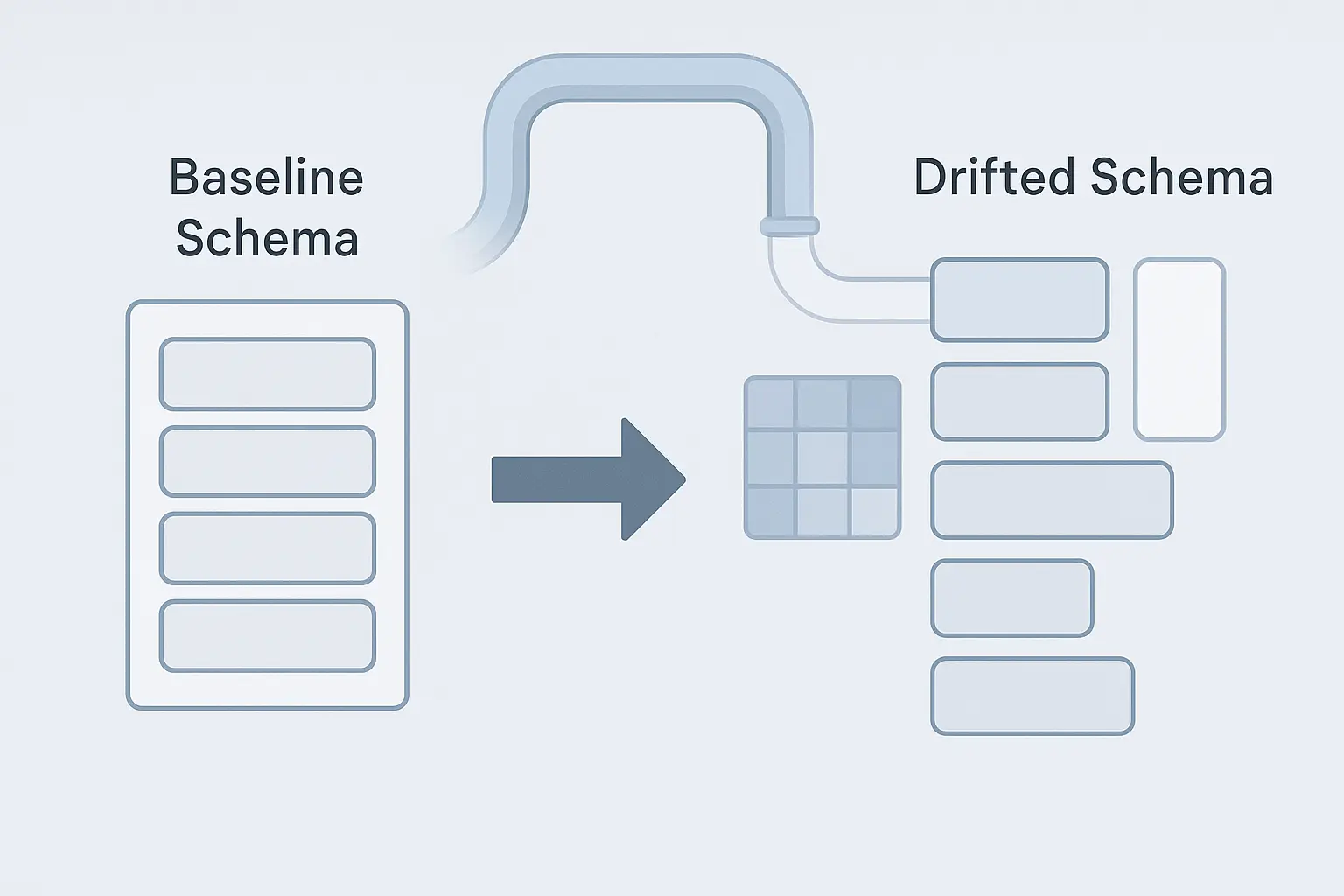
The payoff is significant; research shows that displaying these rich results in the SERPs can increase click-through rates (CTR) by 5-30%. It’s the difference between a standard blue link and a visually engaging, trustworthy result that encourages clicks.
The “Set It and Forget It” Fallacy: Introducing Schema Drift
Here’s the trap many agencies fall into. They implement the schema perfectly at launch, validate it, and check the box. But a website isn’t a static brochure; it’s a living entity. Schema drift is the gradual degradation of structured data integrity caused by post-launch website changes.
It happens silently, in the background, due to seemingly harmless updates:
-
CMS & Plugin Updates: A WordPress theme or a Shopify app gets an update, altering the HTML structure of the product template and breaking the connection to your schema.
-
Developer Code Refinements: A developer “cleans up” some code, unknowingly removing a div or span tag your structured data was relying on.
-
Content Editor Changes: A marketing team member replaces a product image, not realizing the old image URL was a required image property in the schema.
-
Template Modifications: The web design team rolls out a new header or footer across the site, which conflicts with the existing page structure.
The result is always the same: your once-perfect schema becomes invalid or incomplete. And because these changes don’t trigger obvious SEO “errors,” the problem often goes unnoticed until the damage is done.
Why Schema Drift is More Than Just a Technical Glitch
Losing your rich snippets isn’t just a cosmetic issue; it has a direct impact on performance and your relationship with the client.
-
Vanishing SERP Real Estate: The most immediate effect is the loss of those eye-catching rich snippets. Your client instantly loses a key visual differentiator against competitors.
-
Decreased Traffic and CTR: Remember that 5-30% boost? When rich snippets disappear, CTR often falls, leading to a measurable drop in organic traffic.
-
Eroding Client Trust: From the client’s perspective, something they were paying for suddenly vanished. Explaining this drop can become a difficult conversation, one that underscores the importance of white-label SEO reporting that can track these technical changes alongside performance metrics.
-
Handing an Advantage to Competitors: While you’re scrambling to diagnose the problem, your competitors with intact schema are capturing the clicks and traffic that used to be yours.
According to Google, one of the most persistent issues with structured data is simply incorrect or incomplete implementation. Schema drift is a primary cause, turning once-correct implementations into broken ones without warning.
From Manual Spot-Checks to Automated Monitoring
So how do agencies typically guard against this? The traditional way is manual, time-consuming, and fundamentally reactive.
The Old Way: An SEO analyst periodically grabs a few key URLs and runs them through Google’s Rich Results Test. The problem is this isn’t scalable. For an agency with 30 clients, each with hundreds of important pages, it’s impossible to check everything manually. This method only allows for spot-checking, and you’ll only find the problem after it has already impacted your client’s search presence.
The New Way: Automated schema drift detection. This approach treats structured data like a critical system that requires continuous monitoring, not occasional spot-checks.
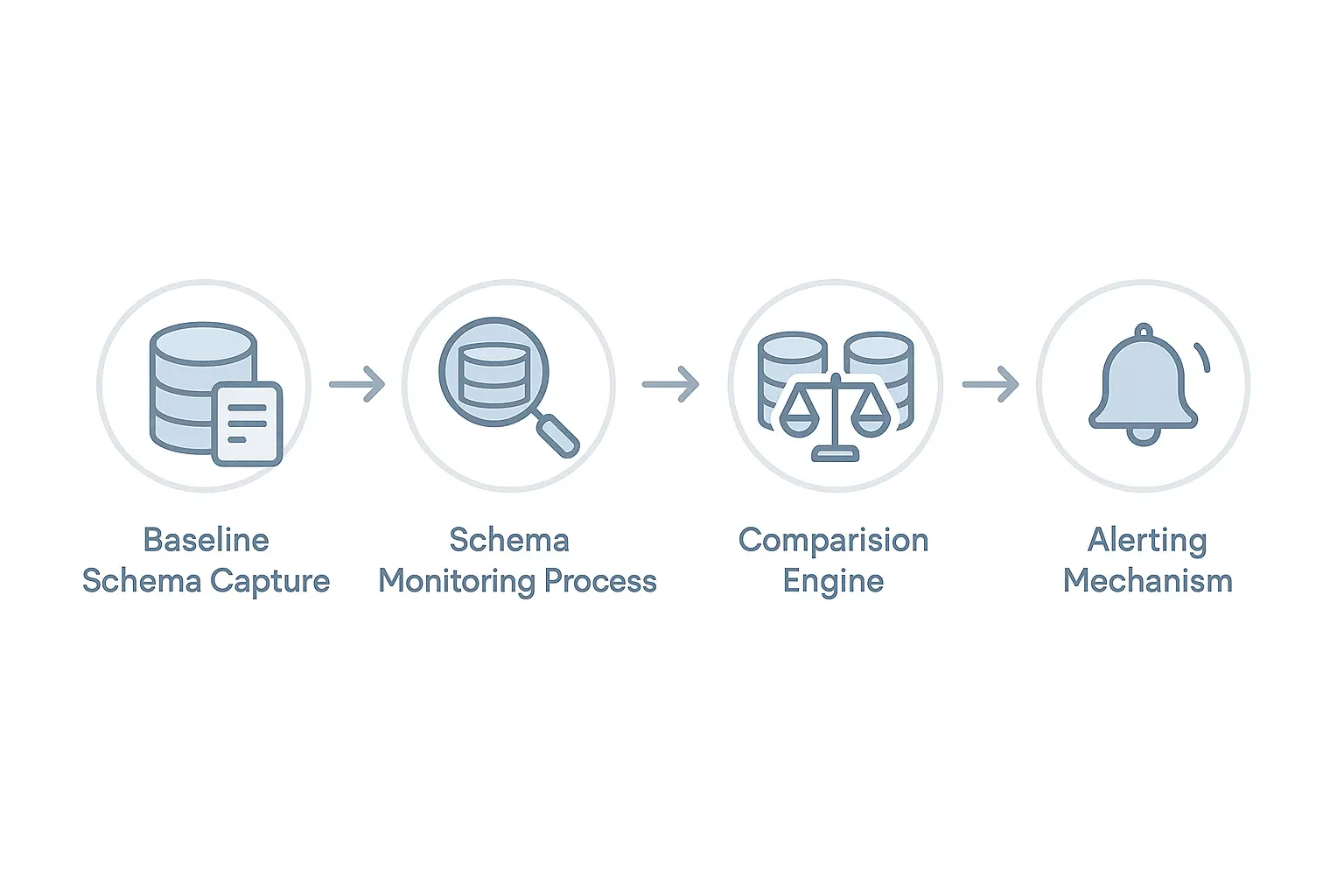
Here’s how it works in simple terms:
-
Establish a Baseline: At launch, the system takes a “snapshot” of the validated, correct schema on your key pages. This becomes the “source of truth.”
-
Monitor Continuously: The system automatically re-crawls these pages on a regular schedule (e.g., daily or weekly).
-
Compare and Alert: It compares the current schema against the baseline. If it detects any changes, missing fields, or new errors—the “drift”—it instantly sends an alert to your team.
This proactive approach transforms your agency from a reactive problem-fixer into a vigilant protector of your client’s SEO health. You find and fix the issue before it impacts their rankings or rich snippets.
What Does a Modern Schema Monitoring System Do?
When considering an automated solution, you’re looking for a system built for the realities of agency life. For agencies managing multiple clients, this level of automation is a core component of effective white-label SEO services. Key features include:
-
Baseline Comparison: The foundational ability to lock in a “correct” version and detect deviations.
-
Real-Time Alerts: Notifications via email, Slack, or your project management tool the moment a drift is detected.
-
Scalable Monitoring: The capacity to monitor thousands of URLs across dozens of client accounts without manual effort.
-
Detailed Error Reporting: The alert shouldn’t just say “it’s broken.” It should tell you exactly what changed—e.g., “Required property ‘price’ is missing on URL X.”
Frequently Asked Questions About Schema Drift
How often does schema drift happen?
More often than you’d think. On any website with an active blog, a frequently updated product catalog, or a team of content editors, small changes happen daily. Each one is a potential point of failure for your schema.
Can’t I just use Google Search Console to monitor this?
Google Search Console (GSC) is an essential tool, but it’s reactive. It reports an issue after Google has tried to process the broken schema and already decided not to show your rich snippets. Automated monitoring is proactive, helping you catch the error before GSC even sees it.
Is fixing schema drift difficult?
Often, the fix itself is quite simple—re-adding a missing property or correcting a field format. The difficult part has always been detecting the problem in the first place, across thousands of pages, in a timely manner. Automation solves the detection problem so you can focus on the easy fix.
What types of schema are most prone to drift?
Complex schema types with many required properties are the most vulnerable. This includes Product, Recipe, FAQPage, and LocalBusiness schema, as they are often tied to many different fields within a CMS that can be changed by various team members.
Moving Beyond Implementation to Integrity
Implementing structured data is just the first step. The real, long-term value comes from maintaining its integrity. In today’s competitive digital landscape, leaving your schema unmonitored is like leaving the front door unlocked. You might be fine for a while, but eventually, something will go wrong.
By shifting from a “set it and forget it” mindset to one of continuous monitoring, agencies can protect their clients’ hard-won SEO gains, strengthen trust, and deliver more reliable results.

Protect your clients’ results from this silent threat. See how automation is transforming SEO oversight in our complete guide to AI-powered SEO automation for agencies.